Microsoft has signed a 1.8-million-ton carbon removal agreement to restore degraded African rainforest, marking one of the largest nature-based climate deals on the continent.
The multi-year partnership aims to combine biodiversity recovery with high-integrity carbon credits, positioning Africa as a serious player in global removal markets.
The agreement signals growing corporate confidence in African climate assets, but also raises questions about governance, permanence, and benefit-sharing.
Big Tech Deepens Africa Climate Bet
Microsoft has committed to purchasing 1.8 million tonnes of carbon removal credits from a large-scale African rainforest restoration project, in a deal that underscores the tech giant’s escalating push toward net-zero and carbon-negative targets.
The agreement spans multiple years and is structured around high-integrity, nature-based carbon removals, rather than avoidance credits.
It is among the largest corporate removal transactions linked to Africa’s tropical forest ecosystems.
For African climate markets, the signal is clear: global corporates are increasingly willing to anchor long-term capital in restoration projects across the continent.
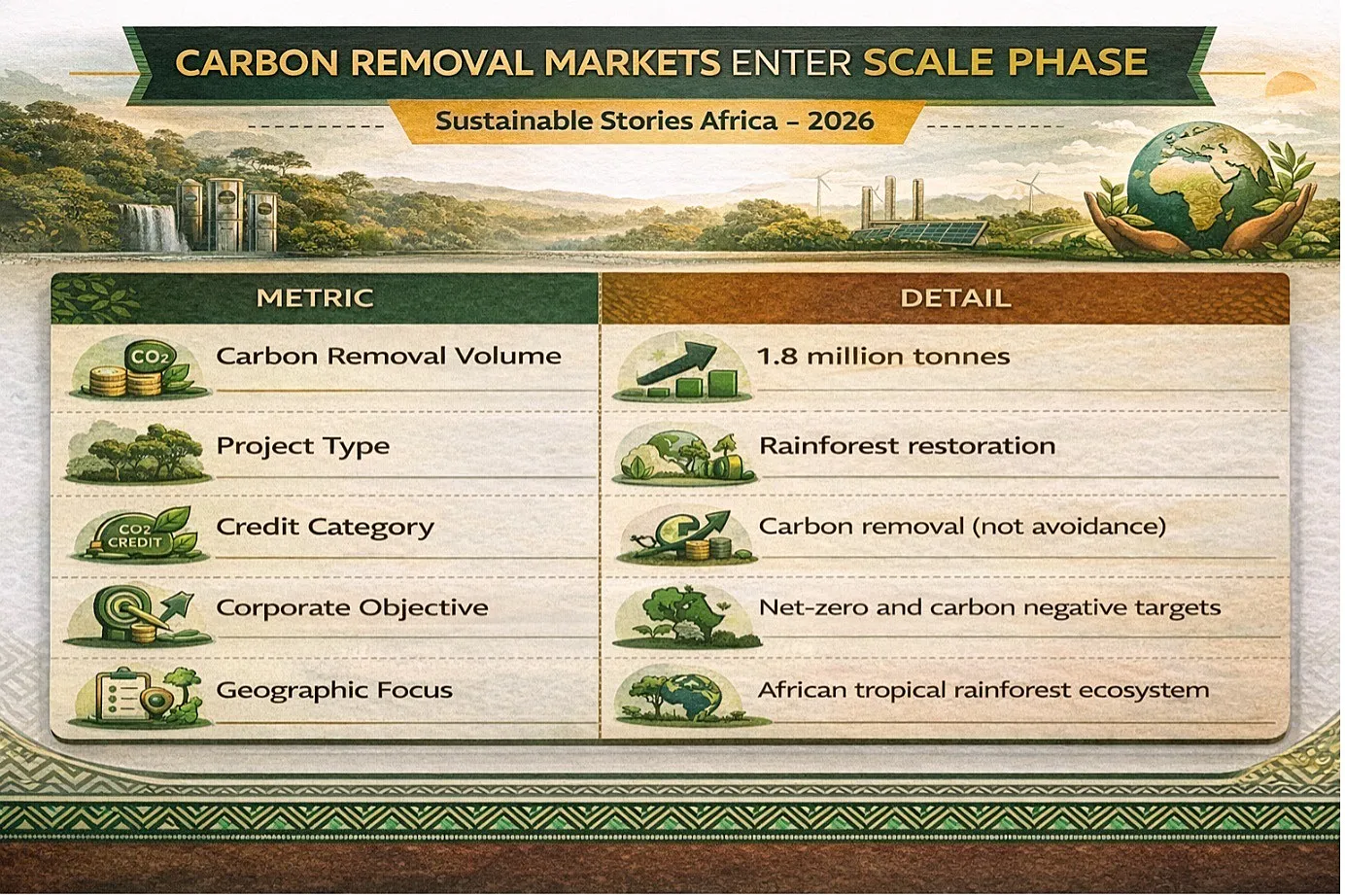
Carbon Removal Markets Enter Scale Phase
Unlike traditional carbon offset deals focused on emissions avoidance, this agreement centres on verified carbon removal, the physical extraction and storage of atmospheric carbon dioxide through forest regeneration and ecological restoration.
Metric | Detail |
|---|---|
Carbon Removal Volume | 1.8 million tonnes |
Project Type | Rainforest restoration |
Credit Category | Carbon removal (not avoidance) |
Corporate Objective | Net-zero and carbon negative targets |
Geographic Focus | African tropical rainforest ecosystem |
Carbon removal credits are typically more expensive than avoidance offsets due to permanence, monitoring requirements, and additionality standards.
Microsoft has been steadily increasing its portfolio of removal contracts globally, including direct air capture and soil carbon projects.
Africa’s rainforest zones, especially within Central and West Africa, hold significant sequestration potential.
However, the credibility of these markets hinges on measurement integrity, community safeguards, and transparent governance.
Forest Restoration Meets Corporate Demand
Global voluntary carbon markets are undergoing structural tightening, with buyers prioritising quality over volume following scrutiny over greenwashing risks.
Market Driver | Current Trend |
|---|---|
Corporate Climate Targets | Increasingly removal-focused |
Nature-Based Solutions | High investor interest |
Credit Verification Standards | Tightening methodologies |
Biodiversity Co-benefits | Growing valuation |
African Project Pipeline | Expanding capacity |
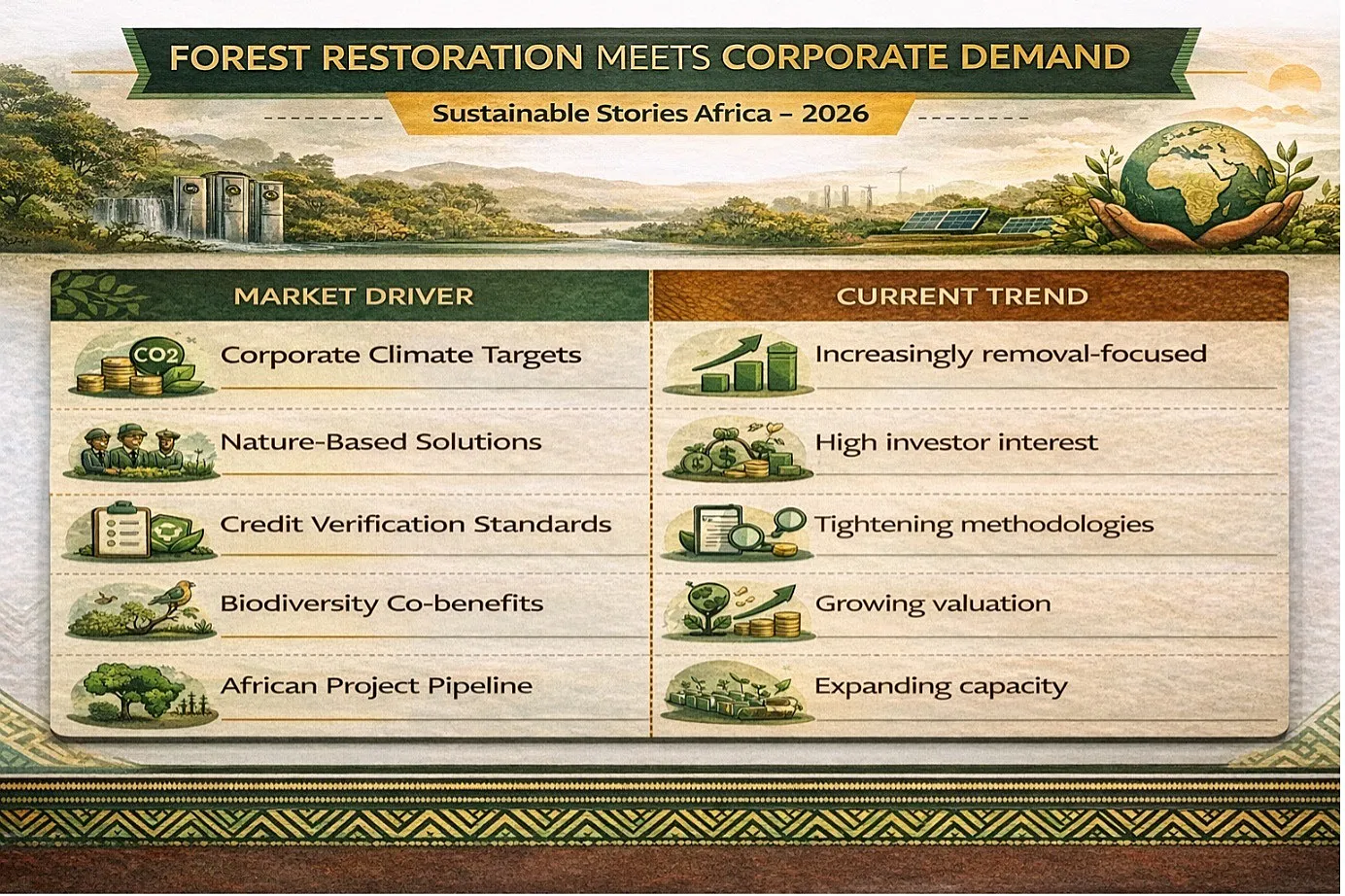
Microsoft’s transaction reflects this shift. Rather than relying on lower-cost avoidance credits, it is investing in higher-integrity removals that align with its long-term decarbonisation strategy.
For African developers, this raises the bar and expands opportunities. High-quality rainforest restoration projects can command premium pricing if backed by rigorous monitoring, reporting, and verification systems.
Integrity, Communities, Governance Central
While the deal strengthens Africa’s position in climate finance flows, experts caution that scale must not outpace safeguards.
Key concerns include:
- Permanence risk – Forest carbon must be protected from deforestation and fire.
- Benefit-sharing – Local communities must receive equitable economic returns.
- Regulatory clarity – Host governments must align carbon markets with national climate strategies.
- Transparency – Independent verification remains critical to market credibility.
For policymakers, the deal reinforces the need to formalise carbon registries, land tenure protections, and revenue frameworks. For communities, it presents both economic opportunity and governance risk.
Corporate buyers are increasingly scrutinising social safeguards as part of ESG disclosure frameworks. As global disclosure standards tighten, African carbon projects must meet international reporting benchmarks.
Path Forward – Scaling With Safeguards and Structure
African rainforest carbon markets are entering a capital-intensive growth phase. The priority now is institutional strength: clarity of land rights, transparent registries, and durable monitoring frameworks.
Microsoft’s deal demonstrates confidence, but sustainable scale will depend on regulatory alignment, community inclusion, and high-integrity verification that positions Africa not just as a carbon supplier, but as a climate governance leader.
Culled From: Microsoft Signs 1.8 Million Ton Carbon Removal Deal to Restore African Rainforest