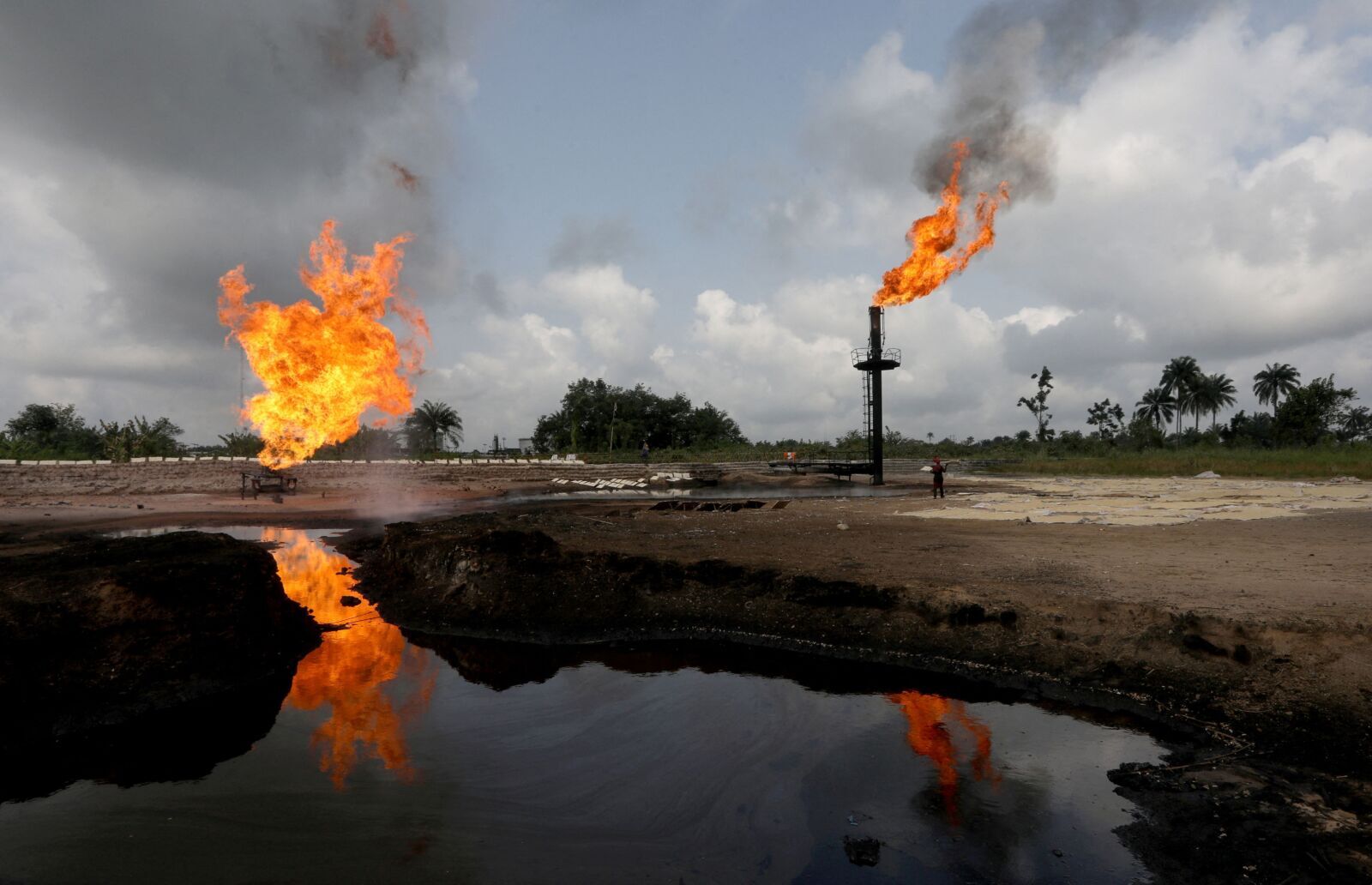
Nigeria and South Africa are accelerating fossil fuel development to secure energy supply and boost revenues. But their plans are colliding with climate commitments made under the Paris Agreement.
New gas fields, oil licensing rounds and coal-reliant power strategies could lock both countries into carbon-intensive pathways for decades.
As global investors shift toward cleaner energy, Africa's two largest economies now face a credibility test: can they balance development goals with climate responsibility?
Fossil expansion meets climate reality
Nigeria and South Africa, Africa's two largest economies, are pushing ahead with expanded fossil fuel production, despite both countries having pledged to cut emissions under international climate agreements.
Nigeria is promoting gas development as a "transition fuel," while South Africa continues to rely heavily on coal for electricity use. Together, these strategies risk increasing long-term emissions and undermining climate credibility at a time when global finance is shifting away from carbon-intensive assets.
Energy security, job creation, and revenue pressures are driving these decisions. However, climate experts warn that locking in new fossil infrastructure today could expose both countries to future economic and environmental risks.
Energy security versus climate commitments
Nigeria plans to expand its gas production through new licensing rounds, pipeline projects, and the development of export infrastructure. Officials argue that gas will replace dirtier fuels like diesel and biomass, while supporting industrial growth and export earnings.
South Africa, meanwhile, remains heavily dependent on coal, which still generates most of its electricity. Despite renewable energy plans, new coal projects and delayed plant retirements continue to shape the country's energy mix.
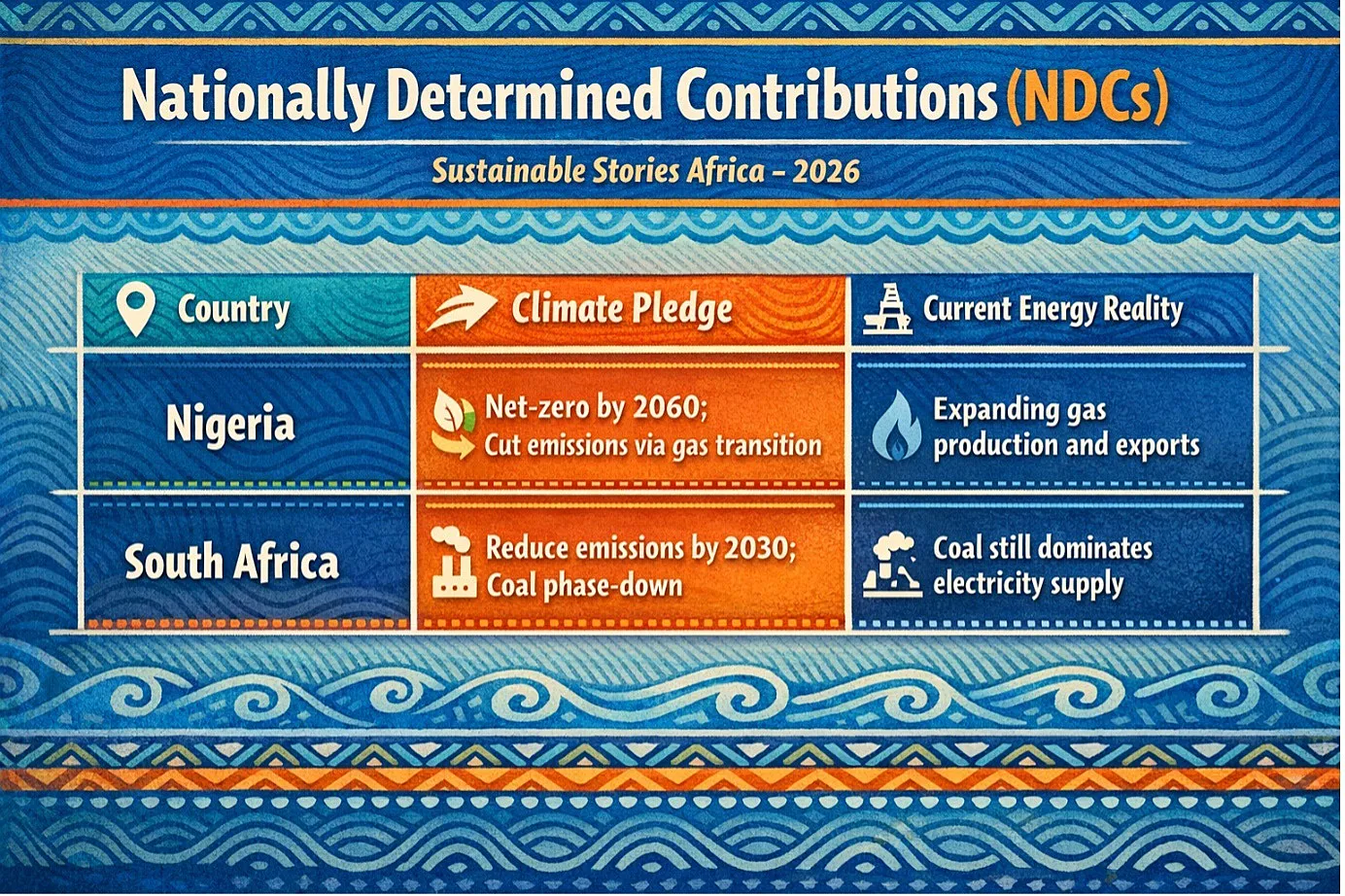
However, both countries have committed to climate targets under their Nationally Determined Contributions (NDCs):
| Country | Climate Pledge | Current Energy Reality |
|---|---|---|
| Nigeria | Net-zero by 2060; cut emissions via gas transition | Expanding gas production and exports |
| South Africa | Reduce emissions by 2030; coal phase-down | Coal still dominates electricity supply |
Critics argue that new fossil fuel investments risk creating "carbon lock-in," long-lasting infrastructure that makes future decarbonisation harder and more expensive.
International pressure is also growing. Development banks and climate funds are increasingly reluctant to finance fossil fuel projects, favouring renewables, energy efficiency, and climate-resilient infrastructure.
Short-term gains, long-term risks
Both governments face difficult trade-offs.
For Nigeria, gas offers revenue, foreign exchange, a cleaner transition fuel, and industrial growth. For South Africa, coal remains a stabilising force in an electricity system plagued by power shortages.
But climate analysts warn that fossil fuel expansion could:
- Increase exposure to stranded asset risks
- Weaken access to climate finance
- Undermine investor confidence in ESG commitments
- Worsen air pollution and health costs
- Delay renewable energy scale-up
As global carbon markets, green bonds, and climate finance grow, countries that are taking steps back on climate promises may face higher financing costs and reduced investor trust.
Rethinking Africa's energy pathways
Experts are calling for a more balanced energy strategy, one that protects energy security while accelerating clean energy investment.
Key recommendations include:
- Fast-tracking renewable energy deployment
- Investing in grid upgrades and storage
- Expanding energy efficiency programmes
- Redirecting subsidies toward clean technologies
- Strengthening climate policy enforcement
South Africa's Just Energy Transition Partnership (JETP) shows how international funding can support coal phase-down. Nigeria, too, has opportunities to attract climate finance for solar, gas-to-power efficiency upgrades, and clean cooking solutions.
The challenge is not abandoning development but aligning it with long-term climate resilience.
PATH FORWARD – Balancing growth with climate responsibility
Nigeria and South Africa face a defining energy crossroads. Fossil fuels still offer economic stability, but climate risks are rising fast.
Aligning national energy plans with climate commitments will require quicker renewable investment, clearer policy signals, and stronger accountability frameworks.
The future of Africa's energy leadership now depends on whether development and decarbonisation can move forward together, not in conflict.