
Nigeria's not-for-profit sector entered a new governance era with the rollout of the 2023 Code of Governance for Not-For-Profit Organisations (NFPGC).
The framework introduces principle-based accountability, board reforms, transparency rules, and sustainability requirements for charities, faith groups, trade unions, and civil society organisations.
Experts say the Code could strengthen public trust if boards move from symbolic compliance to measurable governance performance.
A New Governance Standard Emerges
Nigeria unveiled the Code of Governance for Not-For-Profit Organisations (NFPGC) 2023, a national framework designed to strengthen accountability, transparency, and public trust across the not-for-profit sector.
Developed by a Technical Working Group under the Ministry of Industry, Trade and Investment, the Code applies to charities, educational institutions, religious groups, trade unions, political organisations, and social associations, among others. The Minister may also expand the list over time.
The goal, policymakers say, is to restore confidence in how donations, grants, and public resources are managed.
What the Code Requires
The NFPGC adopts a principle-based "Apply or Explain" approach, meaning organisations must either comply with its standards or clearly explain how they are meeting governance expectations.
Participating organisations must publish an Annual Governance Statement within their financial reports, outlining their commitment to the Code and the steps taken to implement it.
The framework includes 12 core governance principles, applicable to all organisations, with tailored guidelines based on size: Micro, Small, Medium, or Large.
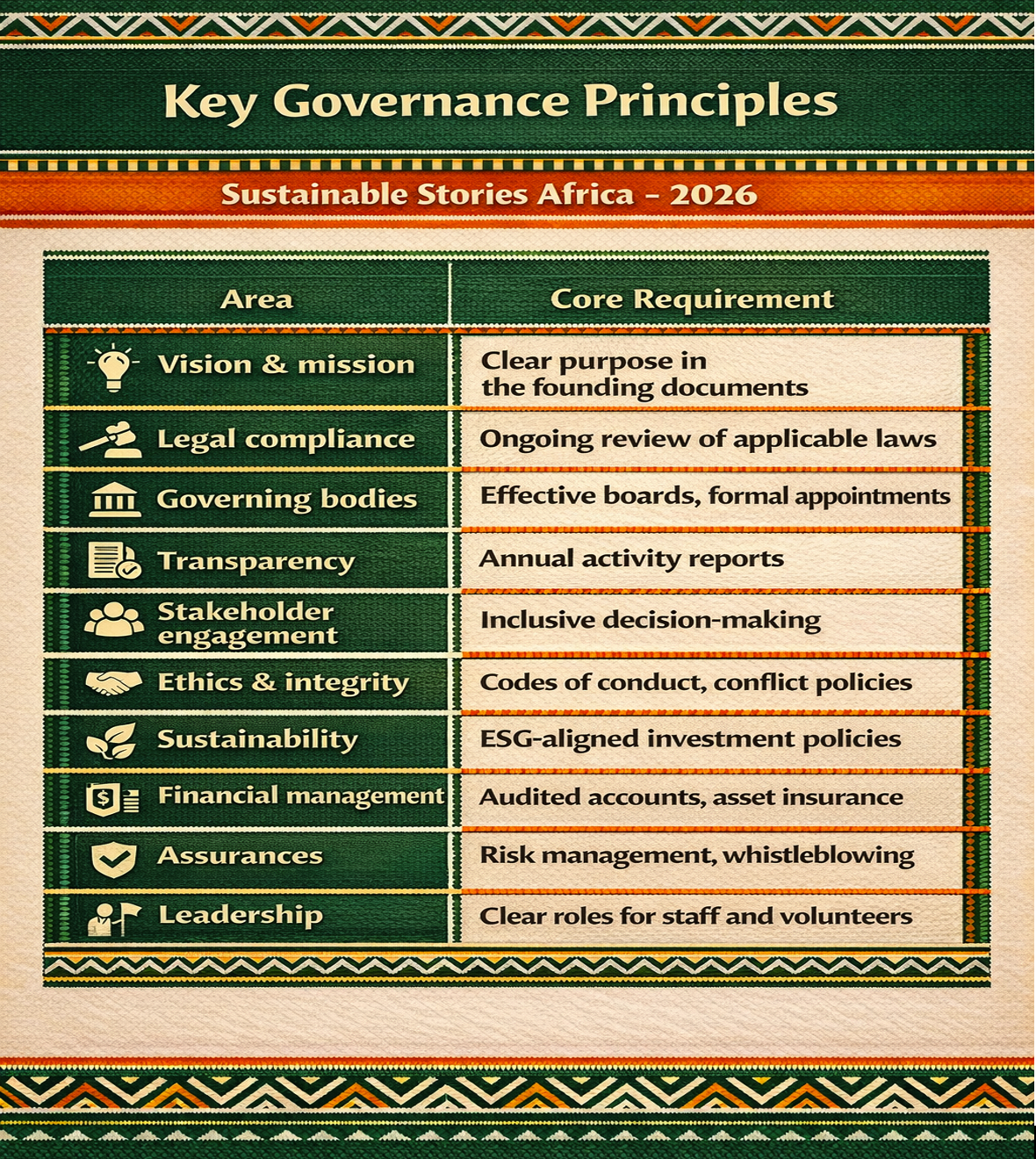
Key Governance Principles
| Area | Core Requirement |
|---|---|
| Vision & mission | Clear purpose in the founding documents |
| Legal compliance | Ongoing review of applicable laws |
| Governing bodies | Effective boards, formal appointments |
| Transparency | Annual activity reports |
| Stakeholder engagement | Inclusive decision-making |
| Ethics & integrity | Codes of conduct, conflict policies |
| Sustainability | ESG-aligned investment policies |
| Financial management | Audited accounts, asset insurance |
| Assurances | Risk management, whistleblowing |
| Leadership | Clear roles for staff and volunteers |
Boards Take Centre Stage
Under the Code, boards are responsible for strategic leadership and oversight.
Key rules include formal appointment letters for directors, separation of executive and oversight roles, and mandatory attendance at board meetings.
Non-Executive Directors must bring relevant expertise and avoid day-to-day management.
Boards must also establish Finance, Audit & Risk as well as Nomination & Governance committees, and conduct biennial performance evaluations, externally facilitated every four years.
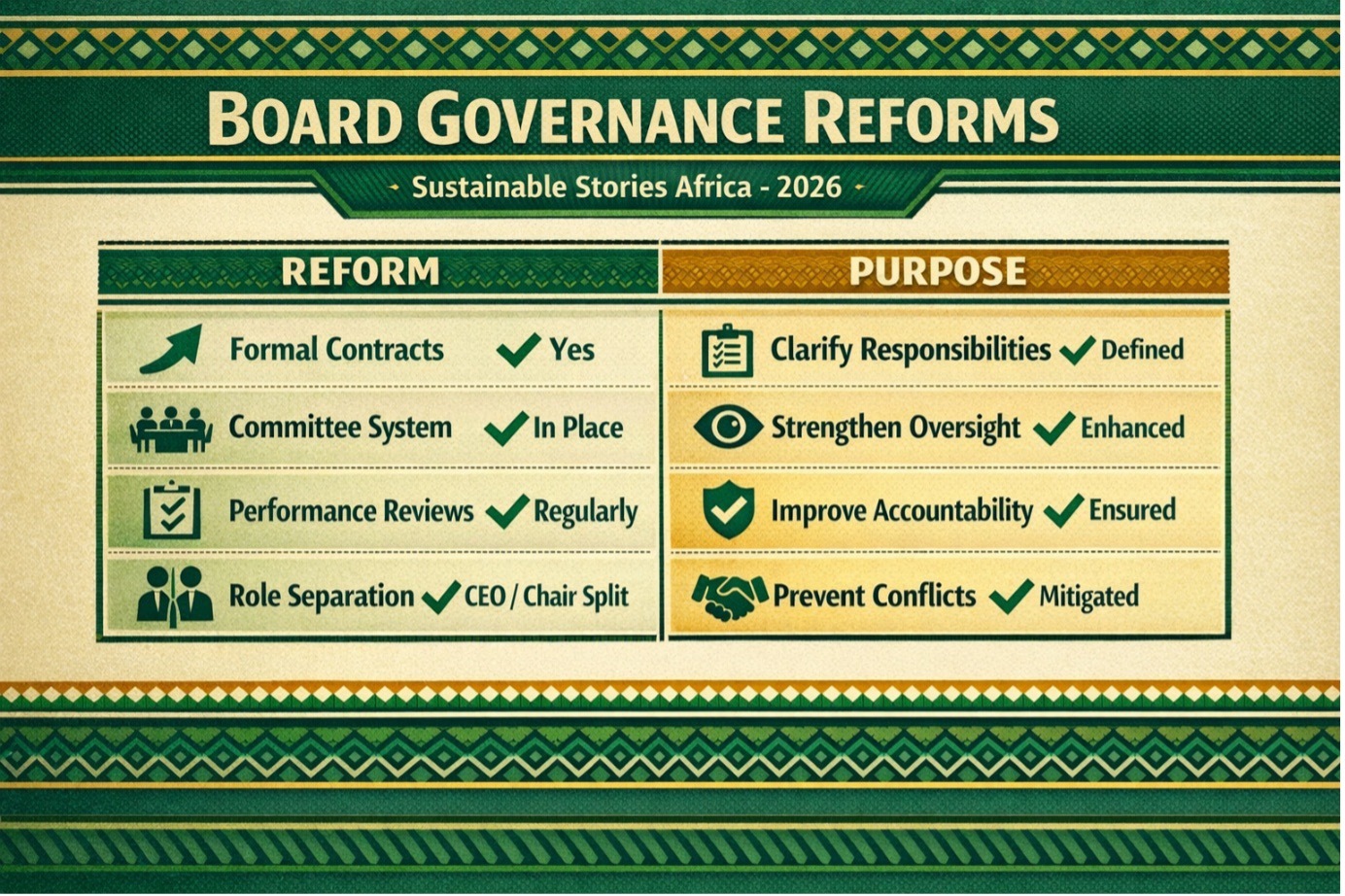
Board Governance Reforms
| Reform | Purpose |
|---|---|
| Formal contracts | Clarify responsibilities |
| Committee system | Strengthen oversight |
| Performance reviews | Improve accountability |
| Role separation | Prevent conflicts |
Transparency, Ethics, and Sustainability
The NFPGC places strong emphasis on transparency, ethics, and long-term sustainability.
Boards must publish comprehensive annual activity reports and engage stakeholders through Q&A processes. Compliance reports to regulators such as the CAC and FIRS must be reviewed by the board.
Organisations are also required to adopt Codes of Business Conduct, policies on insider dealings, and conflict-of-interest controls. Sustainability policies must integrate environmental, social, and governance (ESG) considerations into investments and operations.
Fundraising must remain transparent, and reserve policies must be disclosed. All assets should be insured, and financial statements audited annually.
PATH FORWARD – Building Trust Through Governance
The NFPGC marks a major step toward stronger governance in Nigeria's not-for-profit sector. By enforcing transparency, accountability, and sustainability, the Code aims to rebuild public trust among donors, beneficiaries, and regulators.
Its success will depend on consistent implementation, independent oversight, and whether boards adopt governance as a culture, not just a compliance exercise.
Culled From: Key-Highlights-of-the-NFPGC-final.pdf