Chad is charting an ambitious energy transition, aiming to close one of Africa's lowest electricity access gaps while bolstering climate resilience and diversifying its economy.
A Nation at the Energy Crossroads – Powering Chad's Sustainable Future
Chad sits at the heart of Africa with vast renewable energy potential, yet it remains one of the world's most energy-poor countries.
Only 12% of the population has access to electricity, and just 10% have access to clean cooking, far below the sub-Saharan African average of 48%.
Despite being an oil producer since 2003, Chad's power sector is dominated by 95% fossil-fuel generation, with just 113 MW of usable capacity from an installed capacity of 184 MW.
Electricity production reached only 598 GWh in 2023, leaving most households and businesses underserved.
At the same time, Chad is among the world's most climate-vulnerable countries, ranked 187 out of 187 in global vulnerability assessments.
Climate shocks, from prolonged droughts to recurrent floods and advancing desertification, are already eroding agricultural productivity, straining water security and disrupting livelihoods across communities.
Now, a new energy transition blueprint led by the government and IRENA aims to turn these challenges into an opportunity for inclusive, low-carbon growth.
Energy Poverty Meets Climate Risk
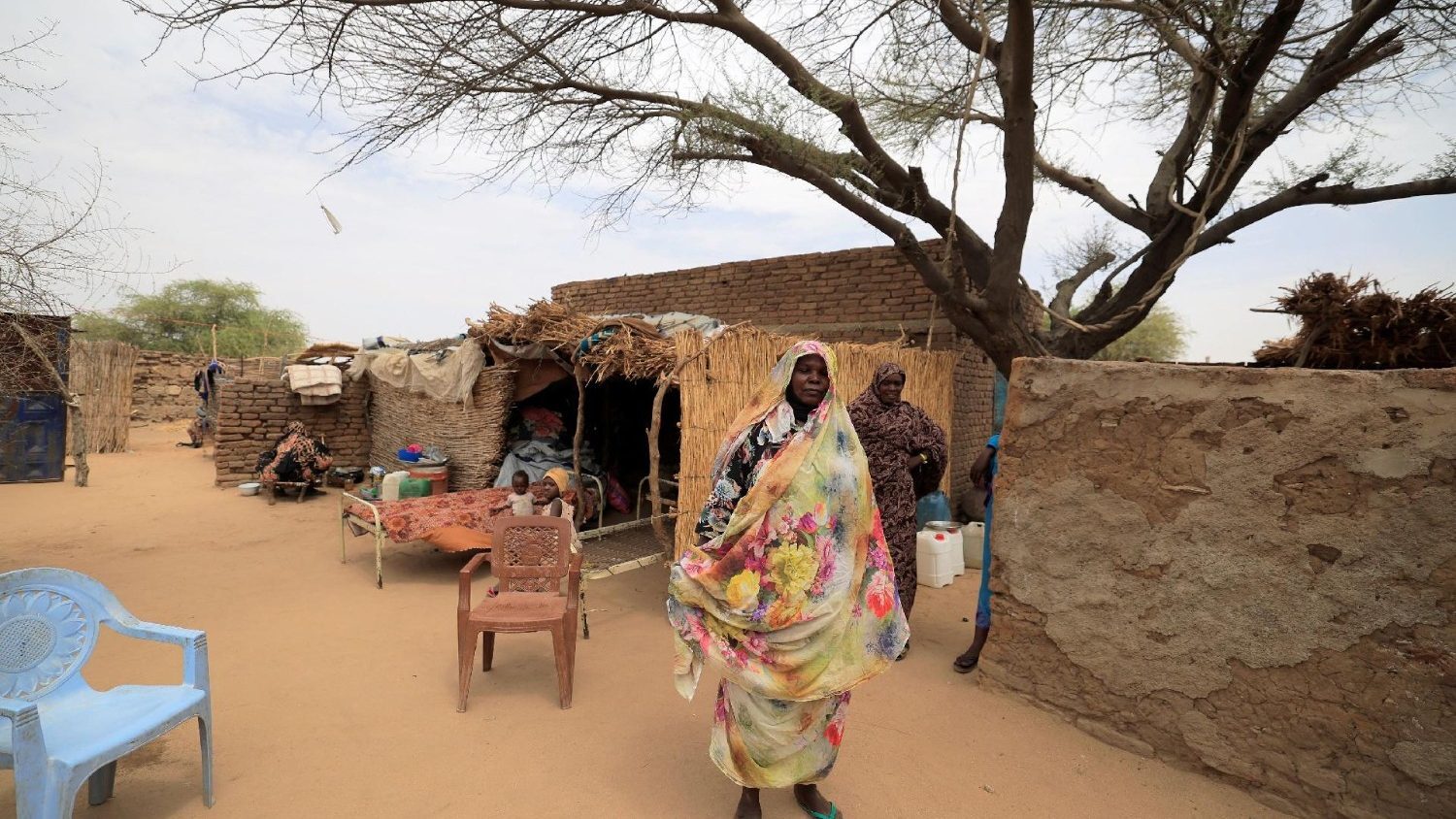
Chad's energy crisis is both a development challenge and a climate risk. Traditional biomass still dominates household energy use, fuelling deforestation, worsening indoor air pollution and heightening public health concerns.
Meanwhile, fossil fuel–based power generation leaves the country vulnerable to volatile fuel prices and expensive electricity imports.
However, Chad's renewable potential is extraordinary:
- Solar potential: 80 GW
- Wind potential: 59 GW
- Hydropower potential: 1.8 GW
Solar irradiation reaches between 1,900 and 2,500 kWh/m² annually, with up to 3 750 peak sun hours in northern regions, among the highest in Africa.
Wind speeds average 7 m/s at 100 metres, peaking at 14 m/s in the Sahara regions of Borkou and Tibesti.
These resources could dramatically cut electricity costs, improve energy security, and reduce dependence on oil—if properly harnessed.
Where Chad's Energy System Stands
Most electricity access is concentrated in N'Djamena, where around one-third of residents are connected to the grid.
In secondary cities and rural areas, access falls below 10%. Even in the capital, supply is unreliable and insufficient to meet growing demand.
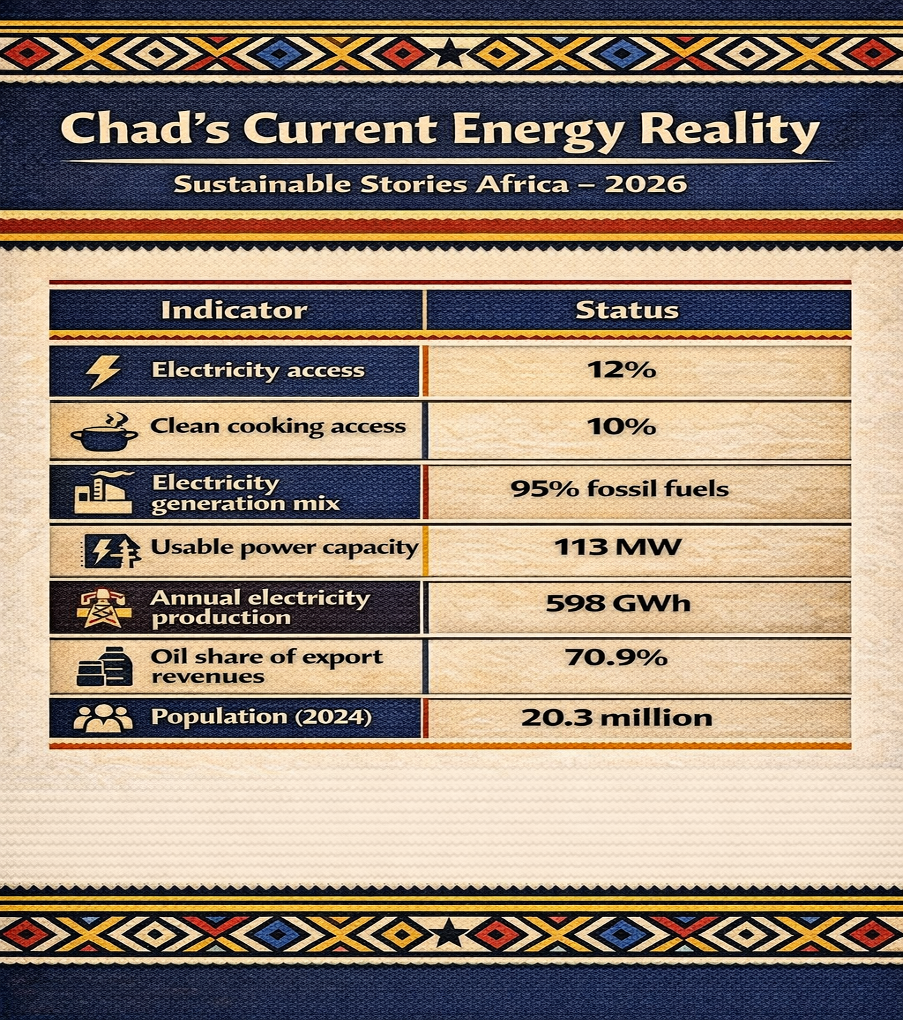
Chad's Current Energy Reality
| Indicator | Status |
|---|---|
| Electricity access | 12% |
| Clean cooking access | 10% |
| Electricity generation mix | 95% fossil fuels |
| Usable power capacity | 113 MW |
| Annual electricity production | 598 GWh |
| Oil share of export revenues | 70.9% |
| Population (2024) | million |
Recognising this, Chad has adopted several strategic frameworks:
- National Energy Compact (2024) – Targets 90% electricity access, 46% clean cooking access, and 30% renewables by 2030.
- Chad Connexion 2030 – Aims for 60% national electrification and 20–30% renewables in the energy mix.
- Electricity Law (2019) – Liberalised the power sector to attract private investment and strengthen regulation.
However, implementation has lagged due to regulatory delays, weak institutional capacity, and financial constraints.
Renewables as a Development Catalyst – Solar Power Takes Centre Stage
In 2025, Chad inaugurated its second utility-scale solar plant, Noor Chad (50 MWp) with battery storage, designed to supply power to about 274,000 households.
Together with the Dino plant (30 MWp), these projects signal the country's first major steps toward large-scale clean power generation.
These solar projects reduce reliance on imported fuel, stabilise power supply, and lower generation costs. Battery storage improves grid reliability, which is critical in Chad's weakly interconnected system.
Energy for Health, Agriculture and Industry
Decentralised solar is already delivering social impact. Under UNDP's Solar for Health (Santé Soleil) programme, 150 health centres across 23 provinces have been equipped with solar systems, providing reliable power for essential services which include medicine storage and maternity care.
In agriculture, renewable-powered irrigation, food processing, and cold storage can increase productivity and reduce post-harvest losses, vital for a sector that employs 75% of the population.
For the industry, renewable-energy industrial parks are being explored to support small and medium-sized enterprises (SMEs) that lack capital to build their own power systems.
Clean Cooking: A Missing Piece
Traditional biomass is still the primary cooking fuel. Biogas, improved cookstoves, and alternative fuels are viable but under-deployed due to cost, safety concerns, and weak supply chains.
IRENA recommends a national clean cooking strategy, supported by standards, local manufacturing, and innovative financing to reduce deforestation and improve public health.
What Must Change Now
To unlock its energy transition, Chad must move from strategy to execution. IRENA identifies key priorities:
- Strengthen power sector governance – Finalise Electricity Law decrees, clarify institutional roles, and stabilise the regulator's funding.
- Fix electricity tariffs and losses – Current tariffs ($0.15 – $0.22/kWh) are high, yet utilities recover only 50% of bills. Loss reduction is critical for financial sustainability.
- Accelerate rural electrification – Establish the Electricity Fund (FDE) to finance mini-grids and off-grid solar systems.
- Scale clean cooking solutions – Promote biogas, improved cookstoves, and alternative fuels with local business models.
- Mobilise climate finance – Chad estimates USD 6.7 billion is needed to implement NDC energy mitigation actions by 2030, mostly through international support.
- Develop critical minerals responsibly – Chad has lithium, cobalt, and rare earth potential, but needs a "just transition" mining strategy.
Path Forward – From Energy Poverty to Opportunity
Chad's energy transition is about more than megawatts; it is about jobs, health, food security, and climate resilience.
With abundant solar and wind resources, supportive policies, and international partnerships, the country can leapfrog fossil-fuel dependency and build a more inclusive energy future.