Nigeria's climate ambition is colliding with fiscal reality. While climate finance flows rose to $2.5 billion in 2021/22, the country faces an annual gap of over $27 billion, at a time when debt service absorbs more than 80% of federal revenues. The result is a growing mismatch between national climate promises and sub-national delivery.
This is the story of capital scarcity, institutional strain, and why Nigeria's climate future will be decided in states and cities as much as Abuja.
Nigeria's Climate Finance Stress Test
Nigeria stands at a defining juncture in its climate and development trajectory. As Africa's largest population centre and one of its biggest greenhouse gas emitters, the country's climate choices will shape regional outcomes for decades. Yet ambition is running ahead of balance sheets. Climate finance flows, though growing, remain marginal relative to needs, while fiscal pressures are tightening at both the federal and state levels.
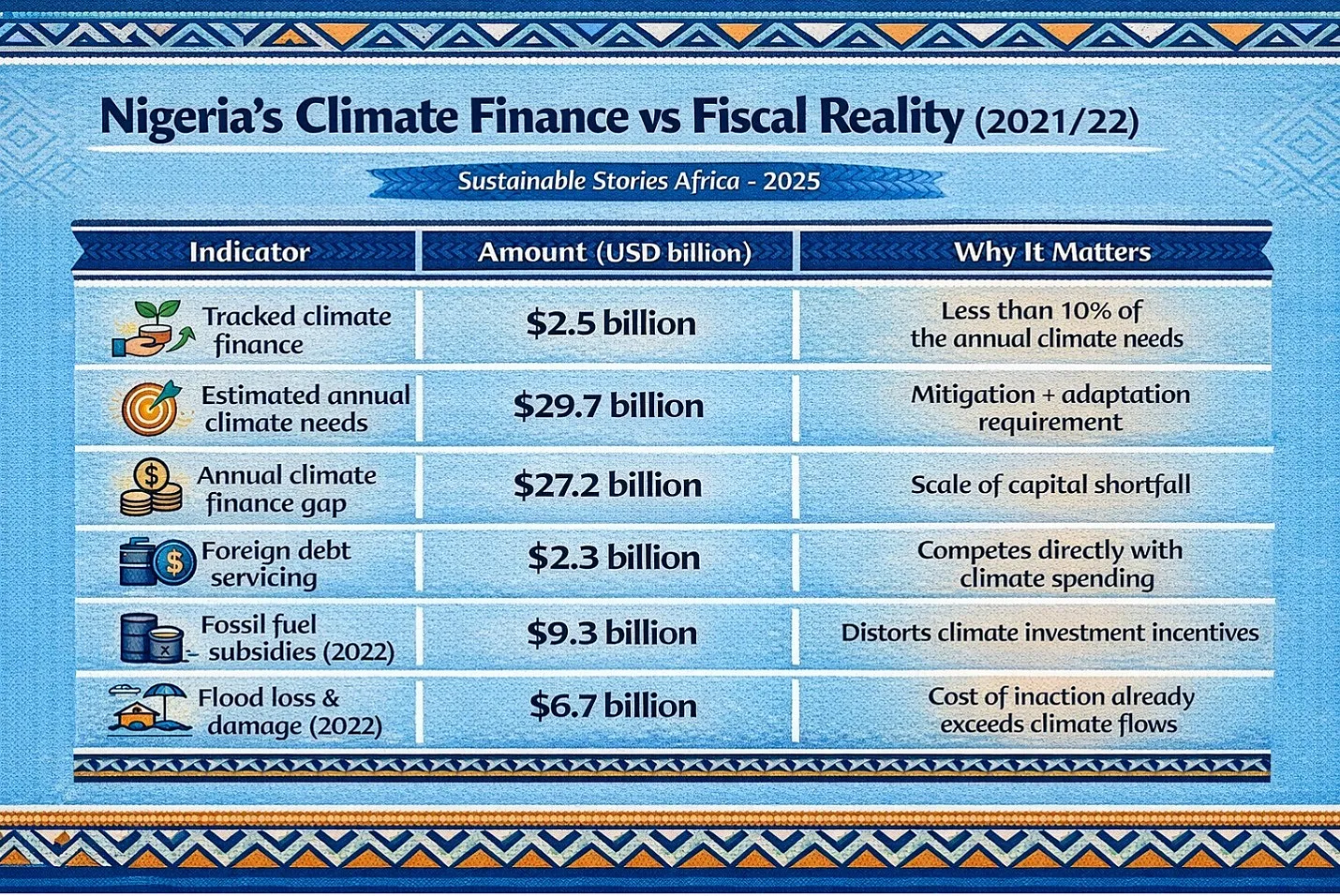
Between 2021 and 2022, Nigeria attracted an average of $2.5 billion annually for climate action, up 32% from previous years, but still less than 10% of the $29.7 billion required each year for mitigation and adaptation. At the same time, foreign debt servicing consumed roughly the same amount as total climate finance, underscoring the trade-offs confronting policymakers.
This tension is most visible below the federal level. While national plans increase, states – particularly Lagos – are increasingly the frontline of climate risk, infrastructure stress and financing gaps.
Nigeria's climate finance challenge is therefore not only about scale, but about fiscal realism and where capital can actually land.
Climate Ambition Meets Fiscal Constraint
Nigeria's climate narrative is often framed around long-term transition plans and net-zero targets.
Less visible is the fiscal squeeze shaping what is feasible. In 2021/22, climate finance represented less than 1% of GDP, dwarfed by $9.3 billion in fossil fuel subsidies and $6.7 billion in climate-related flood losses in a single year.
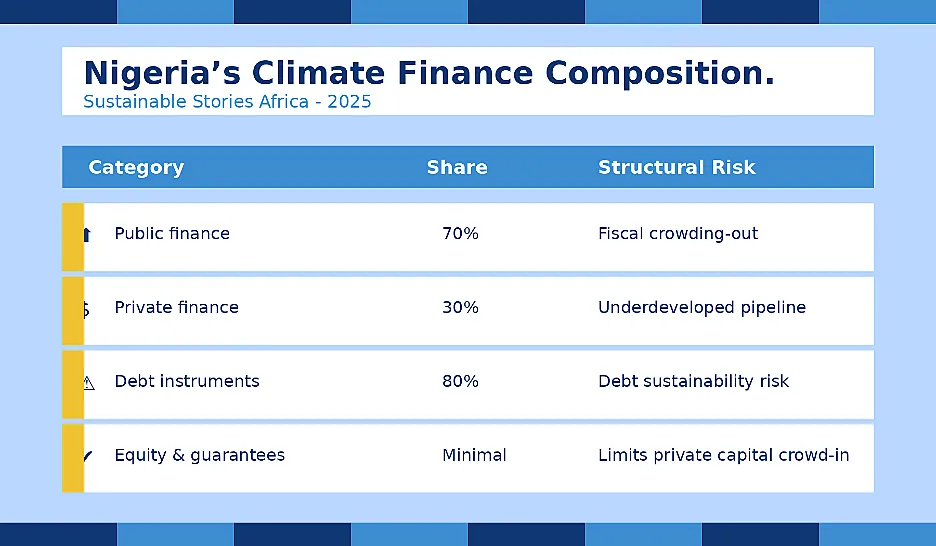
Public actors provided 70% of climate finance, mostly as debt from multilateral development banks. This reliance on borrowing raises hard questions in a country where debt service already crowds out social and capital spending. Climate finance, in practice, is competing with fiscal survival.
Nigeria's Climate Finance vs Fiscal Reality (2021/22)
| Indicator | Amount (USD billion) | Why It Matters |
|---|---|---|
| Tracked climate finance | $2.5 billion | Less than 10% of the annual climate needs |
| Estimated annual climate needs | $29.7 billion | Mitigation + adaptation requirement |
| Annual climate finance gap | $27.2 billion | Scale of capital shortfall |
| Foreign debt servicing | $2.3 billion | Competes directly with climate spending |
| Fossil fuel subsidies (2022) | $9.3 billion | Distorts climate investment incentives |
| Flood loss & damage (2022) | $6.7 billion | Cost of inaction already exceeds climate flows |
SSA Insight: Climate finance is constrained less by ambition than by fiscal space.
Federal Plans, Sub-National Realities
Nigeria's climate architecture is heavily federal in design but has its major impacts through sub-national. States and cities bear responsibility for power distribution, transport, waste management, water systems and urban resilience; however, only a fraction of climate finance flows is received.
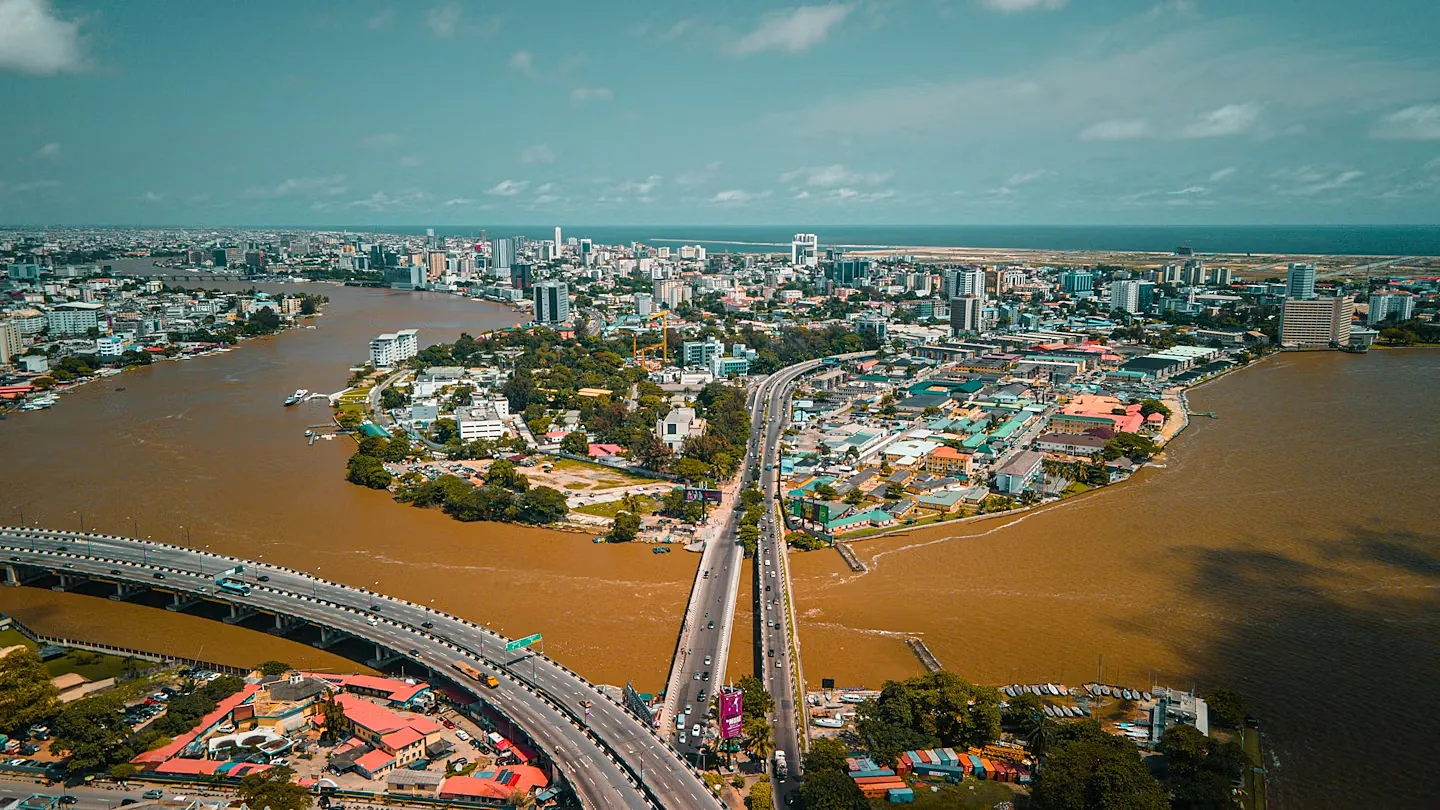
Lagos illustrates the paradox. As Africa's fastest-growing megacity, it faces acute flood risk, infrastructure deficits and adaptation needs that run into tens of billions of dollars by mid-century.
However, most climate finance tracked in Nigeria bypasses sub-national governments, flowing instead through federal channels or project-level debt structures.
Across states, weak balance sheets, limited creditworthiness, and low project preparation capacity constrain access to finance. Climate budget tagging remains embryonic, and few states have investment-ready pipelines aligned with national climate objectives.
Federal vs Sub-National Climate Finance Reality
| Dimension | Federal Level | States & Cities (e.g. Lagos) |
|---|---|---|
| Policy authority | High | Limited |
| Climate risk exposure | Indirect | Direct and immediate |
| Access to climate finance | Relatively higher | Severely constrained |
| Creditworthiness | Mixed but improving | Uneven, often weak |
| Project preparation capacity | Moderate | Low |
| Responsibility for delivery | Shared | Primary |
SSA Insight: Climate responsibility is decentralised, but finance is not.
Debt-Led Climate Finance Is Unsustainable
The current structure of Nigeria's climate finance is fiscally fragile. Over 80% of international public climate finance arrives mostly as concessional or market-rate debt. While suitable for mature mitigation assets, such as solar PV, debt-heavy financing is ill-suited to adaptation, urban resilience and social infrastructure.
Without decisive reforms, Nigeria could trade one crisis for another, replacing climate vulnerability with fiscal fragility. With limited headroom for its fiscal responsibilities at the federal level, future climate action must be increasingly enabled, rather than financed, by the Federal Government. This calls for stronger leadership from state governments and deeper engagement from markets.
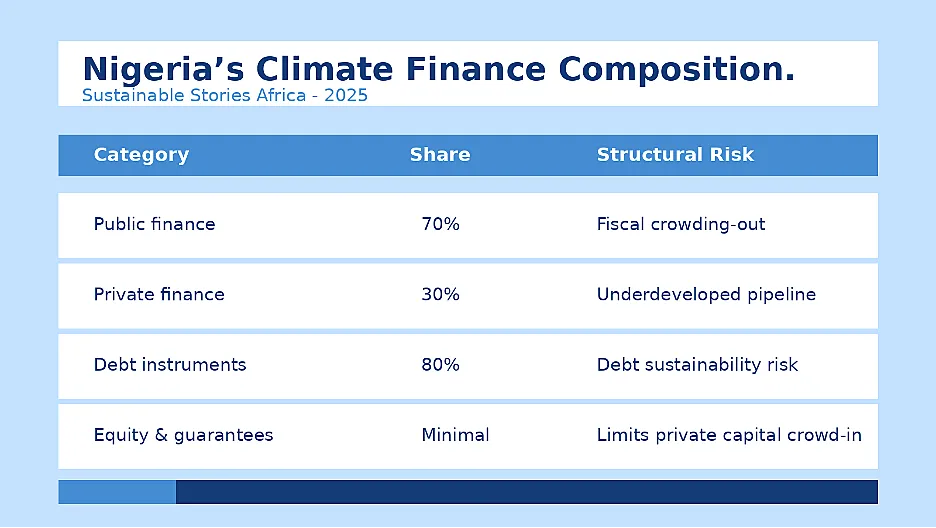
Nigeria's Climate Finance Composition
| Category | Share | Structural Risk |
|---|---|---|
| Public finance | 70% | Fiscal crowding-out |
| Private finance | 30% | Underdeveloped pipeline |
| Debt instruments | 80% | Debt sustainability risk |
| Equity & guarantees | Minimal | Limits private capital crowd-in |
SSA Insight: Nigeria's climate finance model is debt-heavy and adaptation-poor.
Rebalancing Finance Across Nigeria's Federation
Closing Nigeria's climate finance gap requires a pivot toward fiscal realism. This means expanding guarantees, local-currency instruments, green bonds and carbon finance tools that mobilise private capital without adding sovereign debt.
Equally critical is empowering states. Lagos and other large states should be able to generate dedicated climate finance windows, stronger project preparation facilities and clearer revenue frameworks to absorb capital. Climate finance must follow responsibility, not just federal policy.
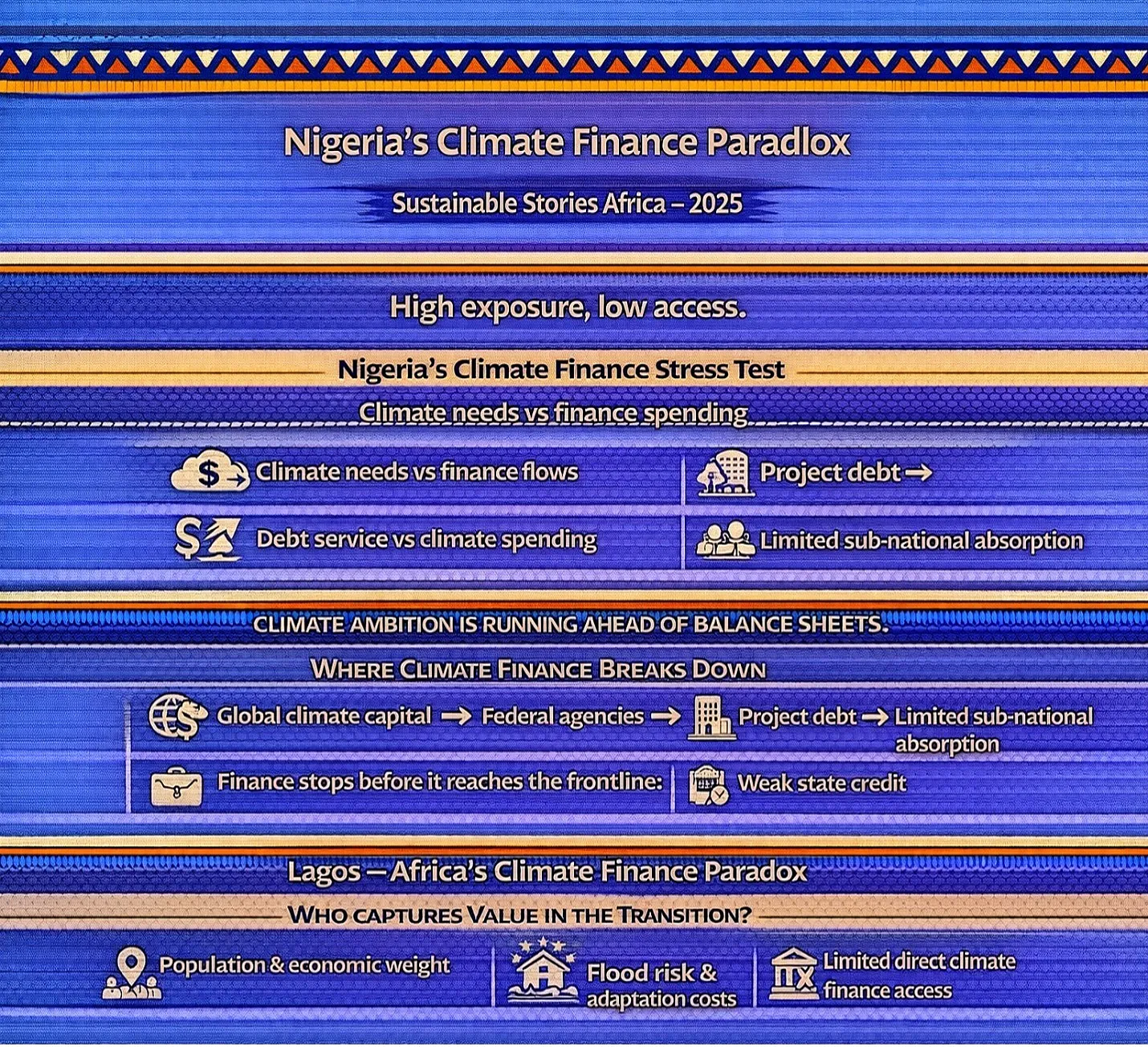
PATH FORWARD: Climate Finance Follows Fiscal Reality
Nigeria's climate future will be shaped by how honestly it confronts fiscal limits and how boldly it decentralises finance. Federal ambition must give way to sub-national execution, backed by private capital and risk-sharing instruments.
Climate finance will not scale through debt alone. It will scale where balance sheets, institutions and cities are strong enough to receive it.