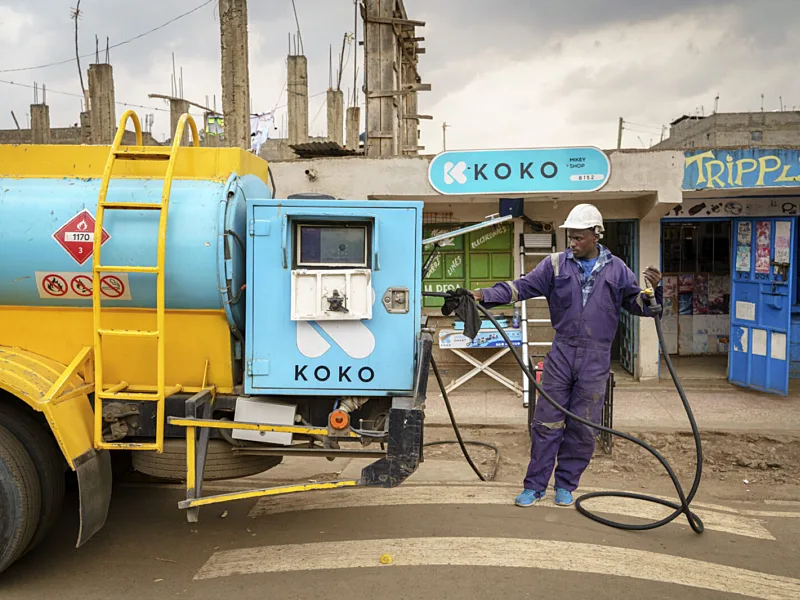
Africa's demographic and economic surge is redefining global power dynamics, with the continent outpacing growth expectations and reshaping strategic partnerships.
However, retreating aid, shifting alliances, persistent governance gaps, and financing bottlenecks highlight both opportunity and urgency.
As Africa moves toward the centre of global decision-making, the choices made today will determine whether it leads with agency or remains marginalised.
Demographic and Economic Ascent Meet New Global Dynamics
Africa has moved from the periphery toward the centre of 21st-century global affairs, driven by its rapid economic growth, urban expansion, and shifting international order.
In 2025, Africa was the world's fastest‐growing region and home to 11 of the 15 fastest-growing economies globally, a remarkable reversal of historical marginalisation.
By 2050, one in four people on Earth will be African and African cities will house nearly 1.4 billion people, fuelling consumption and economic potential projected at $16.1 trillion in private and consumer spending.
However, this ascent collides with tightening official development assistance (ODA), major donor countries reducing aid for the first time in decades, even as the continent's infrastructure, jobs, technology, and human capital needs deepen.
Seen through an inverted pyramid, at the apex is a continent reshaping its global role; below, structural gaps and strategic choices will define whether this window of opportunity yields sustained agency or renewed dependency.
Africa's Strategic Ascent in a Fragmented Order
Africa's growing clout is not merely economic; it is increasingly geopolitical and technological. Historic participation in forums like the G20 under South Africa's presidency has amplified African voices on debt reform, global finance, and investment rules.
The African Union's coordinated presence across global institutions, from the UN Security Council to trade and finance gatherings, demonstrates its growing influence and agency.
In digital transformation, mobile money penetration in Kenya reached 91% in 2025, a global leader demonstrating how technology catalyses financial inclusion and regional integration.
Artificial Intelligence and the Fourth Industrial Revolution opportunities could unlock tens of billions of dollars more in GDP if strategically harnessed.
However, amid these prospects, the global order is in flux. Traditional aid models are shrinking, multilateral commitments are wavering, and geopolitical competition among major powers, including the U.S., EU, China, and Gulf states, is reshaping Africa's options.
The Landscape of Opportunity and Risk
These trends reveal a continent simultaneously strong in economic momentum and vulnerable to external shocks.
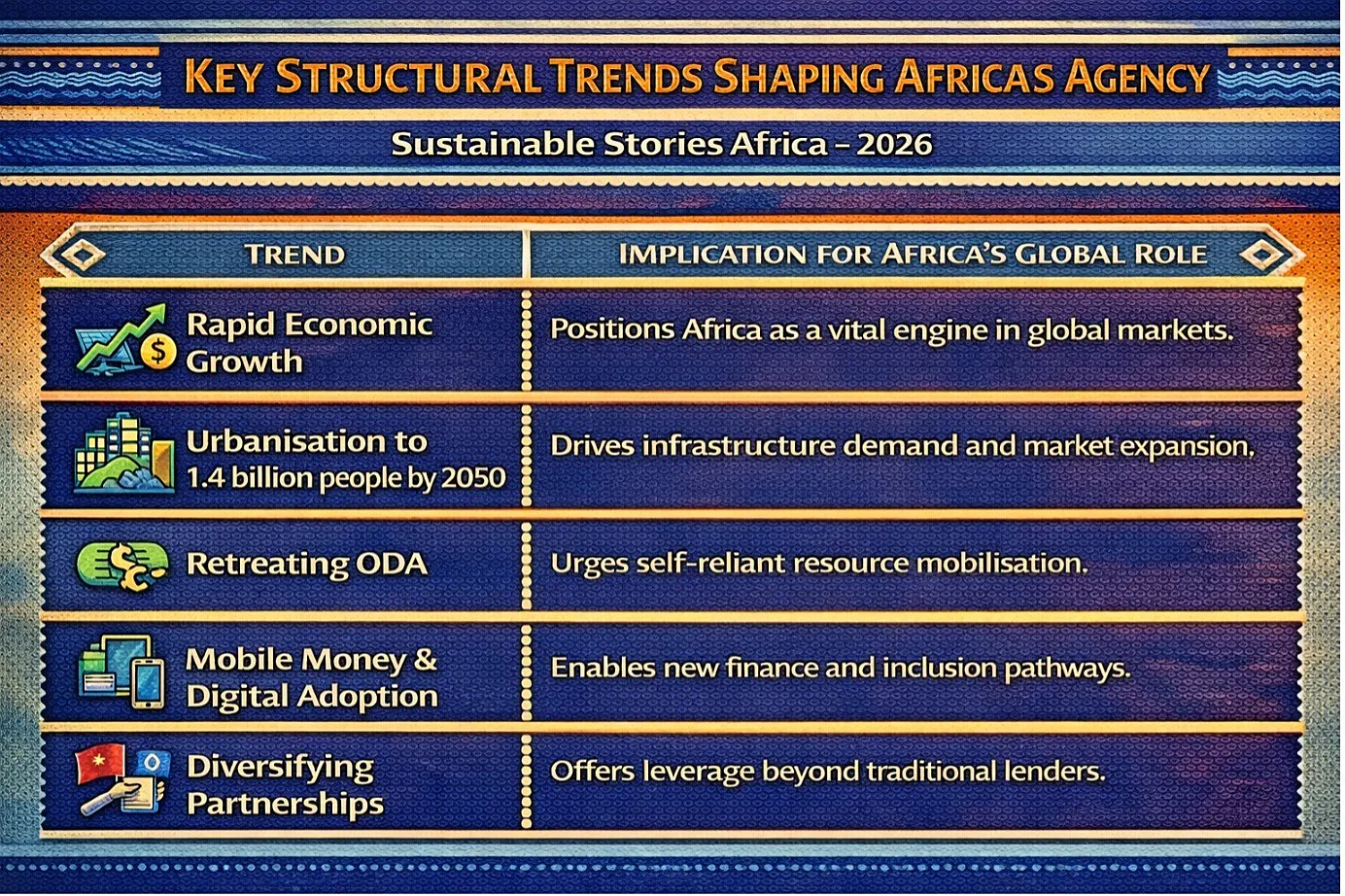
Key Structural Trends Shaping Africa's Agency
| Trend | Implication for Africa's Global Role |
|---|---|
| Rapid Economic Growth | Positions Africa as a vital engine in global markets |
| Urbanisation to 1.4 billion people by 2050 | Drives infrastructure demand and market expansion |
| Retreating ODA | Urges self-reliant resource mobilisation |
| Mobile Money & Digital Adoption | Enables new finance and inclusion pathways |
| Diversifying Partnerships | Offers leverage beyond traditional lenders |
These trends reveal a continent simultaneously strong in economic momentum and vulnerable to external shocks.
With ODA contracting, including cuts from key donors who historically accounted for nearly 65% of aid, Africa must turn inward for policy innovation and outward for strategic partnerships.
Structural Challenges in a Shifting World –
Despite its economic potential, Africa faces persistent financing and governance constraints. Average tax-to-GDP ratios remain low compared to its peers in the OECD, limiting domestic revenue mobilisation.
Dependence on concessional loans and traditional financing, rather than blended capital and local institutional investment, compresses fiscal space.
Moreover, governance variances remain stark across the continent, which is slowing implementation of its goals, thereby hampering coherent regional strategy, risks that could undermine influence if not carefully managed.
These structural considerations are not mere context but determinants of Africa's leverage in shaping global norms, whether on climate finance, trade rules, or digital economy governance.
Path Forward: Six – Unify Strategy, Mobilise Capital, Strengthen Agency
To capitalise on its demographic and economic rise, Africa must adopt a strategic agenda that blends domestic capacity building with unified global engagement.
Strategic Priorities for Africa's Global Leadership
| Priority | Actionable Focus |
|---|---|
| Resource Mobilisation | Improve tax systems, harness private capital |
| Regional Integration | Build coordinated security, trade and digital blocs |
| Technology & Innovation | Invest in AI, data governance, digital industry |
| Global Governance Reform | Push for equitable finance and representation |
| Strategic Partnerships | Leverage South-South cooperation and balanced diplomacy |
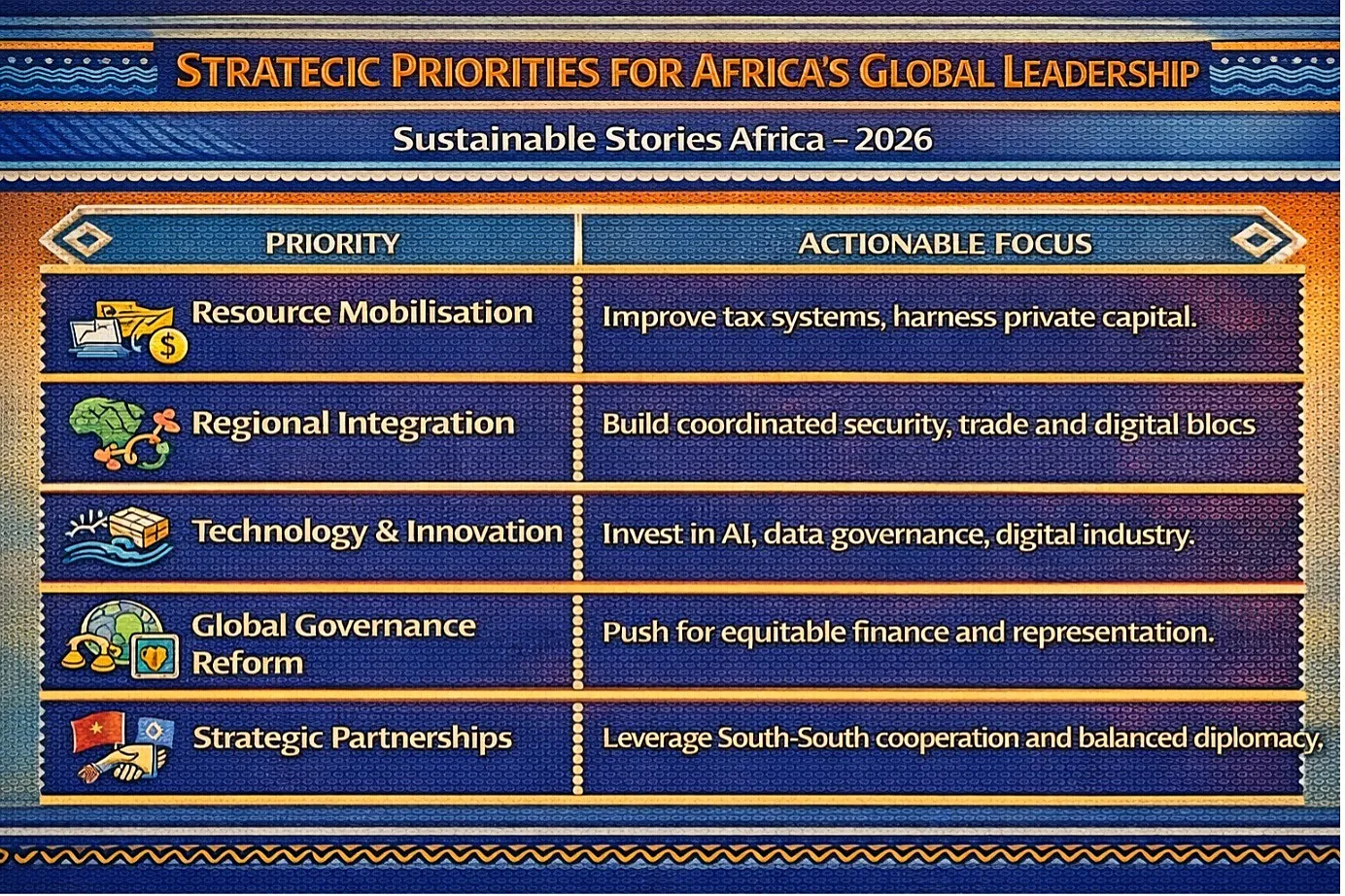
These priorities, drawn from Brookings and continent-wide consultations, underscore that agency grows from both internal strength and external coordination — not passive adaptation.
Prediction – Africa as a Global Game Changer
Looking into the coming decade, Africa's demographic dividend, digital transformation, and diversified diplomacy position the continent to redefine the global order.
However, the distance between potential and delivery depends on policy coherence, financing innovation, and unified continental leadership.
As global power balances shift amid weakening multilateral norms, Africa's moment is not a certainty but a strategic opportunity, one that could reshape global governance architecture, spur equitable finance reform, and give the continent a leading voice in the rules that govern international cooperation.
Culled From: https://www.brookings.edu/articles/africas-moment-to-shape-the-global-order/