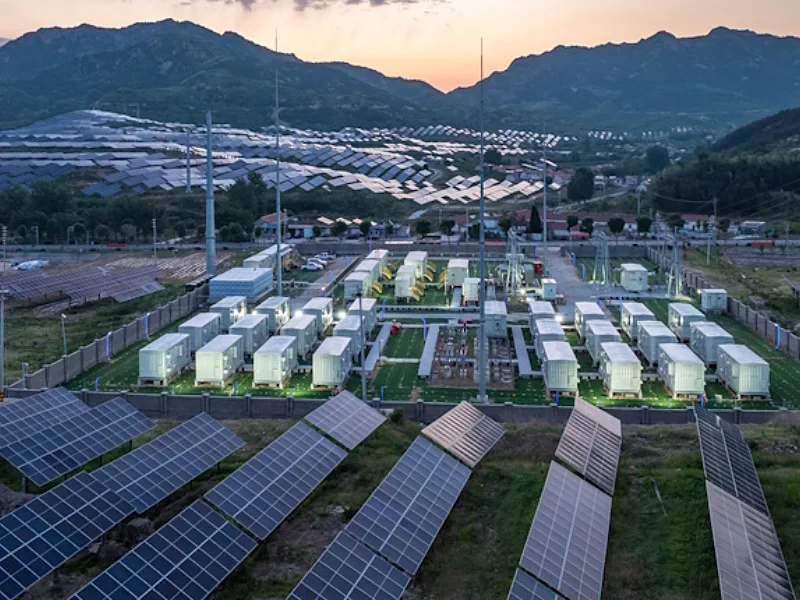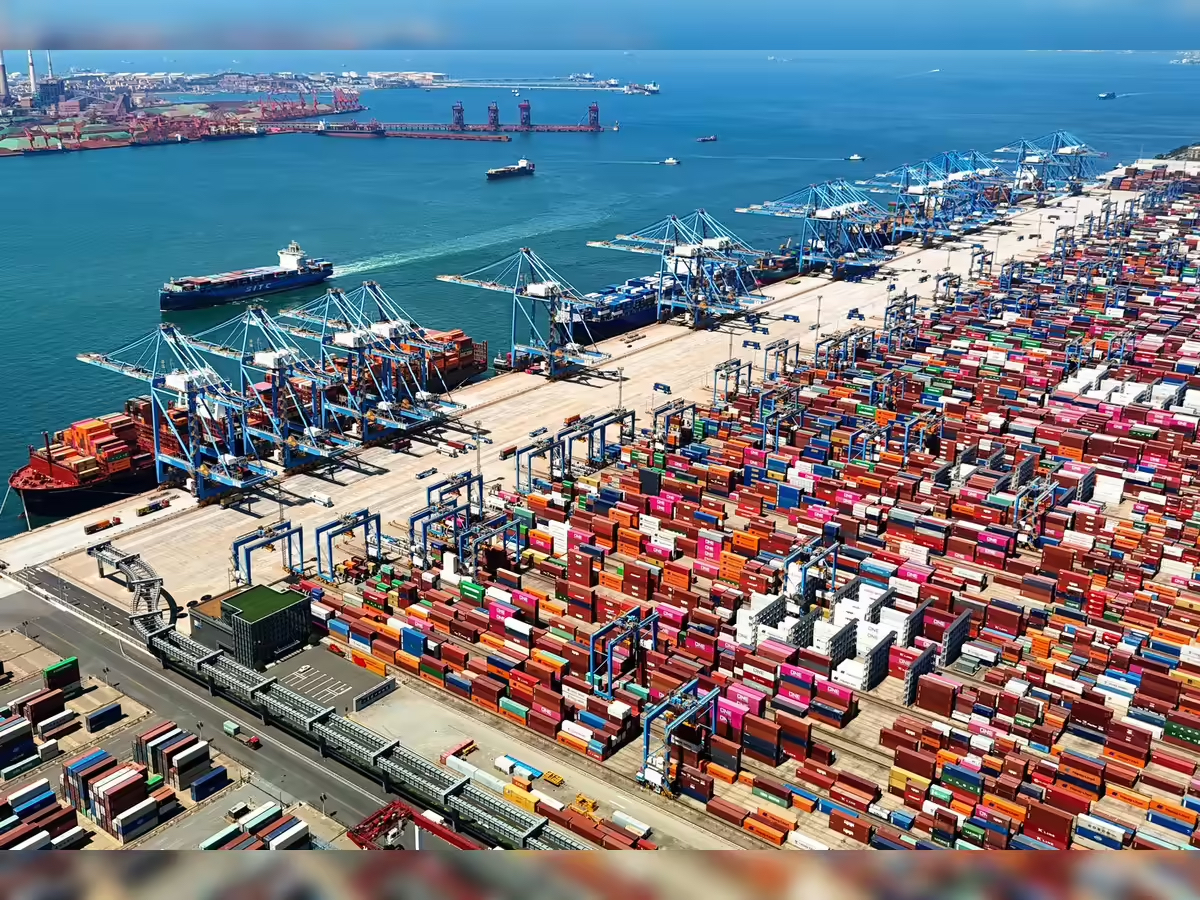
Ghana’s Tema Port has begun installing a 1.5-megawatt solar power system, marking a new step toward cleaner energy in Africa’s logistics sector.
Port authorities plan to scale the project to 6 megawatts, signalling a broader commitment to sustainable port operations.
The move reflects a growing trend across African transport hubs, where renewable energy is increasingly seen as essential to lowering costs, reducing emissions and powering the continent’s expanding trade networks.
Solar Power Arrives At Ghana’s Busiest Port
Ghana’s Tema Port has launched a 1.5-megawatt solar installation, with authorities already outlining plans to expand the project to 6 megawatts, as the country’s largest maritime gateway moves toward cleaner and more resilient energy systems.
The solar project is being deployed across available port infrastructure, including rooftops and operational facilities, and is expected to reduce reliance on grid electricity while cutting operational costs.
Tema Port, located about 25 kilometres east of Accra, handles the majority of Ghana’s international trade and serves as a key logistics hub for West Africa.
For port authorities, the investment reflects a broader shift in how infrastructure operators across Africa are responding to rising electricity costs, climate commitments and global supply chain sustainability standards.
“The future of port operations must be both efficient and sustainable,” one port official said during the project announcement. “Solar energy is becoming a practical solution for powering high-demand logistics infrastructure.”
Renewable Energy Gains Ground In African Ports
Ports are among the most energy-intensive facilities in global trade systems. From cargo handling equipment and lighting systems to cold storage and administrative operations, electricity demand at major ports can be significant.
In Africa, where energy reliability and costs remain pressing challenges, ports are increasingly exploring renewable energy to enhance operational resilience.
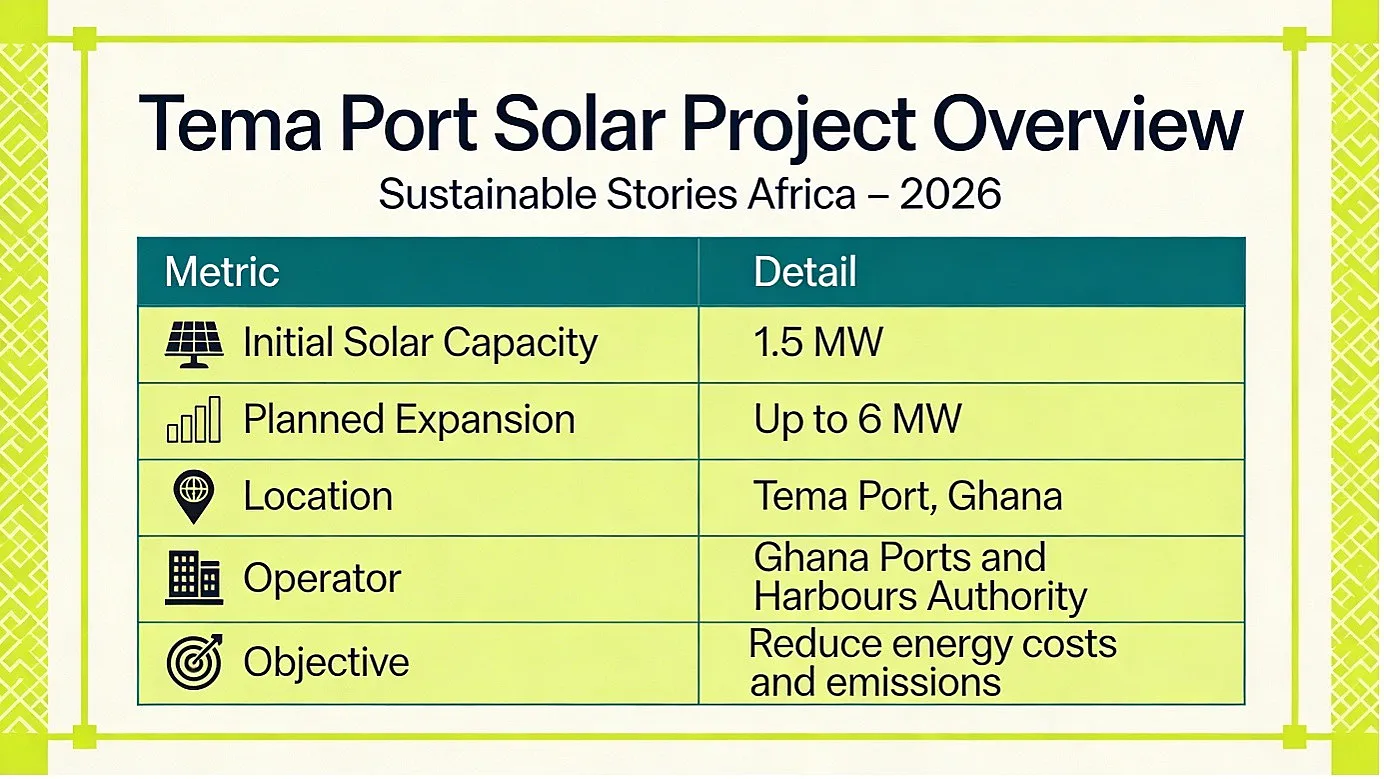
Tema Port Solar Project Overview
Metric | Detail |
|---|---|
Initial Solar Capacity | 1.5 MW |
Planned Expansion | Up to 6 MW |
Location | Tema Port, Ghana |
Operator | Ghana Ports and Harbours Authority |
Objective | Reduce energy costs and emissions |
The Tema initiative reflects a broader global movement toward green port infrastructure, in which renewable energy, electrification and digital technologies are integrated to improve sustainability.
Across Europe and Asia, ports such as Rotterdam and Singapore have introduced renewable energy systems to power logistics operations and reduce emissions from port activities.
African ports are now following similar pathways, driven by both environmental goals and economic considerations.
Energy analysts say solar installations are particularly attractive for ports with large rooftop areas and open spaces available for solar arrays.
Cleaner Ports Could Transform African Trade
The long-term benefits of renewable energy at ports extend far beyond electricity savings.
If successfully scaled, solar power at Tema Port could reduce carbon emissions associated with logistics operations while improving energy reliability.
Cleaner energy infrastructure also helps ports align with emerging global trade expectations, where sustainability standards increasingly influence supply chains.
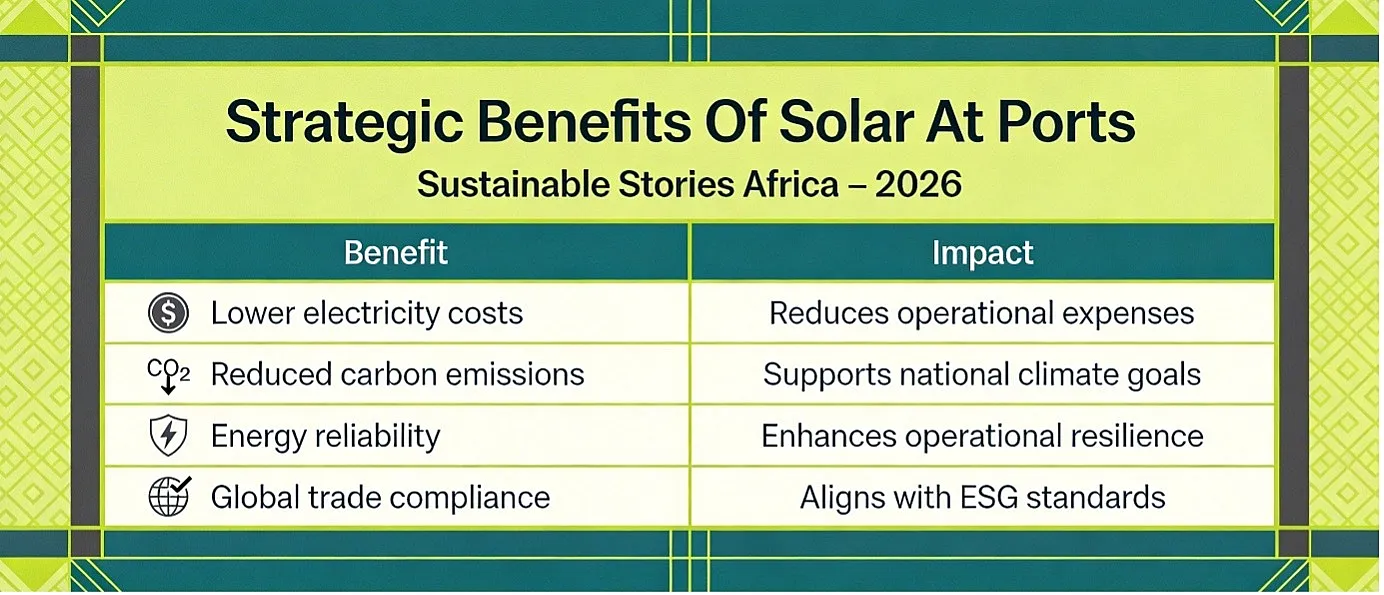
Strategic Benefits Of Solar At Ports
Benefit | Impact |
|---|---|
Lower electricity costs | Reduces operational expenses |
Reduced carbon emissions | Supports national climate goals |
Energy reliability | Enhances operational resilience |
Global trade compliance | Aligns with ESG standards |
For shipping companies and exporters, greener ports could strengthen Africa’s competitiveness in international markets where environmental performance is increasingly scrutinised.
In addition, renewable energy projects create opportunities for local engineering, installation and maintenance jobs, supporting broader economic development.
In Ghana, integrating renewable energy into key infrastructure such as ports aligns with national ambitions to expand clean energy capacity.
Scaling Renewable Infrastructure Across Logistics Hubs
Tema Port’s solar installation could become a model for other infrastructure projects across Africa.
Energy experts argue that transport infrastructure, from airports to rail terminals and industrial parks, represents a major opportunity for renewable energy deployment.
To scale these initiatives, policymakers and infrastructure operators may need to focus on several priorities:
- Expanding public-private partnerships for renewable energy infrastructure
- Integrating solar power into future port expansion plans
- Encouraging local renewable technology deployment and training
- Aligning infrastructure investment with national climate and ESG commitments
As Africa’s trade volumes continue to grow, ensuring that logistics infrastructure is both efficient and environmentally sustainable will become increasingly important.
For Ghana’s Tema Port, the solar project signals a practical step toward that future.
Path Forward – Greener Infrastructure For African Trade
Tema Port’s solar project highlights how renewable energy can strengthen the resilience and sustainability of Africa’s critical infrastructure.
If expanded successfully, similar initiatives across ports, airports and logistics hubs could help power the continent’s growing trade networks while advancing climate and ESG commitments.
Culled From: Ghana's Tema port begins 1.5 MW solar installation, eyes 6 MW expansion - Energy in Africa