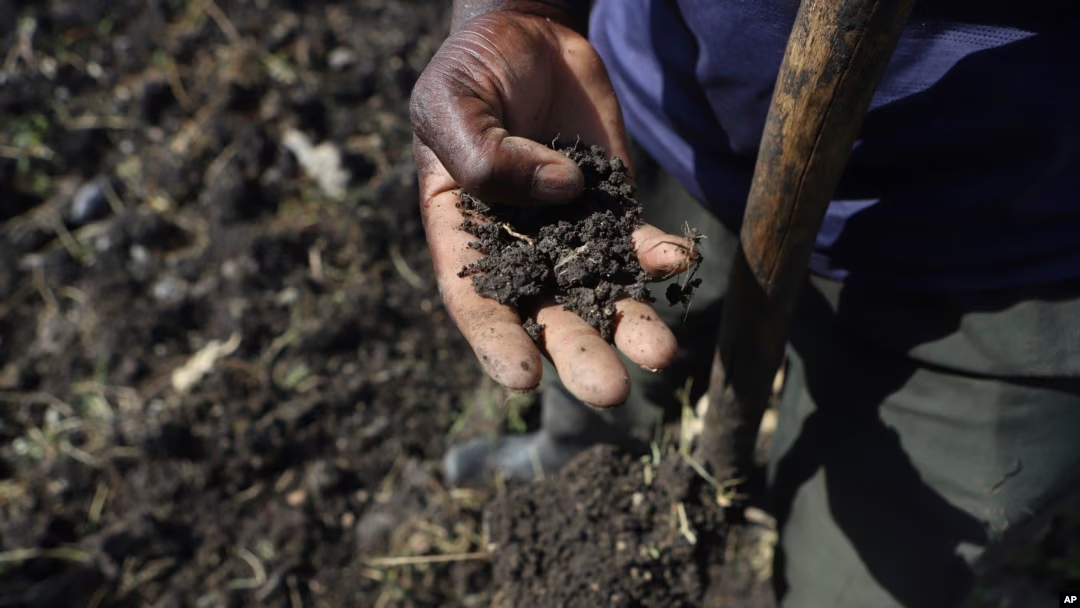
African governments are being urged to act quickly as fertiliser supply risks grow from disruptions around the Strait of Hormuz.
The warning comes as planting seasons advance, and food prices remain exposed to global energy and shipping shocks.
For smallholder farmers, delayed fertiliser could mean lower yields, higher food costs and deeper pressure on household resilience.
Fertiliser Risk Now Threatens Harvests
A disruption in a distant shipping lane could soon show up in African markets as thinner harvests, higher food prices and deeper pressure on households already stretched by inflation.
African governments are being urged to take urgent action on fertiliser shortages as uncertainty around the Strait of Hormuz slows shipments and threatens supplies of ammonia, urea, phosphate, sulphur and other inputs needed by farmers.
The warning was raised in a recent commentary by Martin Fregene and Chakib Jenane, who argued that the conflict involving the United States, Israel and Iran is disrupting global fertiliser trade flows at a dangerous moment for Africa’s food systems.
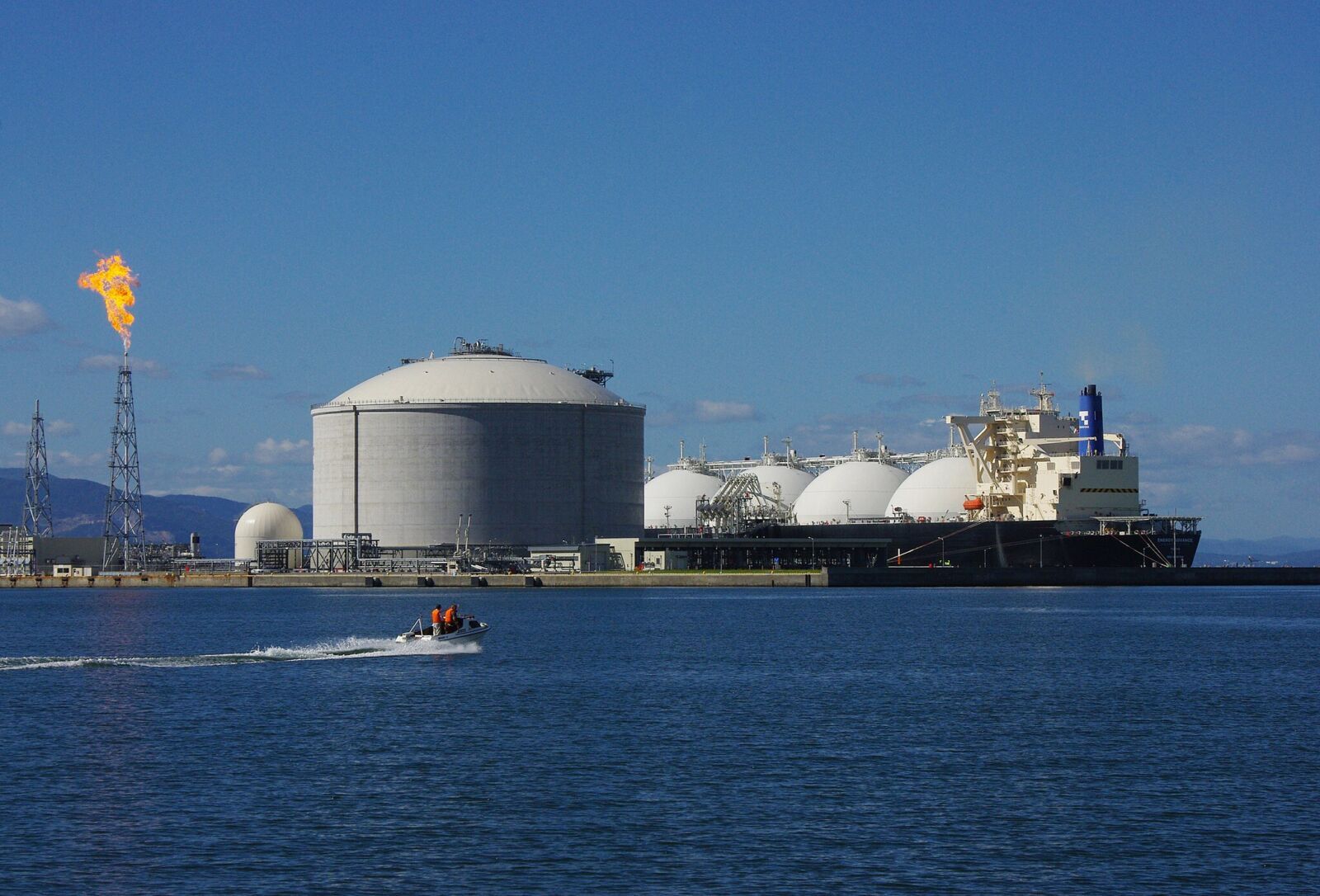
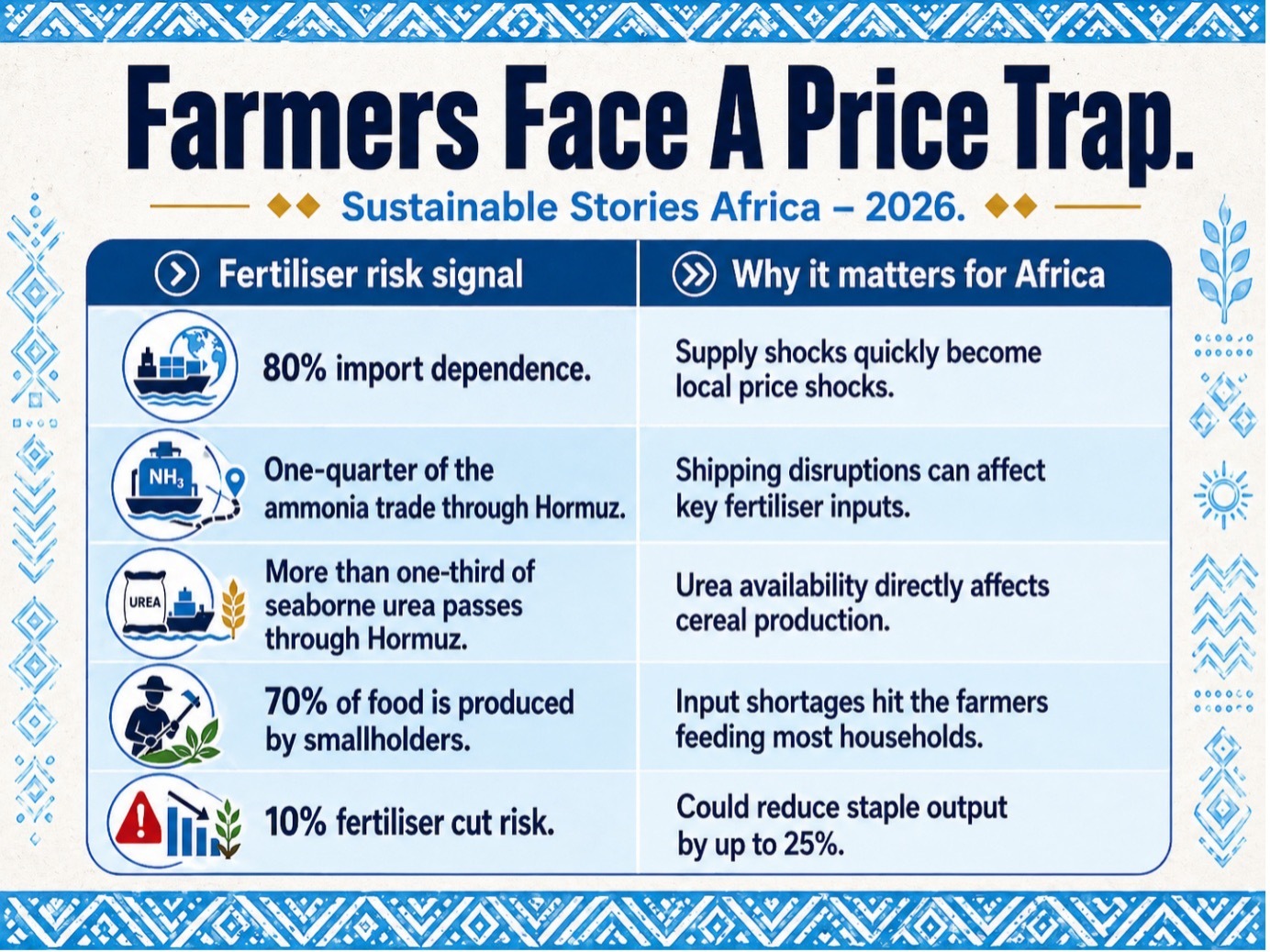
The risk is immediate because fertiliser security is food security. Fertiliser shipments through the Strait of Hormuz account for roughly one-quarter of global ammonia trade and more than one-third of seaborne urea.
Even a perceived supply risk can raise prices, delay shipments and feed into food inflation.
Farmers Face A Price Trap
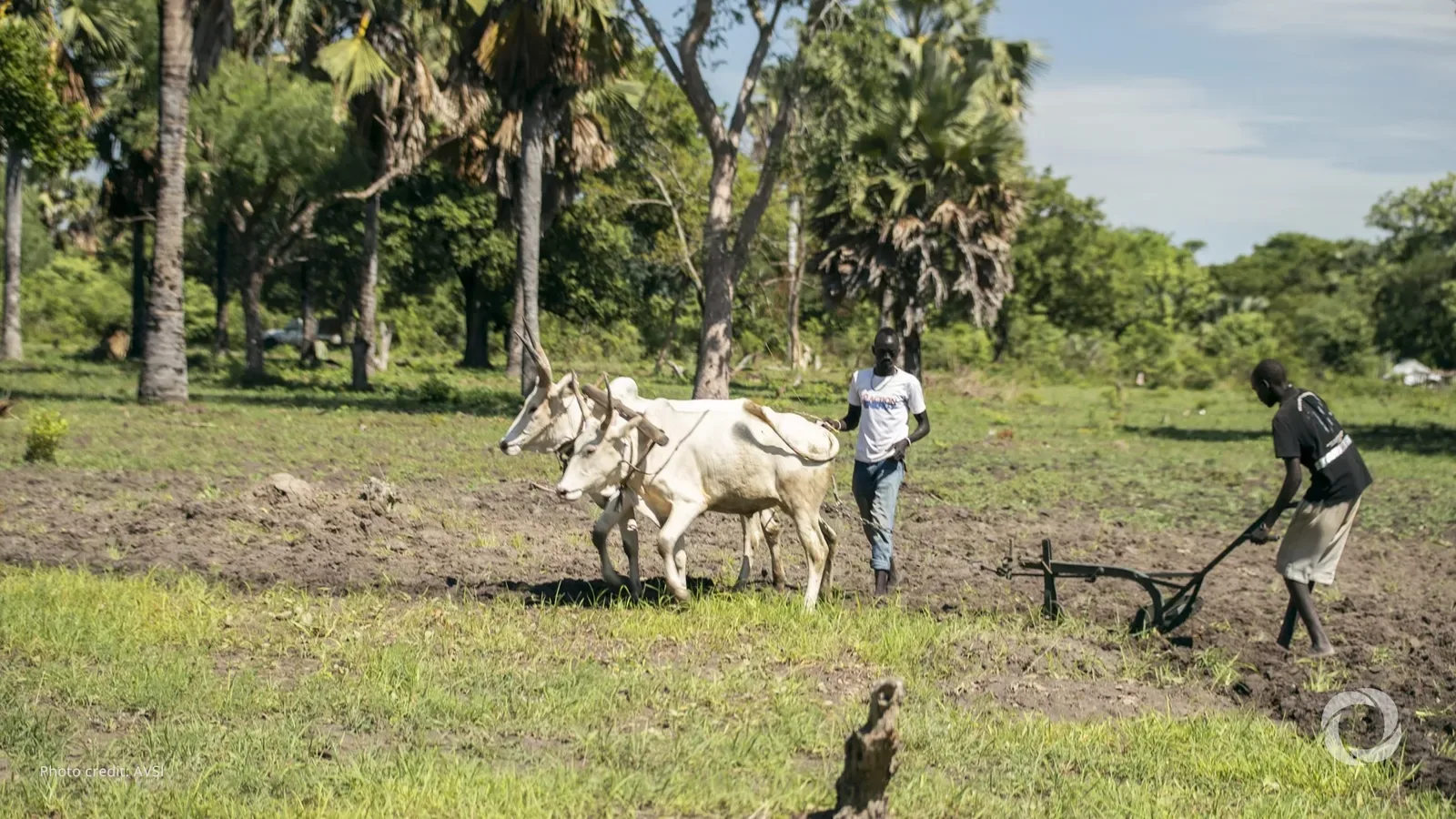
Africa's food security sits on precarious ground. Roughly 80% of fertiliser used across sub-Saharan Africa is imported, typically at higher prices than in Europe due to freight, financing and logistics costs. Smallholder farmers, who produce nearly 70% of the region's food, are most exposed, often lacking the cash reserves to buy early or absorb sudden price shocks.
For a maize farmer in northern Nigeria, a rice grower in Senegal or a small cooperative in Malawi, the consequences are immediate: fewer fertiliser bags, late application, crop switching or planting with inadequate nutrients. Each adjustment reduces yields.
The FAO estimates that a 10% reduction in fertiliser availability could cut maize, rice and wheat output across sub-Saharan Africa by up to 25%, potentially triggering food inflation of up to 8%.
African institutions are responding. The African Union Commission, African Development Bank, ECA and UNDP are developing a coordinated strategy to stabilise food, fuel and fertiliser supplies as the Middle East conflict escalates energy and trade risks across the continent.
Resilience Can Build Food Sovereignty
Africa has a proven model for responding to fertiliser shocks, and a roadmap for moving beyond them.
In 2022, the African Development Bank Group launched a $1.5 billion African Emergency Food Production Facility in response to supply disruptions triggered by the war in Ukraine.
The initiative reached nearly 16 million smallholder farmers across 35 countries, delivering 3.5 million metric tonnes of fertiliser and helping generate 46 million tonnes of food valued at approximately $19 billion. A second phase focused on longer-term food sovereignty is now underway.
The current crisis demands the same urgency and greater ambition. The solution is not simply importing more fertiliser.
It is building systems resilient enough to absorb future shocks: regional procurement networks, buffer stocks, domestic blending plants, affordable farmer finance and soil-specific nutrient management.
The African Fertiliser and Soil Health Initiative, adopted at the 2024 AU Summit, provides a long-term framework that targets fertiliser use to restore nearly one-third of degraded soils and double cereal yields within a decade.
Governments Must Move Before Shortages
African governments now need a coordinated, practical response that protects farmers before the shock becomes a harvest crisis.
- First, they should strengthen market intelligence by tracking fertiliser trade flows, shipping routes, prices and exposure to risky supply corridors.
- Second, regional blocs should pool procurement and build commercial buffer reserves to reduce panic buying and strengthen bargaining power.
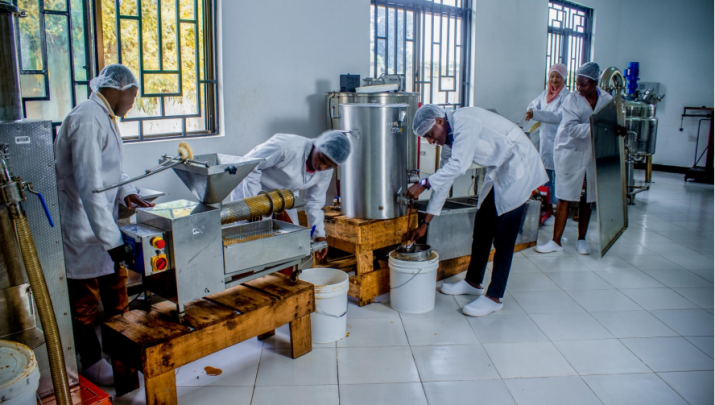
- Third, countries with production potential — including Morocco, Nigeria, Kenya and Ethiopia- should accelerate fertiliser manufacturing, blending capacity, port upgrades and rail logistics.
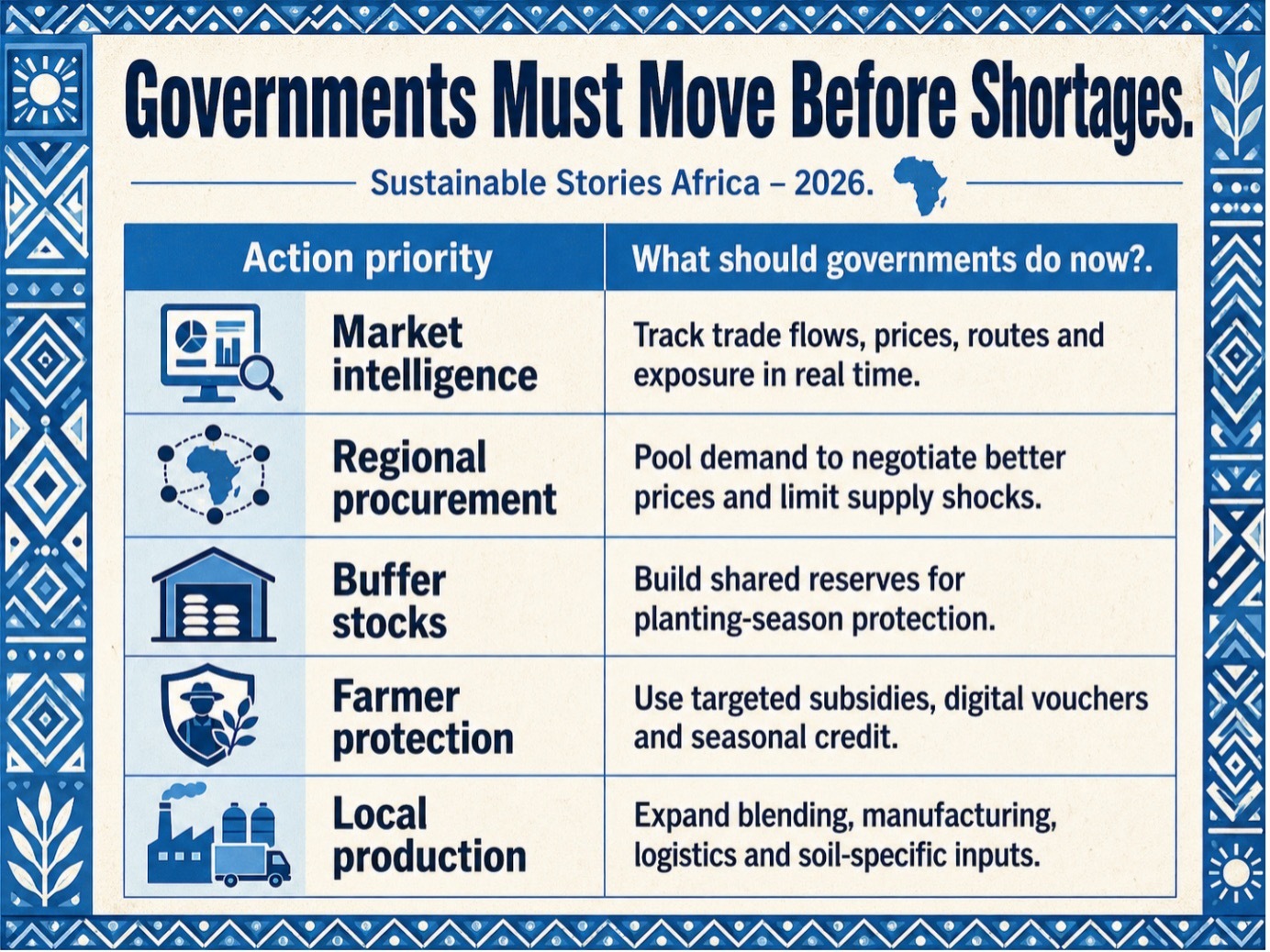
Targeted support for smallholders is essential. Broad subsidies can strain public finances, but well-designed digital vouchers, seasonal credit and transparent distribution systems can help farmers access inputs without distorting markets.
African institutions are also considering contingency import financing, pooled procurement, emergency food corridors, diversified fertiliser sourcing and targeted social protection as part of a wider crisis response.
Path Forward – Build Fertiliser Security Before Crisis
Africa’s path forward requires faster procurement, smarter reserves, local production, regional coordination and direct protection for smallholder farmers.
Fertiliser security should be embedded into food security, trade and climate-resilience planning.
The ESG case is clear: resilient input systems protect farmers, stabilise food prices and reduce social vulnerability.
Acting now can turn a global supply shock into a continental push for food sovereignty.
Culled From: African governments need to take urgent action on fertiliser shortages