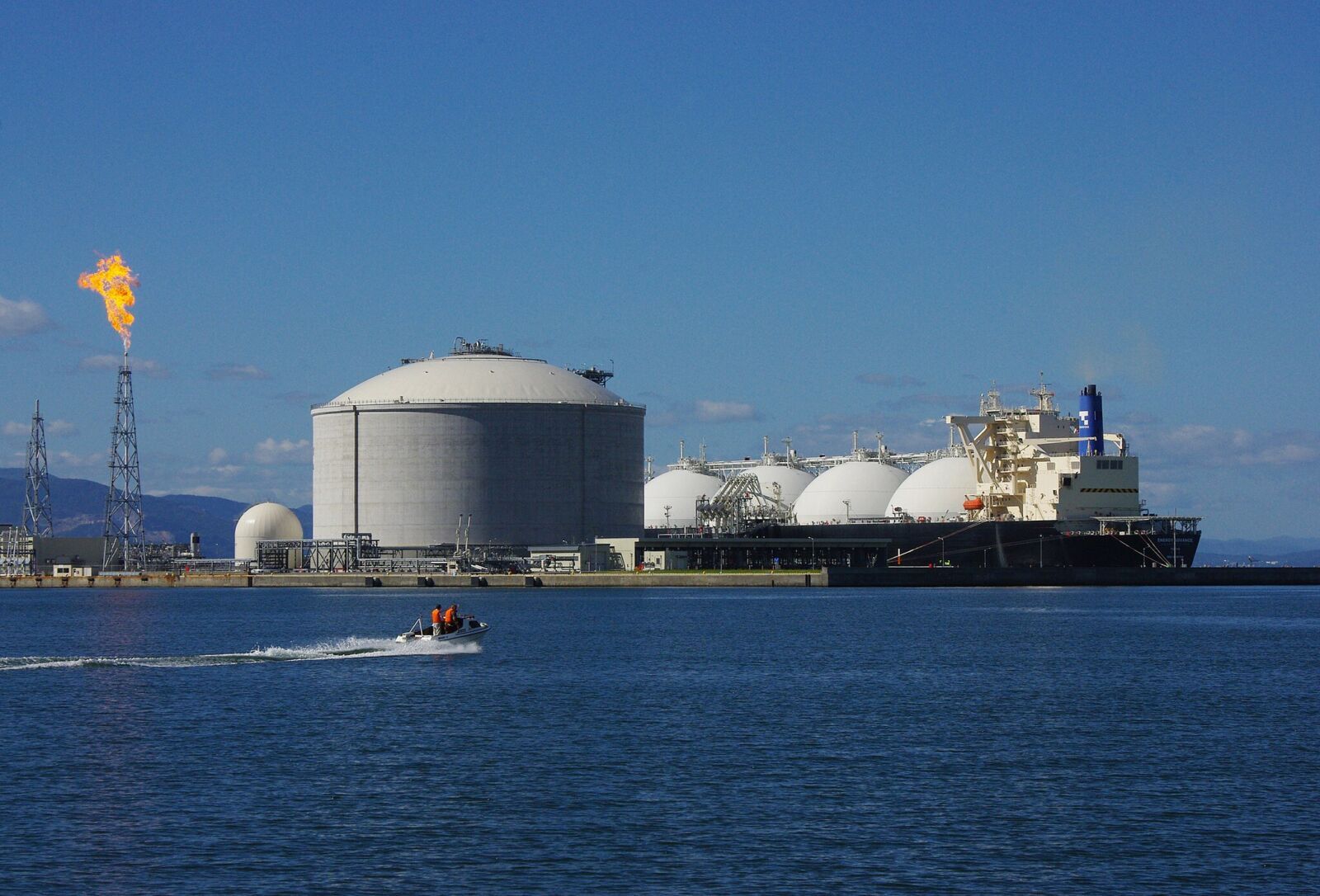
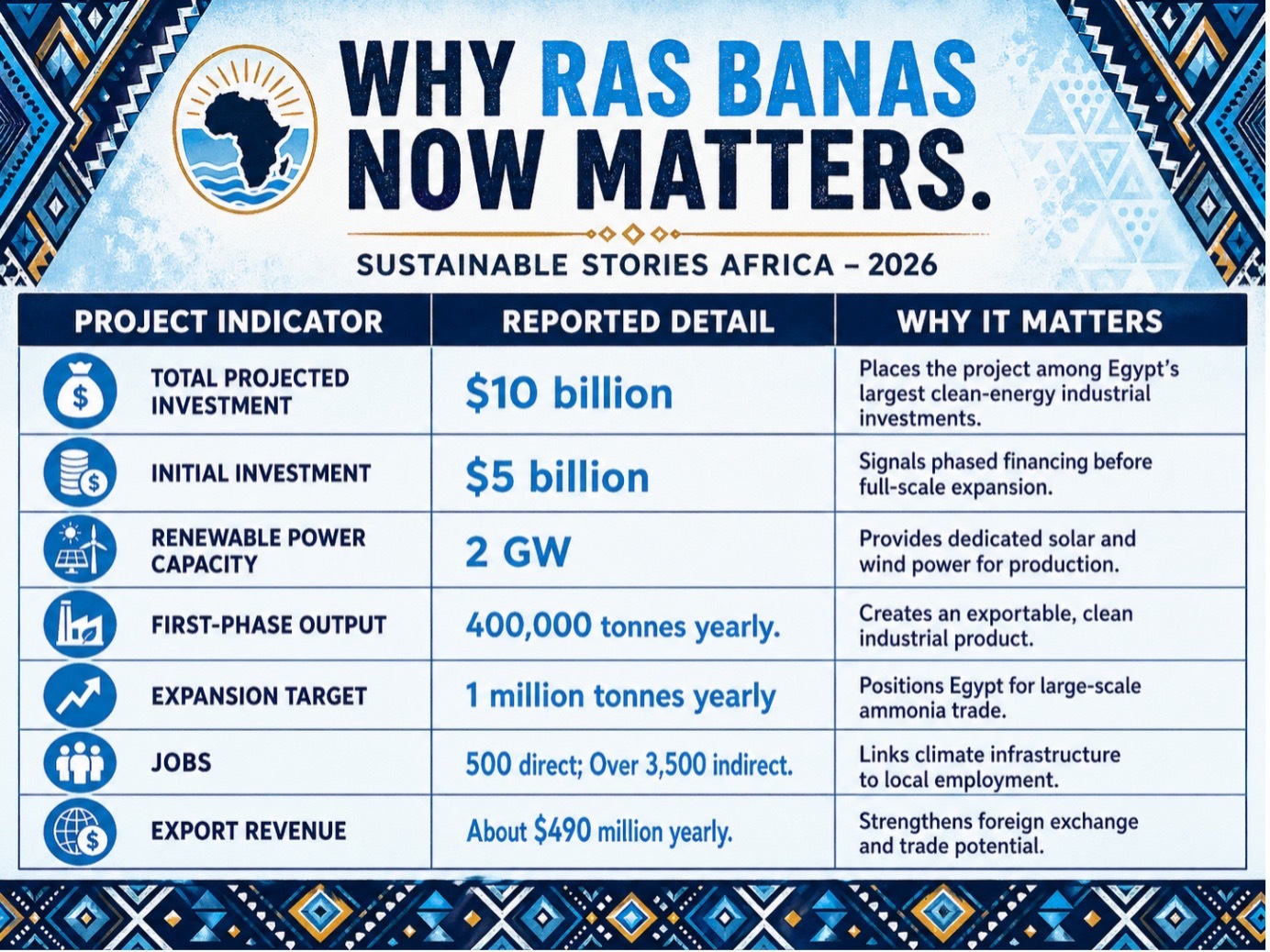
Egypt is advancing a $10 billion green ammonia project in Ras Banas, backed by 2 GW of solar and wind power.
The facility targets an initial annual output of 400,000 tonnes, with potential to scale to 1 million tonnes.
For Africa, the project signals a shift: renewable energy is becoming an industrial strategy, export policy and climate finance infrastructure.
A Desert Project With Global Reach
Egypt is moving ahead with plans for a $10 billion green ammonia project in Ras Banas, a Red Sea location now emerging as part of the country’s clean-energy export map.
The project is being advanced by Egypt Amun Green Ammonia, a consortium that includes Poland’s Hynfra and Egypt’s Coxswains, after discussions with Egypt’s Minister of Industry, Khaled Hashem, on April 24, 2026.
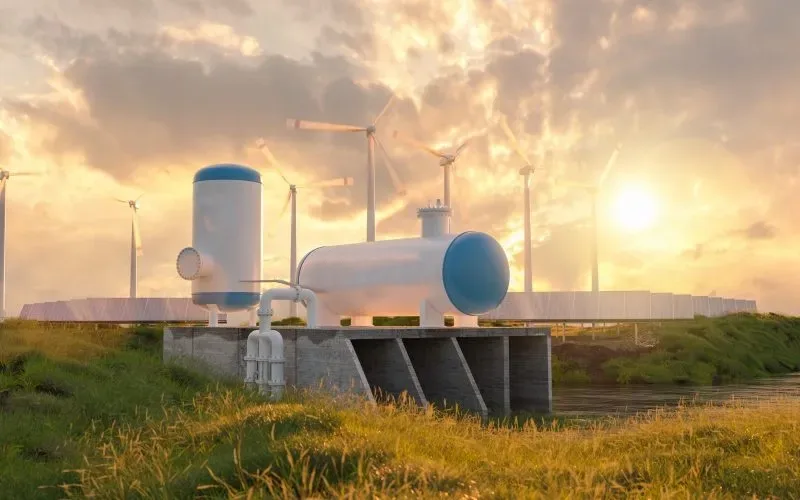
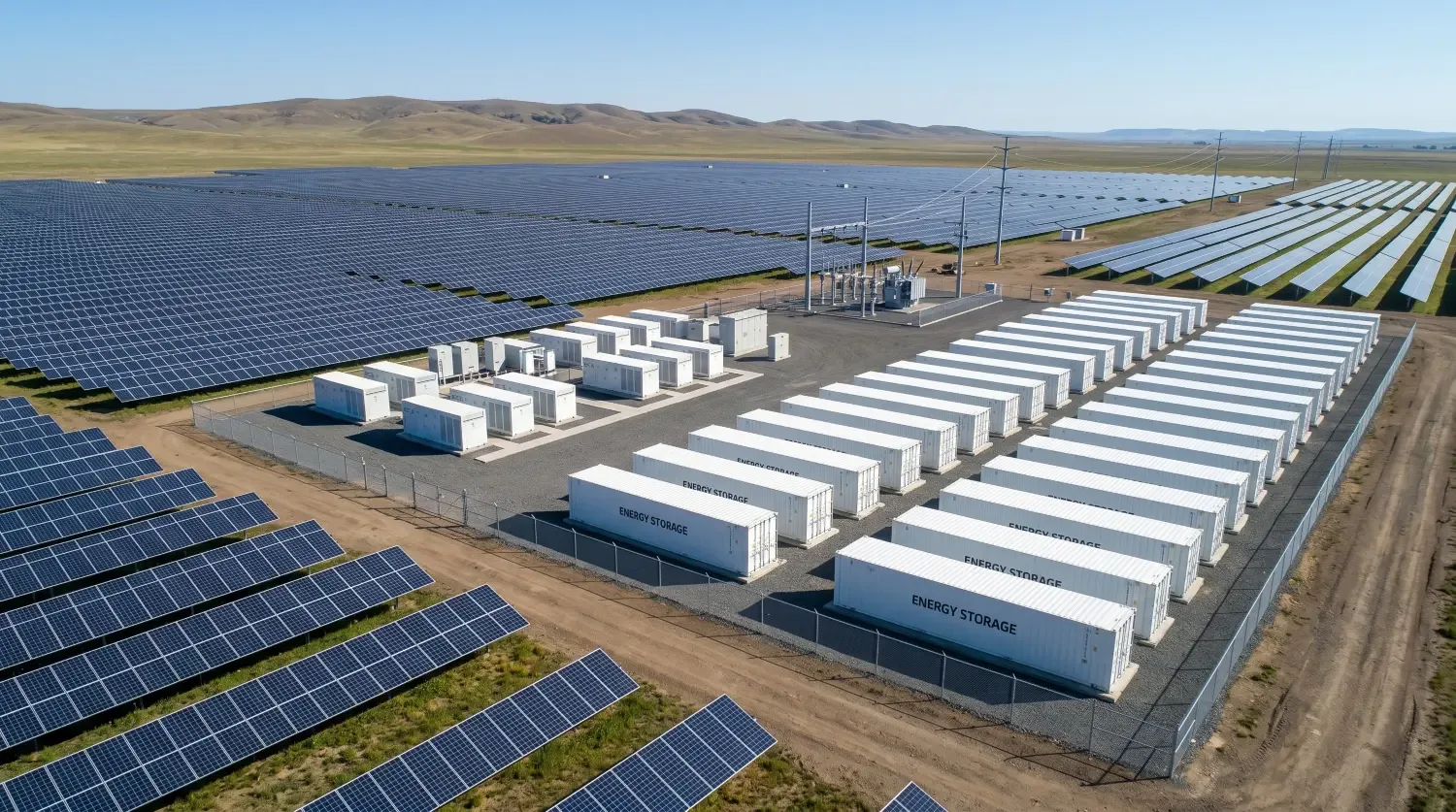
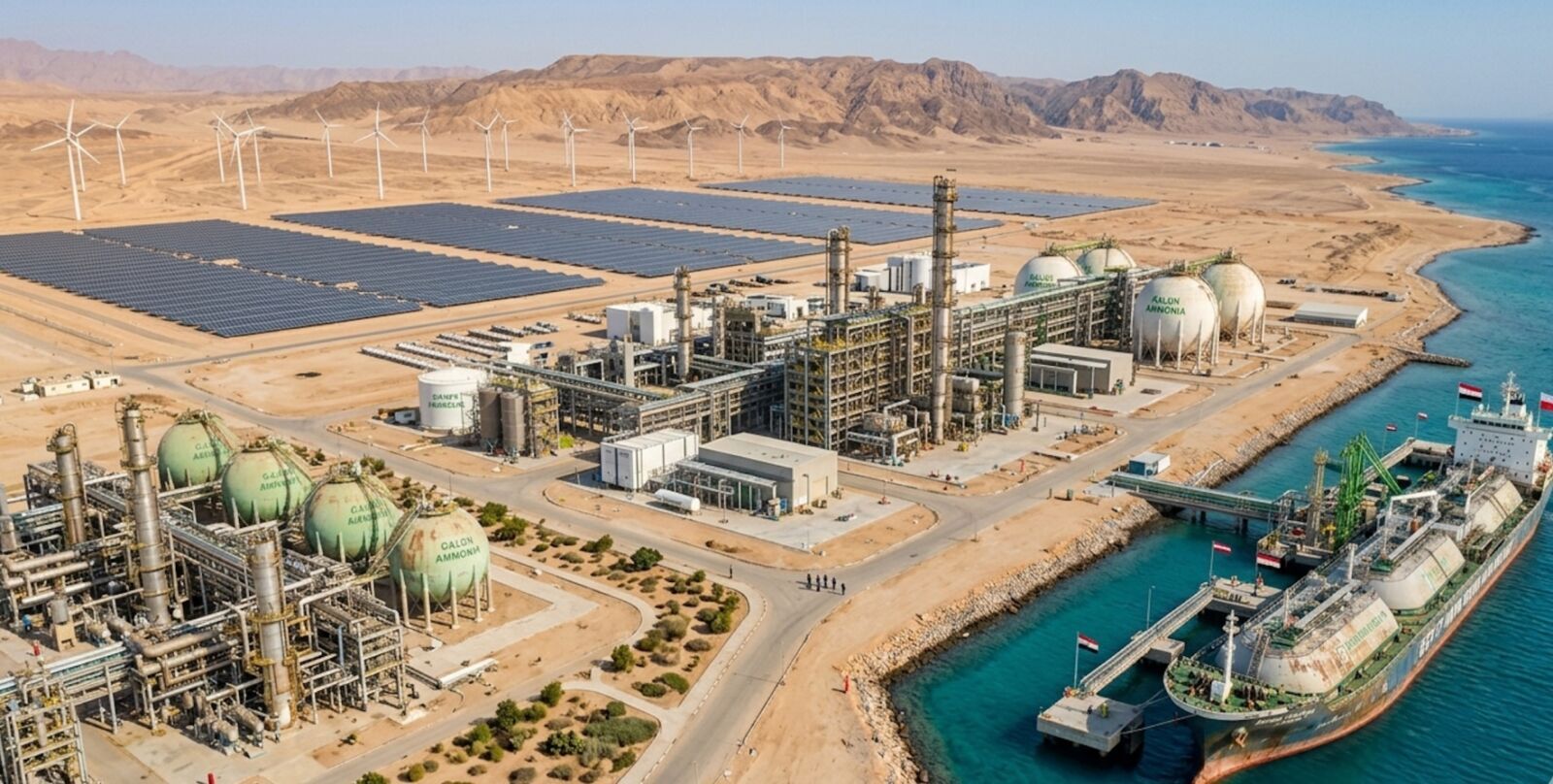
The facility is planned as a large-scale industrial platform powered by 2,000 megawatts of renewable energy.
This will be split between 1,000 MW of solar and 1,000 MW of wind, across 100 square kilometres.
Production is expected to start by 2031, with 400,000 tonnes of green ammonia annually, and expand to 1 million tonnes annually in later phases.
The numbers matter because green ammonia is moving from a climate promise to a trade product.
It can serve as a hydrogen carrier, fertiliser input, and future clean fuel for hard-to-abate sectors.
For Egypt, the project is also a bet that geography, ports, wind, solar and proximity to Europe can become a new development advantage.
Why Ras Banas Now Matters
The Ras Banas project is structured around a simple but powerful idea: produce green ammonia without drawing electricity from Egypt’s national grid
Officials say the project will rely on an integrated hybrid renewable system and will not depend on the grid, a design intended to reduce pressure on national electricity supply while supporting Egypt’s low-carbon industrial ambitions.
The project also includes plans for an integrated export infrastructure, including a dedicated port for shipping green ammonia.
Egyptian officials say export contracts have already been signed for the full production to markets in Central and Eastern Europe, with first-phase exports expected to generate around $490 million annually.
That European demand is not abstract. In 2024, Germany awarded a tender to purchase approximately 259,000 metric tonnes of green ammonia from Egypt between 2027 and 2033, as part of a broader strategy to import green hydrogen derivatives for steel, chemicals and other industrial sectors that are difficult to electrify.
Clean Industry Becomes Development Strategy
For Egypt, the Ras Banas project represents more than export potential; it is positioned as a driver of domestic economic value.
The government estimates 500 direct jobs and over 3,500 indirect roles, alongside opportunities to localise manufacturing of selected components. In a region where climate investments are judged by their broader development impact, this emphasis on jobs, skills, and industrial capacity is significant.
Officials say the project aligns with Egypt’s sustainable development strategy and supports the localisation of green hydrogen derivatives.
Hynfra plans to bring ammonia production expertise into the market while linking the project to agriculture, water, and energy systems.
The broader opportunity is reinforced by Egypt’s push to reach 42% renewable electricity by 2030, supported by recent agreements spanning solar, battery storage, and clean energy manufacturing.
Africa’s Green Export Question Widens
The Ras Banas project underscores a broader shift: renewable energy in Africa is evolving from an access solution into a platform for industrial growth, trade, and economic diversification.
Green ammonia, in particular, offers a pathway to higher-value exports, fertiliser security, and expanded port and logistics infrastructure.
If well executed, such projects can attract long-term investment and create skilled jobs across the value chain.
However, the risks are significant. Export-led developments must avoid becoming isolated enclaves with limited domestic impact.
Strong regulation, local supply chain integration, environmental safeguards, and labour standards will determine whether benefits translate into inclusive and resilient economic development.
Turn Clean Energy Into Local Value
Egypt’s next phase is execution, as investors assess whether financing, permits, offtake agreements, port infrastructure, and renewable capacity translate into construction.
The project highlights how climate ambition becomes bankable when linked to industrial demand.
For African governments, the priority is clear: expand renewable energy, strengthen transmission, define hydrogen standards, secure value-retaining offtake deals, and invest in workforce development.
Path Forward – Build Value Beyond Exports
Egypt’s Ras Banas plan can advance ESG goals if it delivers clean production, credible jobs, transparent governance and local supply -chain growth.
For African markets, the priority is clear: connect renewable megaprojects to domestic industrial policy, skills development and community benefit.
Green ammonia should not only leave through ports; it should leave behind stronger institutions, a cleaner industry and wider economic opportunity.
Culled From: Egypt to Build $10 Billion Green Ammonia Project With 2 GW of Renewable Power and 1 Million Tonne Output