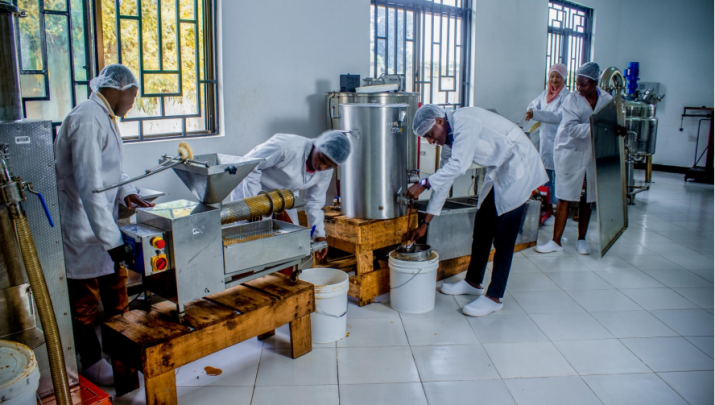
The African Development Fund has approved 1.7 billion CFA francs to strengthen private sector competitiveness across WAEMU countries.
The project will support all eight member states as they position businesses for AfCFTA trade.
For export-ready SMEs, especially women- and youth-led firms, the funding could turn regional integration into real market access.
Small Firms Get Regional Trade Lifeline
For many West African entrepreneurs, the promise of continental trade still meets the hard edge of paperwork, finance gaps, customs delays and uneven standards.
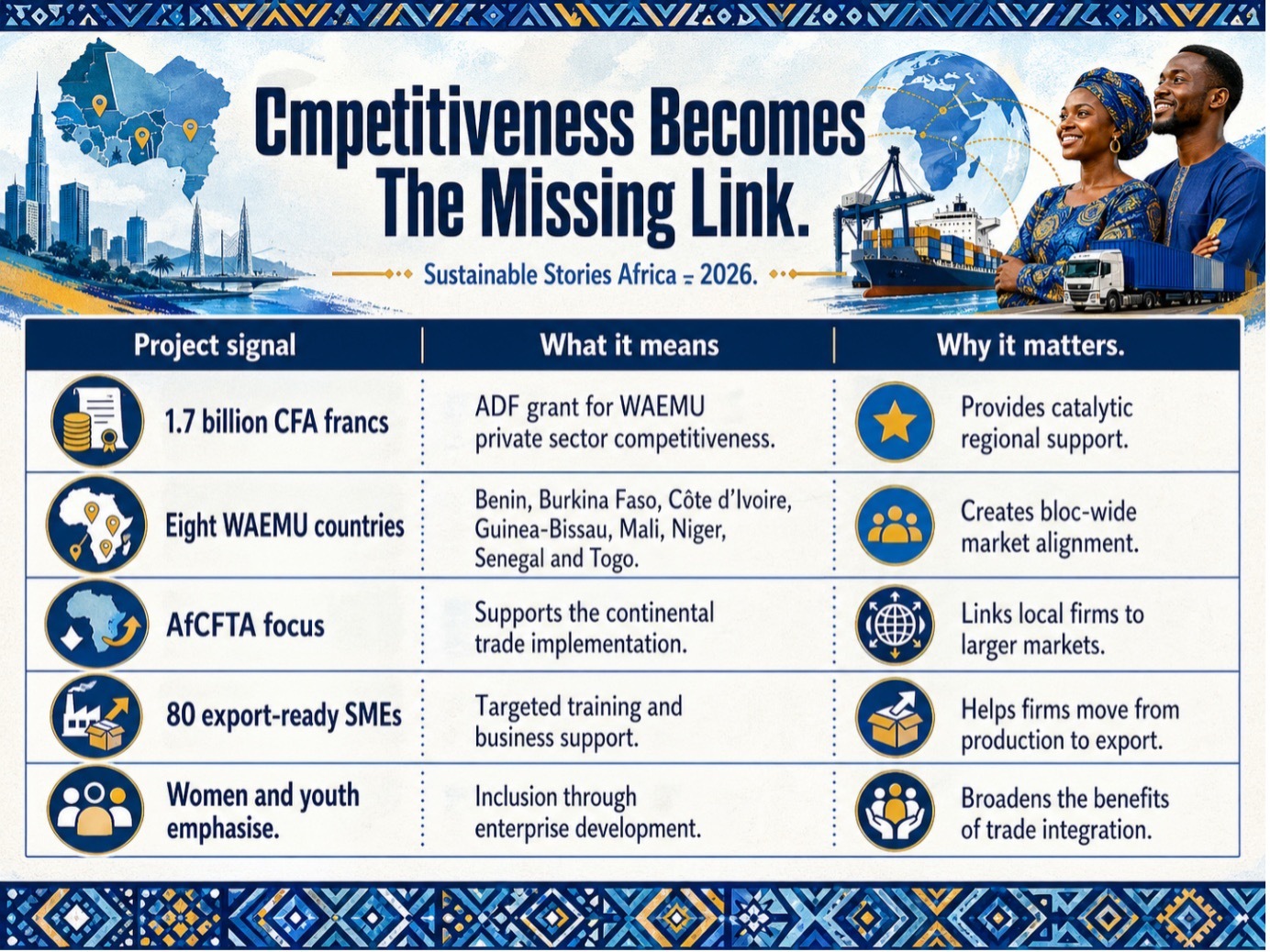
The African Development Fund has approved a 1.7 billion CFA franc grant to finance the Project to Strengthen Competitiveness of the Private Sector across the West African Economic and Monetary Union, or WAEMU.
The project will support all eight WAEMU member countries, including Benin, Burkina Faso, Côte d’Ivoire, Guinea-Bissau, Mali, Niger, Senegal and Togo, while helping the region deepen its implementation of the African Continental Free Trade Area.
The grant, worth about $2.8 million, is small in headline terms but strategic in purpose: helping firms become more competitive, better prepared to export and more able to use regional and continental markets.
For a food processor in Dakar, a textile maker in Abidjan or a youth-led digital service firm in Cotonou, the question is simple: can African integration lower the cost of doing business, or will it remain a policy slogan?
Competitiveness Becomes The Missing Link
The WAEMU project is designed to strengthen the private sector and broader economy by capitalising on production and trade opportunities, while supporting deeper integration into the AfCFTA market.
It will also reinforce WAEMU’s role as a customs union and support regional private sector institutions, including the WAEMU Regional Chamber of Commerce.
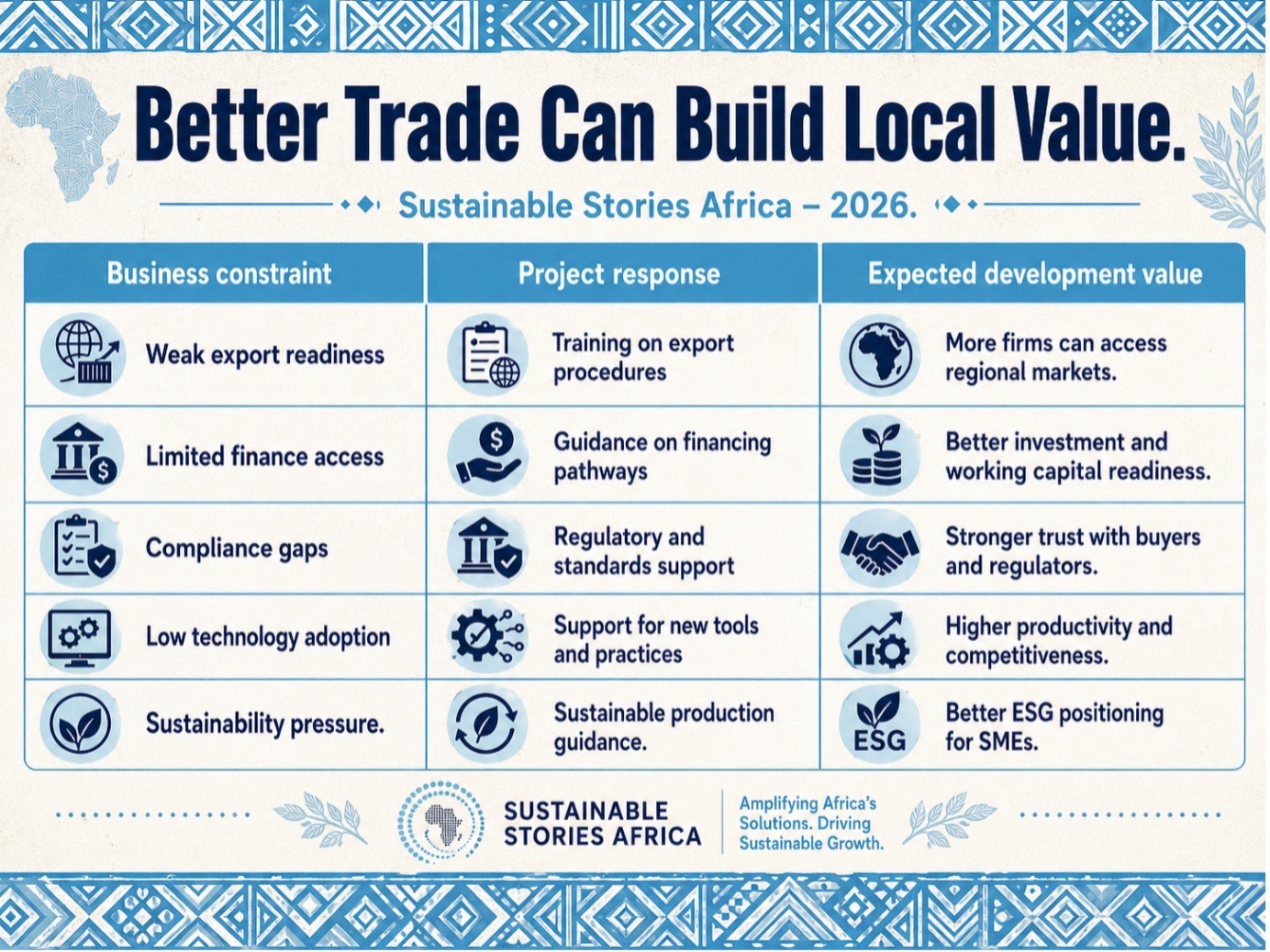
A key feature is targeted support for export-ready small and medium-sized enterprises. Reports on the approval indicate that 80 SMEs will receive training and guidance on export procedures, access to finance, regulatory compliance, technology adoption and sustainable production practices.
Many of the businesses are expected to be women- and youth-led, making the project a competitiveness intervention with social inclusion value.
The project’s timing is important. Across West Africa, small businesses often produce goods with market potential but struggle to meet export documentation, certification, financing and logistics requirements.
Without support, they remain trapped in domestic markets, even when neighbouring countries offer demand.
Better Trade Can Build Local Value
The promise of the grant is not only more exports. It is better regional value creation.
If WAEMU firms can become more competitive, they can expand from informal cross-border trade into structured supply chains.
- A shea processor in Burkina Faso could access better packaging standards.
- A cashew processor in Côte d’Ivoire could navigate rules of origin more effectively.
- A small manufacturer in Togo could prepare products for buyers beyond its home market.
The project also matters for ESG and sustainable development. Competitiveness is no longer only about price.
Buyers increasingly ask whether products meet quality, traceability, labour, environmental and sustainability standards.
By including regulatory compliance, technology adoption and sustainable production practices, the initiative recognises that future trade growth must be more formal, transparent and resilient.
The risk of inaction is clear. If firms are not prepared, AfCFTA benefits will flow mainly to larger companies with existing compliance teams, stronger banking relationships and more formal systems.
Smaller enterprises, the backbone of employment, could watch regional integration happen around them rather than for them.
Trade Support Must Reach Firms
The action priority is implementation. WAEMU institutions, chambers of commerce, national trade agencies and development partners must ensure that the grant reaches firms in practical ways: hands-on training, simplified export guidance, finance-readiness support, digital tools and standards assistance.
The project must be measured through outcomes, rather than workshops.
- How many firms export for the first time?
- How many secure new buyers?
- How many women- and youth-led businesses access finance?
- How many adopt traceability or sustainable production systems?
This is significant because:
- For policymakers, the grant is a reminder that trade agreements need firm-level capacity.
- For financiers, it highlights the need for SME-friendly products.
- For businesses, it is a signal to professionalise operations, improve records, adopt standards and prepare for a larger African market.
Path Forward – Make Integration Work For Enterprises
The path forward is to turn regional policy into practical business gains.
WAEMU must use this grant to simplify trade, strengthen chambers, support export-ready SMEs and align firms with AfCFTA opportunities.
The ESG case is strong: inclusive trade can create jobs, formalise businesses, improve standards and expand sustainable production.
The real test is whether small firms feel the change at the border, in the bank and in the marketplace.