Gabon and the African Development Bank have concluded the 10th Africa Energy Market Place in Libreville, aligning national energy priorities with Mission 300.
The talks matter because Gabon already reports high electricity access, yet rural gaps and isolated grids still limit inclusive growth.
For households, businesses and investors, the next test is execution: reforms, financing, grid integration and accountable delivery.
Gabon Moves From Access To Reliability
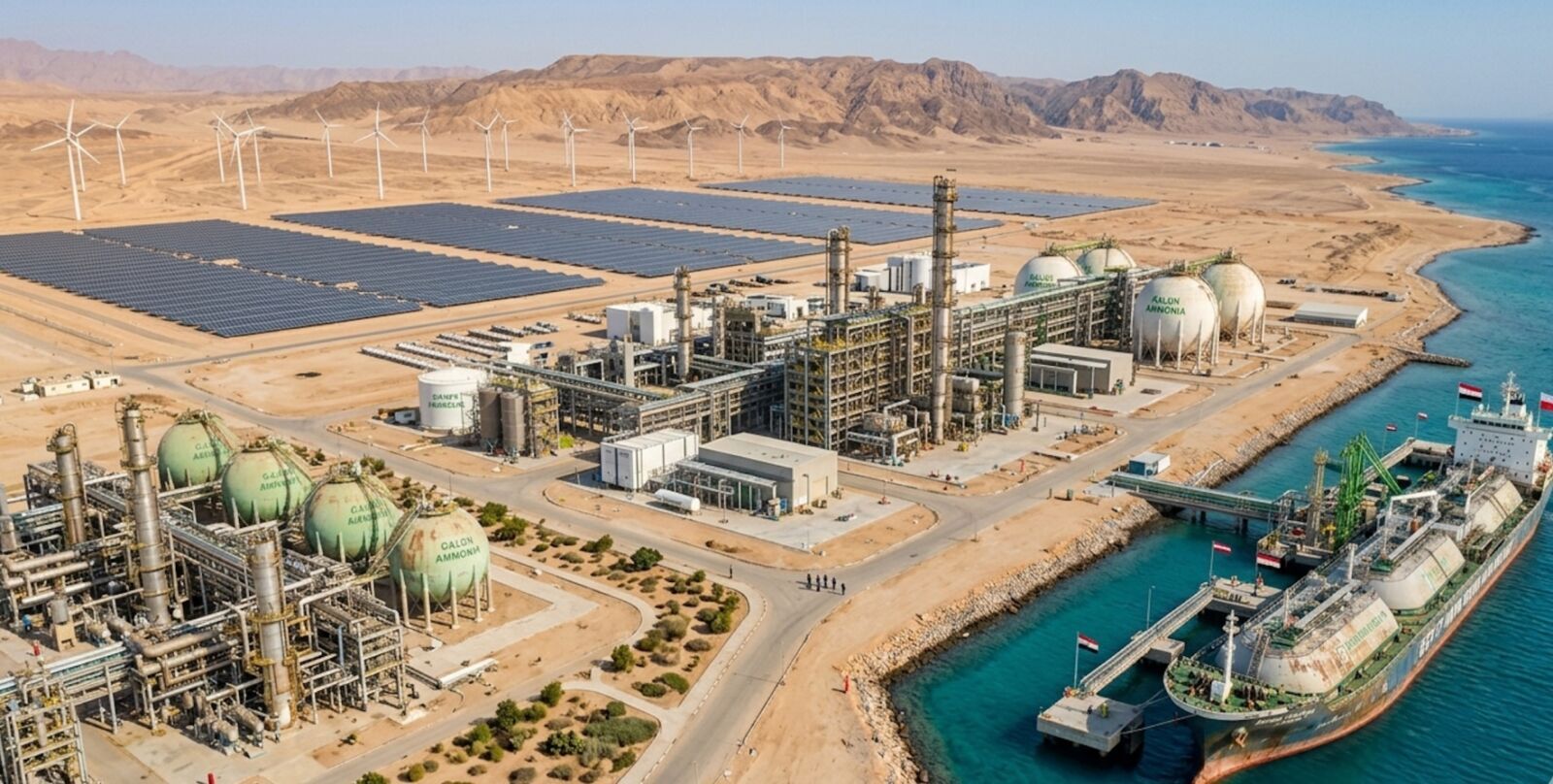
Gabon and the African Development Bank Group have concluded the 10th edition of the Africa Energy Market Place in Libreville, using the two-day forum to shape a National Energy Compact to expand reliable, inclusive and investment-ready power access under the continent-wide Mission 300 initiative.
The forum, held from April 8 to 9, 2026, at Nomad Suites Residence in Libreville, brought together the Gabonese government, the AfDB, development partners, private-sector actors, and regional institutions to discuss reforms and investments across generation, transmission, distribution, rural electrification, renewables and utility governance.
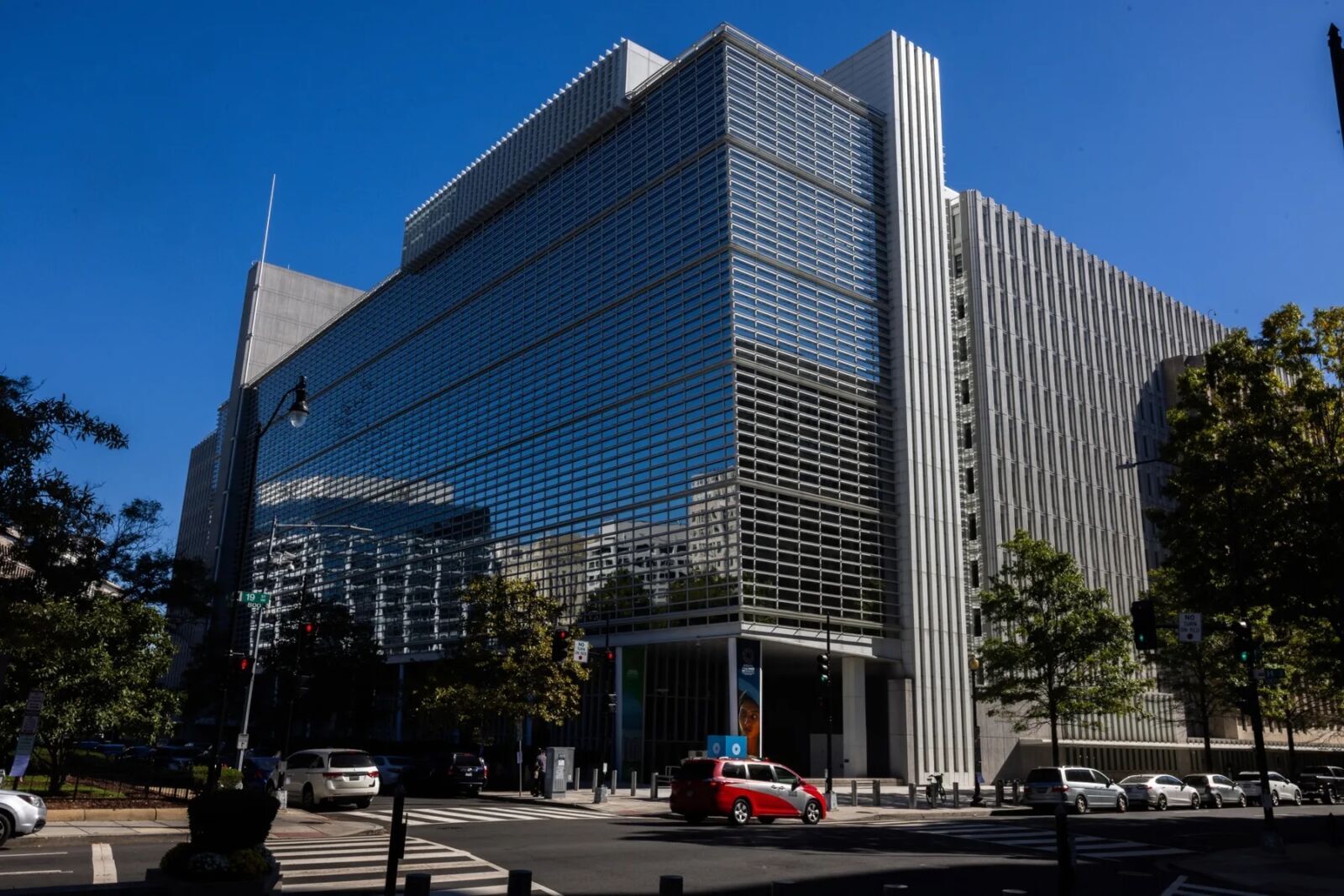
Mission 300, a joint initiative of the AfDB and World Bank Group, aims to connect 300 million Africans to electricity by 2030, with the AfDB Group committed to delivering access for 50 million people.
That continental target gives Gabon’s process wider significance: the country is not starting from darkness, but from a more complex challenge: turning high national access into universal, reliable and geographically fair access.
Strong Access Still Masks Rural Gaps
Gabon enters the Mission 300 process with stronger energy fundamentals than many African markets.
The Africa Energy Portal estimates electricity access at about 94% and clean cooking at roughly 90%; however, this progress is uneven, with access concentrated in urban centres and persistent deficits in rural areas.
This disparity defines the lived reality behind the data. For households beyond Libreville, electricity shapes health, education, and livelihoods, determining safe medicine storage, study after dark, and business productivity.
At a systems level, a structural paradox persists: surplus generation in some areas coexists with shortages elsewhere due to four unconnected grids.
Integrating these networks and linking them to the Central African Power Pool is now a strategic priority for reliability and growth.
Gabon’s participation in the African Energy Market Place, launched in 2018 under the AfDB and now spanning 25 countries, positions this moment as both a national reform effort and part of a wider continental transition.
Reform Can Make Power Investable
The Libreville meetings centre on making Gabon’s energy transition more bankable, decentralised, and accountable. Deliberations focused on five pillars within the draft
- National Energy Compact:
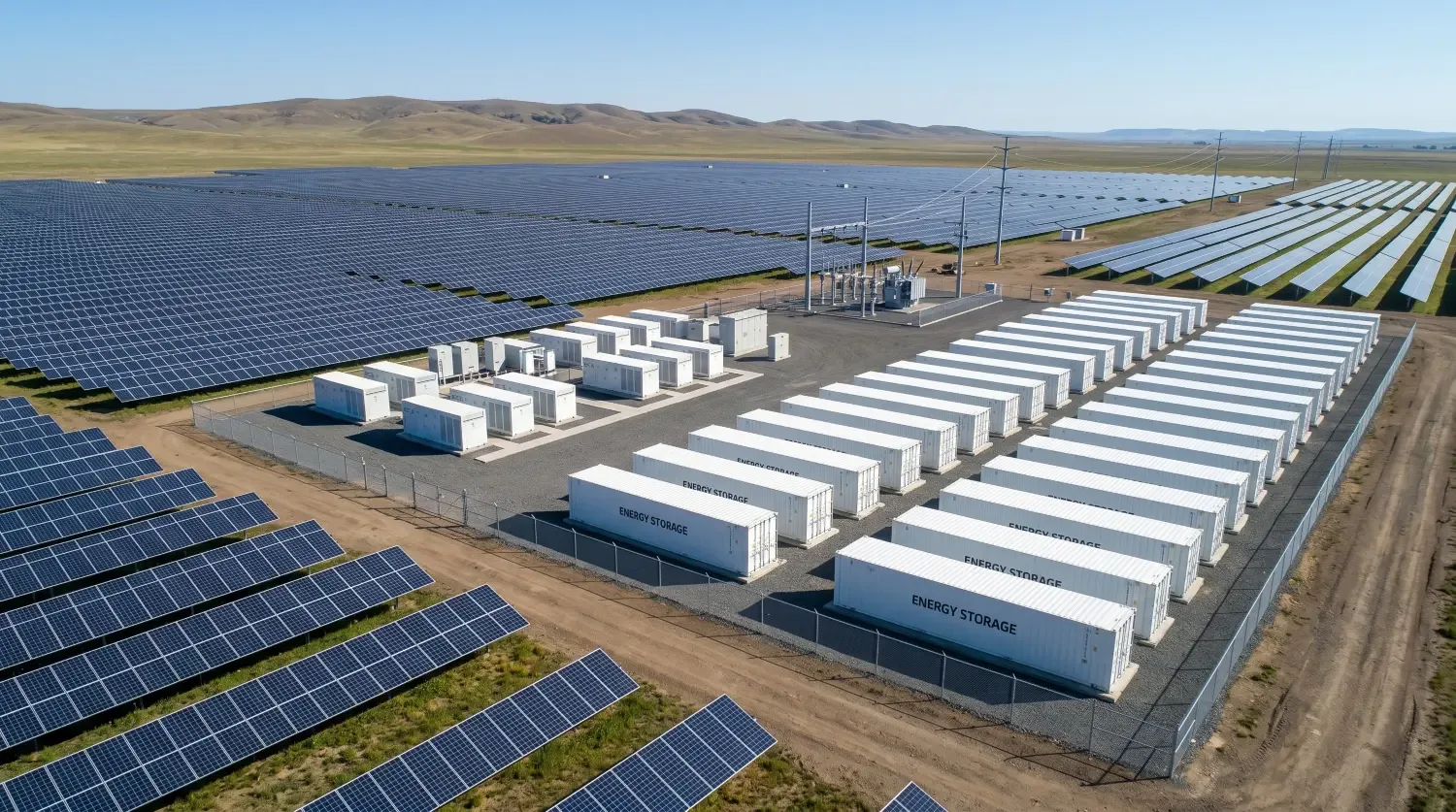
- Expanding generation and modernising grids
- Strengthening regional integration through ECCAS, CEMAC, and the Central African Power Pool
- Scaling distributed renewables and clean cooking
- Mobilising private capital through innovative finance and public-private partnerships
- Improving the governance and financial viability of Société d’Energie et d’Eau du Gabon.
AfDB Vice President Kevin Kariuki emphasised that consistent reform underpins sustainable power systems, noting Gabon’s political ownership and commitment to translating policy into investable outcomes.
- For investors, this signals whether ambition can convert into structured, finance-ready projects with clear tariffs, guarantees, and repayment mechanisms.
- For citizens, the same reform pathway determines whether electricity access evolves beyond an urban privilege into a foundation for inclusive national development and long-term economic resilience.
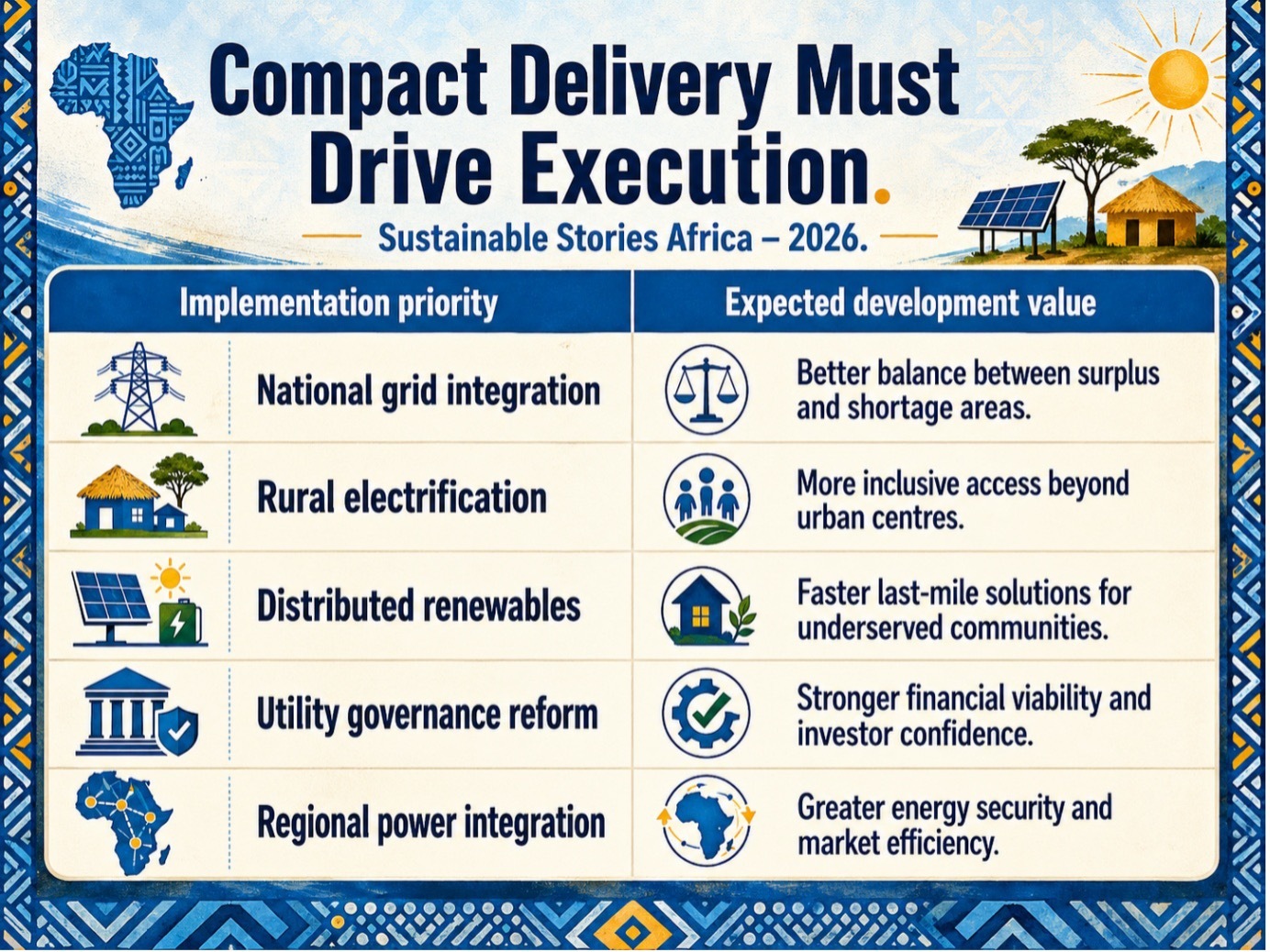
Compact Delivery Must Drive Execution
The Libreville forum produced a set of practical outcomes anchored in implementation.
These include a Gabon Energy Access Investment Brief aligned with Mission 300, agreement on priority renewable energy and grid expansion projects, draft policy and regulatory reforms with defined timelines, and the establishment of a Compact Delivery and Monitoring Unit to strengthen execution and accountability.
A coalition including the AfDB, Government of Gabon, SEEG, World Bank, ECCAS, PEAC, SEforALL, AMDA and AREI, through coordinated reforms, investment planning and monitoring systems designed to close access gaps and improve reliability.
AfDB’s Wale Shonibare underscored that the AEMP is structured to unlock private sector participation through enabling reforms.
With Mission 300 projected to require about $90 billion, Gabon’s next test lies in converting strong fundamentals into credible, finance-ready projects that can attract sustained investment.
Path Forward – Reform Must Become Delivered Power
Gabon’s next test is to convert the Energy Compact into financed projects, connected grids and measurable gains of rural access.
The Compact Delivery and Monitoring Unit should make timelines, responsibilities and progress visible.
For African markets, the lesson is clear: ESG-aligned energy access requires more than ambition.
It needs credible reform, private capital, resilient infrastructure and institutions that can turn policy dialogue into reliable power for communities.