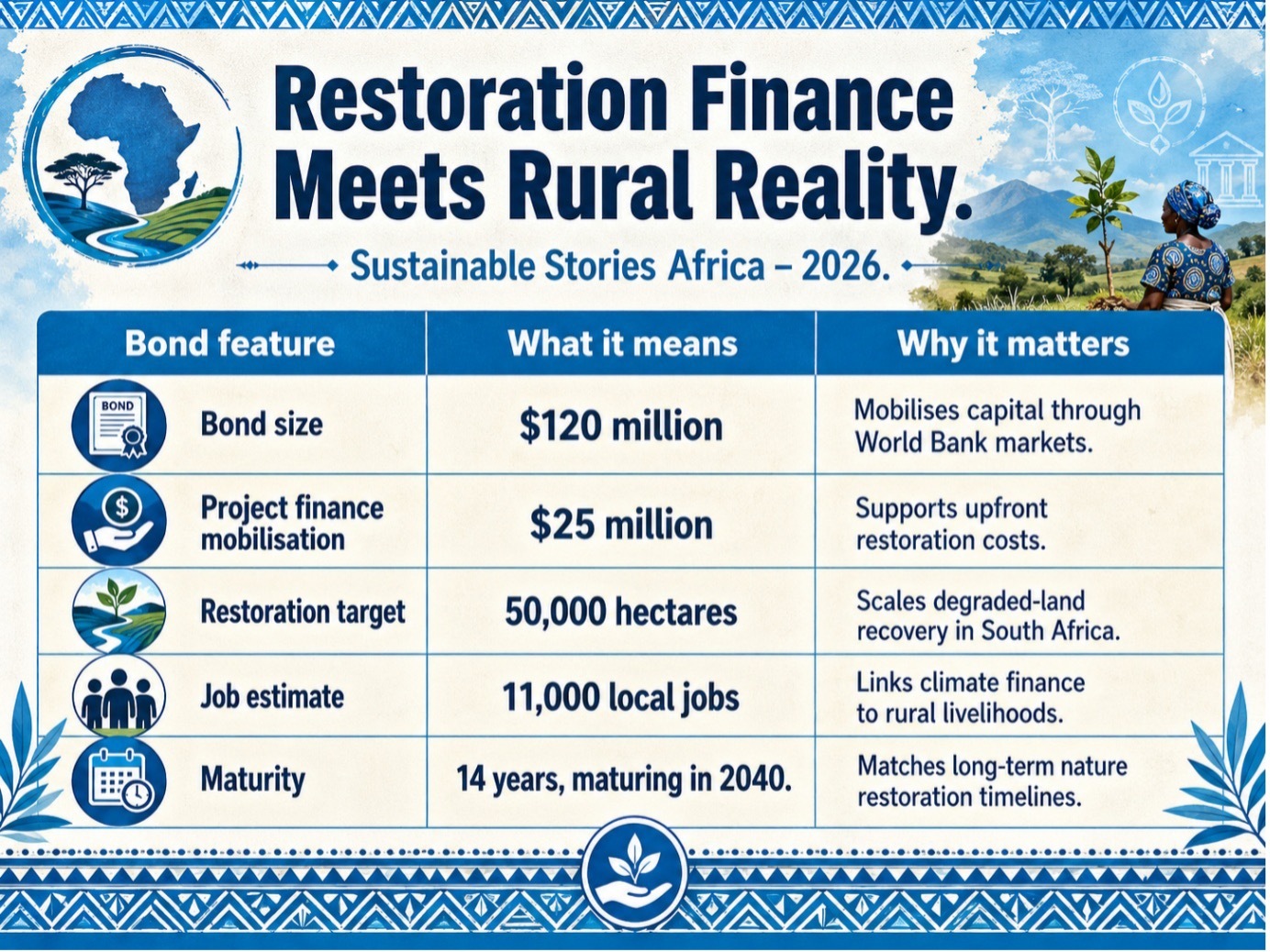
The World Bank has priced a $120 million outcome bond linked to spekboom restoration in South Africa.
The deal aims to mobilise $25 million for restoring 50,000 hectares of degraded land while supporting local jobs.
For Africa, it offers a practical test of whether nature finance can protect ecosystems, reward investors and strengthen rural livelihoods.
A Small Shrub Carries Big Finance
In South Africa's Eastern Cape, a native shrub called spekboom has become the centrepiece of a $120 million climate-finance experiment with continental implications.
The World Bank has priced a 14-year Spekboom Restoration Outcome Bond; its longest-dated outcome bond to date, designed to restore 50,000 hectares of degraded land while creating an estimated 11,000 jobs through small and medium-sized enterprises in harvesting, planting, monitoring and land management.
Issued by the International Bank for Reconstruction and Development, the bond carries World Bank triple-A credit protection, with a portion of foregone coupon payments channelled into upfront restoration financing.
For African climate markets, this bond signals something beyond carbon credits. It tests whether capital markets can finance ecological restoration before the benefits materialise, and whether rural communities can meaningfully share in the value generated by repairing degraded land.
Restoration Finance Meets Rural Reality
Spekboom is no ordinary shrub. This drought-resilient succulent, native to South Africa's Eastern Cape, is valued for its exceptional carbon sequestration capacity, and it is now at the heart of a serious restoration finance model.
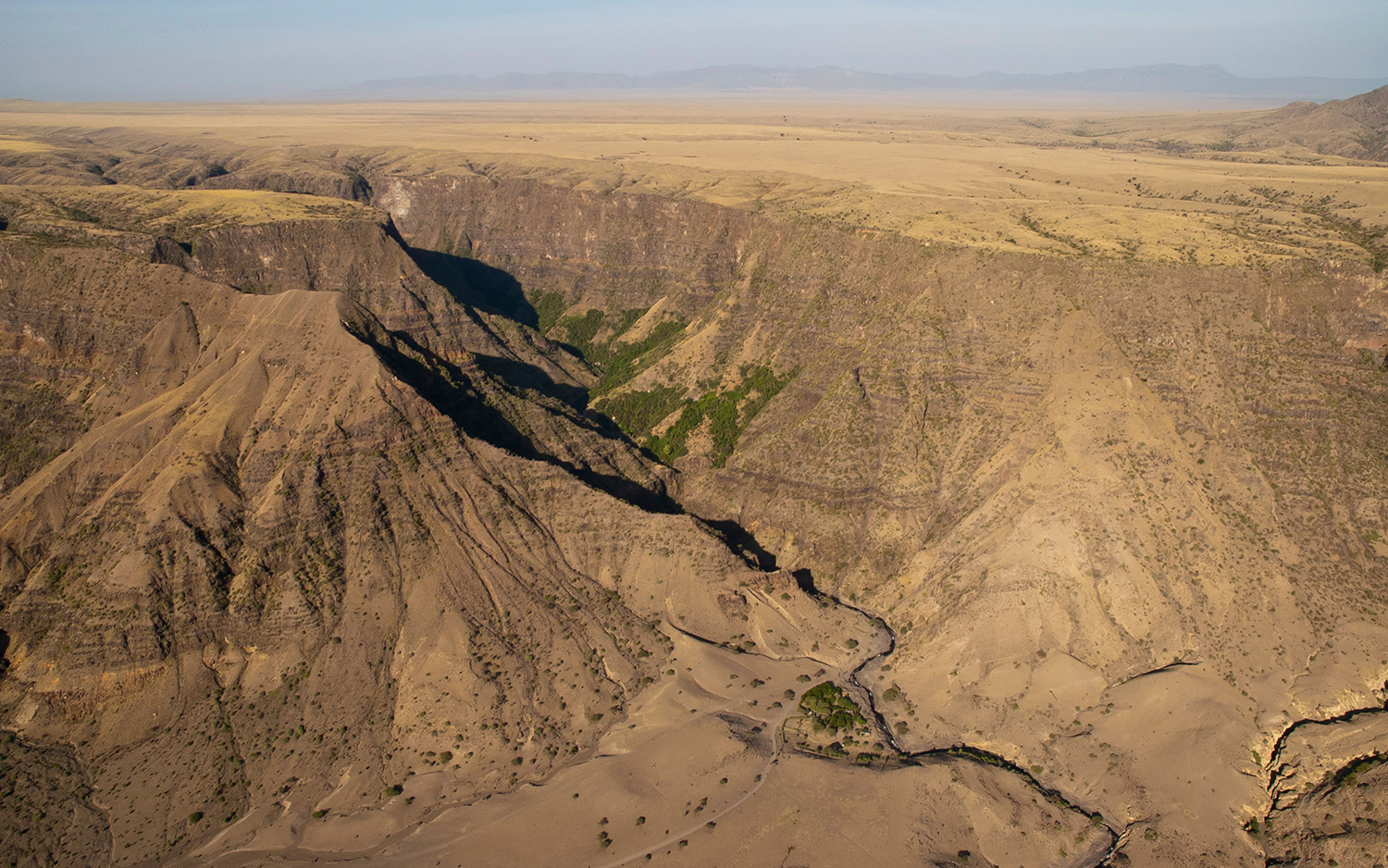
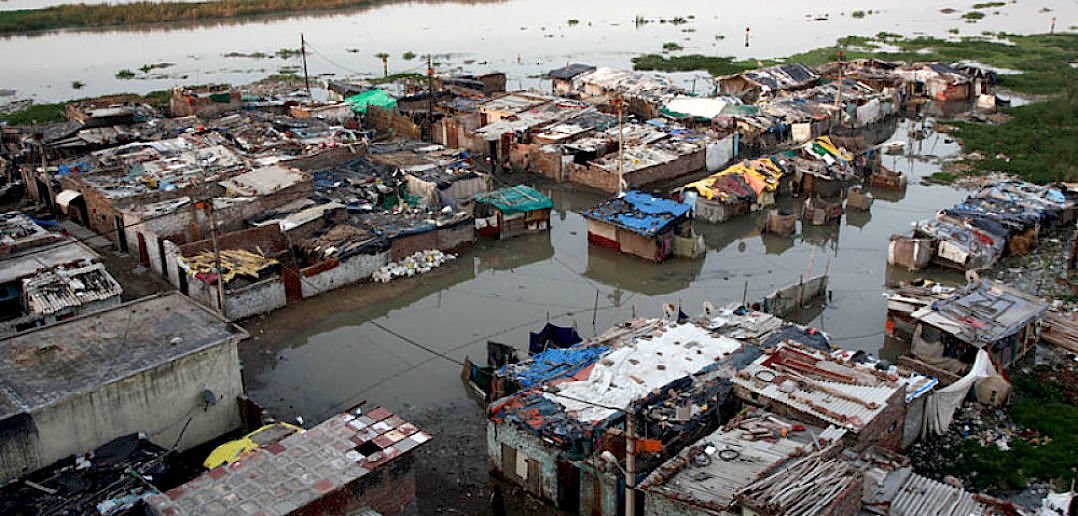
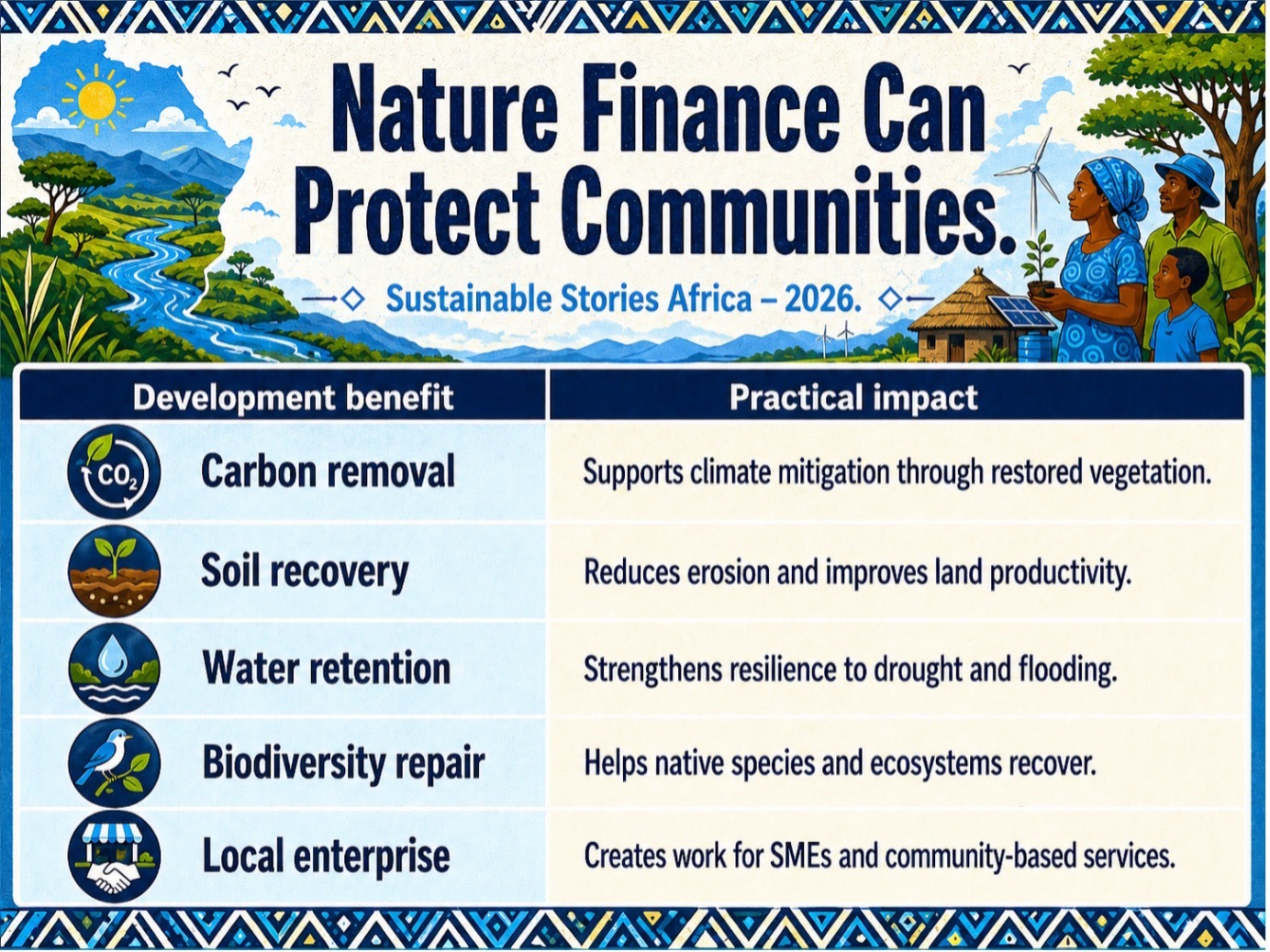
Decades of overgrazing have stripped Eastern Cape landscapes of biodiversity, weakened soils and increased vulnerability to drought and flooding.
The restoration project, designed and operated by Imperative, a private ecosystem restoration company, aims to reverse this damage by rebuilding spekboom thicket across 50,000 hectares, improving soil quality, water retention and ecosystem resilience in the process.
For local workers, the opportunity is tangible: nursery work, fencing, planting, monitoring, and small-business contracts in restoration services.
The transaction also links investor returns to performance: investors accept a below-market coupon, with additional returns tied to carbon-removal revenues.
Amazon is expected to purchase carbon removal units under a long-term offtake agreement, with BNP Paribas arranging the hedge transaction.
Nature Finance Can Protect Communities
The Spekboom bond carries a straightforward but ambitious proposition: restoration can become investable without losing sight of people.
Nature-based projects typically struggle because they require capital years before carbon credits or ecosystem revenues materialise.
The World Bank's outcome-bond structure addresses this timing gap by aligning investors, project developers and corporate partners around measurable results, protecting investor principal while directing part of the return into upfront restoration financing.
For Africa, this model holds relevance. Many climate-stressed landscapes are also places where jobs are scarce, rural poverty is persistent, and public budgets are thin.
Conventional finance rarely follows.
However, risks remain. Carbon markets require credibility, transparent measurement and strong safeguards.
Communities must benefit fairly, and restoration must not become a financial product disconnected from land rights and ecological science.
The real test is rigorous, independent verification of carbon outcomes, job creation and ecosystem recovery over time.
Make Nature Deals Locally Accountable
The Spekboom bond should push African governments, development banks and investors to take nature finance more seriously, but also more carefully.
- First, countries need stronger project preparation. Restoration projects must have credible baselines, land agreements, monitoring systems and community-benefit plans before finance is raised.
- Second, investors need transparent reporting on what is restored, who is employed, what carbon is removed and how revenues are shared.
- Third, African institutions should build local capacity so that the value of restoration does not flow mainly to foreign intermediaries.
For South Africa, the project emerges as a template for linking degraded land recovery and rural enterprise.
For other African markets, it offers lessons for mangrove restoration, watershed protection, dryland recovery and biodiversity corridors.
The broader message is simple: climate finance should not only fund steel, solar panels and transmission lines. It should also fund living infrastructure, including the soils, shrubs, forests, wetlands and community systems that protect people from climate shocks.
Path Forward: Make Restoration Finance Work Locally
Africa’s nature-finance opportunity must be built on credibility, community benefit and measurable ecological recovery.
The Spekboom bond shows how capital markets can support restoration, jobs and climate goals together.
The next priority is accountability: transparent carbon accounting, fair local participation and projects that restore land while strengthening livelihoods.
Culled From: World Bank Prices $120 Million Spekboom Restoration Outcome Bond to Restore 50,000 Hectares in South Africa