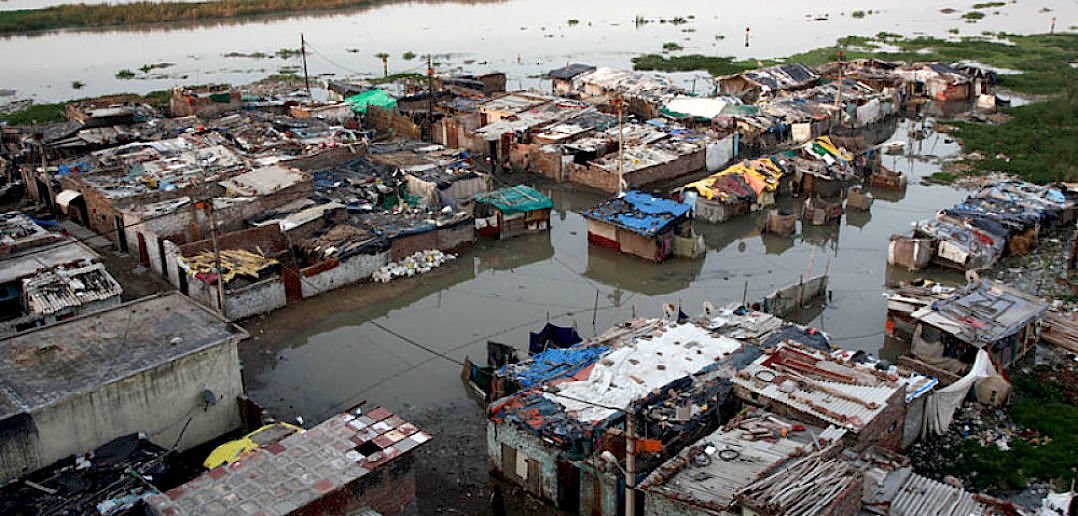
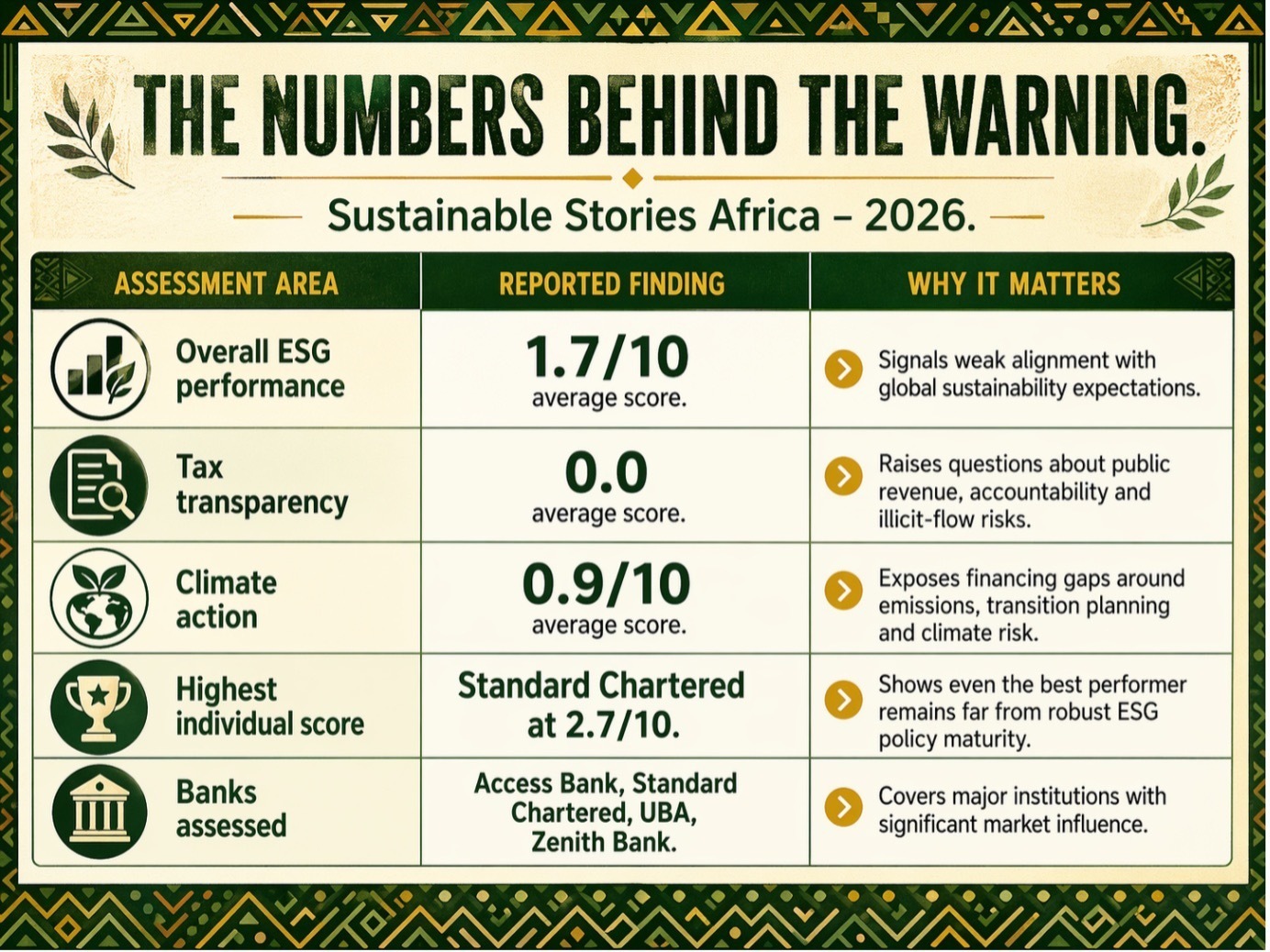
Nigeria’s leading banks have scored an average 1.7 out of 10 in a new ESG policy assessment by the Fair Finance Nigeria Coalition.
The review examined Access Bank, Standard Chartered, UBA and Zenith Bank against more than 400 global sustainability benchmarks.
The findings raise urgent questions about climate finance, tax transparency, human rights safeguards and the role of banks in shaping Nigeria’s development path.
Banks Face a Sustainability Reckoning
Nigeria’s top commercial banks have been handed a stark ESG verdict: 1.7 out of 10.
The score, released by the Fair Finance Nigeria Coalition, marks one of the strongest public challenges yet to the sustainability credentials of major Nigerian financial institutions.
The coalition, comprising BudgIT, Policy Alert, CISLAC, CODE, STEPS and Oxfam, said its first comprehensive ESG policy assessment reviewed Access Bank, Standard Chartered, United Bank for Africa and Zenith Bank against more than 400 international benchmarks.
The findings were presented in Abuja, where the coalition argued that Nigerian banks show some strength in internal policies such as labour rights, gender equality and anti-corruption; however, they fall sharply on external financing commitments affecting communities, climate protection and public revenue.
For customers, communities and investors, the message is clear: finance is not neutral.
Every loan to a refinery, power project, agribusiness, real estate developer or extractive company carries social and environmental consequences.
The question now is whether banks can prove that their balance sheets support development without deepening inequality, pollution or climate risk.
The Numbers Behind the Warning
Nigerian banks scored zero across all tax transparency indicators, with no disclosure of country-by-country revenue reporting or financing in tax havens, according to the coalition assessment.
On climate action, banks averaged just 0.9 out of 10 despite Nigeria's acute exposure to flooding, heat stress, and energy transition risk, continuing to fund oil and gas without credible transition strategies or client-level emissions targets.
Weak safeguards for human rights and biodiversity further undermined the findings, with investment portfolios and supply chains still lacking protections in high-impact sectors.
Oxfam Nigeria Country Director Tijani Hamza Ahmed was direct: "Nigerian banks have massive influence; right now, they are failing that test."
For a flood-hit farmer in Benue or a coastal trader in Lagos, ESG policy is not paperwork; it determines whether finance enables extractive growth or builds safer, more resilient livelihoods.
Better Banking Can Shift Development
The findings are severe, but they also offer a roadmap.
Nigeria’s banking sector has the scale, technology and client relationships to become a powerful engine for sustainable development. Stronger ESG systems could help banks reduce credit risk, attract international capital, lower reputational exposure and align with global disclosure expectations.
For the wider economy, the gains could be more practical: cleaner projects, stronger community safeguards, greater climate resilience, and improved investor confidence.
This is where ESG moves from boardroom language to systems impact.
If banks improve, they can help Nigeria finance power access, climate-smart agriculture, clean transport, affordable housing and small-business resilience
If they do not, the country risks building a financial system that profits from high-impact sectors while outsourcing the costs to citizens.
CBN Must Lead the Overhaul
The coalition’s central demand is regulatory reform. It called on the Central Bank of Nigeria, the Chartered Institute of Bankers of Nigeria, the Bank Directors Association of Nigeria, relevant National Assembly committees and bank executives to convene a multi-stakeholder roundtable to overhaul ESG rules and align them with global standards.
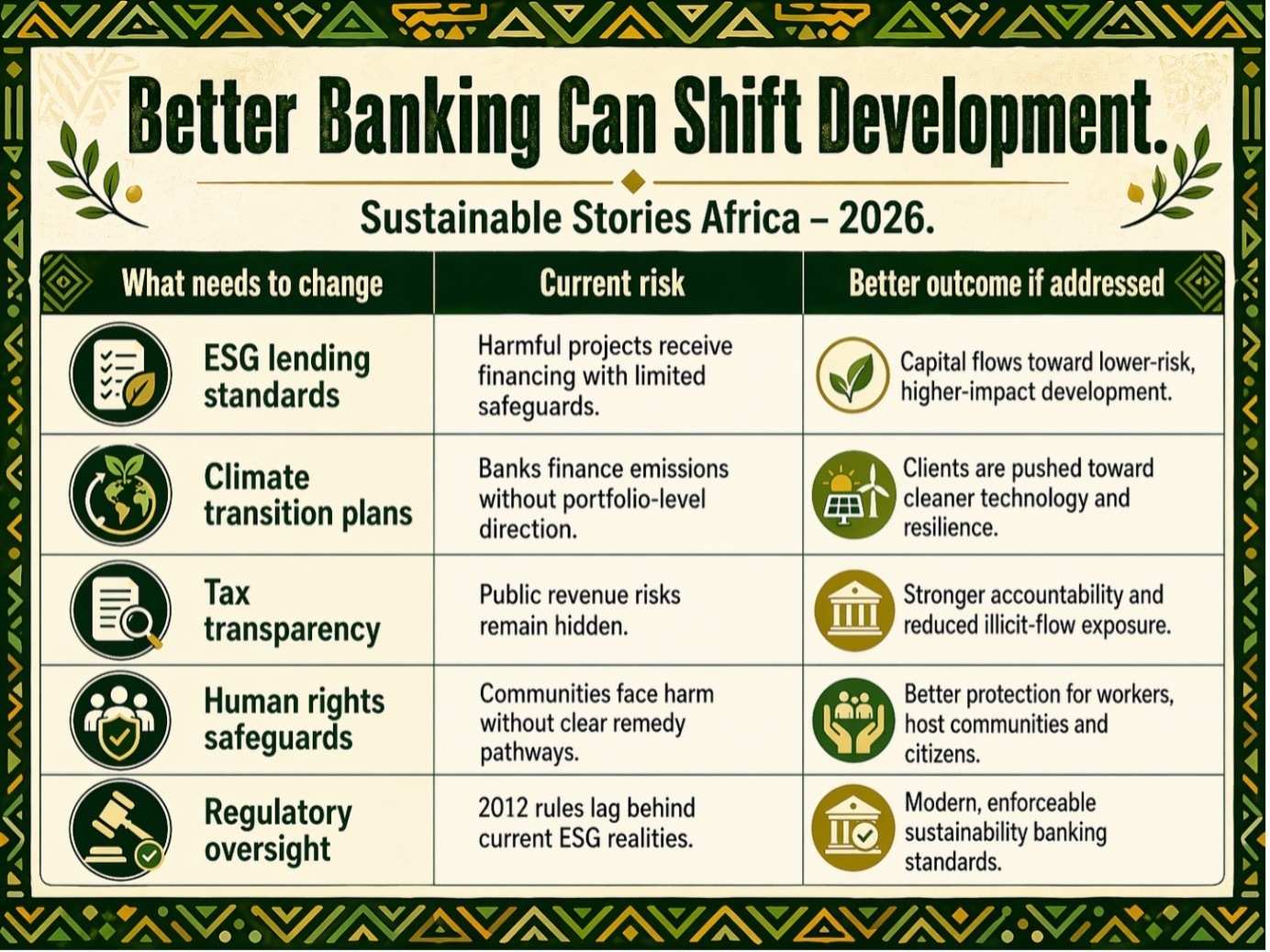
That call matters because Nigeria’s Sustainable Banking Principles were introduced in 2012, long before the current wave of climate disclosure, transition planning, biodiversity risk, human rights due diligence and sustainability assurance became mainstream.
The coalition described the framework as outdated and inadequate for present realities.
The next step should be clear: mandatory ESG lending policies, annual public reporting, portfolio-level climate targets, tax transparency standards, grievance mechanisms for affected communities and independent assurance of sustainability claims.
Banks should not wait for enforcement before acting. Investors, customers and communities are already reading the signals.
A low ESG score is no longer a reputational inconvenience; it is a market, governance and development warning.
Path Forward – Turn Disclosure Into Real Accountability
Nigeria’s banking sector must treat ESG as a credit, governance and development obligation, not a public-relations category.
Stricter rules should link financing decisions to climate transition, tax transparency, human rights and community protection.
The promise is a financial system that funds growth without hiding its costs.
The priority now is coordinated reform: regulators setting enforceable standards, banks publishing evidence, and citizens seeing impact where finance touches their lives.
Culled From: Nigerian banks flunk global ESG test with 1.7/10 score