An FAO-backed assessment says closing gender gaps in sub-Saharan Africa’s agrifood systems could unlock $53 billion in economic value.
The findings come as women remain central to farming, processing, packaging and food distribution; however, they face reduced access to land, finance, social protection and decision-making power.
For African markets, gender equity is no longer only a social goal. It is a food-security and growth strategy.
Africa’s Growth Gap Is Gendered
Sub-Saharan Africa is forgoing a major economic and food security opportunity because the women who sustain its agrifood systems still face unequal access to land, income, decent work, social protection, and decision-making power.
According to “Down To Earth”, a Food and Agriculture Organisation (FAO) report estimates that closing gender gaps in productivity and wages across the region’s agrifood systems could lift regional GDP by 2.58%, or about $53 billion, while reducing food insecurity by 3.79%.
The report, The Status of Women in Agrifood Systems in Sub-Saharan Africa, was launched on April 16, 2026, during the first World Food Forum, Africa.
The message is both economic and structural. Women already do much of the labour that keeps African food systems functioning, yet the systems around them continue to limit their returns.
For policymakers, financiers, and institutions, the task is clear: recognise women’s contribution and remove the barriers that suppress productivity, resilience, and inclusive growth at scale today.
Women Carry the System, But Not the Power
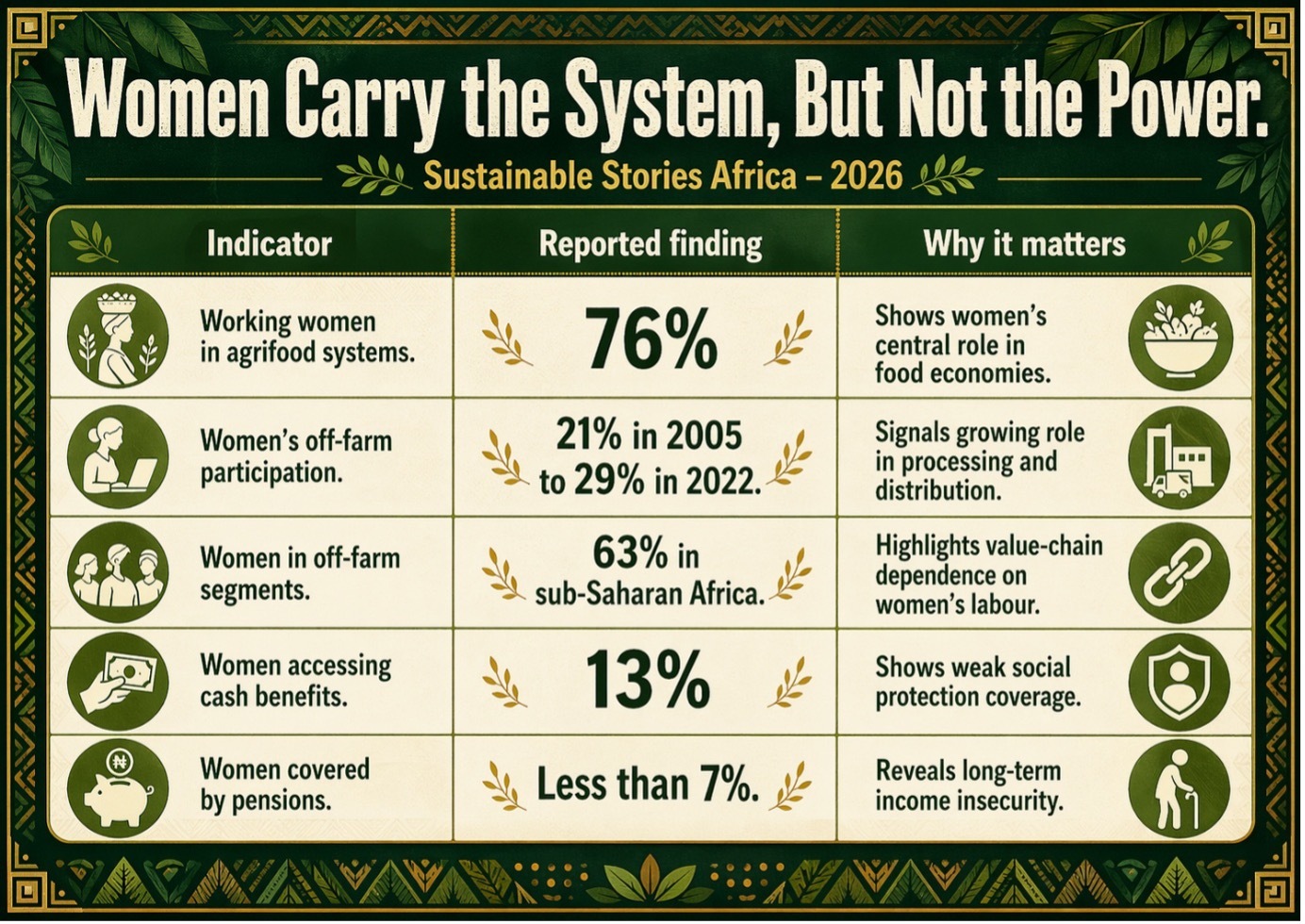
Across sub-Saharan Africa, women are central to agrifood systems, with 76% of working women employed in the sector, the highest share globally.
Their role is significant beyond the farm gate, in processing, packaging, and distribution, where participation rose from 21% in 2005 to 29% in 2022.
In areas, women are four times more likely than men to engage in off-farm agrifood work.
However, this economic role remains constrained by structural inequality. Women still face weaker access to land and productive resources, lower social protection, and higher food insecurity than men.
Only 13% receive cash benefits, while fewer than 7% are covered by pensions. The result is a food economy that depends heavily on women’s labour while continuing to undervalue and underprotect it.
Equity Can Become Economic Strategy
Gender equity is not separate from productivity in sub-Saharan Africa’s agrifood systems; it is part of productivity.
When women have access to secure land rights, finance, training, childcare, digital systems, and stronger market participation, yields rise, processing expands, household incomes improve, and rural economies retain more value.
What is often framed as a social issue is, in practice, a systems-level productivity challenge.
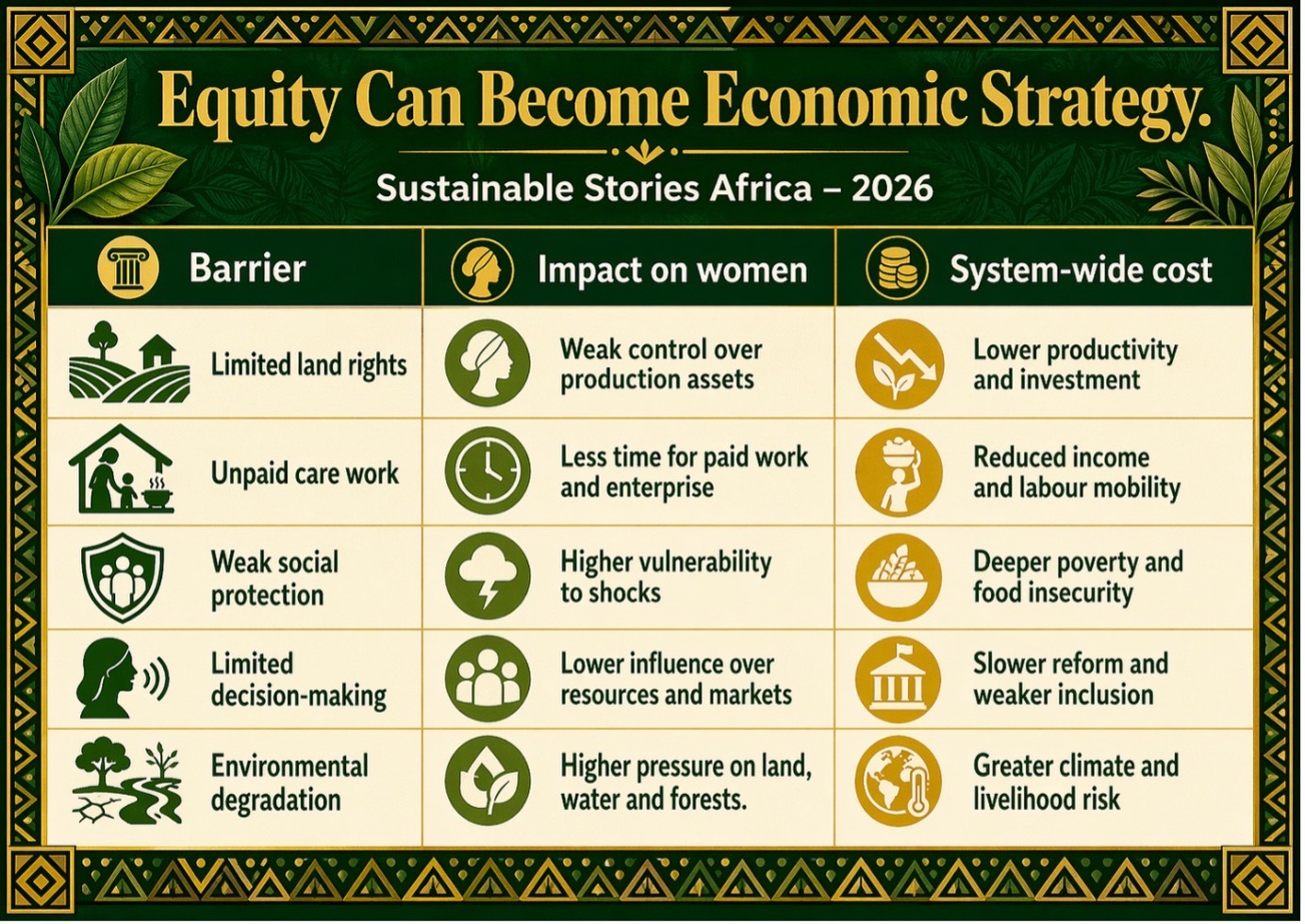
The cost of inaction is also economic.
In 2024, 64.2% of women and 62.7% of men faced moderate or severe food insecurity, with 11.2 million more women affected.
The report links this gap to wider risks, including gender-based violence, child marriage, anaemia, and obesity. For governments, investors, and ESG-focused companies, the $53 billion opportunity is a clear reform signal today.
Move From Recognition to Reform
The next step is not another statement celebrating women’s contributions. It is policy execution.
- Governments should strengthen women’s land rights, expand social protection, invest in childcare and reduce the unpaid care burden that keeps many women locked out of higher-value work.
- Financial institutions should design credit, insurance and savings products for women in agrifood value chains, especially those in informal processing, aggregation and distribution.
- Companies should also rethink procurement. If women dominate key segments of food systems, then gender-sensitive supplier finance, training, digital traceability and fair contracting are not charitable add-ons. They are supply-chain resilience tools.
- Development finance institutions can help by backing women-led cooperatives, rural infrastructure, storage systems, clean energy for processing and climate-smart agriculture.
The FAO-backed assessment calls for gender-just agrifood systems through transformative policy actions that address unequal access to resources, redistribute unpaid care work and strengthen women’s decision-making power.
It also emphasises expanding social protection, challenging discriminatory norms and investing in women across the agrifood value chain.
For African markets, the test is whether this evidence translates to budget, policy and capital allocation.
Path Forward – Put Women At Food-System Centre
The path forward is to treat women’s agrifood participation as economic infrastructure. Land rights, finance, care systems, social protection and market access must move from policy language to funded delivery.
Closing gender gaps can strengthen food security, raise incomes and unlock billions in value.
For Africa’s ESG agenda, the priority is clear: build agrifood systems where women are not only workers, but owners, decision-makers and growth drivers.