The World Bank Group used its 2026 Spring Meetings to sharpen a simple message: women’s economic inclusion is no longer a social add-on, but a growth strategy.
At the April 17 session, the focus was on jobs, finance, digital tools and the systems that keep women-led businesses undercapitalised.
For African markets, the implication is practical: access to capital, broadband, social protection and policy reform could decide who participates in the next growth cycle.
Women’s Inclusion Becomes Growth Policy
The World Bank Group has put women’s economic power at the centre of its jobs and growth agenda, using the 2026 Spring Meetings to argue that access to finance, digital tools and markets is now macro-critical, rather than a side issue.
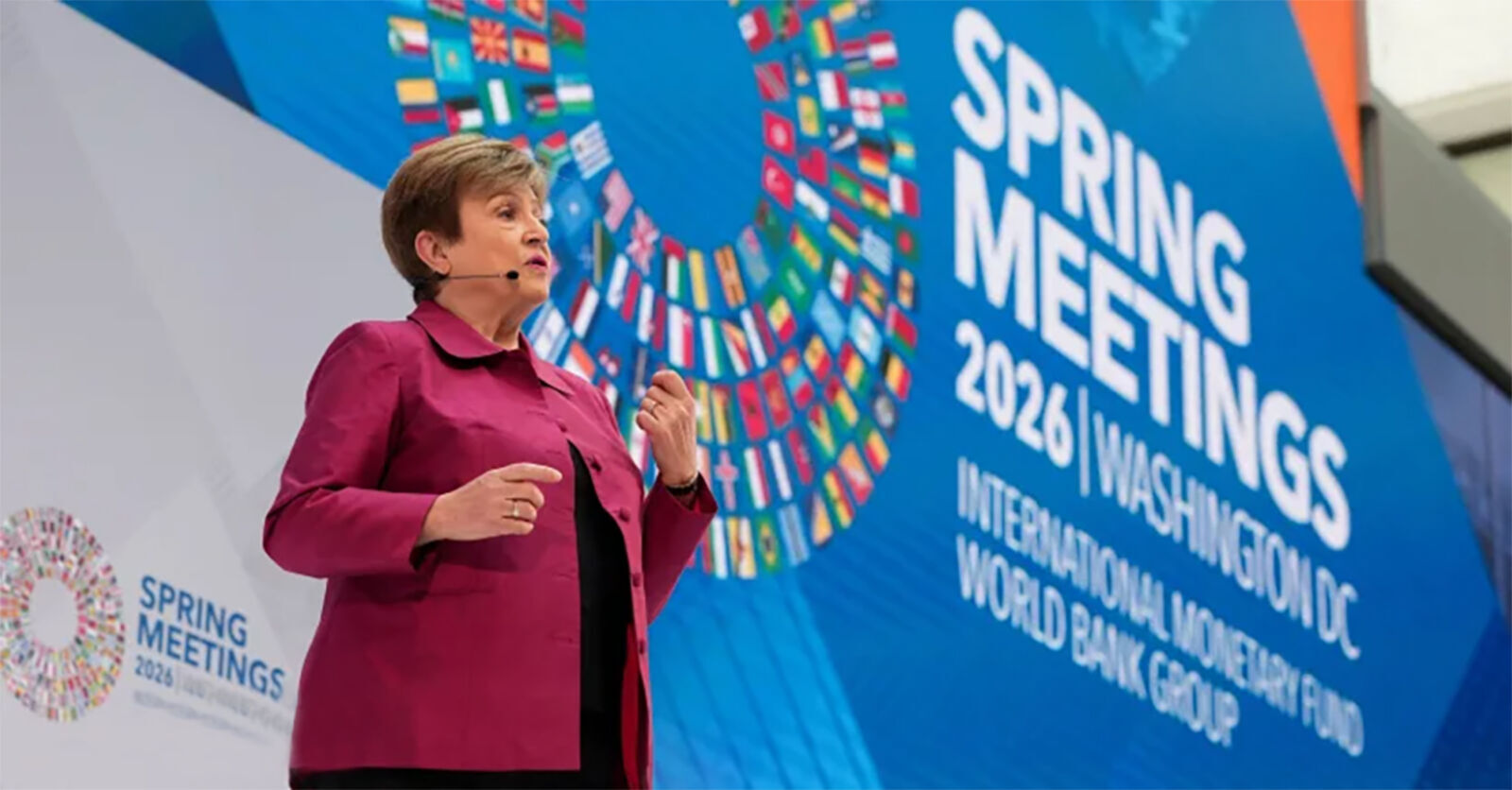
The April 17 session, “Unlocking Women’s Economic Power,” explored how policy, institutions and investment can drive women’s economic inclusion as part of its wider push to “build prosperity through policy.”
For African economies, the message is concrete. Whether it is a food processor in Ogun, a digital trader in Nairobi or a farmer-entrepreneur in northern Ghana, the priorities are similar
- Affordable credit
- Reliable broadband
- Reachable markets
- Fair rules. Panellists.
The panellists, Anino Emuwa of 100 Women @ Davos and Robin Mearns, the World Bank’s Director for Gender, framed these as essential conditions for meeting the Bank’s 2030 ambitions at scale.
Finance, Broadband, and Jobs Converge
The World Bank Group is increasingly framing gender as an economic issue, rather than a symbolic one.
It argues that expanding women’s access to jobs, finance and digital tools can widen labour-force participation, support firm growth and create jobs at scale.
That approach shapes the Bank’s 2024 – 2030 gender strategy, which ties wellbeing, economic participation and women’s leadership to measurable targets around broadband, social protection and capital access.
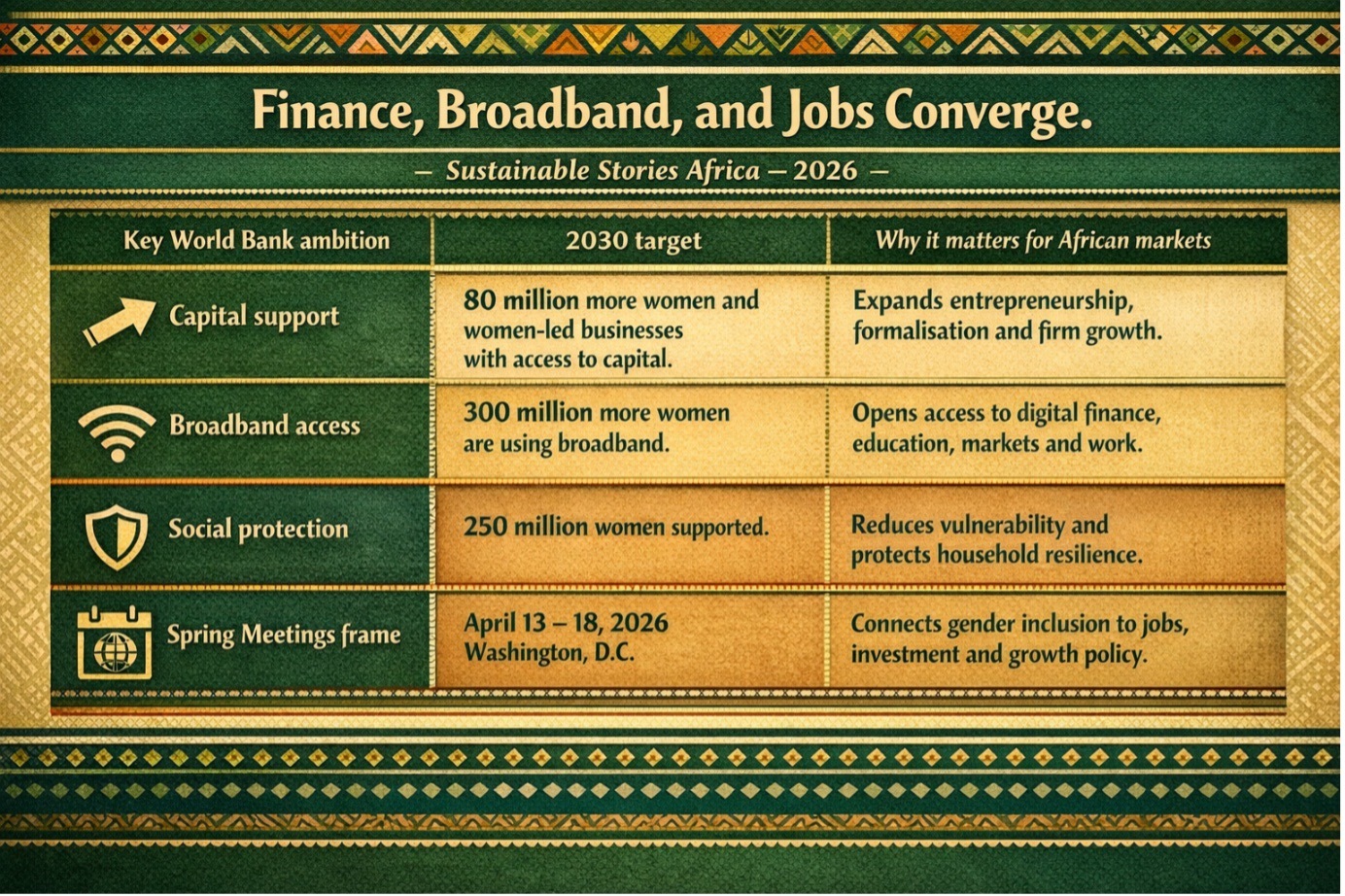
The capital goal is especially significant: the Bank aims to expand access to capital for 80 million more women and women-led businesses by 2030.
In many African markets, that ambition collides with familiar barriers, including weak collateral, lower property ownership, informal business structures, lending bias, thin credit histories and limited investor networks.
Across the Spring Meetings, the Bank also linked gender to wider delivery systems in water, energy, agriculture, health and digital development, arguing that women’s economic inclusion is central to jobs, private investment and measurable results.
Desire: What Changes When Women Get Capital
If implemented well, the agenda could unlock gains beyond individual businesses. More women with access to capital means more investable micro, small and medium-sized enterprises.
Wider broadband access would allow more women to sell online, receive digital payments, use public services and participate in remote work.
Stronger social protection would also reduce the pressure to liquidate businesses or withdraw children from school when shocks hit.
The macroeconomic case is clear. Closing gender gaps can expand output, while policy gaps still limit women’s economic opportunity.
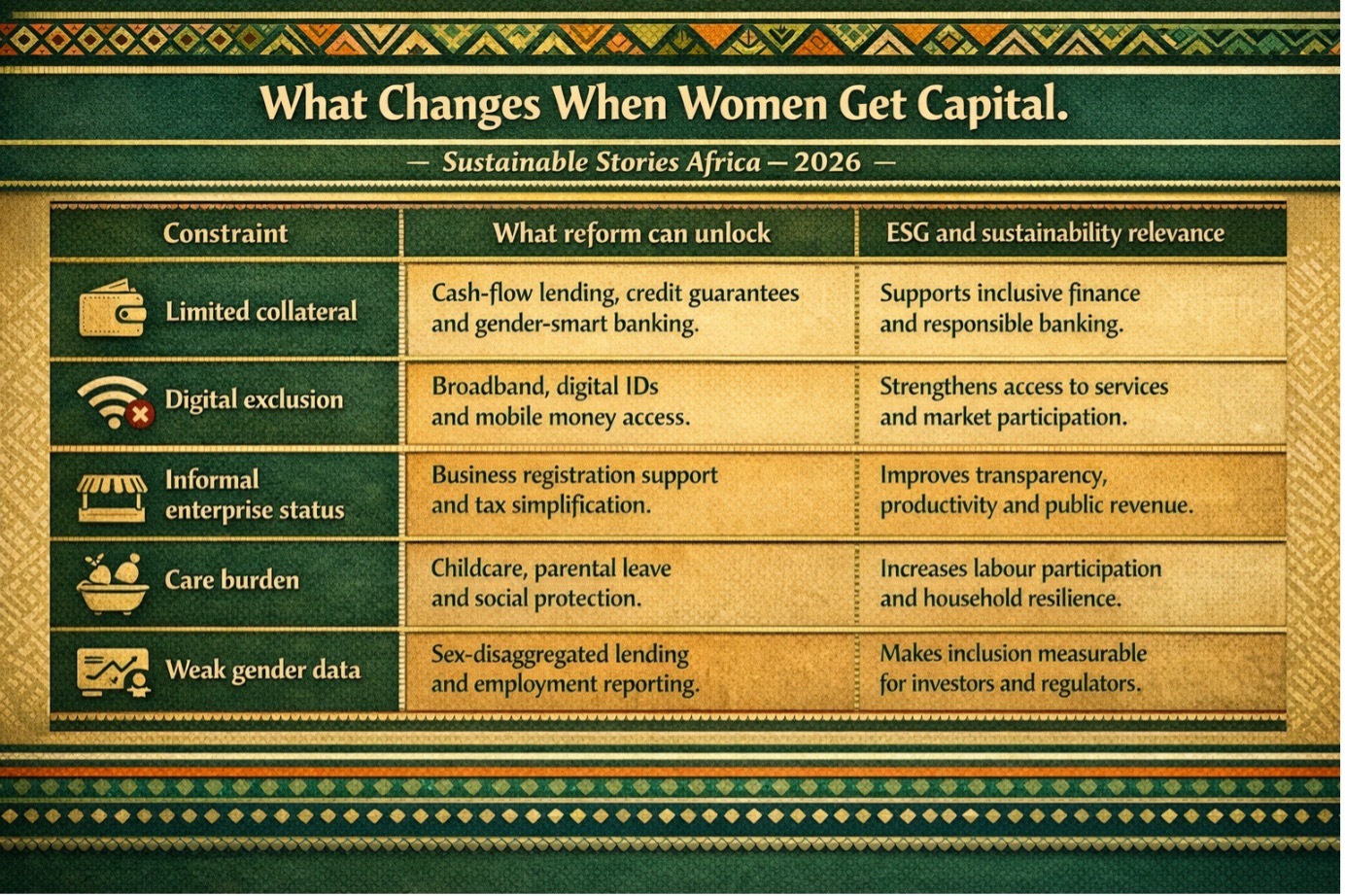
For sustainability investors, that makes gender material: banks should measure lending to women-led firms, telecoms companies should track how connectivity expands capacity, and governments should treat childcare not only as social policy, but as labour-market infrastructure.
Action: Inclusion Must Become Bankable Infrastructure
Execution is now the test.
- Governments must remove legal and administrative barriers that keep women outside formal markets.
- Financial institutions need lending models built around cash flow, business viability and customer behaviour rather than land titles alone.
- Development finance institutions must also de-risk lending in ways that crowd in local banks instead of displacing them.
For African policymakers, women’s inclusion should be treated as infrastructure: broadband, business registries, digital payments, childcare, market access platforms and social protection deserve the same seriousness as roads, ports and power.
- Companies also face a clear commercial opportunity. Gender-smart supply chains can enable vendor networks, banks can grow lending segments, fintechs can build safer tools for women traders, and employers can improve productivity by addressing care, safety and promotion.
The action pathway is concrete: capital must move, rules must change, and institutions must recognise women not only as beneficiaries, but as producers, employers and taxpayers.
Path Forward – Turn Targets Into Market Systems
Women’s economic power will depend on delivery: access to capital, broadband inclusion, social protection, childcare, legal reform and gender-disaggregated data.
The World Bank’s 2030 targets provide a measurable frame, but African markets will need local execution.
The priority now is to make women’s inclusion investable, reportable and scalable. For ESG, that means moving beyond statements toward finance, policy and corporate systems that prove women are participating in growth.