Sahara Group has called for accelerated LPG adoption as Africa’s most immediate route to cleaner cooking, energy access and supply security.
The call came at ARDA’s 2026 Leadership Side Chat and Roundtable, where Sahara linked clean cooking progress to infrastructure, finance and regional coordination.
For millions of households, the debate is not abstract: it is about safer kitchens, lower exposure to polluting fuels, and more resilient energy systems.
LPG Moves From Fuel Debate To Development Test
Sahara Group has said liquefied petroleum gas should be treated as one of Africa’s fastest and most scalable routes to energy access, clean cooking and supply security, as the continent faces persistent household energy deficits and renewed exposure to global fuel-market shocks.
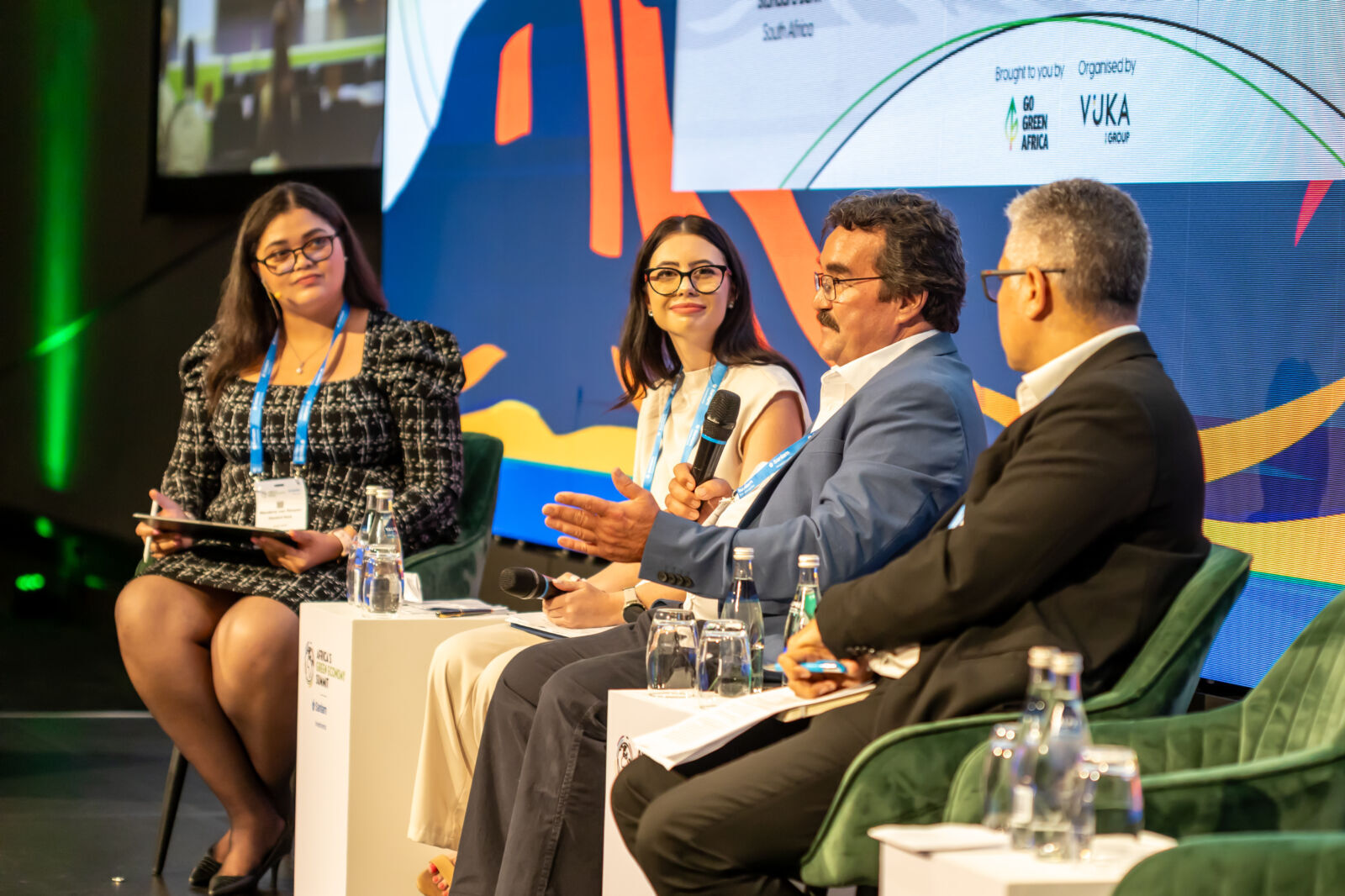
The position was presented by Wale Ajibade, Executive Director of Sahara Group, at the African Refiners & Distributors Association’s 2026 Leadership Side Chat and Roundtable, where the company argued that LPG offers a practical transition pathway suited to Africa’s current infrastructure and affordability realities.
“Africa’s transition must be built around solutions that work now,” Ajibade said. “LPG is not an interim compromise; it is the fastest bridge to energy access, resilience and shared prosperity for Africa.”
The argument lands at a time when clean cooking has become one of Africa’s most urgent energy-security issues.
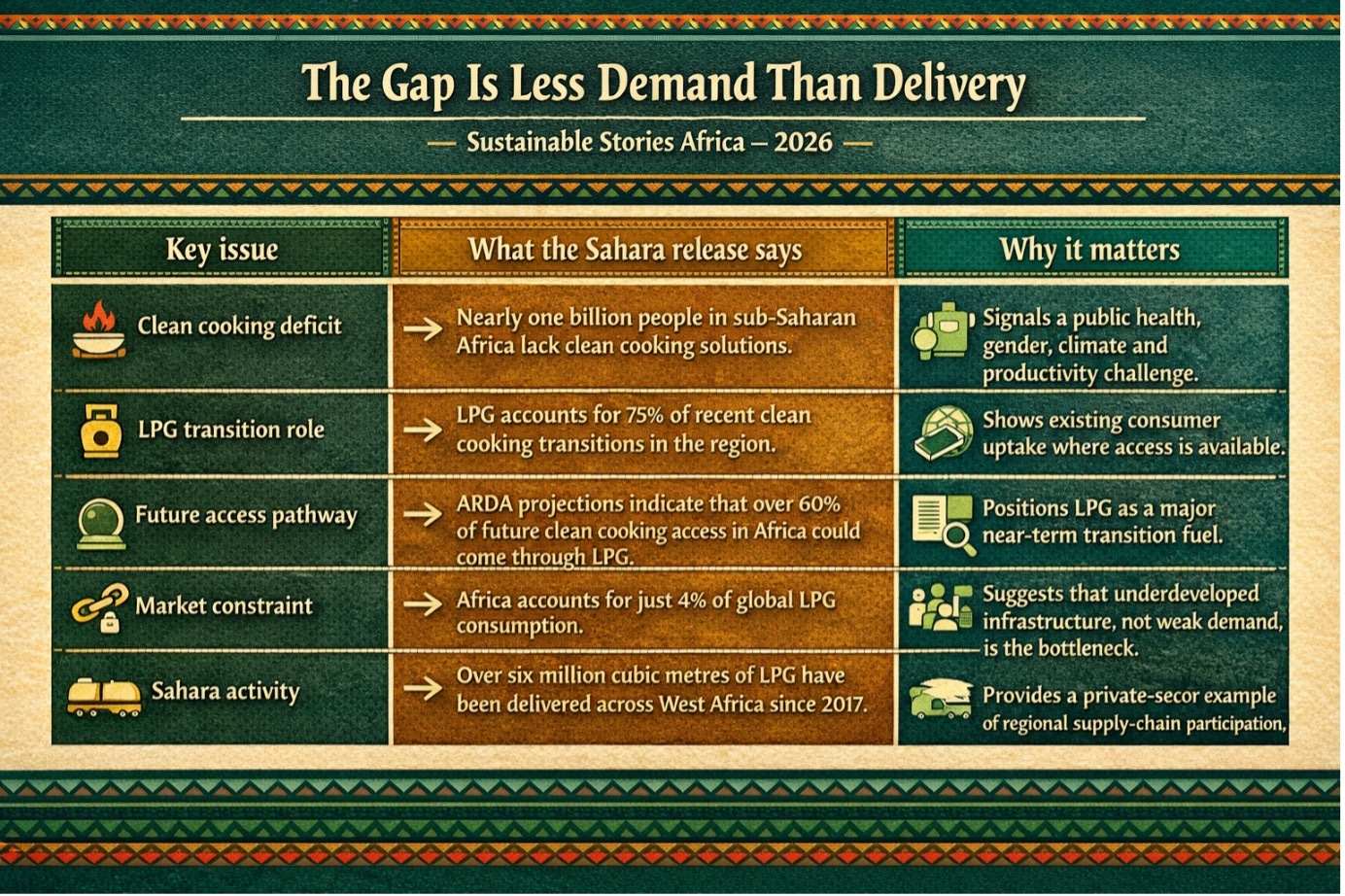
The International Energy Agency says nearly one billion people in sub-Saharan Africa still lack clean cooking options, while LPG has accounted for three-quarters of recent clean cooking transitions in the region.
The Gap Is Less Demand Than Delivery
Sahara’s intervention reflects a wider shift in Africa’s energy conversation: the challenge is no longer only about generating more supply, but about building delivery systems that can reach households consistently and affordably.
Ajibade cited recent global supply disruptions, including the crisis around the Strait of Hormuz, as evidence of Africa’s exposure to fragile international energy routes. According to the release, Brent crude prices rose above $110 per barrel during the disruption, affecting LPG and LNG flows to Africa.
“For African economies, the lesson is clear: energy resilience is built through infrastructure that incorporates robust storage, shipping optionality, diversified sourcing and regional coordination,” he said. “The continent must outgrow its dependency on fragile global routes.”
That framing is important because clean cooking is often treated as a household welfare issue rather than a market-design challenge. In practice, the two are linked. A family may want to switch from charcoal or firewood to LPG, but without affordable cylinders, safe refilling points, reliable supply, consumer finance and predictable pricing, adoption stalls.
Cleaner Kitchens Could Strengthen Economies
If Africa can scale LPG safely and affordably, the benefits would extend beyond the kitchen.
Cleaner cooking can reduce household exposure to smoke, lower time spent gathering traditional fuels, support women’s economic participation, and create new investment opportunities in storage, cylinders, transport, retail and safety systems.
The IEA has also projected that LPG could account for 61% of new clean cooking access in Africa by 2040, ahead of electricity and other modern fuels, underscoring why the fuel is central to many near-term access scenarios.
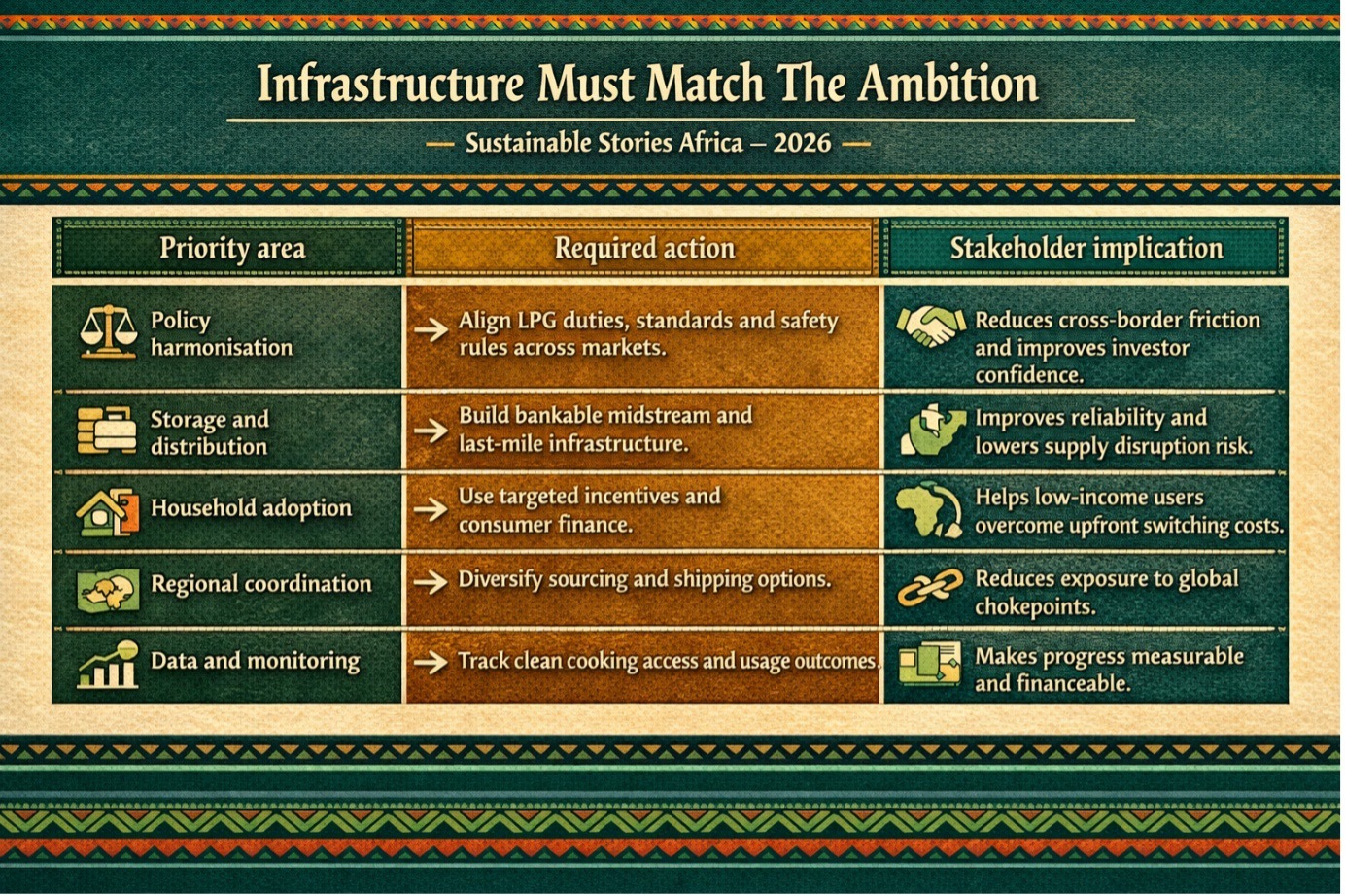
Sahara said the next phase of LPG growth would require harmonised import duties and cylinder standards, bankable storage and distribution frameworks, targeted household adoption incentives, blended finance models, and data-driven monitoring of clean cooking progress.
That list points to a practical policy reality: LPG adoption cannot be delivered by fuel availability alone.
It needs safety regulation, consumer protection, market transparency and financing structures that reduce the upfront cost of switching for low-income households.
Infrastructure Must Match The Ambition
- For governments, the immediate task is to treat clean cooking as core infrastructure, not a peripheral social programme. That means aligning customs policy, national energy plans, safety standards and household support schemes around measurable access outcomes.
- For investors, the opportunity lies in the middle of the value chain: terminals, storage depots, transport assets, cylinder manufacturing, digital tracking, distribution networks and last-mile retail.
These are not as politically visible as power plants, but they often determine whether households can actually access cleaner fuels.
Sahara said it has pursued an integrated LPG strategy across trading, shipping, storage and last-mile distribution, supported by a growing fleet of LPG carriers and expanding storage capacity.
The company said it and its partners have delivered more than six million cubic metres of LPG across West Africa since 2017.
Path Forward – Build Infrastructure Before Demand Fractures
Africa’s clean cooking transition will depend on whether governments and investors can turn LPG from an available fuel into an accessible household service.
The priorities are clear: harmonised policy, safer cylinders, bankable storage, affordable adoption and regional supply resilience.
For Sahara, the message is that LPG should sit within Africa’s ESG and energy-security agenda now, not as a final destination but as a practical bridge toward cleaner, healthier and more resilient markets.