EcoVadis and Accenture say top procurement performers are now finding stronger returns from sustainability-led innovation than from compliance alone.
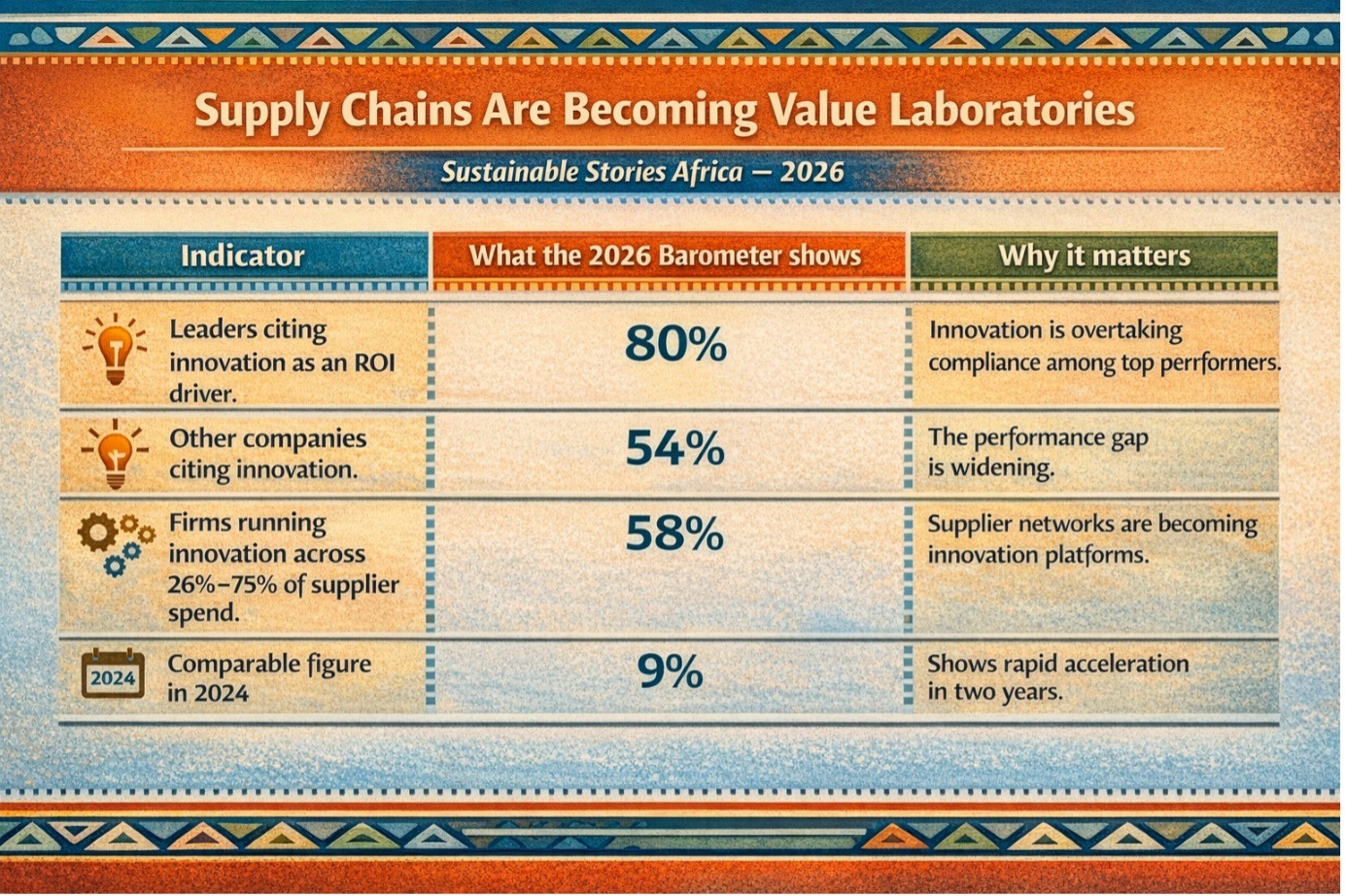
The 2026 Sustainable Procurement Barometer shows 80% of leaders cite innovation as a leading ROI driver, signalling a shift in how ESG value is measured.
For African suppliers and buyers, the message is practical: data, resilience, circularity and Scope 3 readiness are becoming market-access tools, not side projects.
Innovation Is Rewriting Procurement’s ESG Case
Sustainable procurement is moving from a compliance checklist to a boardroom value engine, with EcoVadis and Accenture finding that 80% of top-performing procurement organisations now cite innovation as a leading driver of return on investment.
The finding, released on April 16, 2026, in the 2026 Sustainable Procurement Barometer, marks a sharp turn in how companies are thinking about ESG inside supply chains.
Among the top 10% of performers, innovation has overtaken compliance as the main ROI driver, compared with 54% of other companies.
The report was based on input from more than 1,000 multinationals with revenues above $1 billion and nearly 2,000 suppliers across 20 industries.
The shift matters because procurement sits where climate targets, supplier risk, inflation, operational disruption and human rights expectations meet.
For African manufacturers, exporters and service providers, the message is direct: sustainability data is no longer just evidence for audits.
It is becoming evidence of resilience, innovation capacity and commercial reliability.
Supply Chains Are Becoming Value Laboratories
EcoVadis and Accenture’s central argument is that leading companies are no longer treating ESG as a defensive function.
They are embedding sustainability into sourcing decisions, supplier engagement, product design and risk management.
The report says 58% of organisations now run innovation initiatives across 26% to 75% of supplier spend, up from just 9% in 2024.
That is a major jump. It means sustainable procurement is moving deeper into everyday purchasing decisions, from materials and packaging to energy efficiency, circular design and supplier collaboration.
For a Nigerian food processor, a Kenyan textile exporter or a Ghanaian packaging supplier, this is not abstract.
A global buyer asking for lower-carbon packaging, stronger labour safeguards or verified emissions data is not only managing compliance exposure.
It is also searching for suppliers that can reduce waste, cut costs, withstand disruption and meet customer expectations.
EcoVadis says the pressure is coming from multiple fronts:
- Geopolitical conflict
- Regulation
- Climate disruption
- Scope 3 demands.
Nearly all surveyed companies, 98%, have started embedding ESG data into procurement processes, either manually or through digital tools. But full integration remains uneven.
Better Data Can Unlock Better Markets
The upside is significant. Procurement teams that use ESG intelligence well can make faster decisions, reduce supplier risk, improve continuity and identify new value from circularity, resource efficiency and carbon reduction.
Pierre-François Thaler, co-founder and co-CEO of EcoVadis, framed the shift clearly: “The question is no longer whether to invest in sustainable procurement.”
That statement captures the new competitive line. The stronger question is whether companies can convert supplier data into decisions that protect revenue and improve performance.
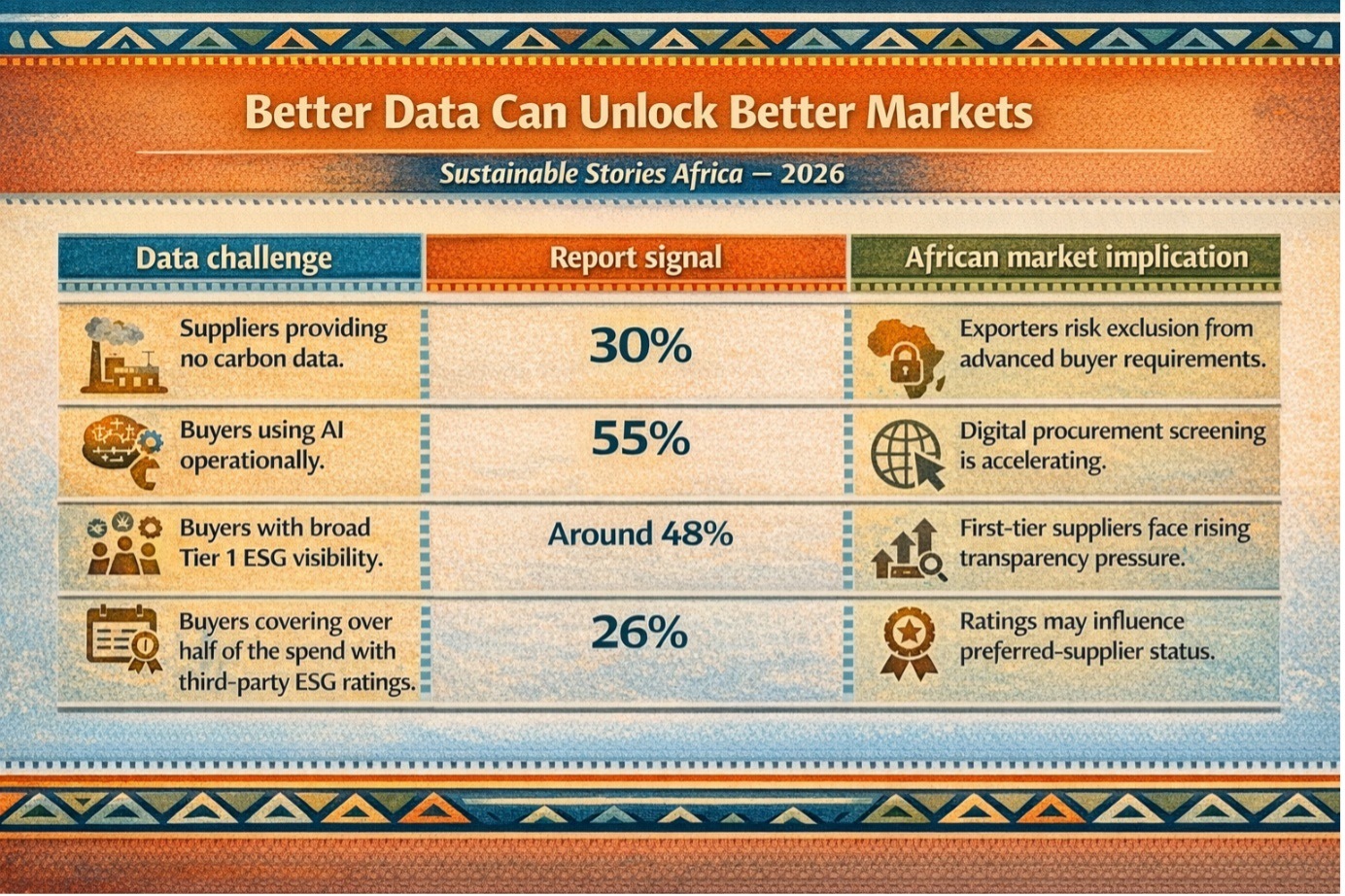
The report also highlights a data divide. Around half of buyers now have visibility into ESG practices for most Tier 1 suppliers, but visibility falls sharply beyond that level.
Supplier carbon data is also uneven: 30% of suppliers still do not provide any carbon data, while only 21% provide detailed activity-level carbon data across Scope 1, Scope 2 and selected Scope 3 categories.
For African suppliers, this creates both risk and opportunity. Firms that cannot provide credible ESG and emissions data may face higher scrutiny or lose access to premium buyers.
However, those that can document improvements, cleaner energy, safer labour systems, better waste management, and lower-carbon inputs can position sustainability as a market advantage.
African Suppliers Need Procurement-Ready ESG Systems
The next step is not simply more reporting. It is a procurement-ready ESG infrastructure.
- Companies need supplier data systems that are accurate enough for buyers, practical enough for operations teams and credible enough for financiers. That includes product-level carbon data, supplier risk mapping, labour practice documentation, waste and resource-efficiency metrics, and evidence of continuous improvement.
- For policymakers and business associations in African markets, the priority should be support systems for SMEs. Many smaller suppliers cannot afford complex ESG platforms, consultants or assurance processes. Without technical support, supplier training and accessible reporting tools, sustainable procurement could become another barrier between African producers and global value chains.
- For corporates, the mandate is clearer: move beyond questionnaires. The report recommends ratings, training, joint innovation projects, incentives and deeper supplier engagement. That is where compliance becomes collaboration, and where ESG becomes a shared productivity agenda rather than a pass-or-fail audit.
Path Forward – Build Data-Rich Supplier Resilience Now
African companies should treat sustainable procurement as a market-access strategy: measure emissions, strengthen labour systems, document improvements and prepare for buyer scrutiny beyond Tier 1.
The bigger promise is competitiveness. If suppliers, regulators and financiers align around credible ESG data, African firms can move from compliance pressure to innovation-led growth, winning business not because they tick boxes, but because they solve supply-chain problems.
Culled From: EcoVadis and Accenture Find 80% of Procurement Leaders Now See More ROI from Innovation Than Compliance