Henkel has set new 2030 sustainability targets covering emissions, packaging, gender equity and supplier standards.
The company aims to cut Scope 1 and 2 emissions by 42%, raise recycled plastic in consumer packaging to at least 35%, and ensure 85% of suppliers meet sustainability standards.
For African suppliers and consumer markets, the signal is clear: ESG performance is becoming part of procurement access, packaging design and long-term competitiveness.
Henkel Puts 2030 Targets Into Motion
Henkel has announced a new set of 2030 sustainability targets that tighten the company’s climate, packaging, workforce and supplier commitments, signalling how global consumer goods and chemicals groups are moving ESG deeper into operations rather than treating it as a reporting add-on.
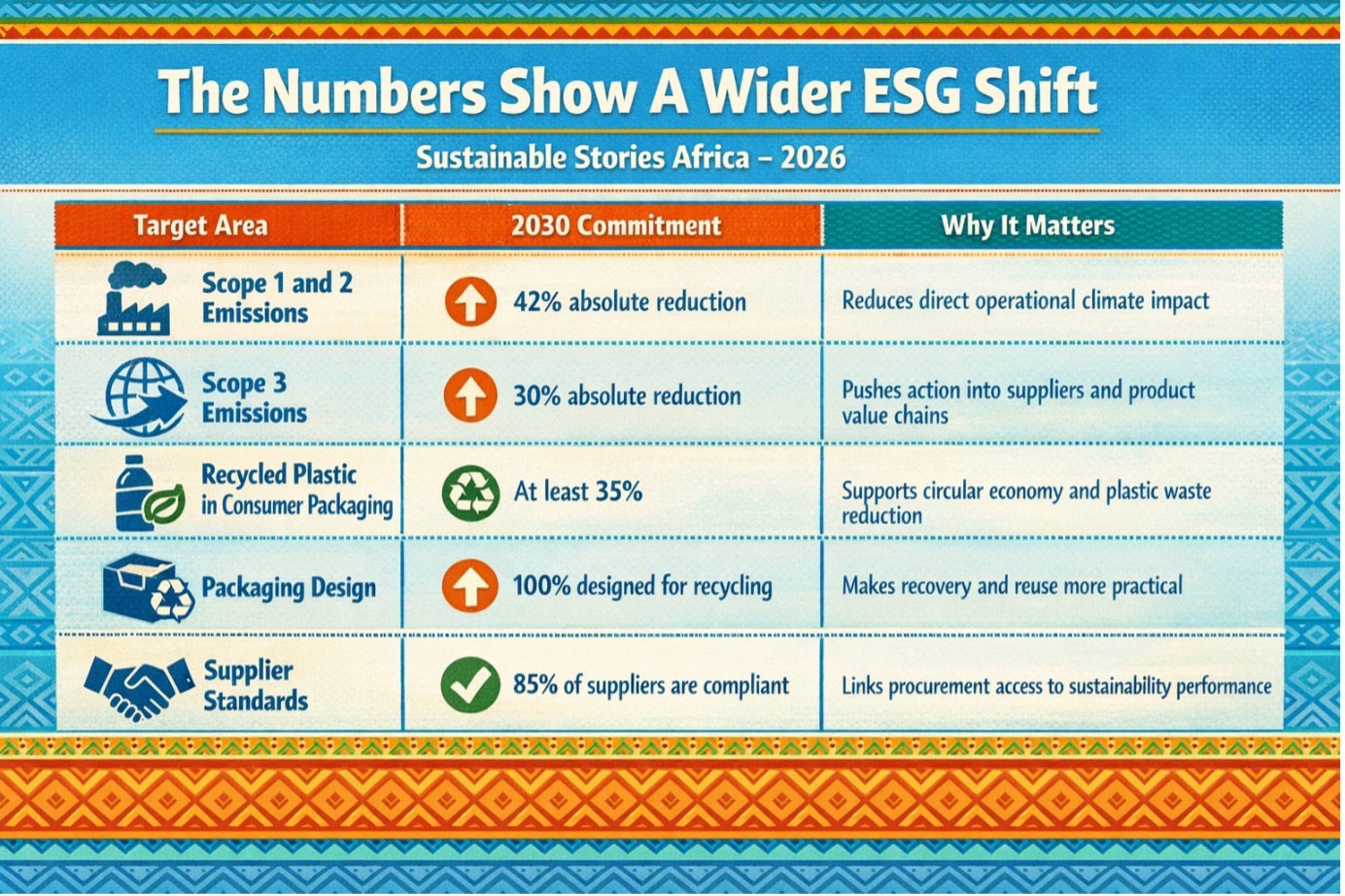
The Düsseldorf-based company said it aims to reduce absolute Scope 1 and Scope 2 greenhouse gas emissions by 42% by 2030, using 2021 as the baseline, while cutting Scope 3 emissions by 30%.
It also plans to increase recycled plastic content in consumer packaging to at least 35%, design 100% of packaging for recycling, and ensure 85% of suppliers meet specific sustainability standards.
The targets matter because Henkel’s products are part of everyday life: detergents, adhesives, beauty care, packaging materials and industrial solutions.
For households, manufacturers and retailers across African and Global South markets, the announcement points to a future where product affordability, packaging waste, supplier eligibility and climate performance increasingly sit in the same conversation.
The Numbers Show A Wider ESG Shift
Henkel says the new 2030 goals are part of its pathway to net-zero emissions by 2045 and are supported by a roadmap validated by the Science Based Targets initiative in 2024.
The company reported that by 2025, it had achieved a 29% reduction in Scope 1, 2 and 3 emissions compared with the 2021 baseline, reached carbon-neutral production at 37 sites worldwide, and increased renewable electricity use to 97% globally.
This is where the African relevance becomes concrete. A packaging supplier in Lagos, a contract manufacturer in Nairobi, or a logistics partner in Accra may not see Henkel’s global targets as distant corporate language for long.
Once major multinationals attach sustainability standards to procurement, suppliers are expected to provide cleaner inputs, better data, safer labour systems and stronger waste-management practices.
The packaging target is especially important. Plastic remains one of the most visible sustainability issues in fast-growing cities, where weak collection systems and limited recycling infrastructure turn consumer packaging into a public health, drainage and flood-risk problem.
Henkel’s push towards recycled content and recyclable design speaks to a broader market reality: companies are being asked not only about what they sell, but what happens after the product is used.
Better Standards Can Unlock Better Markets
If implemented well, Henkel’s targets could create value beyond emissions accounting. Lower operational emissions can reduce exposure to energy volatility.
Recycled packaging can support secondary materials markets. Stronger supplier standards can improve traceability, working conditions and risk management.
For African firms, the opportunity is moving from informal compliance to measurable competitiveness.
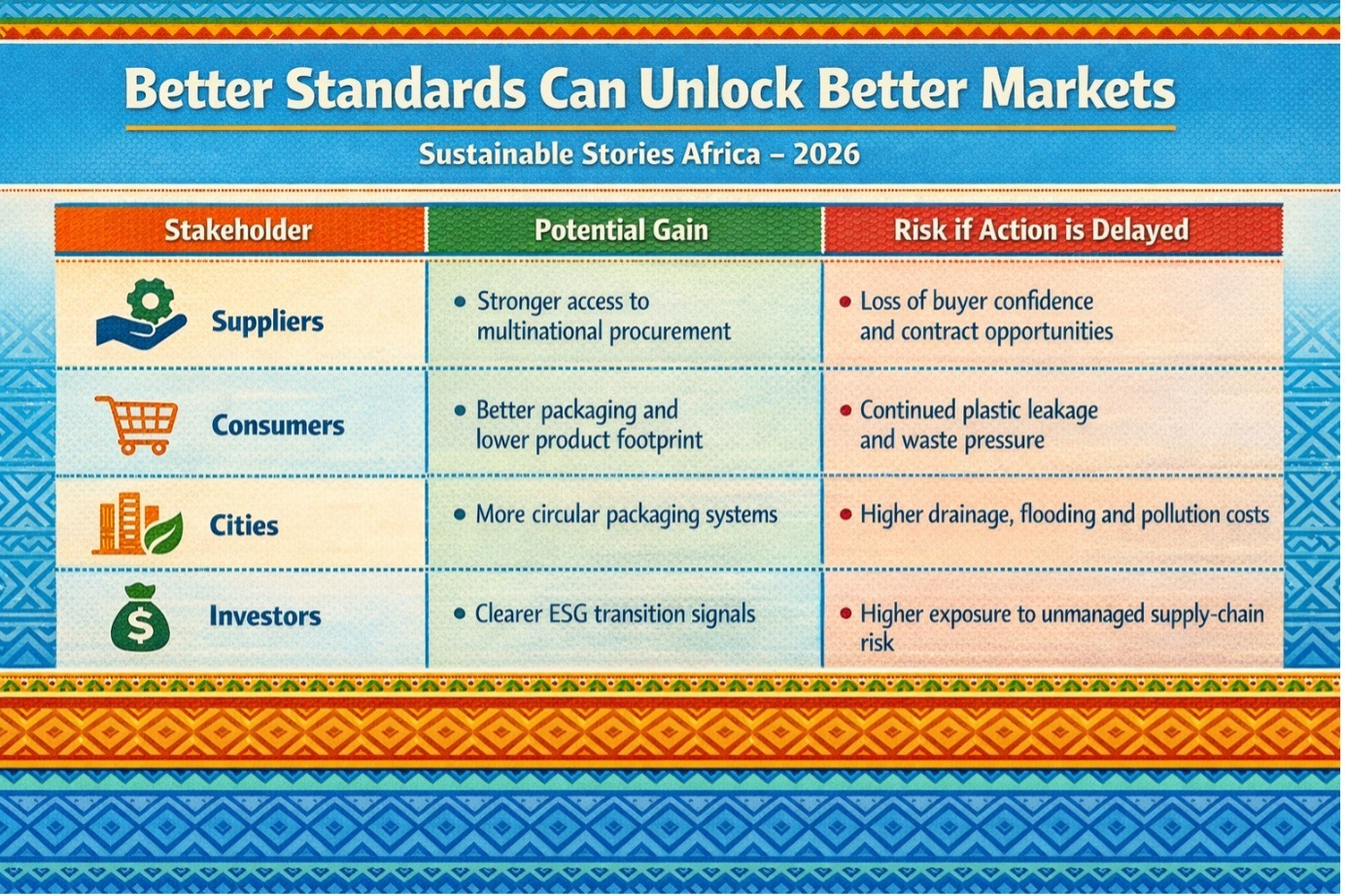
Suppliers that can document renewable energy use, waste recovery, material traceability, labour safeguards and emissions reductions may become more attractive to global buyers.
Those that are not able to face tougher onboarding, smaller order books or exclusion from higher-value supply chains.
Henkel’s targets also reflect a wider shift in corporate sustainability: companies are moving from broad ambition statements to measurable milestones.
That matters for investors and regulators, but it also matters for communities living with the consequences of waste, dirty energy and fragile supply chains.
Suppliers Need Practical ESG Readiness
The next task is execution. Henkel will need to translate its global targets into procurement rules, supplier engagement, packaging redesign, renewable-energy sourcing and product-level decisions.
The harder work will happen inside factories, supplier audits, logistics systems and material choices.
African policymakers and business associations should also pay attention. If global companies raise supplier expectations, local firms will need support: affordable ESG reporting tools, recycling infrastructure, access to renewable energy, technical training and credible assurance systems.
Without that support, sustainability requirements may become a barrier. With it, they can become a route into better markets.
For companies supplying Henkel or similar multinationals, the message is immediate: sustainability data is now business data.
It can influence whether a supplier is trusted, whether a product is preferred, and whether a market is ready for the next phase of global procurement.
Path Forward – Build Supplier Readiness Before 2030 Arrives
Henkel’s 2030 targets show that emissions, packaging and supplier standards are converging into a single business test.
African suppliers should prepare now by measuring emissions, improving packaging inputs, formalising labour and environmental practices, and building credible ESG records.
The winners will be firms that treat sustainability not as paperwork, but as proof of resilience, quality and market readiness.