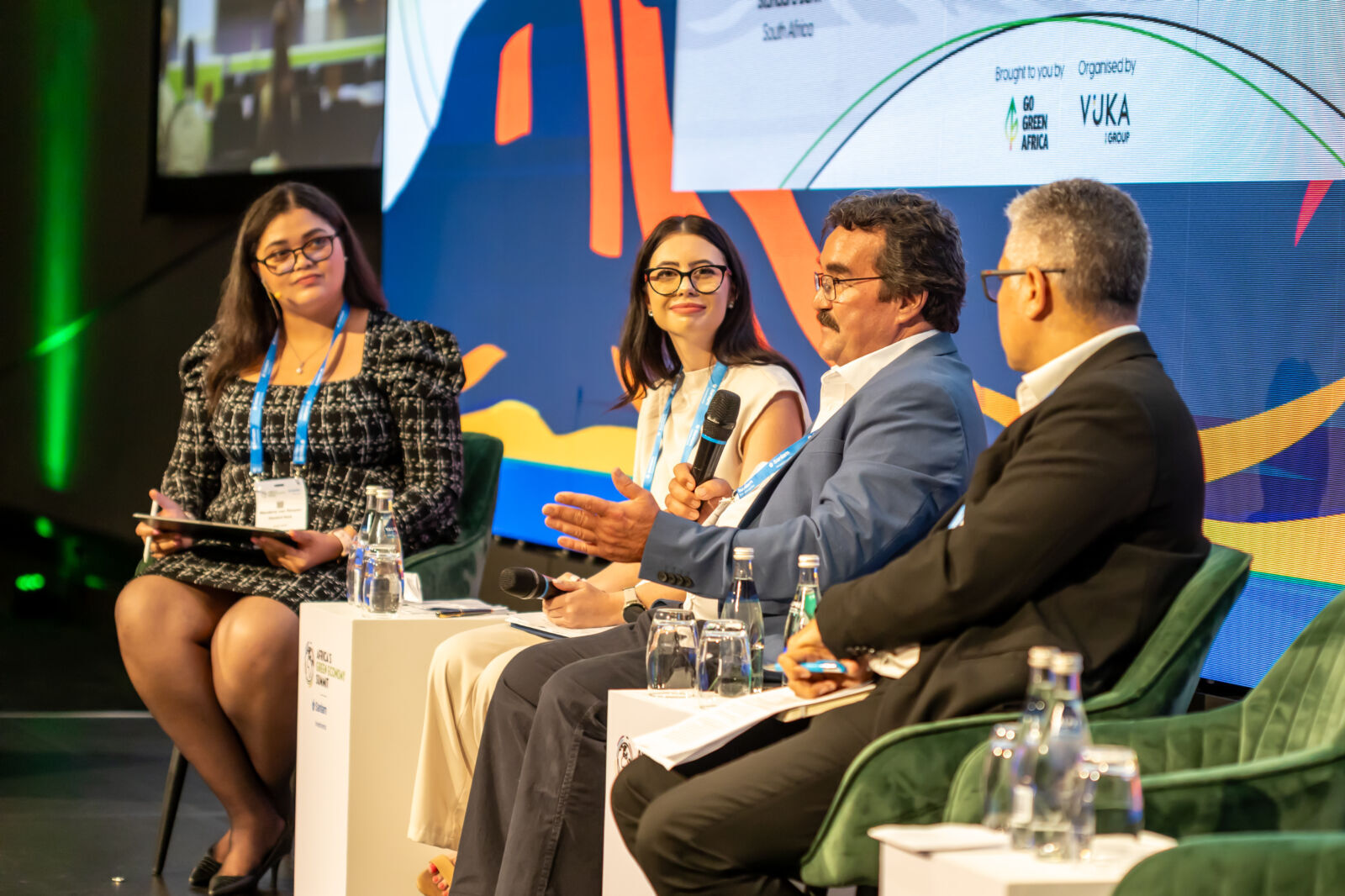
AGES 2026 closed in Cape Town with a blunt message: Africa’s climate ambition must now become bankable, scalable and locally owned.
The summit brought together more than 600 delegates from 42 countries, linking policymakers, investors, developers and innovators around green and blue economy opportunities.
The stakes are practical: water systems, farms, energy access, jobs and resilient local value chains now depend on whether climate plans can attract capital.
Africa’s Climate Plans Need Capital Now
Africa’s Green Economy Summit 2026 has ended in Cape Town with a clear shift in tone: climate ambition is no longer enough unless it can be translated into investable projects, bankable pipelines and systems that protect communities while creating jobs.
Held from 24 to 27 February 2026, the four-day platform gathered more than 600 delegates from 42 countries, including investors, policymakers, project developers and business leaders.
The summit urged African markets to use digital innovation, water finance, redesigned agriculture and green industrialisation to turn climate exposure into economic opportunity.
The message was direct. Africa does not lack climate need, natural assets or entrepreneurial ambition.
What remains uneven is the architecture that moves projects from concept notes to financial close: credible data, risk-sharing tools, policy certainty, local value chains and finance structures that match the realities of African markets.
From Pledges To Practical Pipelines
AGES 2026 focused on where capital is flowing, where it is stalling and which sectors are ready for scale. The summit’s deal-making platform covered renewable energy, green transport, water, waste, sustainable agriculture, green buildings, the blue economy and climate technology.
That framing matters because Africa’s climate finance gap remains severe. The Climate Finance Lab, which hosted its 2026 Africa selection meeting with AGES, cited the Africa Climate Finance Tracking Report 2025 as showing that current climate finance flows meet only around 25% of Sub-Saharan Africa’s annual climate financing needs.
Key AGES 2026 signal | What it means for African markets |
|---|---|
600+ delegates from 42 countries | Climate finance is becoming a deal-making issue, not only a diplomatic agenda. |
50+ vetted African projects | More attention is shifting to investment-ready pipelines across sectors. |
24–27 February 2026, Cape Town | The summit positioned South Africa as a convening hub for green finance. |
Green and blue economy focus | Energy, water, agriculture, waste, mobility and nature finance are now linked. |
It also elevated a critical principle for African markets: communities must be treated as core stakeholders, not passive beneficiaries.
For a farmer in drought-prone Limpopo, a waste entrepreneur in Lagos, or a coastal community in Senegal, that distinction is not theoretical.
It determines whether climate finance arrives as distant reporting language or as irrigation, cleaner transport, waste recovery, resilient food systems and new income streams.
Bankable Climate Action Can Create Jobs
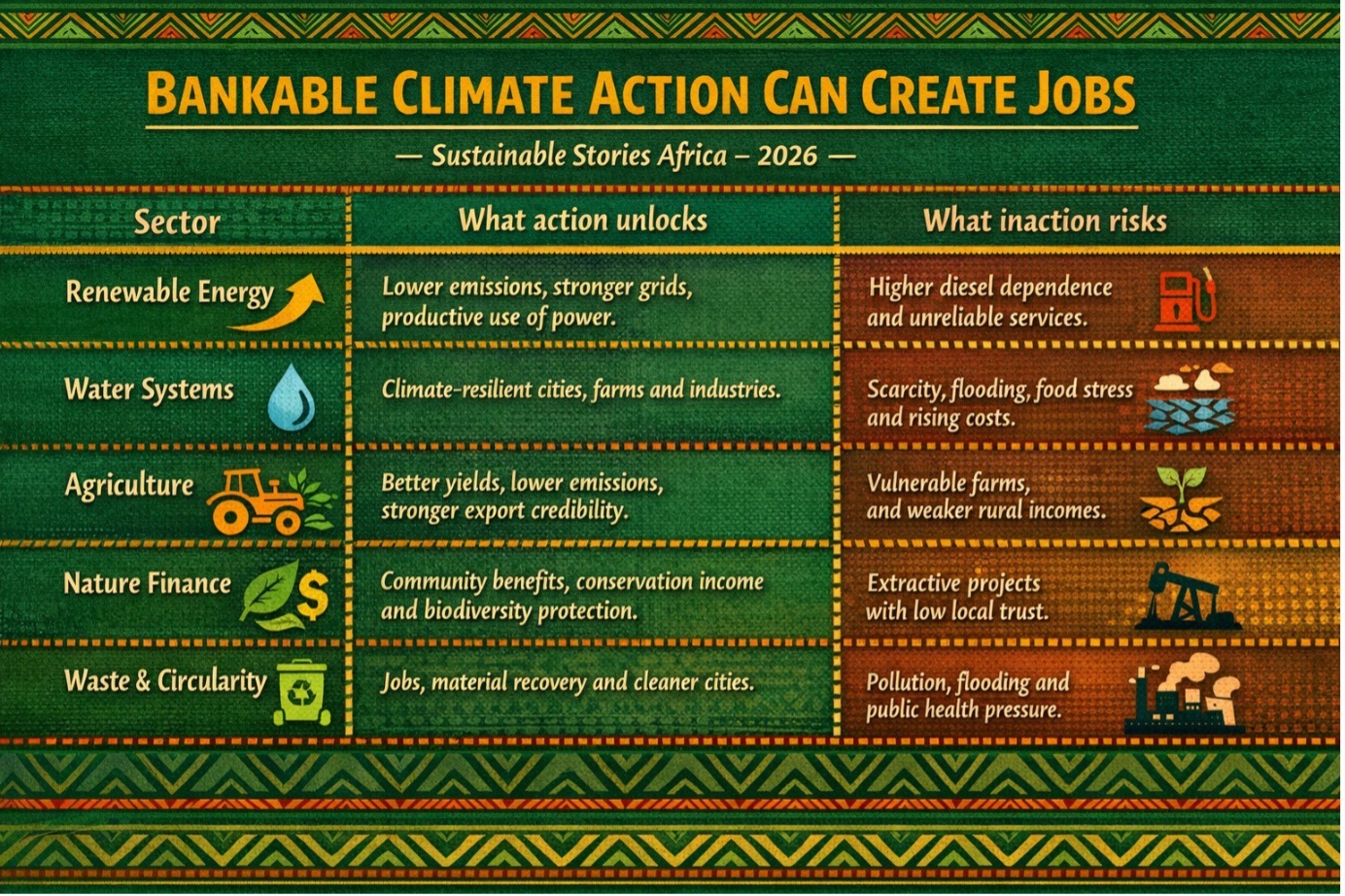
The opportunity in the AGES roadmap is that climate action can become an industrial strategy. If African countries build the right pipelines, green investment can support power reliability, local manufacturing, regenerative agriculture, water security and export competitiveness.
That is why the summit repeatedly returned to local value chains. South Africa’s Deputy Minister of Forestry, Fisheries and Environment, Narend Singh, urged African countries to move beyond raw material exports by building domestic value addition around minerals and technologies.
The summit also linked energy reliability to food systems. Without stable power, irrigation weakens, cold chains fail, and food losses rise.
Speakers highlighted the water-energy-food nexus, where farmers increasingly need clean power, efficient water tools and data systems that help them adapt.
Finance Must Meet Local Realities
The next test is execution. Investors need stronger project documentation, clearer permits, credible revenue models and risk-sharing instruments.
Governments need predictable regulation, faster procurement and stronger coordination between climate plans, industrial policy and infrastructure delivery.
AGES 2026 also showed that finance must be redesigned around African realities.
Blended finance, guarantees, green bonds, biodiversity credits and project preparation facilities can help crowd in private capital, but only when they reduce real risks instead of adding another layer of complexity.
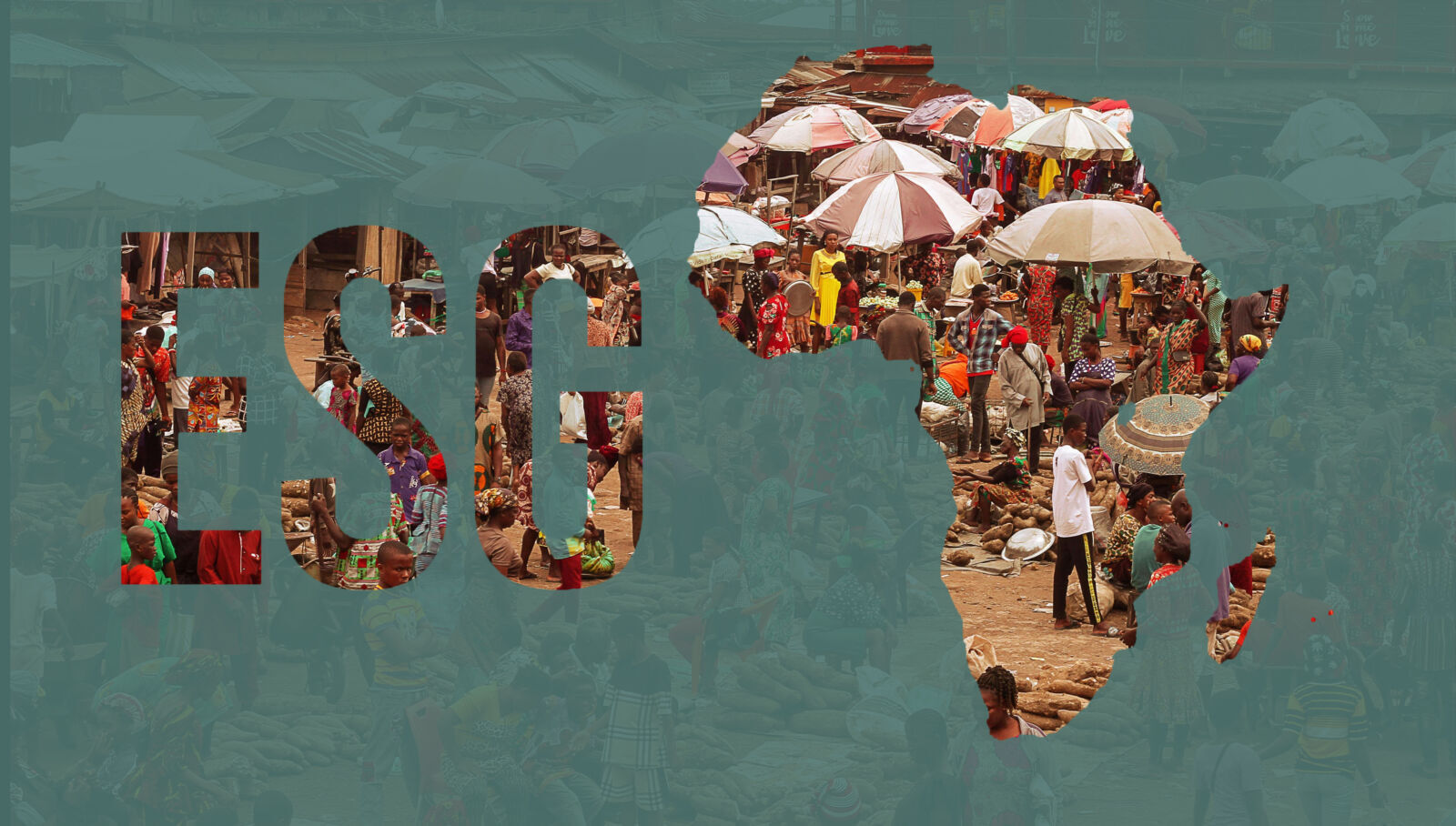
For businesses, the signal is equally clear. ESG is no longer just reporting. It is becoming a market-access issue, especially as carbon-linked trade rules and investor scrutiny rise.
Companies with cleaner energy, traceable supply chains and credible emissions data will be better positioned than those treating sustainability as a communications exercise.
Path Forward – Build Pipelines, Policy, Trust, Scale
Africa’s climate ambition now needs delivery systems: investable projects, credible data, local ownership, policy certainty and finance that reaches real assets.
AGES 2026 has reframed climate action as an economic execution agenda, not only an environmental promise.
The next phase should prioritise bankable pipelines, community-centred finance, resilient water and food systems, and green industrial value chains.
Culled From: AGES 2026 Delivers Definitive Roadmap to Turn Africa’s Climate Am