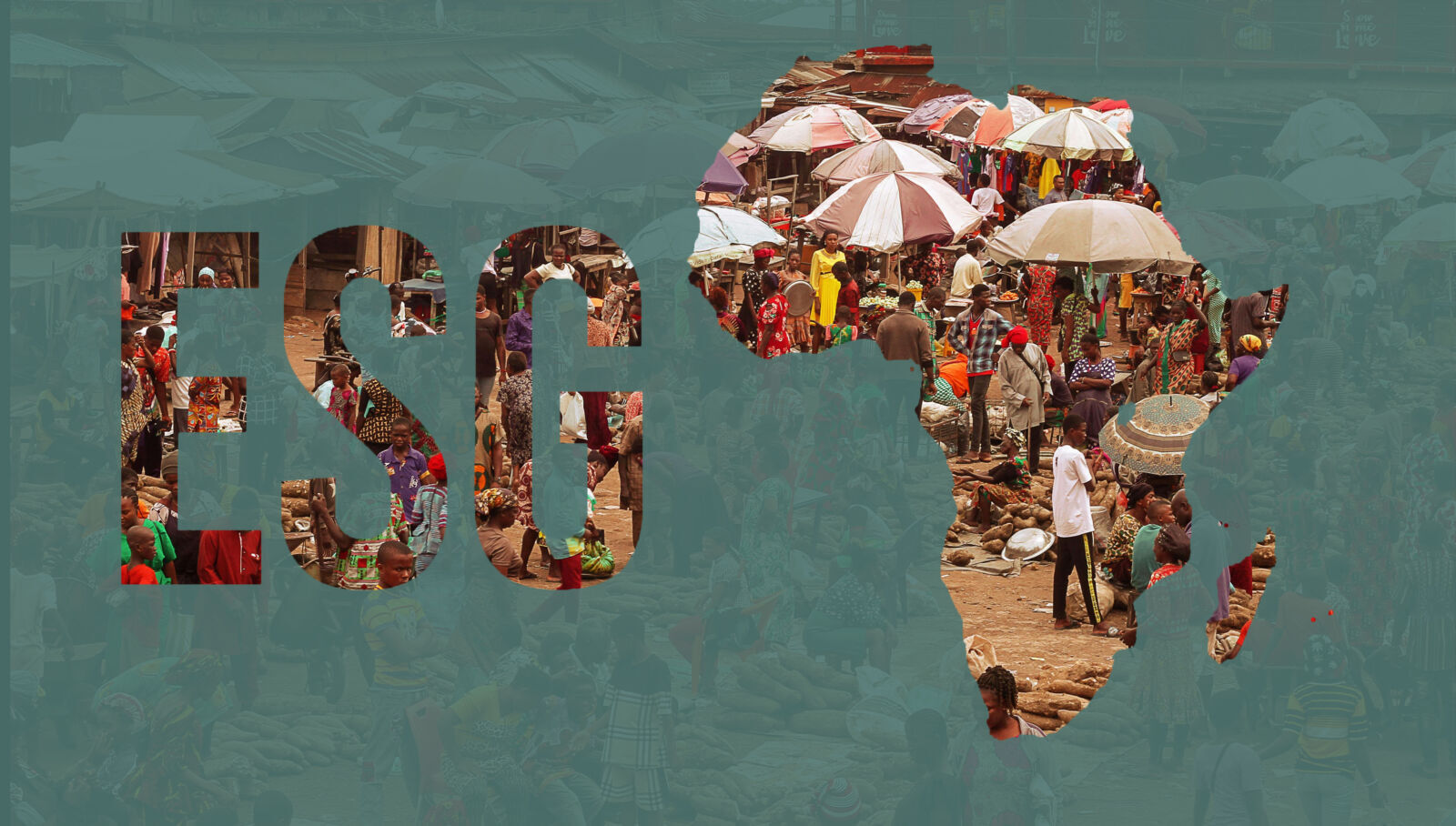
A Climate & Capital Media report has spotlighted how fast fashion waste from wealthy markets is overwhelming Ghana’s second-hand clothing system.
The crisis matters now because textile waste is no longer just a consumer issue; it is a climate, trade and environmental justice problem.
For African cities, the cost is visible in clogged drains, polluted beaches, overwhelmed traders and rising pressure for producer responsibility.
Africa Is Not Fashion’s Dumpster
Fast fashion’s waste crisis is increasingly landing on African shores, with Ghana emerging as a powerful case study of how discarded clothing from wealthy countries is overwhelming local markets, waste systems and communities.
A Climate & Capital Media article by Sam Quashie-Idun, Head of Investigations at Greenpeace Africa, reports that shipping containers carrying about 15 million pieces of clothing arrive at Ghana’s largest port each week, feeding one of the world’s biggest second-hand clothing markets while also producing a growing mountain of unsellable waste. The report frames the issue as more than poor waste management: it is a climate justice problem tied to overproduction, weak regulation and unequal global trade. (climateandcapitalmedia.com)
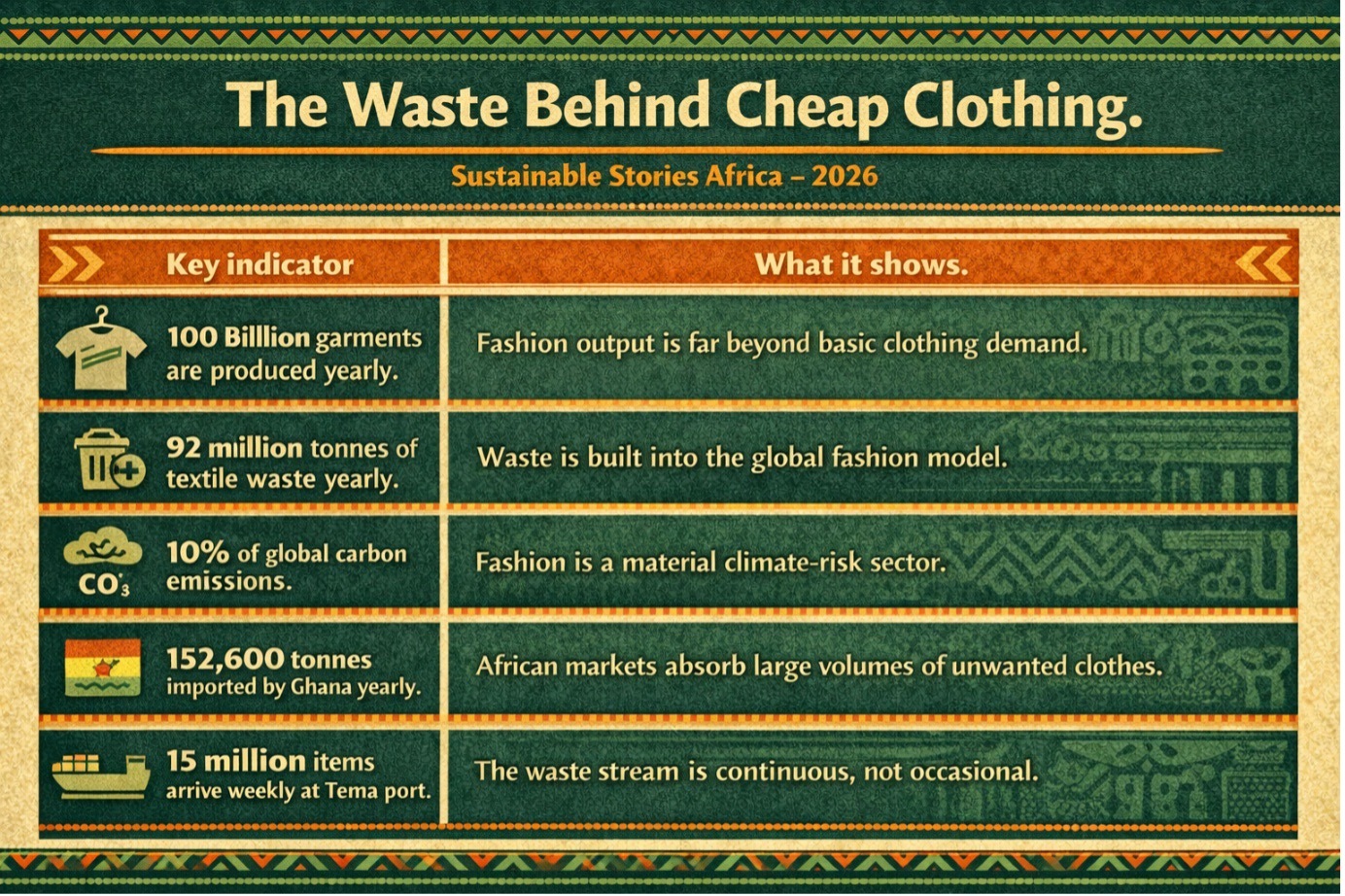
The numbers are stark. Climate & Capital cites annual global production of 100 billion garments and 92 million tonnes of textile waste, with the fashion industry accounting for 10% of global carbon emissions and about 20% of global water waste. (climateandcapitalmedia.com)
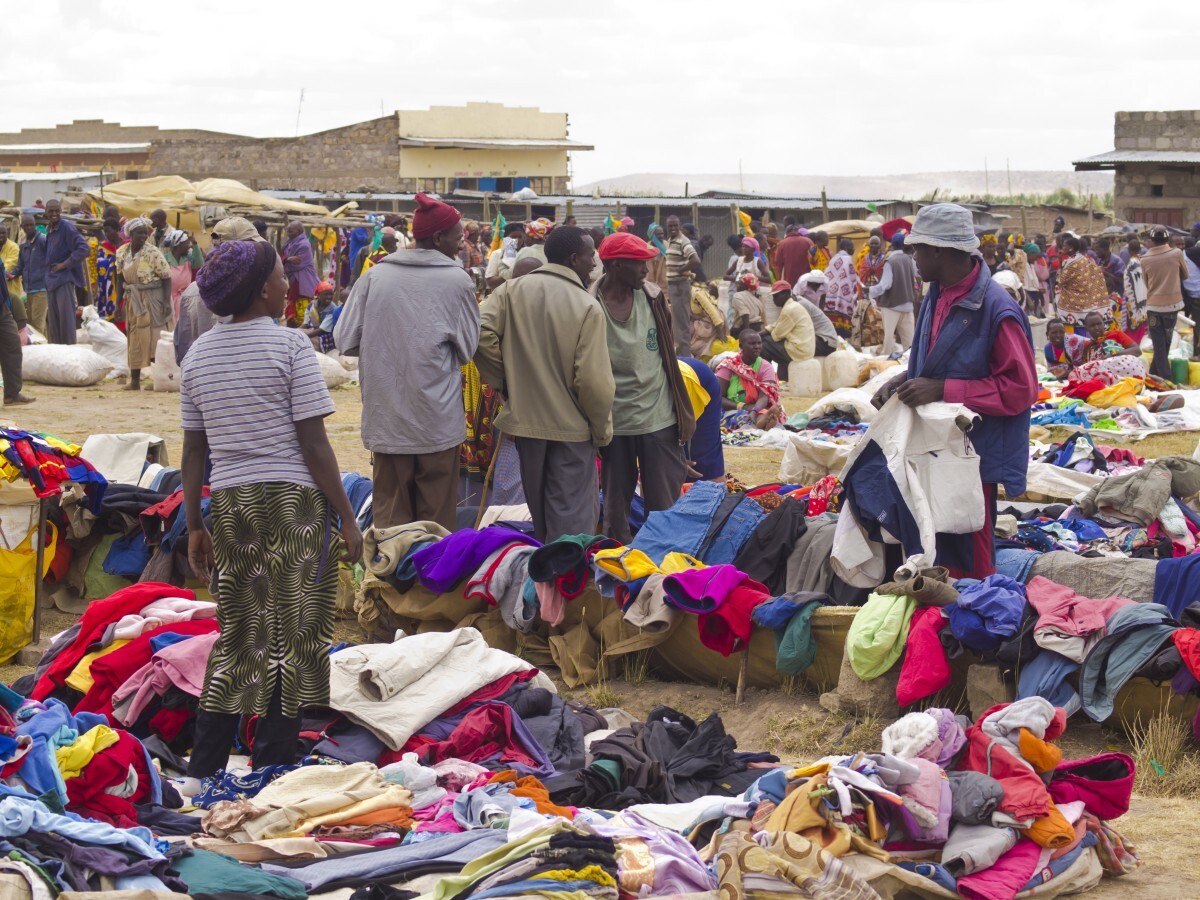
For African markets, the story is not abstract. It is the blocked drainage channel after heavy rain, the informal trader who pays for a bale of clothes only to discover much of it cannot be sold, and the coastal community watching synthetic fabrics wash into lagoons and beaches.
Interest: The Waste Behind Cheap Clothing
Ghana’s Kantamanto market in Accra sits at the centre of this global contradiction. Second-hand clothing has long supported livelihoods, repair businesses and upcycling work.
Climate & Capital reports that Kantamanto employs more than 30,000 workers who sell, clean, repair and repurpose imported garments.
However, the increase in fast fashion has changed the quality and volume of what arrives. Ghana receives about 152,600 tonnes of second-hand clothes annually, while approximately 100 forty-foot containers carrying more than 15 million fashion items arrive weekly at Tema port. Approximately 70% of the imported clothes go to Kantamanto.
The human impact is sharpest for traders. Climate & Capital reports that some market women and men pay the equivalent of $280 for a bag of imported second-hand clothes, only to find that about half may be usable.
That turns fast fashion’s hidden cost into a local financial loss. Western consumers may think they are donating clothes responsibly.
However, in Accra, Lagos, Nairobi and other cities, poor-quality imports can become an economic burden for workers with limited margins and few protections.
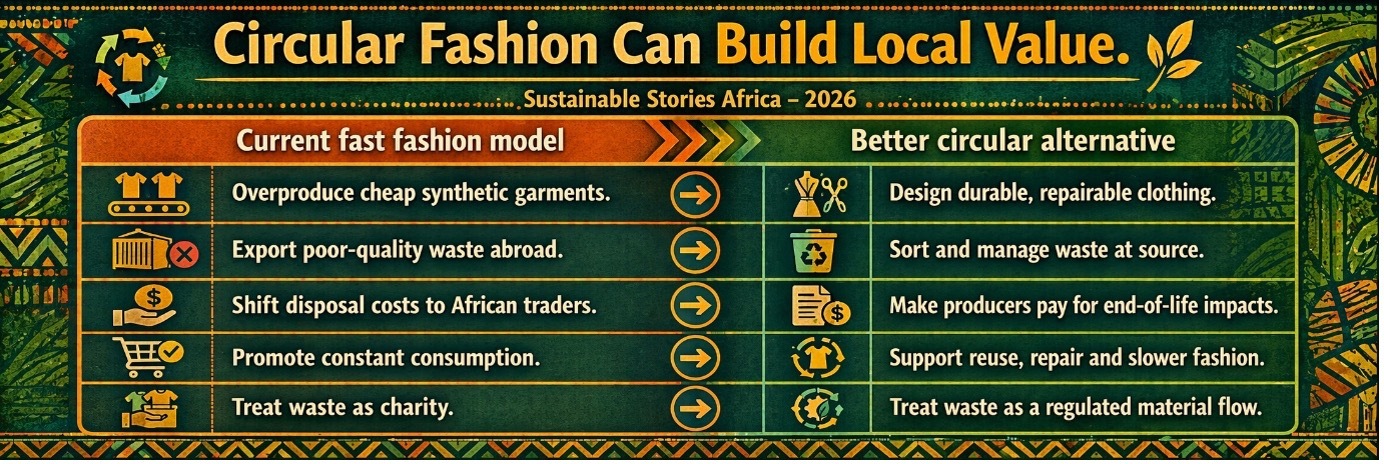
Circular Fashion Can Build Local Value
The better future is not a world without the clothing trade. It is a world where fashion systems are designed for durability, repair, reuse and accountability.
Africa already has the foundations of that circular economy. Tailors, market traders, repairers, upcyclers and local designers extend the life of garments every day.
What they lack is a fair system that protects them from becoming the unpaid waste managers of global overconsumption.
The Climate & Capital report describes a Greenpeace investigation that collected unsellable clothes in Ghana and shipped them back to Europe, where activists displayed a textile waste mountain at Berlin’s Brandenburg Gate.
The action was designed to show that used clothes sent to Ghana rarely make a return journey, even when they should never have been exported in the first place.
If circular fashion is properly financed, African markets could capture more value from textile repair, sorting, resale, recycling, design and local manufacturing.
However, that requires investment, standards and policy enforcement.
Make Polluters Pay For Fashion Waste
Fast fashion can no longer operate as a model where profit is captured in one market and waste is dumped in another.
The emerging demand is for tougher rules across the value chain: stronger extended producer responsibility, tighter import standards and traceability for textile flows.
Brands should disclose production volumes, fabric composition, unsold inventory and end‑of‑life pathways, while importing countries need powers to reject unusable textile waste, and exporting countries must stop using “donations” as a disposal channel.
Consumers matter too, but households cannot carry the burden alone.
For African policymakers, textile waste belongs inside ESG and climate planning because it shapes drainage, flooding, marine pollution, informal livelihoods, public health and urban resilience, and must be tackled as part of a broader circular-economy and waste-management agenda.
Path Forward – Regulate Waste, Finance Circular Fashion
Africa’s textile waste crisis demands producer responsibility, stronger import controls and investment in local circular systems.
Fast fashion brands must carry the full cost of what they place on the market.
The priority is practical: protect traders, clean waterways, support repair and recycling enterprises, and stop treating African cities as disposal points for global overproduction. That is climate justice in everyday clothing form.
Culled From: Turning the tidal wave of fast fashion waste - Climate and Capital Media