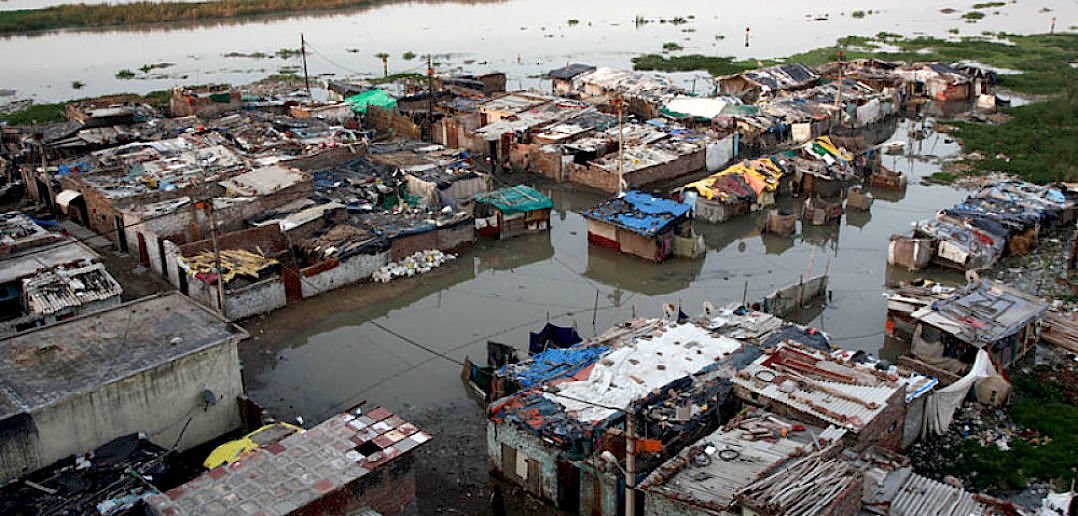
A new GlobeScan survey shows climate change, war and conflict, and extreme poverty now sit above other global concerns.
The result matters because it signals what citizens increasingly expect leaders, institutions and markets to confront first.
For African economies, it reinforces a hard truth: environmental stress, insecurity and deprivation are no longer separate stories.
Three Risks Now Shape Public Fear
Climate change, conflict and extreme poverty have emerged as the public’s most urgent global threats, according to new GlobeScan research spanning 33 markets, including Nigeria, Kenya and South Africa.
The April 22, 2026 insight found that those three issues form a distinct top tier because people rate them as both highly serious and most urgent to address.
That finding lands at a moment when global systems are already strained. The UN’s 2025 Sustainable Development Goals report warns that escalating conflicts, climate chaos, rising inequalities and heavy debt burdens are slowing progress across basic services and livelihoods.
Meanwhile, the World Meteorological Organization says 2025 was among the hottest years ever recorded, with heat, floods and storms disrupting economies and communities across regions.
For African and other Global South markets, the message is especially sharp: public anxiety is no longer organised around isolated crises.
Citizens are reading climate shocks, insecurity and hardship as a single web of vulnerability that touches food prices, jobs, migration, health and trust in leadership. That makes this more than a perception story; it is a market and governance signal.
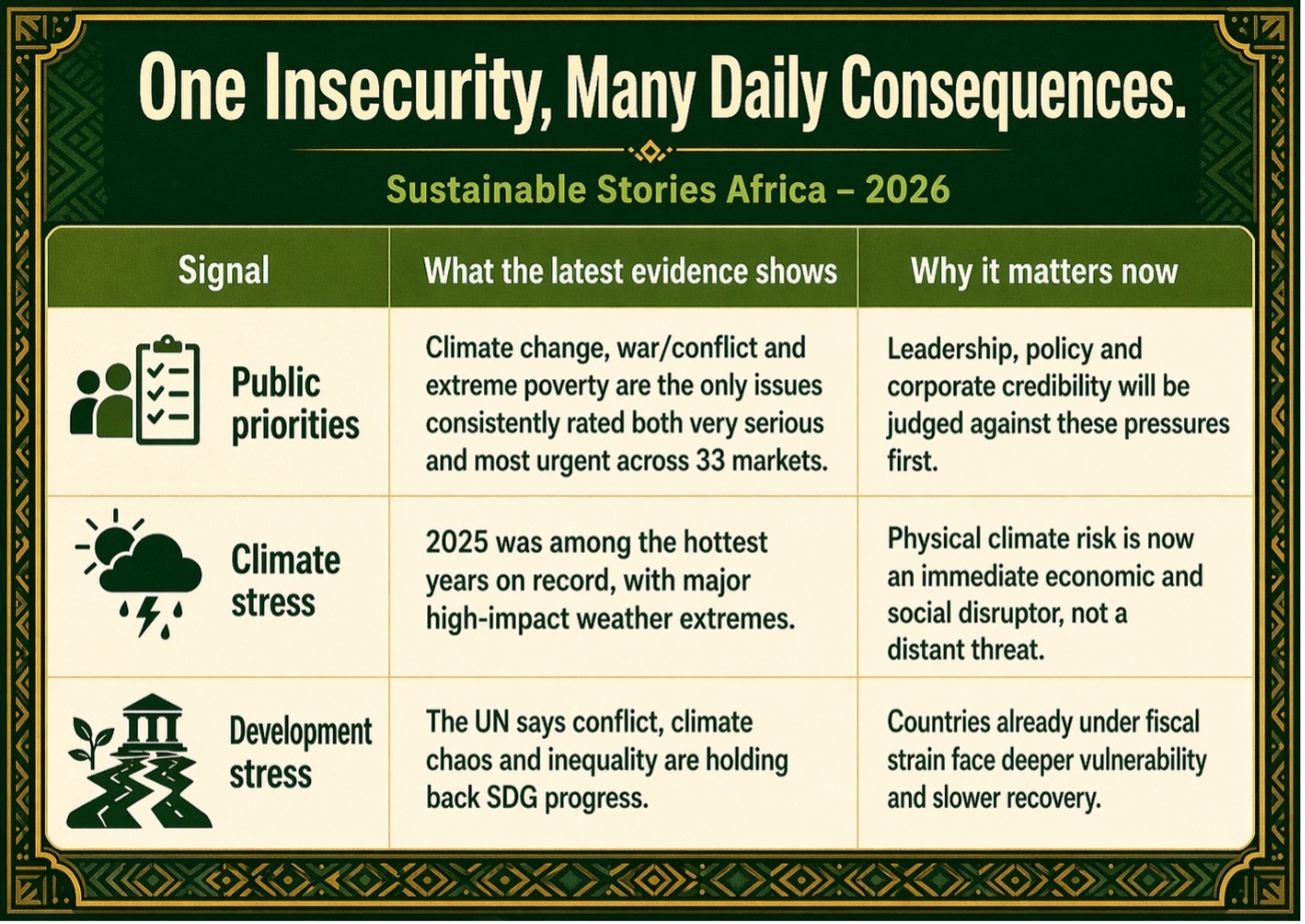
One Insecurity, Many Daily Consequences
GlobeScan’s data show remarkable cross-regional convergence. War and conflict tend to rank highest in Europe, climate change often leads in parts of Asia-Pacific, and extreme poverty is especially salient in North America and many African, Latin American and Middle Eastern markets.
However, across every region surveyed, all three appear near the top of public priorities.
That pattern mirrors life on the ground. In many African economies, a farmer facing erratic rainfall is also dealing with higher input costs, weaker purchasing power and the risk of displacement from violence or instability.
A household hit by inflation does not experience poverty as separate from climate or conflict; it experiences all three as shrinking room to cope.
UNHCR said in late 2025 that by mid-2025, 117 million people had been displaced by war, violence and persecution, with three in four living in countries highly exposed to climate hazards.
The development pipeline is under similar pressure. The UN says millions still face extreme poverty, hunger, inadequate housing and weak access to essential services, while more than three quarters of the world’s extreme poor are expected to live in sub-Saharan Africa or fragile and conflict-affected settings by 2025.
Action Could Still Change Outcomes
The significance of the GlobeScan result is not only that people are worried. It is that the public is signalling what kind of response it now values: empathy, practical support and leadership grounded in lived reality.
GlobeScan says organisations that respond to these insecurities with relevance and practical action are better positioned to build trust and sustain engagement.
That creates a clearer opportunity for African policymakers, financiers and companies. Climate adaptation can be designed to protect livelihoods, not just infrastructure.
Anti-poverty measures can be tied to resilience, food systems and local jobs. Peacebuilding and governance reforms can be treated as investment conditions, not side conversations.
If those agendas are integrated, markets can reduce risk, attract more credible capital and build stronger social legitimacy.
The cost of inaction is equally plain. When climate shocks intensify in fragile settings, poverty deepens faster. When conflict expands, public resources move away from health, education and productive investment.
When deprivation becomes normalised, trust in both public and corporate institutions erodes.
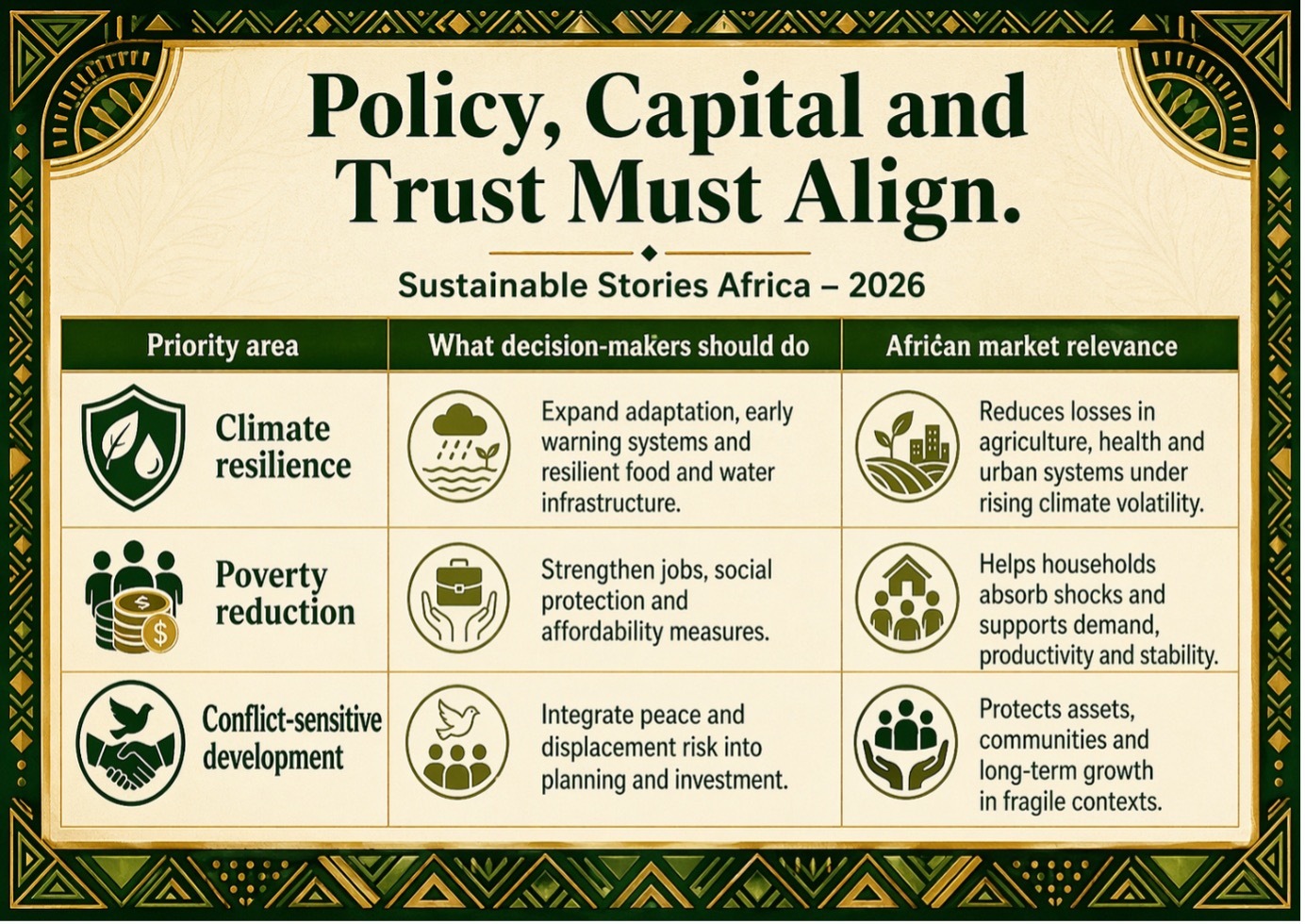
Policy, Capital and Trust Must Align
The immediate task is to stop treating these risks in silos.
- Governments need stronger social protection, climate adaptation finance and conflict-sensitive planning.
- Development banks and private investors need to price resilience into infrastructure, agriculture, housing and energy systems.
- Businesses need to move beyond generic ESG language and show how operations, supply chains and community investments reduce real exposure for vulnerable populations.
For readers in African markets, the underlying lesson is familiar but newly urgent: sustainability is no longer only about disclosure or future targets.
It is increasingly about whether institutions can make daily life safer, more affordable and more secure for people already living through overlapping shocks.
Path Forward – Integrated Risks Demand Integrated Responses
African markets will need a more joined-up response that links climate adaptation, poverty reduction and conflict-sensitive governance.
Public opinion is making that hierarchy of need impossible to ignore.
The clearest path forward is practical: invest where resilience, livelihoods and trust meet.
That is where ESG becomes more credible, public policy becomes more protective, and growth becomes more durable.
Culled From: Climate Change, Conflict, and Poverty Emerge as the Public’s Most Urgent Global Threats