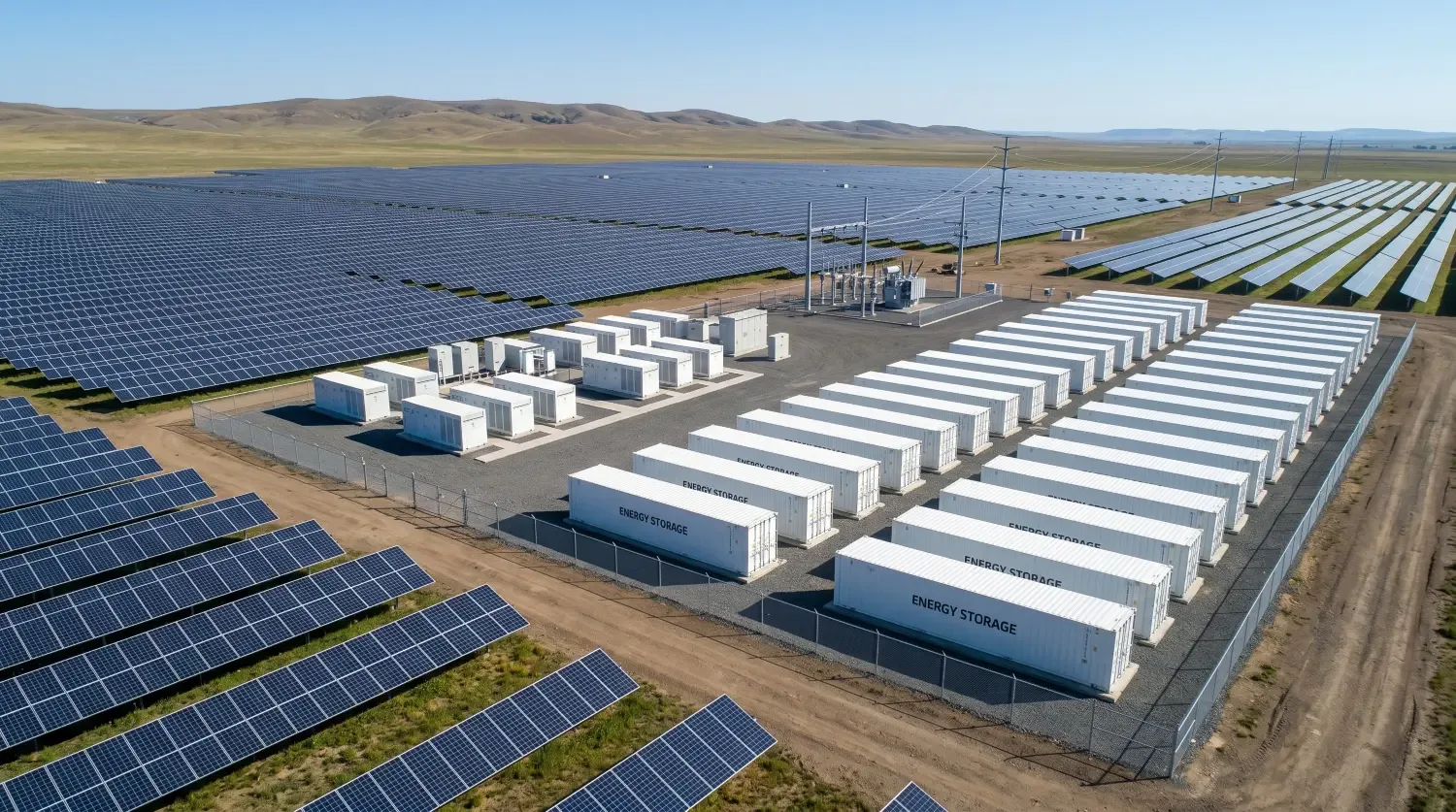
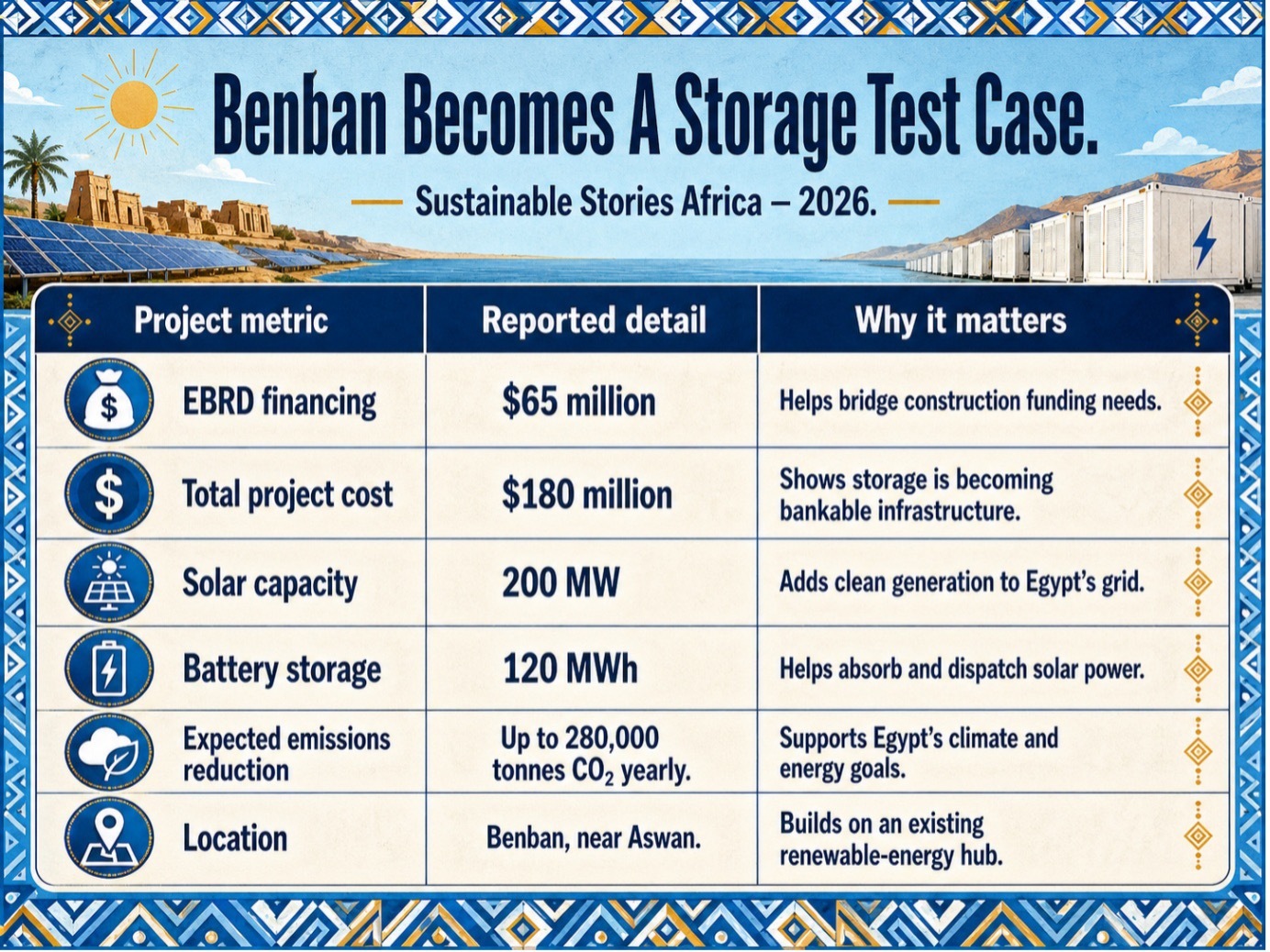
The EBRD is providing a $65 million construction loan to HAU Energy for a new solar and battery project in Egypt’s Benban.
The project will add 200 MW of solar power and 120 MWh of battery storage.
For Egypt and Africa, the deal signals a shift from renewable generation alone to cleaner, more reliable grids.
Clean Power Moves Beyond Daylight Hours
Egypt’s Benban Solar Park, already one of Africa’s most recognisable clean-energy landmarks, is entering a new phase: storage.
The European Bank for Reconstruction and Development has extended a $65 million construction bridging loan to HAU Energy to develop a 200 MW solar photovoltaic plant and 120 MWh battery energy storage system in Benban, near Aswan.
The project is being co-developed by HAU Energy and Infinity Power.
The deal matters because solar energy’s next frontier is not only producing more power, but delivering it when households, factories and grids need it most.
Once operational, the facility is expected to reduce carbon dioxide emissions by up to 280,000 tonnes a year, while strengthening the integration of intermittent solar power into Egypt’s national grid.
For communities near Aswan, the project also tells a wider story: the clean-energy transition is moving from panels in the desert to technical jobs, grid resilience and a new generation of energy skills.
Benban Becomes A Storage Test Case
The project will be built within the existing Benban Solar Park, reducing the need for new land and avoiding any addition of electricity transmission infrastructure.
EBRD’s project disclosure says no livelihood or biodiversity impacts are anticipated because the development sits inside the existing solar park footprint.
EBRD says the project will be among Egypt’s first batch of battery energy storage projects under the 10 GW renewables target linked to the Bank-led Energy Pillar of the NWFE initiative.
That makes Benban more than another solar addition; it is a test case for how Egypt can pair renewable capacity with flexibility.
HAU Energy was established in 2024 to invest in renewable energy projects in Egypt and is owned by Meridiam, Hassan Allam Utilities and the EBRD.
The EBRD says its finance addresses market gaps where comparable commercial financing is not available on reasonable terms, while also helping manage environmental, social and governance risks.
Storage Turns Solar Into System Value
For Egypt, the project’s value lies in what battery storage enables. While solar generation peaks during daylight, demand does not, making storage critical for shifting power, stabilising the grid, and reducing reliance on fossil fuel backup during peak periods.
EBRD’s Aida Sitdikova said the financing reflects a broader commitment to energy security through affordable clean power and storage, supporting Egypt’s efforts to diversify its energy mix and reduce exposure to external shocks.
Hassan Allam Utilities’ CEO, Dalia Wahba, noted that the project strengthens renewable capacity while improving grid reliability.
Beyond infrastructure, the initiative includes a social dimension, with EBRD-backed programmes to build green technical skills, enhance workforce practices, and expand opportunities for women in technical and leadership roles.
Africa Needs Batteries With Megawatts
Across African markets, renewable energy is expanding rapidly; however, grid constraints continue to limit impact. Solar can reduce costs and emissions, but without storage, transmission, and coordinated system planning, it struggles to meet evening demand and reliability needs.
Benban’s battery component shifts this dynamic, positioning solar as system infrastructure rather than standalone generation.
It highlights the need for procurement models that value flexibility, while signalling to financiers that storage requires concessional capital and risk mitigation. For the workforce, it opens pathways in technical and grid-related roles.
Egypt’s long-standing partnership with EBRD, over €14.6 billion invested across 225 projects since 2012, provides a strong foundation for scaling such integrated energy solutions.
Make Storage Central To Transition Planning
Egypt’s next challenge is execution. The Benban project must move from financing to construction, commissioning and dependable operation. That requires strong environmental and social management, credible local hiring, worker safety, supply chain due diligence and transparent project governance.
For African governments, the lesson is direct: storage should not be treated as an optional add-on. It should be part of national renewable-energy planning, grid codes, auction design, private-sector power procurement and green-skills strategies.
The clean-energy transition will be judged not only by how many solar panels are installed, but by whether clean power is reliable, inclusive and usable when people need it.
Path Forward – Build Reliable Renewable Power Systems
Benban’s solar-storage project advances Egypt’s ESG agenda by linking clean generation, emissions reduction, skills development and gender inclusion.
For Africa, the priority is clear: pair renewable megawatts with batteries, grid investment and local workforce development. Solar can change the energy mix, but storage can change the system.
Culled From: EBRD and HAU Energy support new solar and battery project in Egypt’s Benban