Kenya has intensified scrutiny of its rapidly expanding carbon credit market after investigations uncovered questionable practices among some project developers.
Authorities say the crackdown aims to protect the credibility of carbon markets that are increasingly central to global climate finance.
The move reflects a growing debate across Africa: how to ensure carbon offset projects deliver genuine environmental benefits while protecting local communities and maintaining investor trust.
Kenya Scrutinises Carbon Credit Market
Kenya is tightening oversight of its carbon credit sector following investigations that uncovered questionable practices among some developers operating in the country’s fast-growing climate finance market.
Government authorities and environmental regulators have launched a broader review of carbon offset projects after reports suggested that certain players may have used misleading methodologies, exaggerated emissions reductions or opaque project structures to generate carbon credits.
The move comes as Kenya positions itself as one of Africa’s leading hubs for carbon offset projects, attracting international investors seeking to finance climate mitigation initiatives.
However, the investigation highlights a growing concern among policymakers and experts: without strong governance and transparent verification systems, carbon markets risk losing credibility.
For a country seeking to attract billions of dollars in climate finance, ensuring integrity in environmental markets has become a strategic priority.
Carbon Markets Grow Rapidly In Africa
Carbon credit markets allow companies and governments to offset greenhouse gas emissions by investing in projects that reduce or remove carbon from the atmosphere.
These projects can include reforestation, renewable energy installations, soil carbon initiatives and ecosystem restoration programmes.
Kenya has emerged as a key destination for such investments due to its extensive natural ecosystems and strong climate policy frameworks.
However, the rapid expansion of carbon markets has also exposed regulatory gaps.
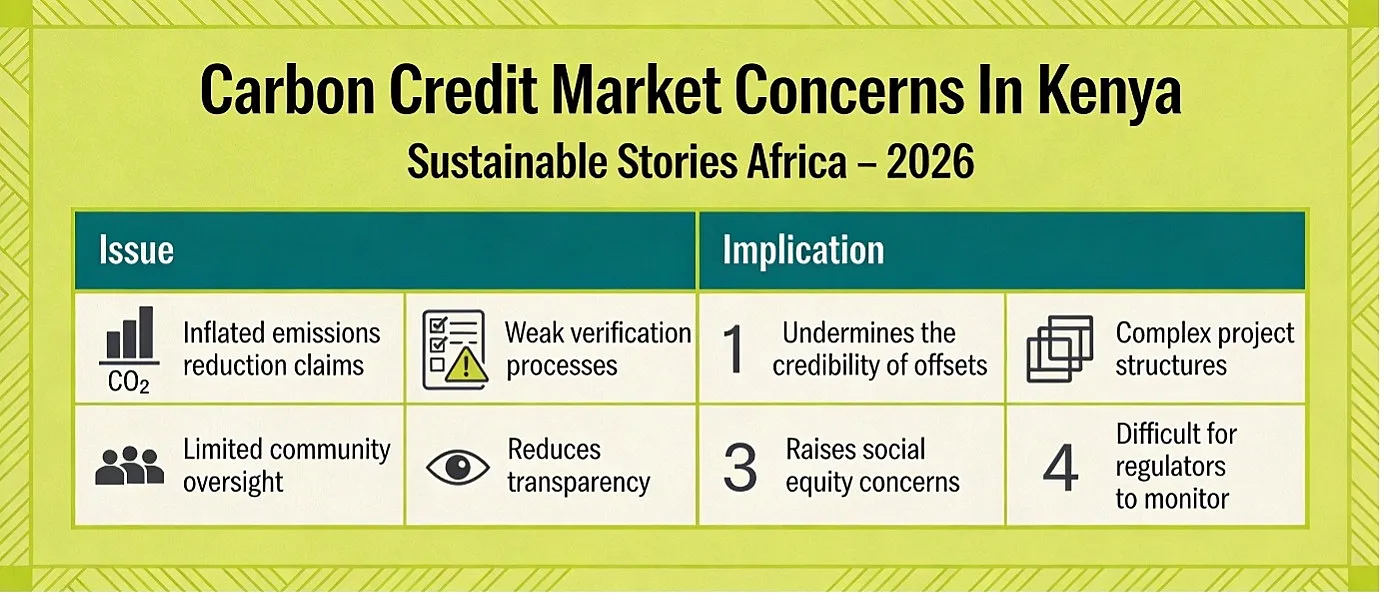
Carbon Credit Market Concerns In Kenya
Issue | Implication |
|---|---|
Inflated emissions reduction claims | Undermines the credibility of offsets |
Weak verification processes | Reduces transparency |
Limited community oversight | Raises social equity concerns |
Complex project structures | Difficult for regulators to monitor |
Investigations suggest that some developers may have used accounting techniques that overstate climate benefits.
In certain cases, projects allegedly generated carbon credits for activities that critics say would have occurred anyway, raising questions about “additionality”, a key concept in carbon markets requiring that projects produce emissions reductions that would not otherwise have happened.
Experts warn that if these practices continue unchecked, they could weaken confidence in voluntary carbon markets globally.
Transparent Carbon Markets Could Unlock Climate Finance
Despite the current scrutiny, climate analysts believe Africa’s carbon markets still hold enormous potential.
The continent possesses vast natural assets, from forests and mangroves to grasslands and peatlands, that could support large-scale carbon sequestration projects.
If governed effectively, carbon markets could generate significant revenue streams for conservation, community development and climate mitigation efforts.
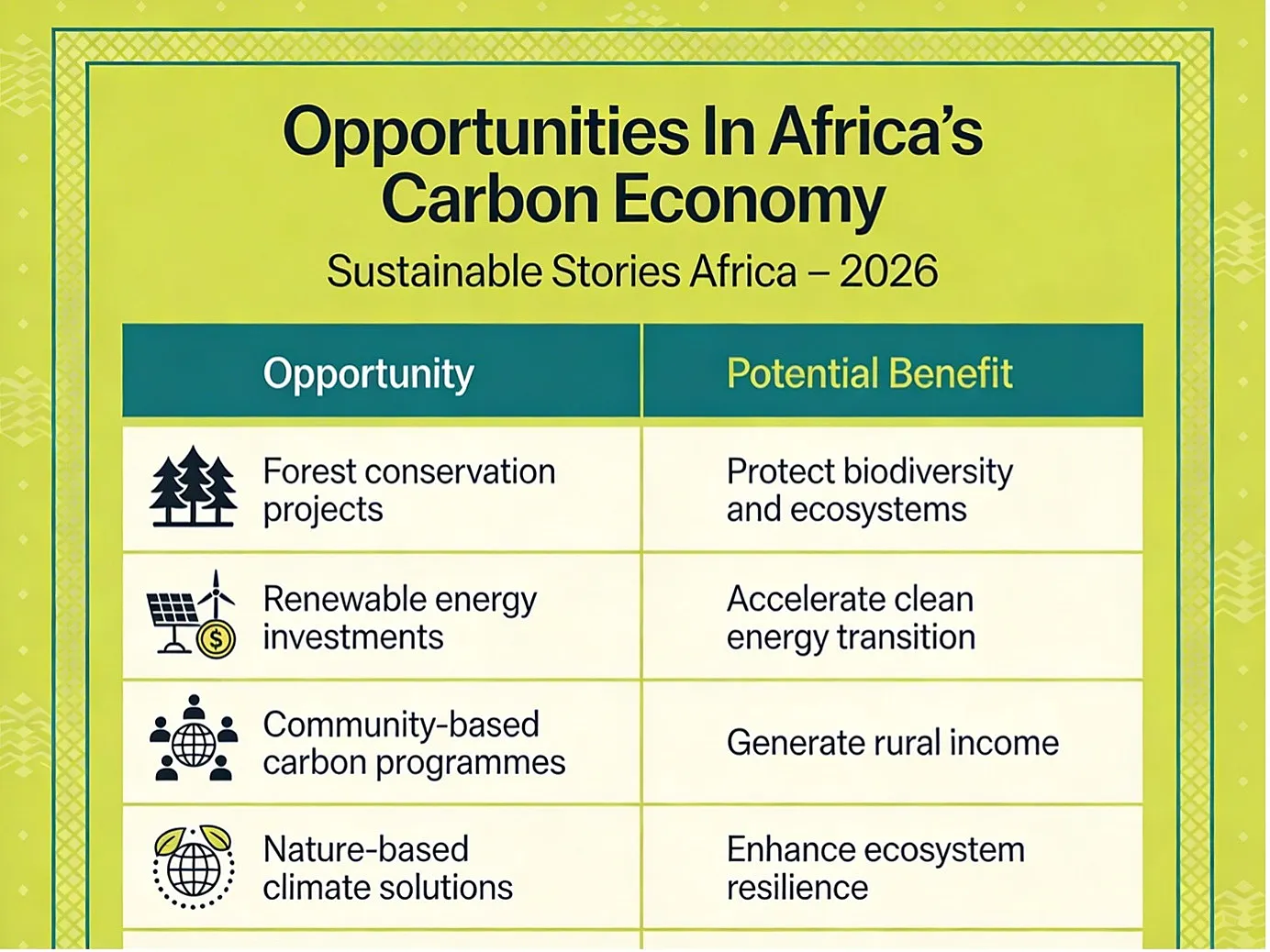
Opportunities In Africa’s Carbon Economy
Opportunity | Potential Benefit |
|---|---|
Forest conservation projects | Protect biodiversity and ecosystems |
Renewable energy investments | Accelerate clean energy transition |
Community-based carbon programmes | Generate rural income |
Nature-based climate solutions | Enhance ecosystem resilience |
For many rural communities, carbon credit projects also offer an opportunity to earn income from protecting ecosystems that have long been undervalued.
However, experts stress that transparency and community participation must remain central to project design.
Without those safeguards, the economic and environmental promise of carbon markets could remain unrealised.
Strengthening Oversight Of Climate Finance
Kenya’s crackdown is widely viewed as part of a broader effort to strengthen governance in emerging climate finance markets.
Authorities are now exploring stricter regulatory frameworks to ensure that carbon projects meet internationally recognised standards.
Key priorities include:
- Strengthening verification and monitoring systems for carbon credits
- Increasing transparency in project ownership and revenue distribution
- Protecting community rights and environmental safeguards
- Aligning national carbon market policies with global climate finance frameworks
Experts say such reforms could help position Kenya as a trusted leader in Africa’s carbon economy.
As demand for high-quality carbon credits grows globally, countries that establish credible regulatory systems may be best positioned to attract long-term investment.
For policymakers across the continent, the lesson is increasingly clear: climate finance must be backed by strong governance and accountability.
Path Forward – Credible Carbon Markets For Africa
Kenya’s investigation emphasises the importance of strengthening governance in emerging carbon markets.
By improving transparency, strengthening verification standards and protecting community interests, African countries can build credible carbon credit systems that attract climate finance while delivering real environmental and social benefits.