PwC’s latest decarbonization report says corporate climate action has not collapsed under pressure.
Instead, companies are becoming more disciplined, linking emissions cuts to margins, resilience, energy security and investor confidence.
For Africa, the signal is clear: decarbonization must move from pledge-making to practical delivery that protects competitiveness, supply chains and jobs.
Climate Strategy Is Becoming Financial Discipline
The corporate decarbonization story is changing. After a year of policy uncertainty, higher energy costs, tougher capital markets and political pushback against sustainability programmes, many companies did not abandon climate action. They made it more disciplined.
That is the central message of PwC’s Third Annual State of Decarbonization Report, which draws on AI-enabled analysis of millions of data points across thousands of corporate disclosures and related documents.
The report says many companies changed how they talked about sustainability, but not what they did about it. Eight in ten companies, approximately 82%, held steady or accelerated timelines for achieving their climate ambitions, while 23% increased ambitions compared with 18% that decreased them.
For African businesses and policymakers, the findings come at a critical moment. Climate disclosure, energy volatility, supply-chain pressure and export-market rules are no longer distant boardroom issues.
They are becoming practical questions for manufacturers, banks, agribusinesses, retailers and energy companies trying to stay investable in a lower-carbon global economy.
The Numbers Show A Harder Business Case
PwC’s report suggests the era of broad climate promises is giving way to a more demanding phase: execution, capital discipline and measurable value. Companies are asking whether decarbonization can improve business economics.
PwC’s answer is direct: yes, when it is tied to cost control, risk reduction and product strategy.
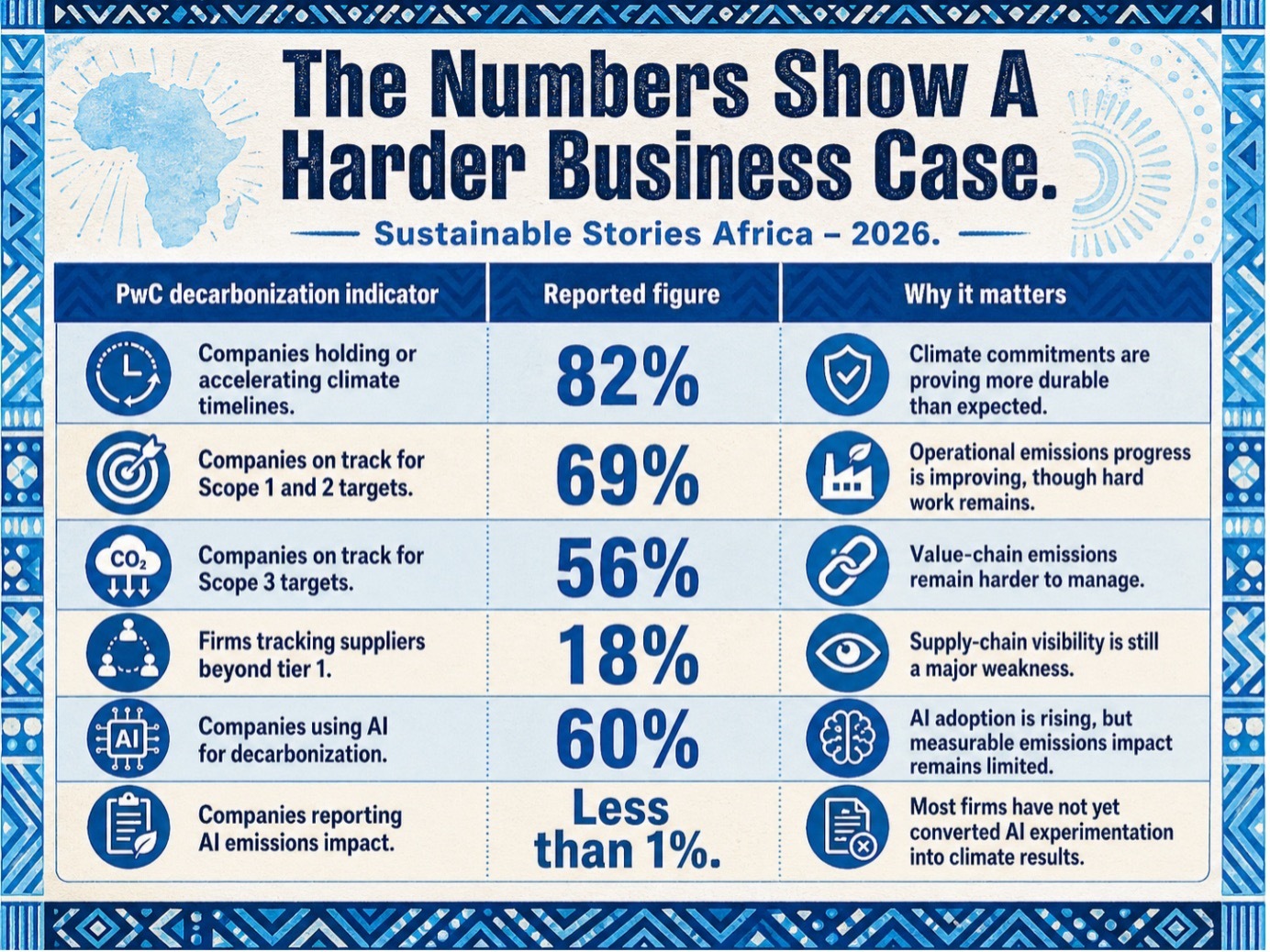
The report shows that progress is uneven. Scope 1 emissions, direct emissions from company operations, remain difficult. Reductions often require asset-level decisions, fuel switching, electrification and capital expenditure.
Scope 3, which covers emissions across suppliers, customers and product use, is even more complex because companies must influence actors outside their direct control.
This is where the African relevance becomes sharp. A Nigerian manufacturer selling into Europe, a Kenyan food exporter working with smallholder suppliers, or a South African mining company seeking transition finance may all face the same pressure: prove not just ambition, but credible execution.
Resilience Can Become Competitive Advantage
The positive story is that climate action is no longer being framed only as reputation management. PwC says decarbonization is increasingly linked to resilience, growth and profitability.
Companies are cutting waste, reducing energy demand, redesigning products and using supplier engagement to manage disruption.
Energy is now one of the clearest examples. The report notes that rolling blackouts, rate spikes, supply risks, surging AI data-centre demand and weak grid infrastructure pushed energy resilience into board-level discussions.
It also says electricity prices increased by 7% to 25% across the United States, making energy optimisation a stronger business imperative.
For Africa, this insight is not theoretical. In markets where firms already operate from grid instability, diesel backup costs and currency pressures, energy efficiency can protect margins immediately
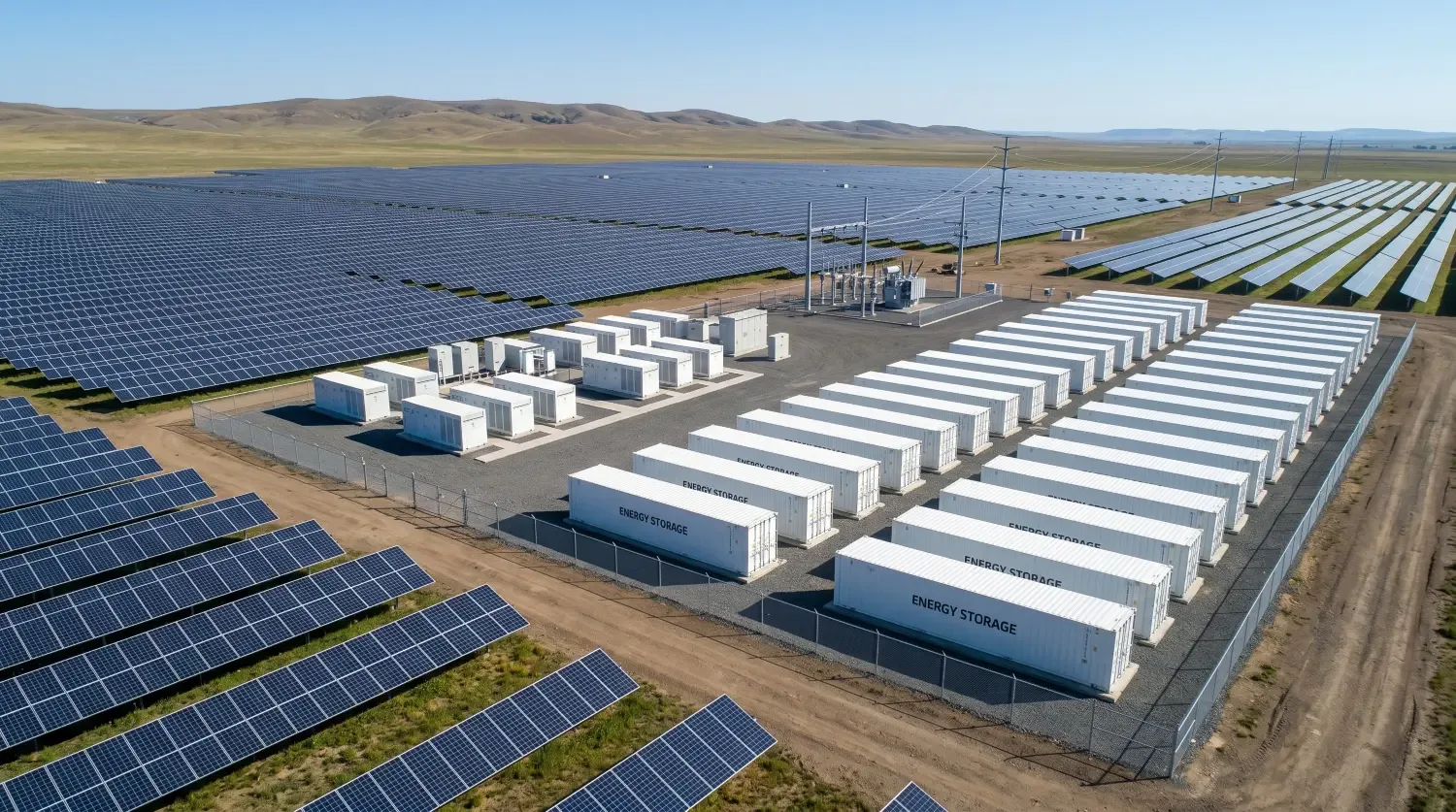
Solar systems, battery storage, efficient equipment, better metering and smarter production schedules are not only climate tools; they are survival tools.
PwC also highlights product sustainability as a commercial opportunity. Companies on track with Scope 3 targets are more likely to have embedded sustainability across the product life cycle.
Sustainable product attributes can support revenue uplift. That matters for African exporters facing tougher buyer expectations around traceability, packaging, materials, emissions and environmental claims.
Execution Must Replace Climate Signalling
The action agenda is clear: companies must stop treating decarbonization as a communications department issue and move it into finance, procurement, operations, product design and risk management.
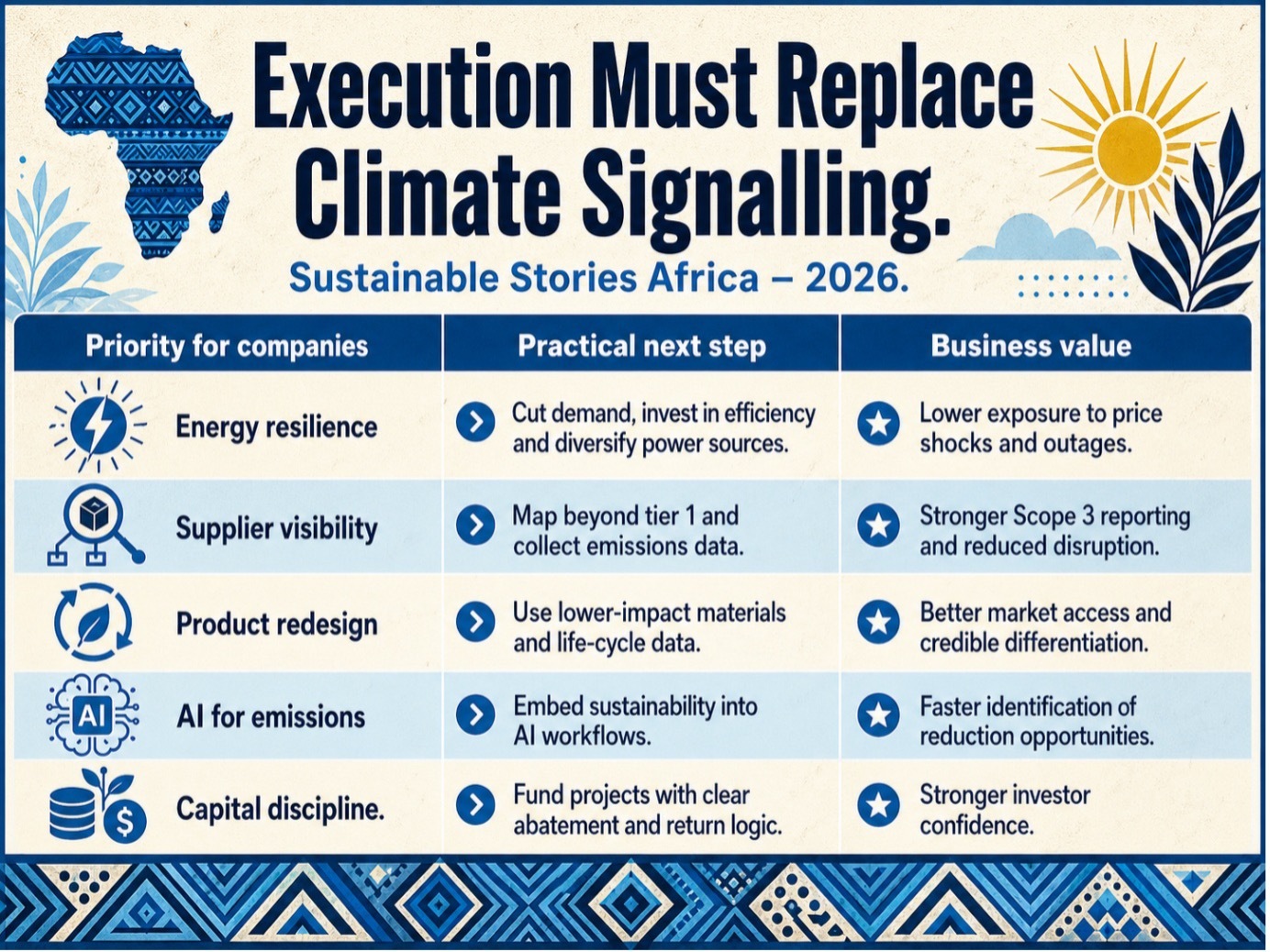
African regulators and exchanges also have a role. They can support credible disclosure, reduce greenwashing, and help firms understand how global rules such as sustainability reporting, carbon accounting and supply-chain due diligence will affect access to capital and markets.
For financiers, the lesson is equally important. Transition finance should reward companies that show practical pathways: energy savings, audited data, supplier engagement, cleaner production and climate-aligned capital expenditure.
The next phase of ESG will not be won by language. It will be won by evidence.
Path Forward – Turn Climate Discipline Into African Advantage
Africa’s opportunity is to convert decarbonisation from the pressures of compliance to competitiveness.
Companies that reduce energy waste, strengthen supplier data and design lower-carbon products can protect margins while accessing better markets and capital.
The path forward is disciplined execution: credible targets, practical investment, transparent reporting and policies that help firms decarbonise without weakening jobs, affordability or industrial growth