Climate change, war and extreme poverty now stand out as the world’s most urgent public threats, according to a GlobeScan survey across 33 markets.
The finding comes as households face overlapping pressures from heat, insecurity, food costs and weak public services.
For African and Global South economies, the signal is clear: resilience is no longer a climate agenda alone, but a development, peace and livelihoods agenda.
Fear Has Become A Global Policy Signal
Climate change, war and conflict, and extreme poverty have emerged as the public’s most urgent global threats, placing three deeply connected crises at the top of a global anxiety map that now reads less like a list of problems and more like a warning about fragile systems.
The finding comes from GlobeScan’s 2025 survey of 31,960 people across the general public in 33 markets, conducted in July and August 2025.
Its page-one chart plots global problems by two measures: how serious people think they are, and how important they believe they are to address.
In the highest-concern quadrant sit climate change, extreme poverty, and war/conflict. Three issues that increasingly shape household security, public trust, investment decisions and national resilience.
For Africa and much of the Global South, this is not abstract polling. It reflects daily realities:
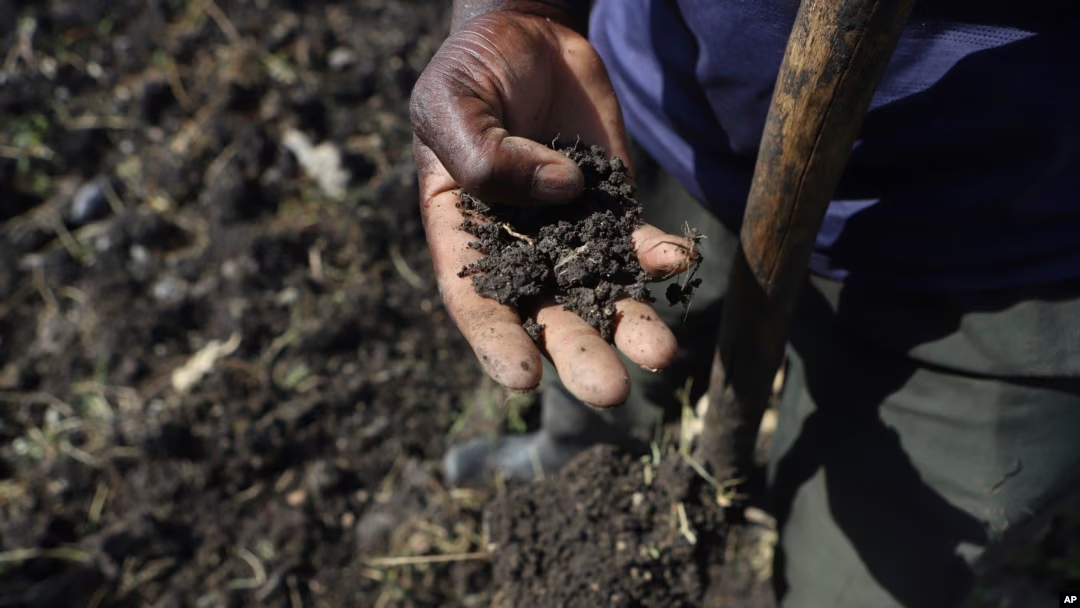
- A farmer watching rainfall patterns shift
- A young graduate facing rising food and transport costs
- A family displaced by insecurity, or a city struggling to keep electricity, water and public health systems reliable under pressure.
Why Three Threats Now Dominate Public Concern
The GlobeScan visual does not rank these threats with headline percentages. Instead, it shows their position in public perception: high seriousness and high importance.
That distinction matters. It means people are not only worried about these risks; they also believe institutions should act on them now.
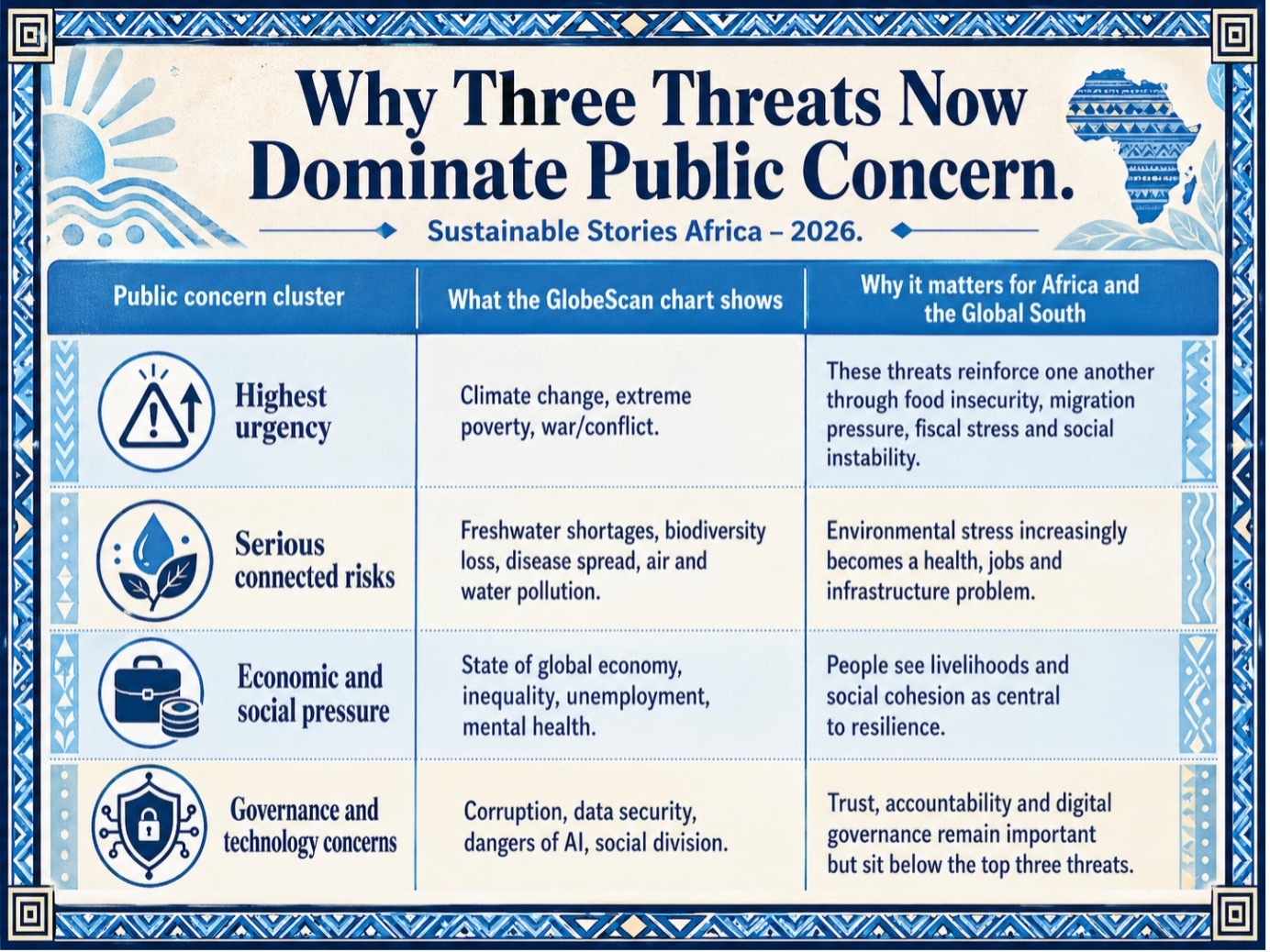
The deeper story is convergence. Climate shocks worsen poverty when floods destroy crops, heat reduces productivity, or drought raises food prices.
Conflicts deepen poverty by disrupting markets, schooling and public services. Poverty can make communities more vulnerable to climate stress and instability.
That is why the chart’s message is sharper than a standard sustainability headline. It suggests that citizens increasingly understand risk as interconnected.
The climate crisis is also a livelihoods crisis. Conflict is also a development crisis. Poverty is also a governance and investment crisis.
Resilience Can Turn Anxiety Into Progress
The positive reading is that public concern can become political and market momentum. If governments, financiers and companies respond intelligently, the same three threats can become entry points for a stronger development model.
For African economies:
- That means treating climate adaptation as core infrastructure, not charity.
- It means building roads, drainage systems, power grids, early-warning systems and food-storage networks that can withstand shocks.
- It means linking climate finance to jobs, agriculture, access to clean energy and community protection.
- It also means recognising that poverty reduction is one of the most powerful forms of climate resilience.
A household with stable income, affordable energy, safe water and access to health services is better able to weather shocks.
A community with trusted local institutions is less exposed to conflict triggers.
A market with predictable rules attracts longer-term capital.
The risk of inaction is equally clear. Without integrated responses, climate damage can raise public spending needs, conflict can weaken investment confidence, and poverty can erode trust in institutions.
In that scenario, governments face higher costs later because they failed to invest early.
Action Must Now Move From Rhetoric
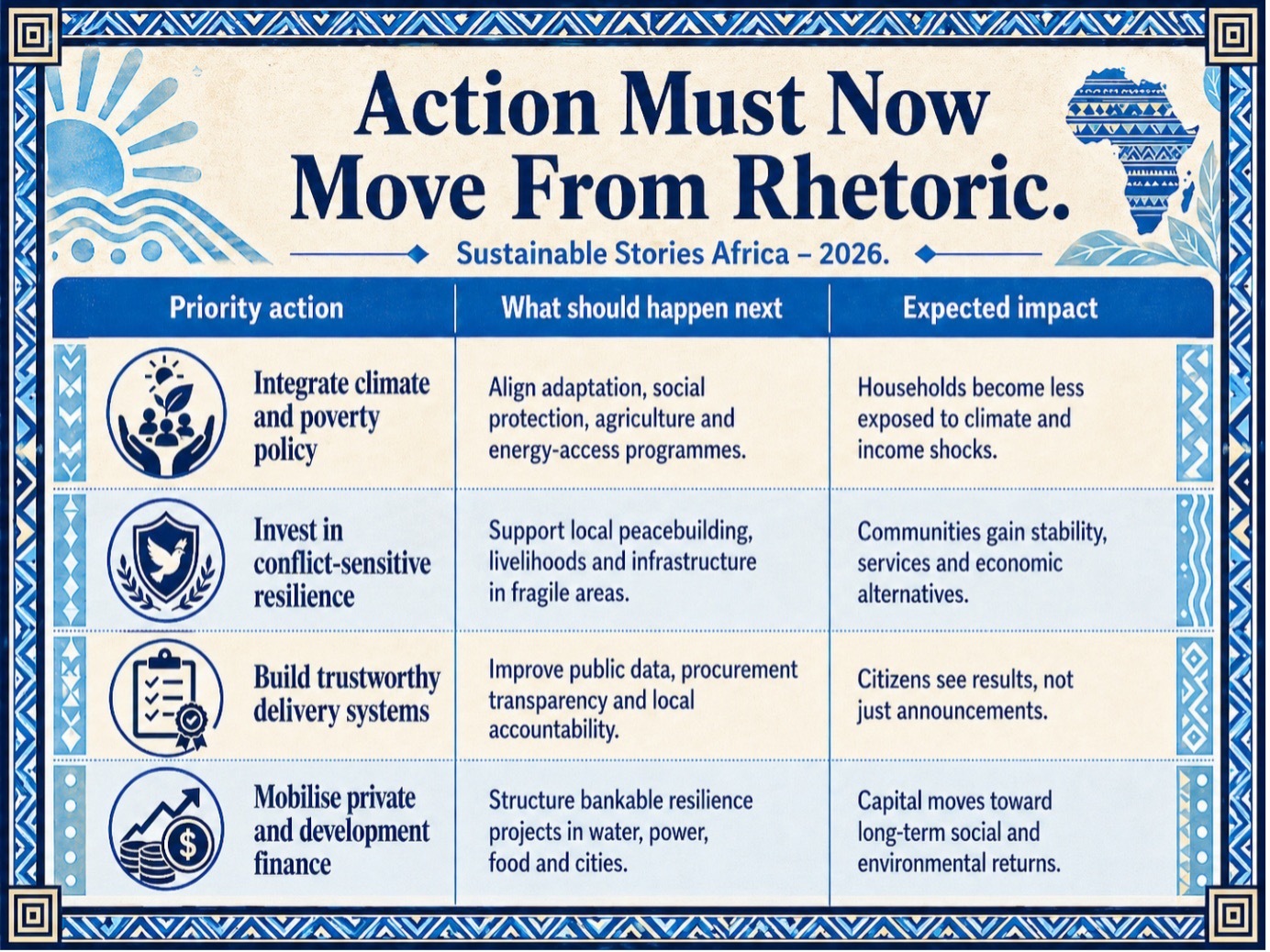
The public has effectively given leaders a three-part mandate: protect the planet, reduce insecurity, and make poverty reduction tangible.
The response must be practical, financially feasible, and measurable.
- For policymakers, the lesson is that public anxiety should not be dismissed as pessimism. It is a governance dashboard.
- For businesses, it is a market signal: resilience, affordability and trust will shape consumer behaviour and operating risk.
- For financiers, it is a reminder that ESG is no longer a reporting exercise alone; it is a capital-allocation question tied to social stability.
Citizens also have a role.
- Public pressure can push climate plans beyond slogans, demand transparent poverty programmes, and hold institutions accountable for conflict prevention and service delivery.
Path Forward – From Public Anxiety To Shared Resilience
Public anxiety should now become delivery discipline. African governments, businesses and financiers need integrated plans that protect households, lower conflict risks, and make climate adaptation visible in jobs, food systems, health and energy access.
The priority is not another siloed pledge. It is accountable execution: better data, locally trusted institutions, investable resilience projects, and policy choices that turn fear into public confidence.
Culled From: Climate Change, Conflict, and Poverty Emerge as the Public’s Most Urgent Global Threats