Debt-for-nature swaps are gaining fresh attention as indebted countries search for ways to fund climate and biodiversity protection.
The model converts part of a country’s external debt into domestic environmental investment, but fairness concerns remain.
For Africa and the Global South, the question is urgent: can debt relief protect nature without weakening sovereignty?
Debt Relief Is Becoming Climate Finance
Debt-for-nature swaps are moving from the margins of conservation finance into the centre of the global climate funding debate, as low- and middle-income countries confront a hard arithmetic: pay creditors first, or protect people, forests, oceans and food systems now.
In an April 22, 2026, Green Central Banking article, economist Allison Benson argues that debt-for-nature swaps can help Global South countries ease fiscal pressure by exchanging part of their foreign debt for commitments to invest in climate action, decarbonisation, biodiversity and environmental protection.
The mechanism could potentially free up to $100 billion, according to the article, but only if it moves beyond isolated deals and becomes part of a wider reform of the international financial system.
For African economies facing debt-service pressure, climate shocks and biodiversity loss, the idea is both attractive and complicated. A debt swap can create fiscal breathing room.
However, if poorly designed, it can also raise concerns over who controls national resources, whose land is protected, and whether local communities are consulted.
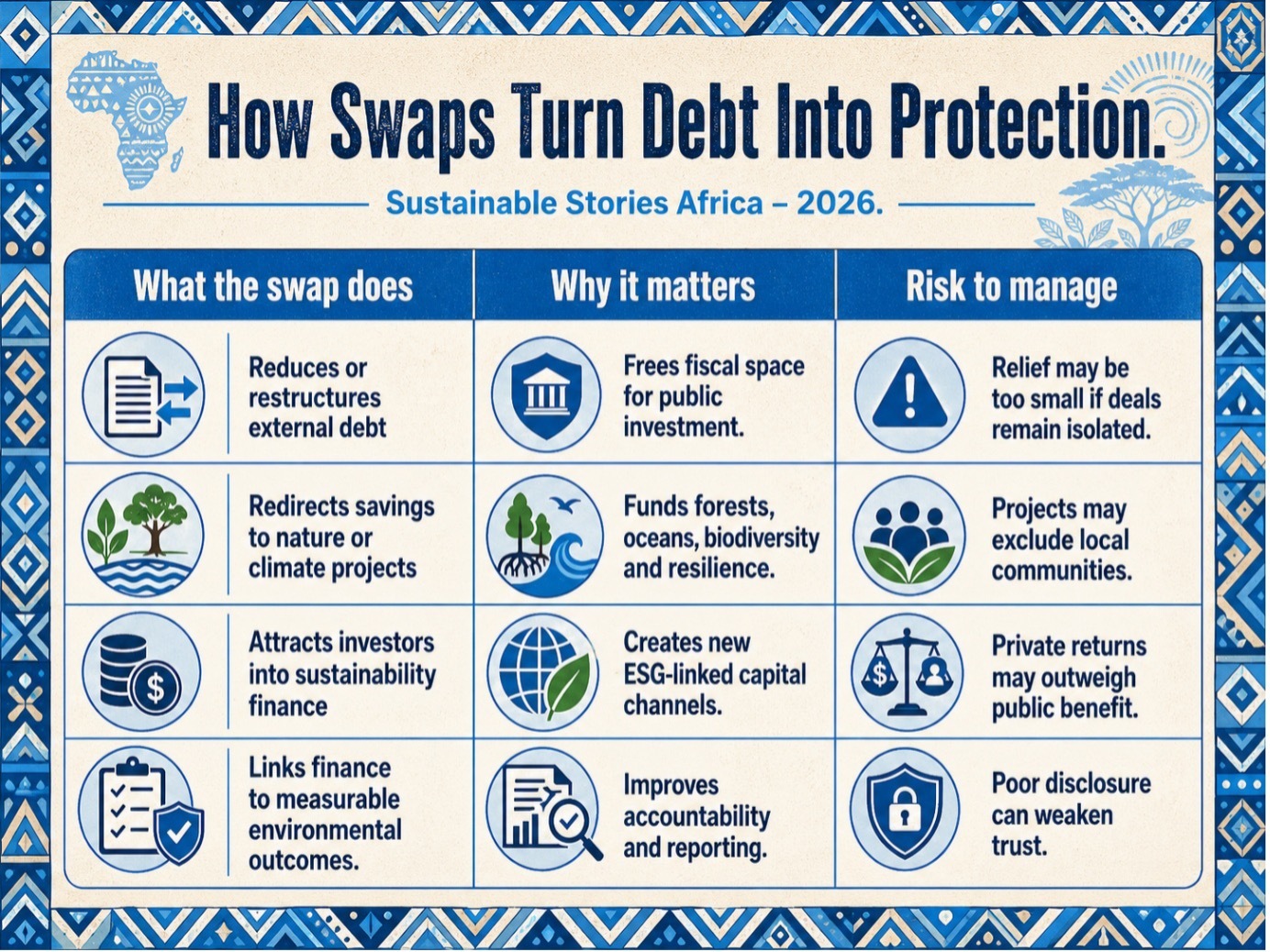
How Swaps Turn Debt Into Protection
The logic is simple. A debtor country reaches an agreement with creditors, investors or intermediaries to reduce or restructure part of its external debt. In return, the country commits to spending the agreed resources on environmental protection, climate resilience or conservation.
Debt-for-nature swaps are not new. They emerged in the 1980s during the Latin American debt crisis, when conservation groups proposed them as a way to relieve debt while financing environmental action. Since then, countries including Bolivia, Ecuador, the Philippines, Gabon and Colombia have used versions of the model.
Benson notes Colombia as a case study of the pressures behind the debate.
The article says Colombia’s external debt amounts to about 50% of GDP, while around 5% of GDP goes to interest payments and only 0.12% to environment and sustainable development.
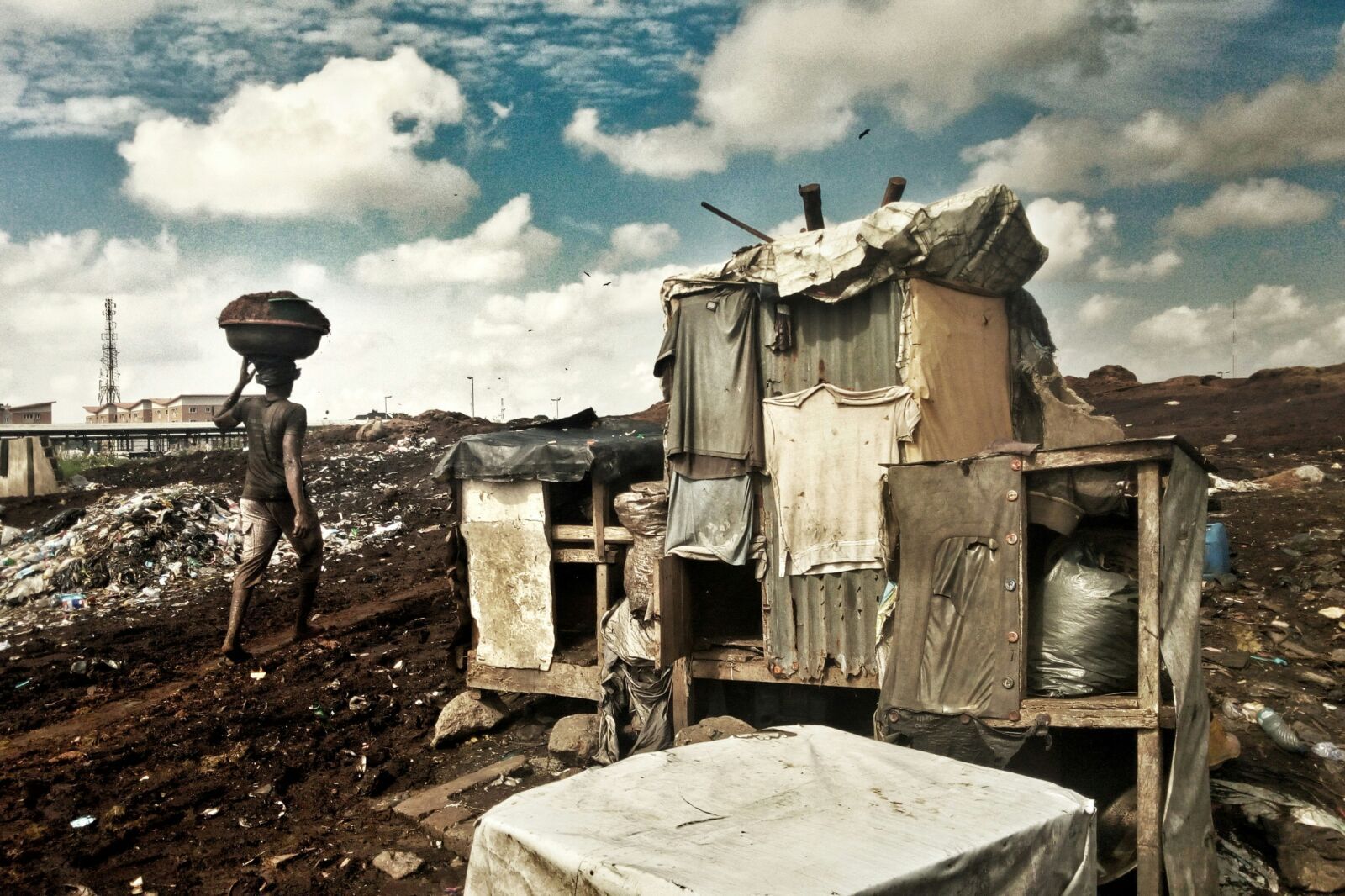
That imbalance is familiar across the Global South. When climate-vulnerable countries spend more on debt servicing than protecting water systems, forests, farms and public health, sustainability becomes a budget problem before it becomes a policy slogan.
A Fairer Deal Could Protect Communities
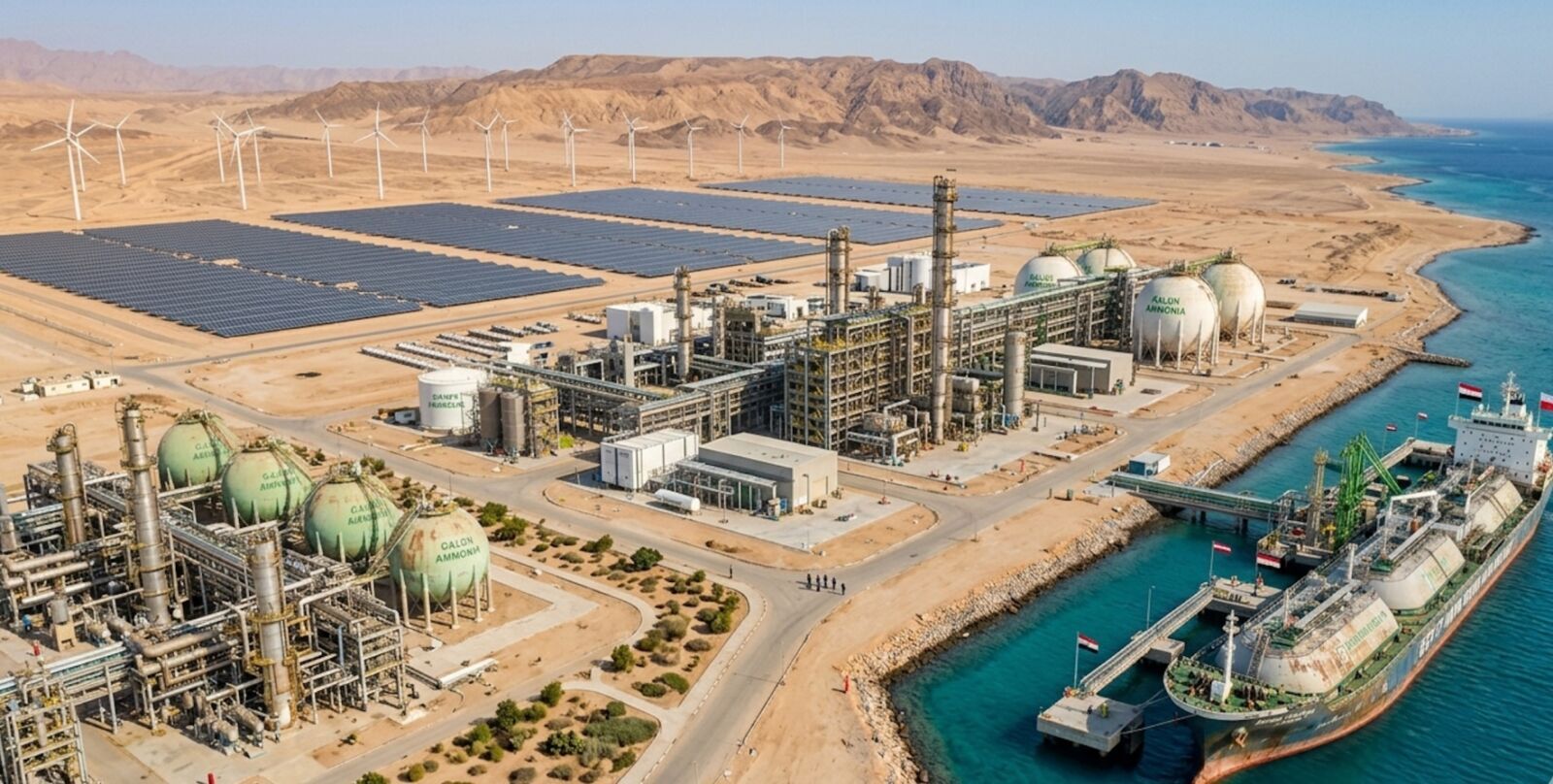
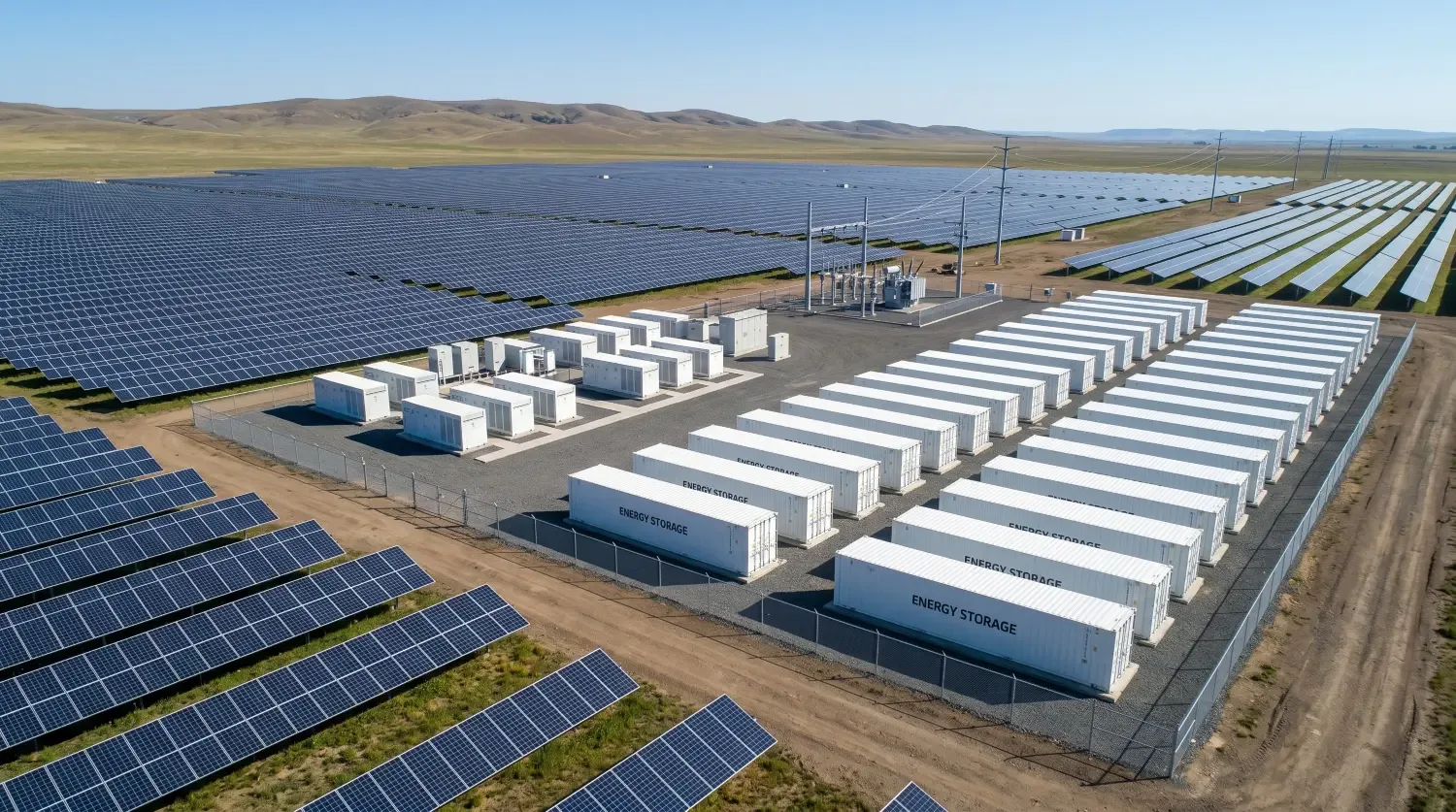
Debt-for-nature swaps offer governments a practical mechanism to redirect fiscal resources toward climate and conservation priorities—from mangrove restoration and forest protection to clean energy, climate-smart agriculture, and watershed management.
For Africa, these outcomes carry direct development value, supporting coastal resilience, rainfall stability, food security, and livelihood protection. Investor interest is growing, with Legal & General committing $1 billion to the model, backing swaps in Ecuador, Belize, and Gabon.
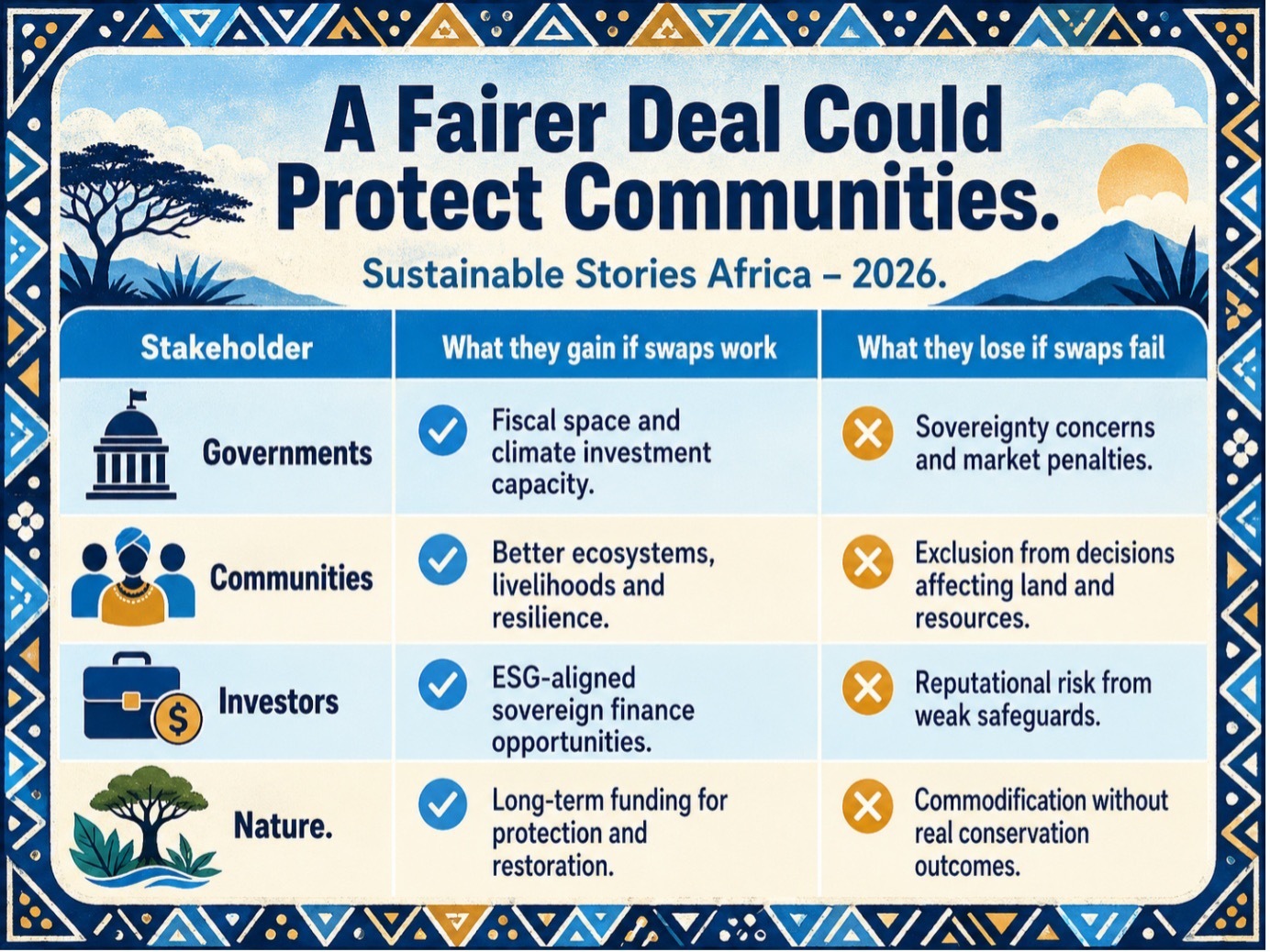
However, significant caution is warranted. Conservation finance must not replicate the dynamics of external dependency it claims to resolve.
Where swaps are structured without meaningful community participation, transparent governance, or publicly accessible reporting, they risk subordinating national environmental decisions to creditor priorities.
The instrument's legitimacy ultimately depends on whether it strengthens local ownership or quietly transfers it elsewhere.
Make Swaps Transparent, Scalable, and Sovereign
Debt-for-nature swaps are a useful tool, not a structural solution. They can ease fiscal pressure, but cannot resolve the deeper debt vulnerabilities facing many African and Global South economies.
Their value depends on transparency, local consent, and meaningful scale. Deals must disclose terms, define community roles, protect specific ecosystems, and establish credible verification mechanisms.
The broader reform argument is clear: countries cannot negotiate debt relief in isolation when markets penalise them.
For Africa, the priority is practical.
- Governments should develop national frameworks for sovereign debt conversions before entering negotiations.
- Development banks should reduce transaction costs
- Investors should accept stronger safeguards, and civil society must insist on community participation and public accountability.
Executed with integrity, debt-for-nature swaps can align climate justice, fiscal resilience, and ESG outcomes. Executed poorly, they risk excluding the communities they claim to serve.
Path Forward – Build Fair Swaps For Nature Now
The path forward is not to reject debt-for-nature swaps, but to redesign them in protected fairness, transparency and local development.
Africa needs deals that protect ecosystems while strengthening sovereignty, livelihoods and public accountability.
The priority is scale with safeguards: credible conservation targets, community consent, open data, lower debt-service pressure and financing that supports climate resilience without deepening dependency.
Culled From: Can debt-for-nature swaps reduce global debt and environmental harm? - Green Central Banking