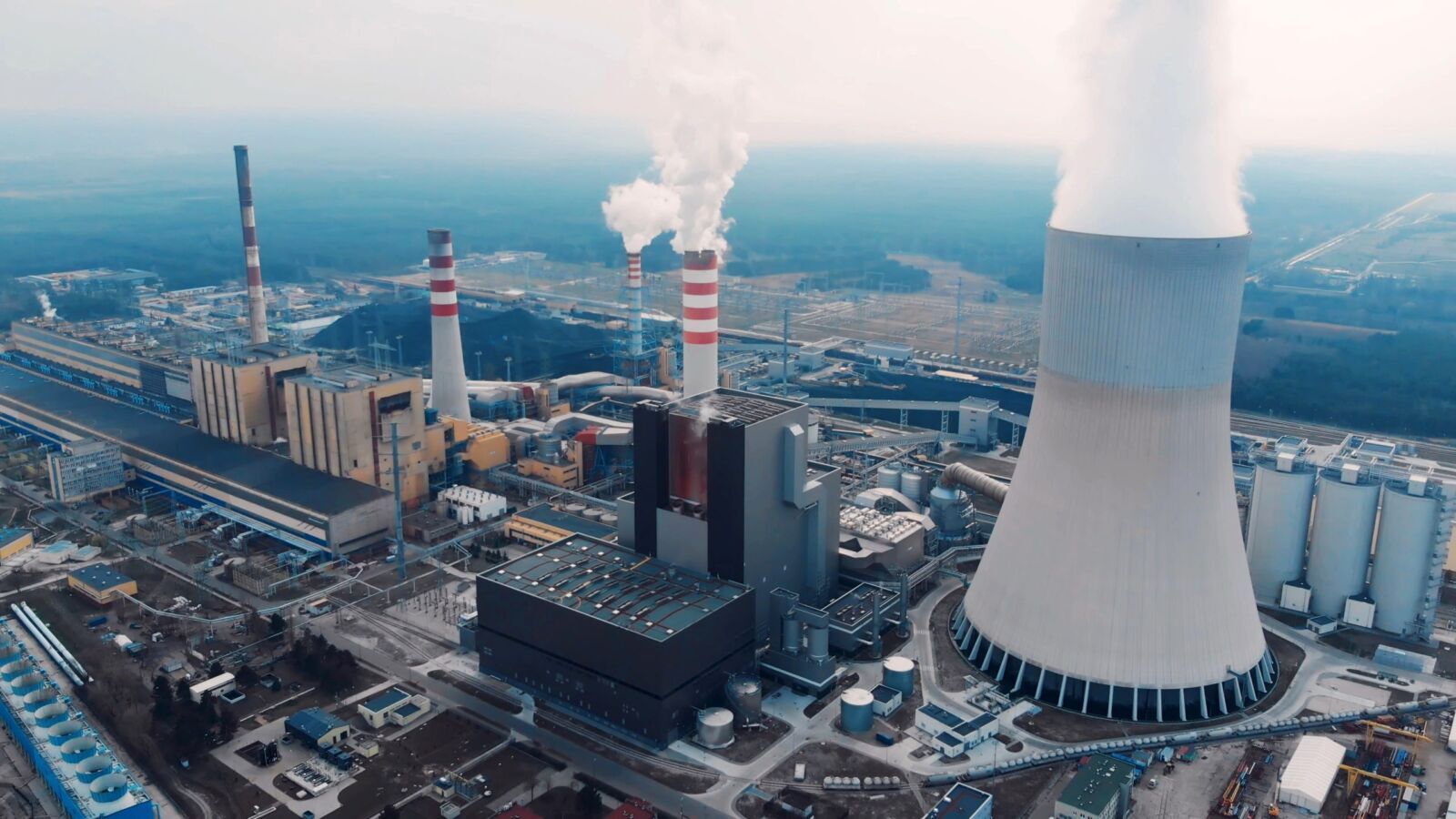
Artificial intelligence is moving from the screen to the electricity grid as data centres consume more power.
The question is no longer whether AI will reshape economies, but who pays for the infrastructure behind it.
For Africa, the answer matters deeply: digital competitiveness must not come at the expense of affordable energy access.
AI’s Cloud Now Carries A Meter
The world’s artificial intelligence boom is creating a new electricity dilemma: the cloud is becoming heavier, and someone must pay the bill.
Data centres, the hidden infrastructure behind AI models, search tools, cloud storage and digital services, are now among the fastest-growing sources of electricity demand.
The International Energy Agency says global electricity demand from data centres grew by 17% in 2025, while demand from AI-focused data centres surged 50%, far above the 3% growth in global electricity demand.
That shift matters because AI is no longer only a technology story. It is now an energy, infrastructure, affordability and climate story.
For African economies looking to expand internet access, attract digital investment and close electricity gaps, the central policy question is becoming urgent: can countries build AI-ready infrastructure without passing the cost of power to households and small businesses?
Data Centres Are Becoming Grid Customers
Data centres require continuous electricity for servers, cooling, and backup systems, and their energy demands are rising as AI models grow more sophisticated.
The IEA projects global data centre consumption could double to approximately 945 terawatt-hours by 2030, representing nearly 3% of total global electricity use, growing at roughly 15% annually, more than four times faster than all other sectors combined.
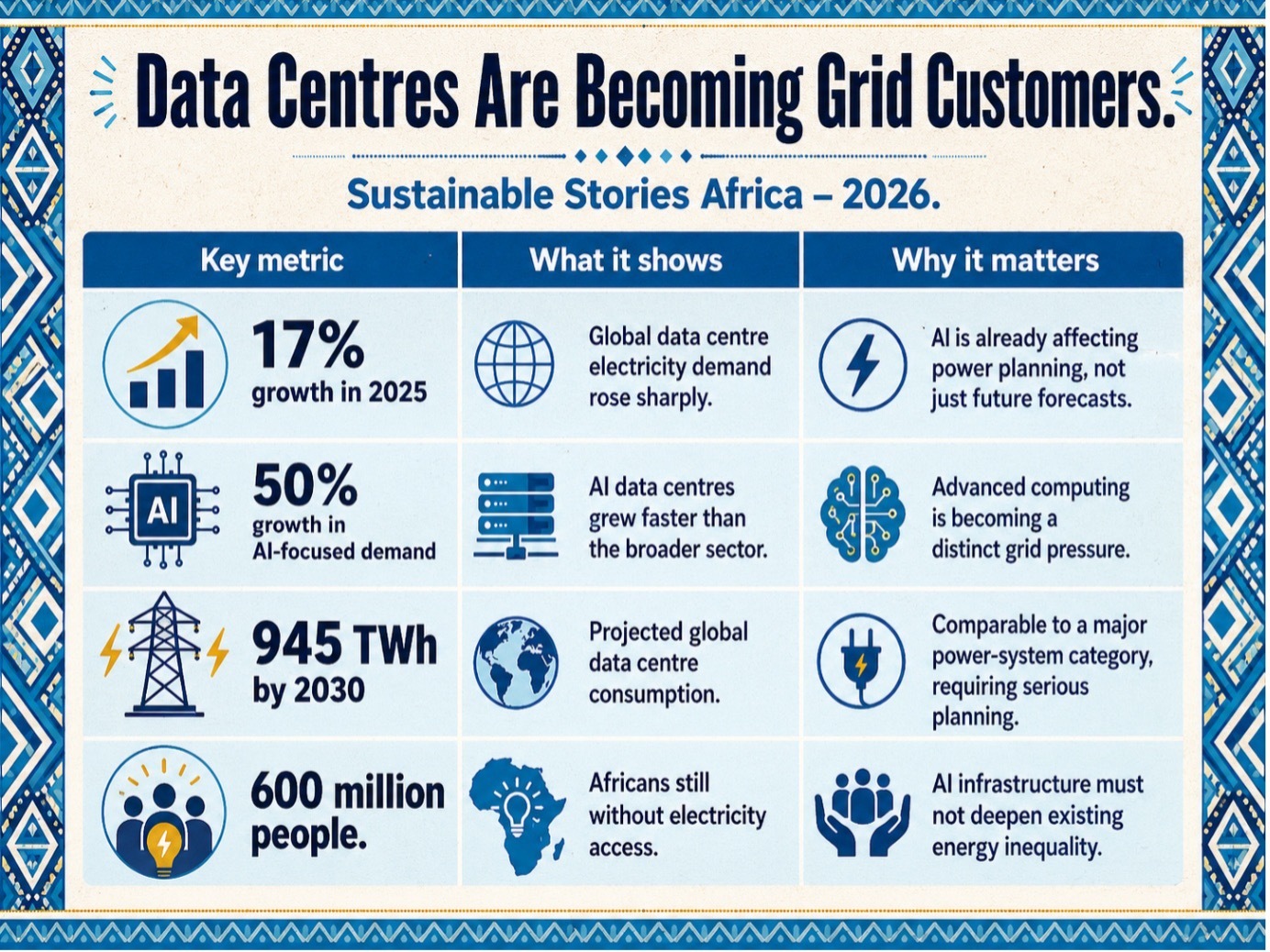
The core challenge is not consumption alone, but its timing, scale, and distribution of costs.
A large data centre introduces concentrated demand into grids already strained by ageing infrastructure, weak distribution networks, or high tariffs. In African cities, this creates direct competition for limited power capacity.
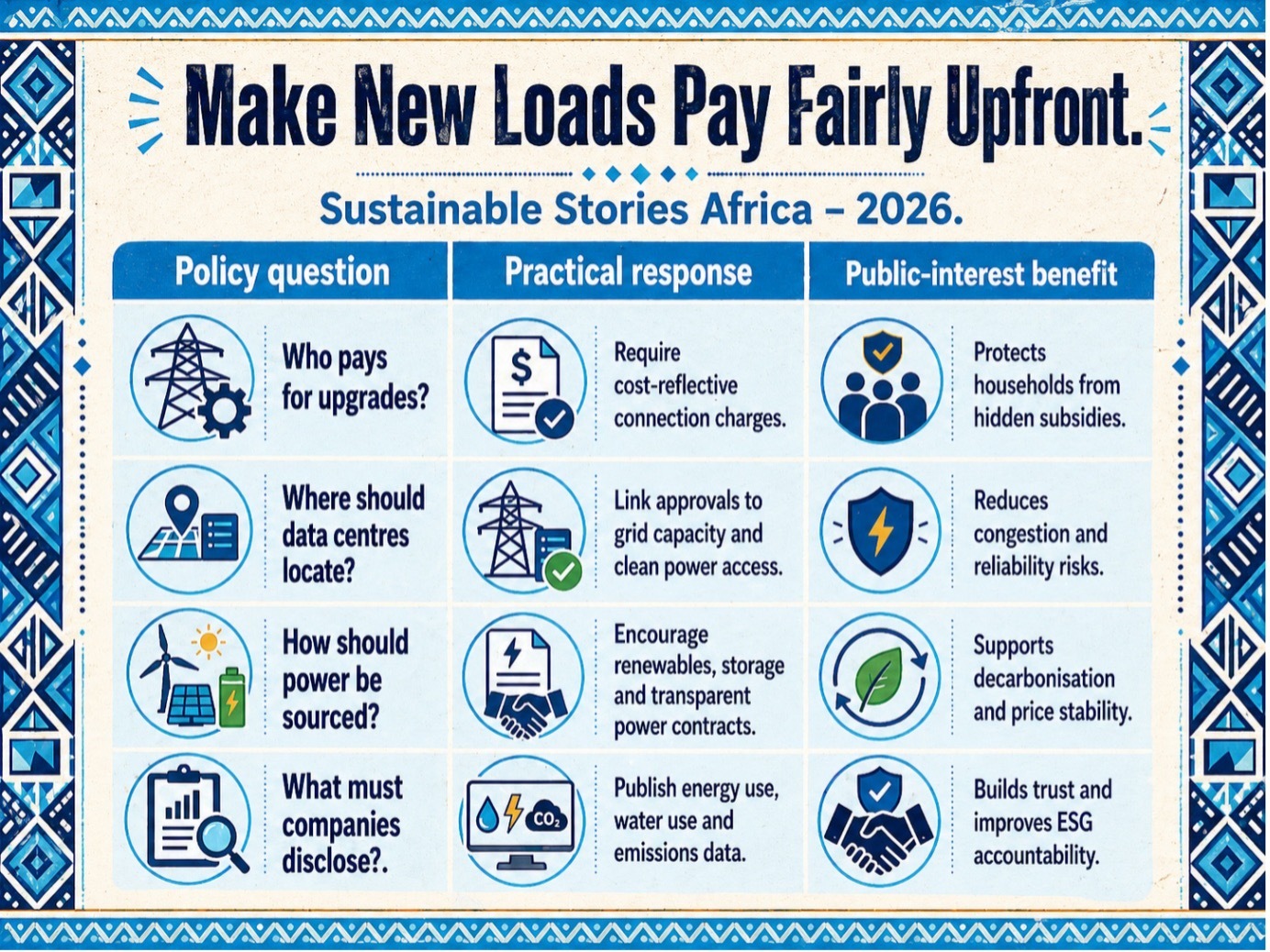
Clinics, schools, manufacturers, and households all depend on reliable, affordable electricity for essential functions. If incoming digital infrastructure triggers expensive grid upgrades, a fundamental policy question remains: should costs be distributed amongst ordinary consumers, or carried by the large users whose demand drives them?
Cleaner Growth Can Lower Shared Costs
The goal is not to slow digital progress, but to design it equitably. AI holds real promise for Africa, from smarter grids and precision agriculture to climate-risk modelling and public service delivery. These benefits require clean, reliable, and affordable power to be meaningful.
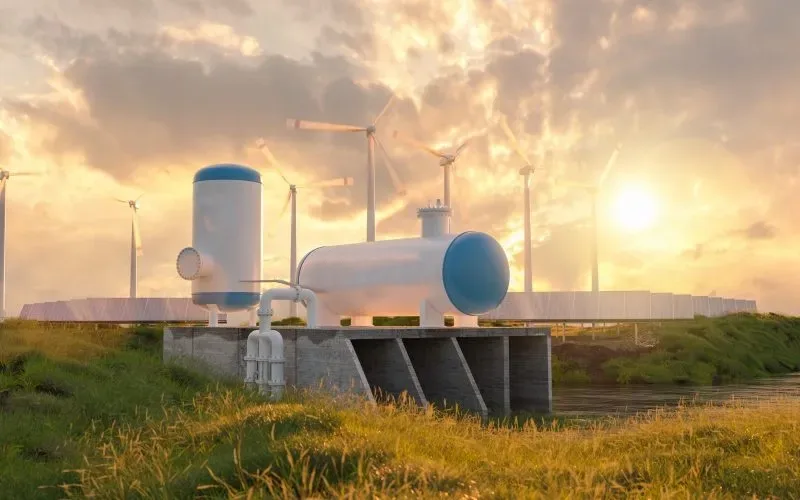
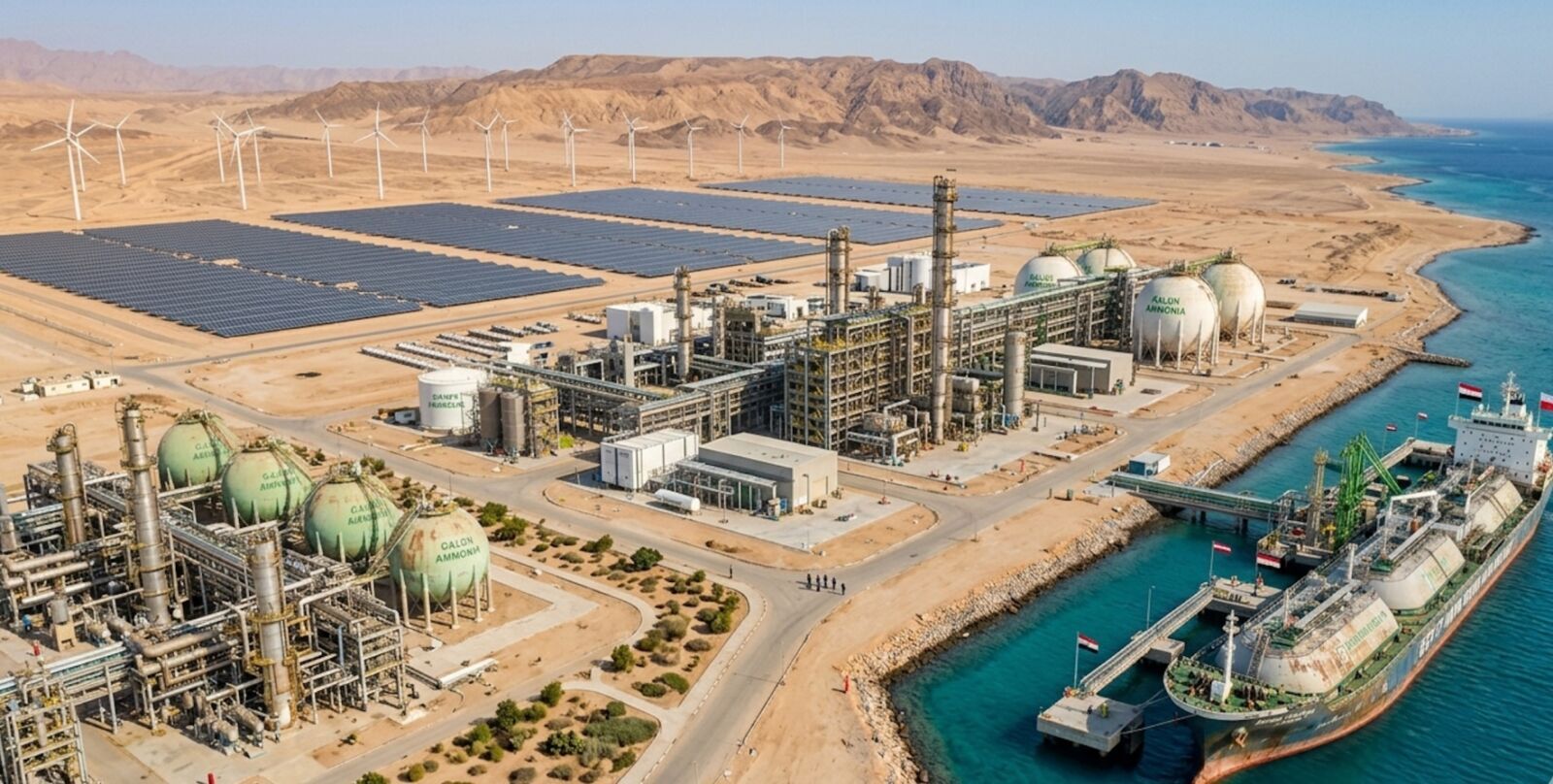
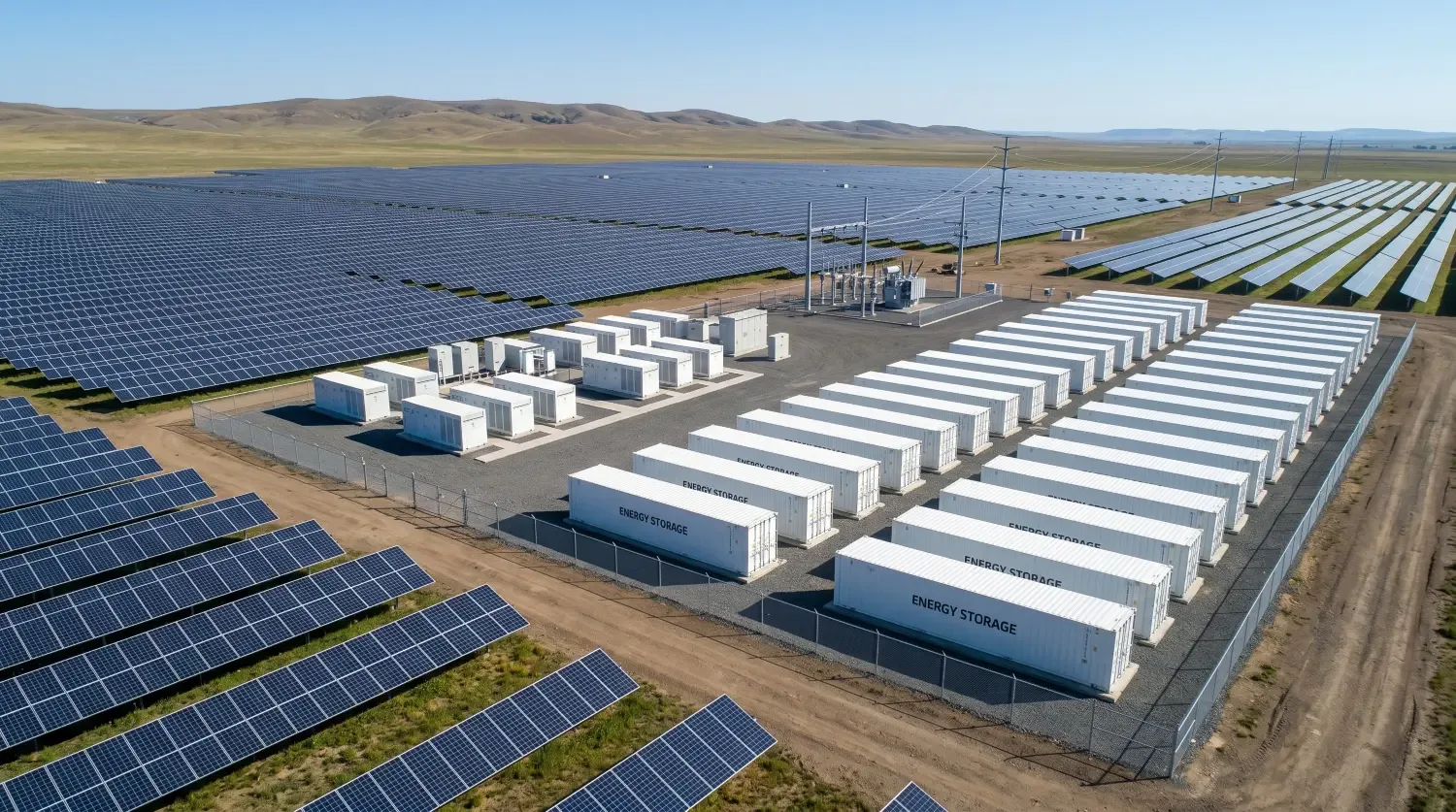
The IEA projects that electricity generation for data centres could exceed 1,000 terawatt-hours by 2030, with renewables expected to meet nearly half of that additional demand. The energy mix matters significantly. AI infrastructure powered by fossil-heavy grids or diesel backup will raise emissions and worsen air quality. Matched with renewables, storage, and transparent procurement, data centres can instead serve as anchor customers that help finance cleaner electricity systems.
For African markets, this distinction creates a genuine opportunity. Policymakers can require large digital users to contribute to the new generation, fund grid upgrades, and commit to long-term clean power contracts.
Managed well, AI demand can strengthen energy systems; managed poorly, it risks crowding out essential users and shifting costs to the public.
Make New Loads Pay Fairly Upfront
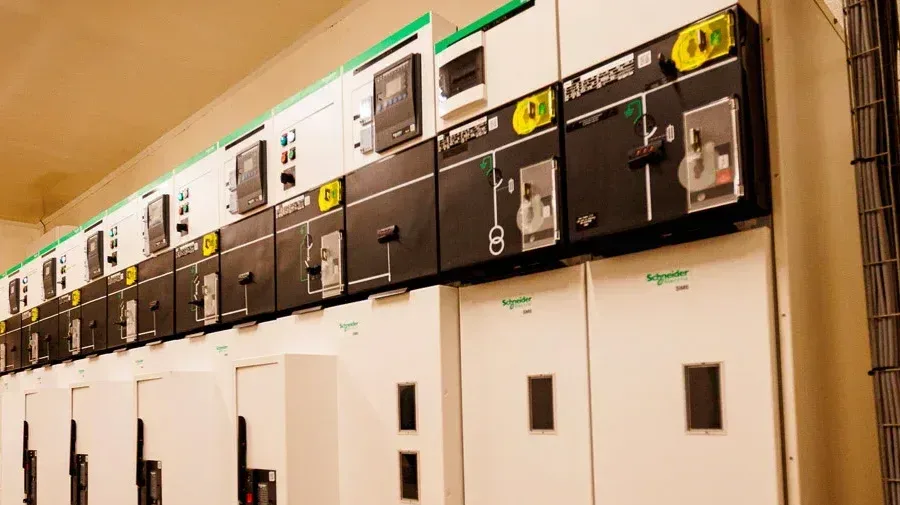
Governing AI effectively now requires governing electricity. Regulators must define how data centres connect to grids, what capacity they reserve, and how infrastructure costs are allocated.
RMI warns that sudden surges in local demand from data centre projects risk higher utility costs, financial exposure from overbuilding, and reduced grid reliability, and recommends minimum contract terms to ensure large users remain committed to the infrastructure built for them.
- For governments, the implication is structural: digital strategy and energy planning cannot operate independently.
- Ministries of technology, power, finance, and environment must align around shared demand forecasts, with clear rules established before large loads arrive.
- For citizens, the fundamental issue is fairness. AI may deliver productivity gains and new opportunities
However, its legitimacy depends on ensuring that infrastructure costs are not socialised while commercial benefits remain private.
Path Forward – Build Cleaner Grids Before Demand Surges
Africa’s AI future should be powered by rules that are transparent, fair and development-centred.
Data centres should pay for the infrastructure they require, while helping expand clean power, storage and grid resilience.
The priority is simple: connect digital ambition to energy access. AI must become a catalyst for stronger grids and better services, not another pressure point on households already paying too much for unreliable power.
Culled From: Who Pays When the Cloud Gets Heavy: The Electricity Bill of AI