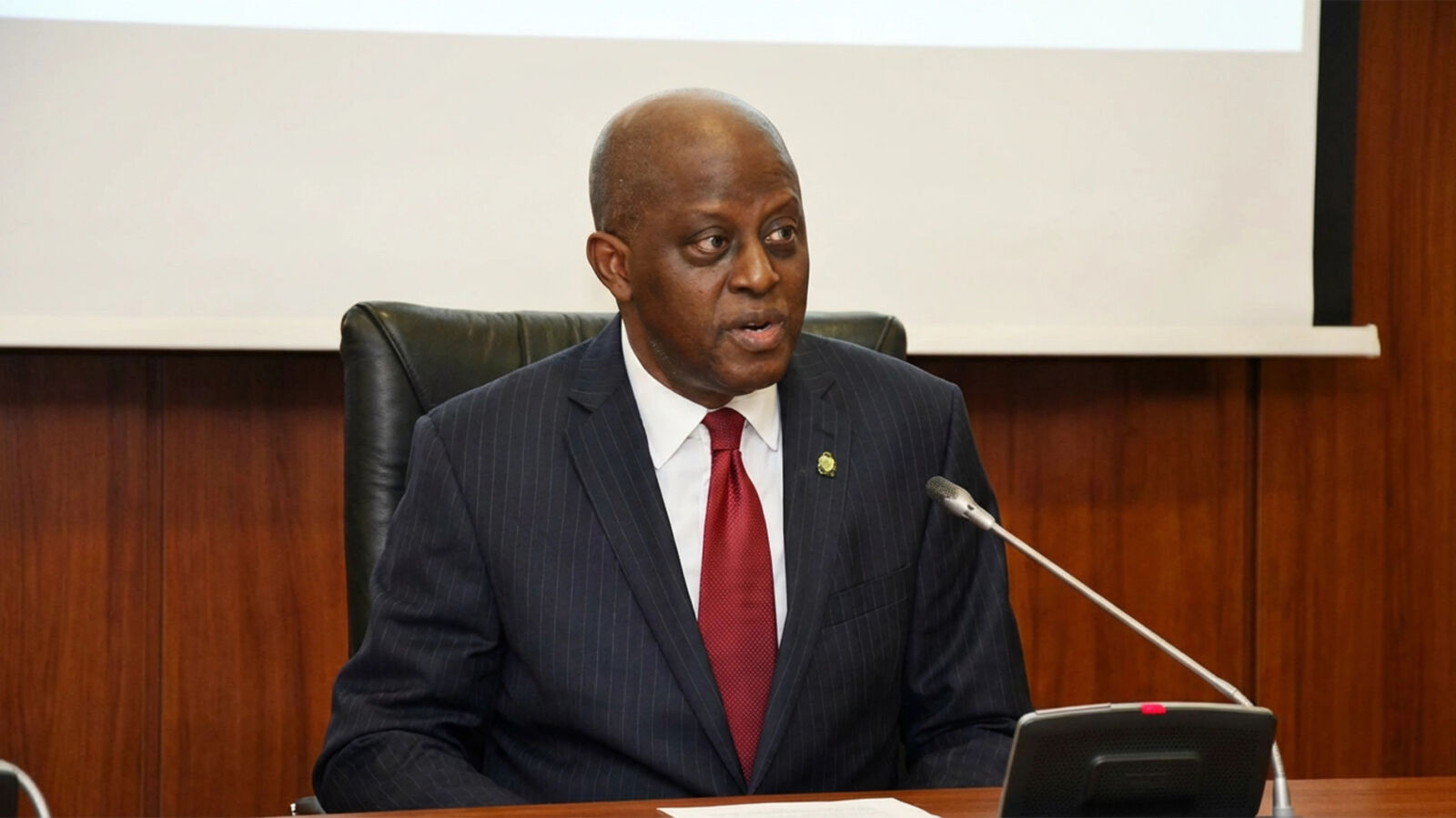
Nigeria’s central bank is sending a clear signal to financial markets: climate risk is financial risk.
Speaking on the growing role of green central banking, Olayemi Cardoso, governor of the Central Bank of Nigeria, emphasised that climate threats now pose systemic risks to the financial sector.
The statement reflects a broader shift among global regulators, who increasingly see climate shocks as threats to financial stability, credit markets, and economic resilience.
Nigeria’s Central Bank Links Climate Threats To Financial Stability
Climate change is no longer just an environmental concern; it is becoming a core financial risk.
That was the message from Olayemi Cardoso, who warned that climate-related disruptions could threaten financial stability if banks and regulators fail to act.
Speaking during discussions on green central banking, the governor stressed that the financial sector must integrate climate risk into lending, supervision, and investment decisions.
“Climate risk is financial risk,” Cardoso said,
highlighting how climate shocks, from floods and droughts to energy disruptions, can undermine economic stability and increase credit risk across financial systems.
The remarks place the Central Bank of Nigeria among a growing number of regulators globally that are incorporating climate risk into financial oversight.
Green Central Banking Gains Momentum Globally
Central banks worldwide are increasingly recognising climate change as a systemic economic risk.
Institutions including the Bank for International Settlements and the Network for Greening the Financial System have warned that climate shocks could disrupt credit markets, insurance systems, and sovereign finances.
In emerging economies such as Nigeria, the stakes are particularly high.
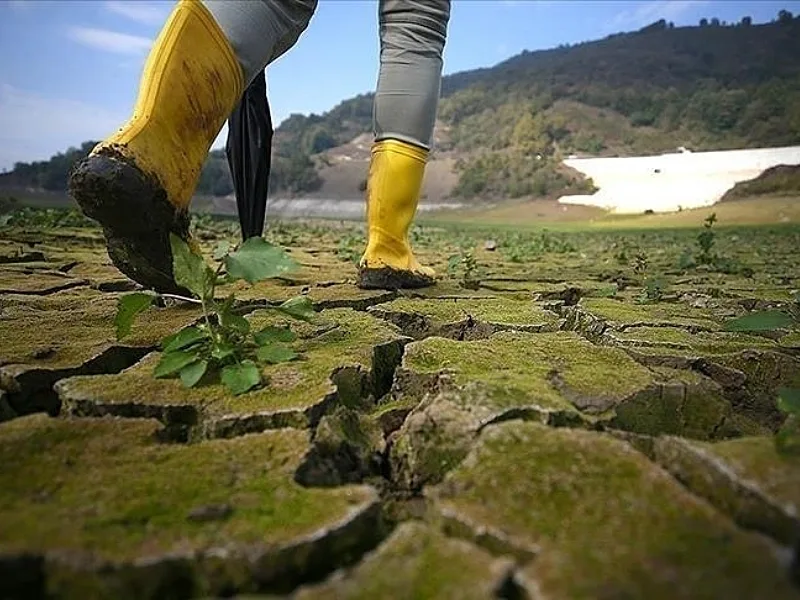
Climate impacts, including flooding, desertification, and agricultural disruption, already affect key economic sectors.
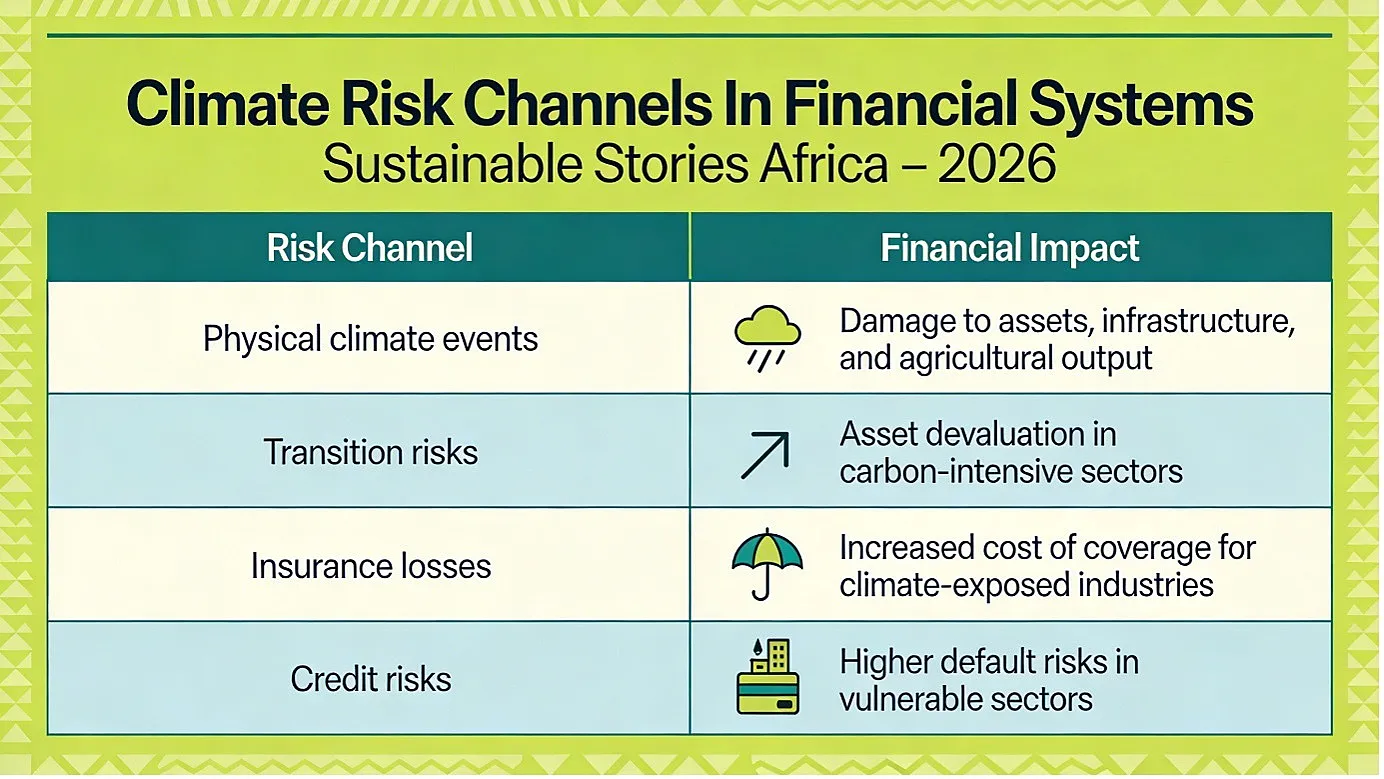
Climate Risk Channels In Financial Systems
Risk Channel | Financial Impact |
|---|---|
Physical climate events | Damage to assets, infrastructure, and agricultural output |
Transition risks | Asset devaluation in carbon-intensive sectors |
Insurance losses | Increased cost of coverage for climate-exposed industries |
Credit risks | Higher default risks in vulnerable sectors |
Nigeria’s financial sector has begun responding.
In recent years, regulators and financial institutions have introduced sustainability guidelines and green finance initiatives to align financial flows with environmental goals.
The Central Bank of Nigeria, for instance, has supported sustainable banking principles that encourage lenders to incorporate environmental and social risks into lending decisions.
Climate Finance And Economic Stability
Indicator | Context |
|---|---|
Nigeria’s exposure to climate risks | High, particularly flooding and desertification |
Global climate finance is required annually | Over $4 trillion by 2030 |
Central banks are considering climate risk frameworks | Growing rapidly worldwide |
Nigerian sustainable banking guidelines | Implemented across the banking sector |
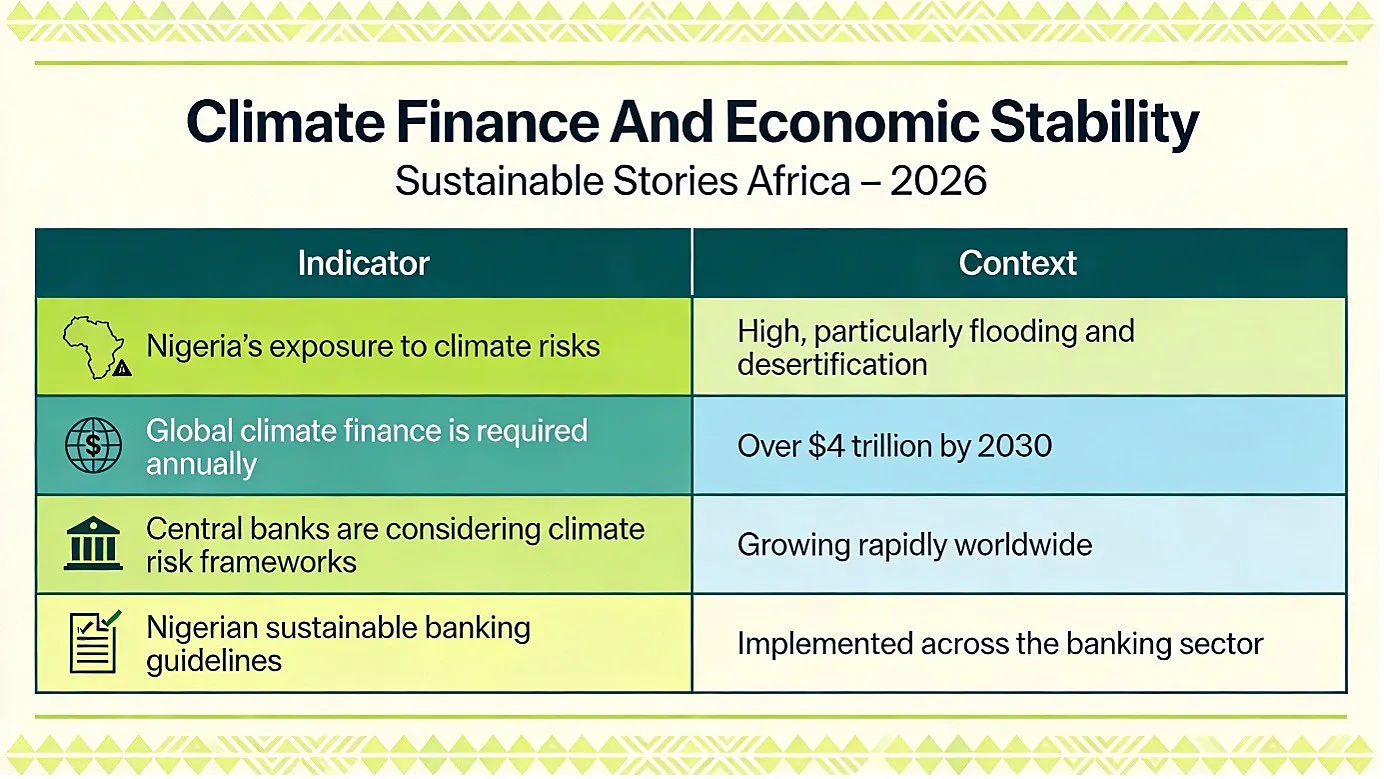
These developments reflect a broader evolution in financial governance: climate risk is increasingly treated as a financial stability issue rather than a purely environmental policy challenge.
Aligning Finance With Climate Resilience
Integrating climate risk into financial decision-making could strengthen economic resilience across emerging markets.
For banks, improved climate risk assessment can help prevent systemic shocks that extreme weather events or sudden policy shifts can affect carbon-intensive industries.
For investors, the shift could unlock new opportunities in renewable energy, climate-resilient infrastructure, and sustainable agriculture.
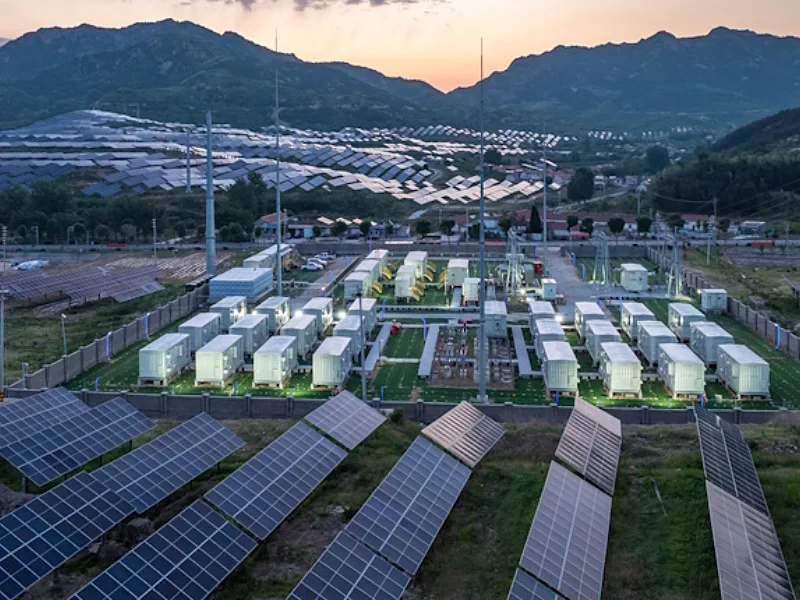
Nigeria’s growing renewable energy sector, for example, is increasingly attracting interest from international investors seeking climate-aligned opportunities.
If financial institutions incorporate climate risk frameworks, the result could be a more resilient financial system, one capable of supporting long-term economic growth while managing environmental risks.
Financial Institutions Must Integrate Climate Risk
Experts say the next step is translating climate awareness into practical financial action.
This includes:
- Integrating climate stress testing into banking supervision
- Expanding green lending and sustainable finance frameworks
- Improving climate disclosure standards for financial institutions
- Supporting investment in climate-resilient infrastructure
Central banks also play a crucial role in coordinating policy responses across the financial system.
By embedding climate considerations into financial regulation, regulators can ensure that banks, investors, and corporations prepare for the economic realities of a warming world.
For Nigeria and many African economies, the challenge is balancing development needs with climate resilience.
But the governor’s message signals a clear direction: financial systems must adapt to climate risks before those risks escalate into systemic crises.
Path Forward – Greening Finance To Safeguard Economic Stability
Central banks are increasingly recognising climate change as a core financial stability challenge.
For Nigeria and other African economies, integrating climate risk into financial supervision could strengthen resilience while unlocking investment in sustainable infrastructure and green industries.
Culled From: Roundup: 'Climate risk is financial risk,' says Nigeria central bank governor - Green Central Banking