Severe drought across parts of Somalia has driven water prices up by as much as 2,000%, according to humanitarian organisation Oxfam.
The surge reflects worsening climate pressures across the Horn of Africa, where rainfall failures are intensifying water scarcity.
For millions of vulnerable families, the rising cost of water is no longer just an economic challenge; it is becoming a daily survival crisis.
Water Prices Surge As Drought Tightens Grip
Across drought-stricken regions of Somalia, access to water is becoming dangerously expensive.
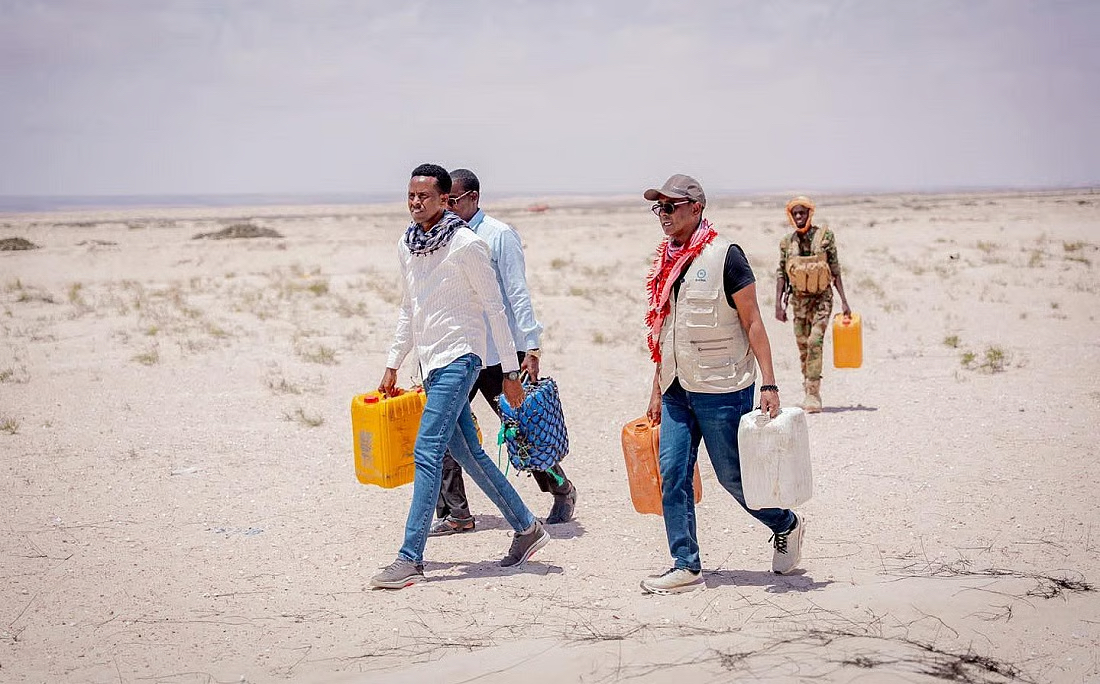
Humanitarian group Oxfam reports that water prices in some areas have surged by up to 2,000%, driven by a prolonged drought that has depleted wells, dried up rivers and forced communities to rely on expensive trucked water supplies.
The spike in prices is hitting some of the most vulnerable populations in the Horn of Africa, including internally displaced communities and pastoral families already facing food insecurity.
Somalia has endured multiple consecutive seasons of below-average rainfall, part of a wider climate pattern affecting East Africa.
For families in drought-affected areas, the consequences are immediate. Water, once collected from nearby sources, is now often purchased from private suppliers at dramatically inflated prices.
Humanitarian agencies warn that the rising costs are compounding an already severe crisis marked by food shortages, displacement and fragile livelihoods.
Climate Shock Disrupts Water Access
Somalia’s water crisis reflects the broader climate volatility reshaping the Horn of Africa.
Longer dry seasons and unpredictable rainfall are disrupting traditional water systems that communities have relied on for generations.
As surface water sources reduce, many households must buy water transported by trucks from distant boreholes.
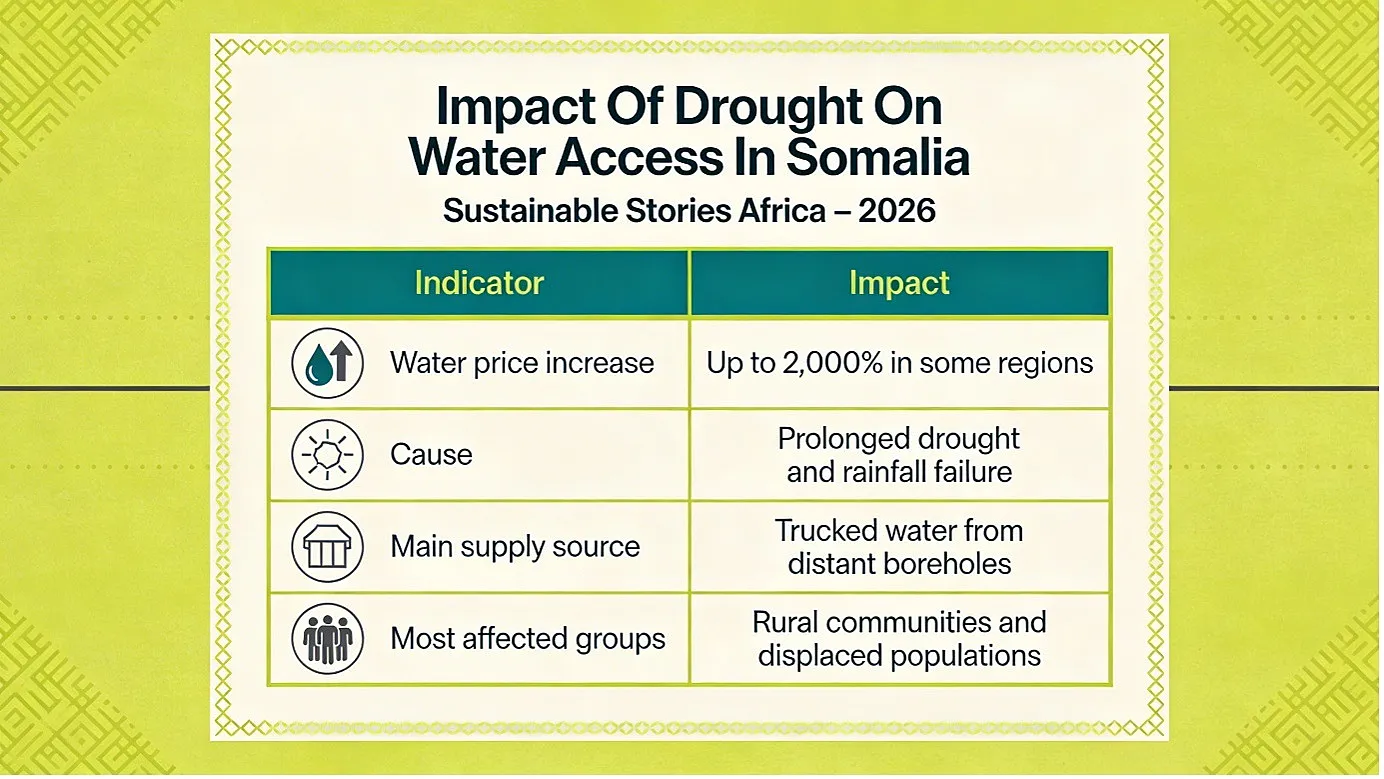
Impact Of Drought On Water Access In Somalia
Indicator | Impact |
|---|---|
Water price increase | Up to 2,000% in some regions |
Cause | Prolonged drought and rainfall failure |
Main supply source | Trucked water from distant boreholes |
Most affected groups | Rural communities and displaced populations |
Humanitarian organisations say the shift toward privately supplied water has transformed a natural resource into a costly commodity.
In some drought-affected communities, households must spend a significant share of their income to secure drinking water.
Children and women, often responsible for water collection, are particularly affected, sometimes travelling long distances to access limited supplies.
The situation illustrates how climate shocks are increasingly translating into economic and humanitarian crises across vulnerable regions.
Climate-Resilient Water Systems Offer Hope
Despite the severity of the crisis, development experts argue that strategic investment in water infrastructure could significantly reduce vulnerability.
Climate-resilient water systems, such as deep boreholes, solar-powered pumping systems, rainwater harvesting and improved storage infrastructure, could provide more stable access to water in drought-prone regions.
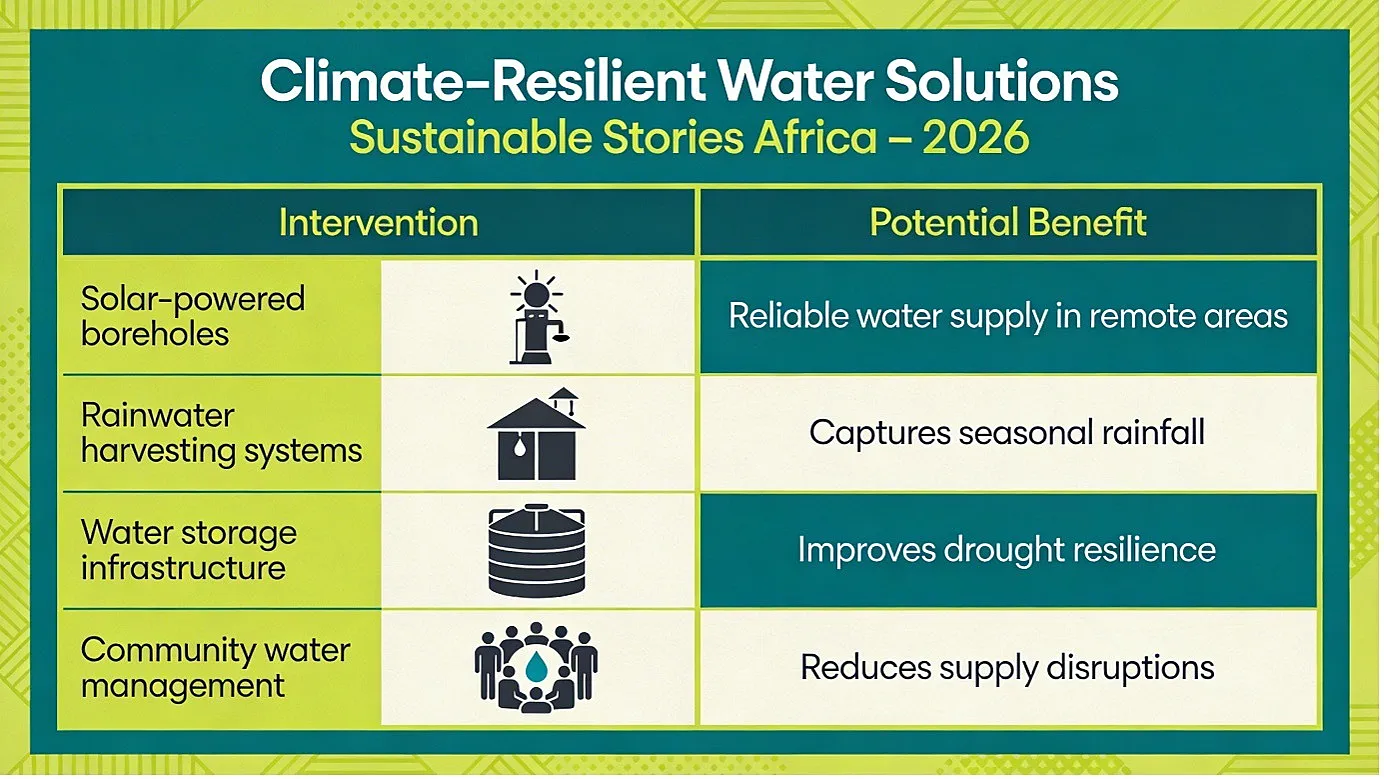
Climate-Resilient Water Solutions
Intervention | Potential Benefit |
|---|---|
Solar-powered boreholes | Reliable water supply in remote areas |
Rainwater harvesting systems | Captures seasonal rainfall |
Water storage infrastructure | Improves drought resilience |
Community water management | Reduces supply disruptions |
Strengthening water infrastructure could also reduce reliance on emergency water trucking, which often drives price volatility.
For pastoral communities whose livelihoods depend on livestock, improved access to water would help stabilise both food security and income levels.
Experts note that climate adaptation investments are increasingly recognised as essential for protecting vulnerable populations across the Horn of Africa.
Urgent Investment Needed For Water Security
Humanitarian organisations are urging governments, international donors and development institutions to accelerate investment in long-term climate adaptation solutions.
Immediate priorities include expanding access to boreholes, rehabilitating damaged water systems and supporting communities facing acute water shortages.
Key action areas include:
- Scaling up climate-resilient water infrastructure
- Expanding humanitarian support for drought-affected communities
- Strengthening early-warning systems for climate risks
- Supporting local water governance and resource management
Experts say that without sustained action, climate change could intensify water insecurity across the Horn of Africa, increasing the risk of humanitarian emergencies.
But with targeted investment and stronger coordination between governments and development partners, Somalia could begin building more resilient water systems capable of withstanding future climate shocks.
Path Forward – Water Security in the Climate Era
Somalia’s water crisis highlights the urgent need to integrate climate adaptation into national development planning.
By investing in resilient water infrastructure and strengthening community water management systems, governments and partners can help protect vulnerable populations while reducing the economic shocks of future droughts.
Culled From: https://www.downtoearth.org.in/africa/drought-drives-water-prices-up-2000-per-cent-across-parts-of-somalia-says-oxfam