The World Bank says $50 billion has been mobilised to accelerate electrification across Africa, marking one of the largest coordinated financing efforts aimed at closing the continent’s energy access gap.
The initiative comes as more than 600 million Africans still lack reliable electricity, limiting economic development and climate resilience.
If delivered effectively, the funding could transform power infrastructure, unlock investment and expand access to clean energy for millions of households and businesses.
$50 Billion Push Targets Africa’s Electricity Gap
Global lenders and development partners have mobilised $50 billion in financing aimed at expanding electricity access across Africa, according to the World Bank, signalling a major push to address one of the continent’s most persistent development challenges.
The commitment forms part of a broader electrification effort designed to accelerate power generation, transmission infrastructure and distributed energy systems across African economies.
Despite decades of investment, more than 600 million people in Africa lack reliable electricity, making the continent the region with the largest energy access deficit.
World Bank officials say the new funding will help scale renewable energy systems, strengthen national grids and support off-grid technologies that can reach rural and underserved communities.
For African governments and development institutions, the initiative offers a significant opportunity to address both energy poverty and climate resilience simultaneously.
Africa’s Power Deficit Remains A Development Barrier
Electricity access remains a cornerstone of economic growth and social development.
Without reliable power, businesses struggle to operate efficiently, hospitals cannot run critical medical equipment, and schools lack access to digital learning tools.
Energy experts say closing the electricity gap could unlock enormous economic potential across the continent.
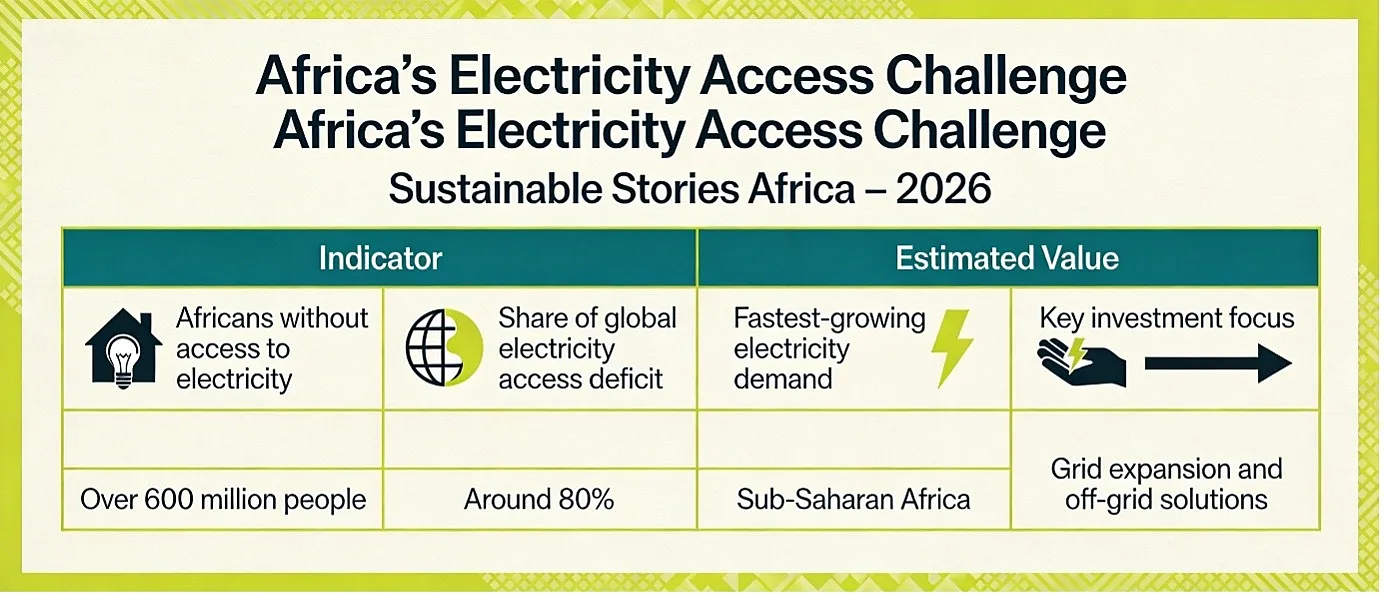
Africa’s Electricity Access Challenge
Indicator | Estimated Value |
|---|---|
Africans without access to electricity | Over 600 million people |
Share of global electricity access deficit | Around 80% |
Fastest-growing electricity demand | Sub-Saharan Africa |
Key investment focus | Grid expansion and off-grid solutions |
The World Bank initiative aims to address this challenge through a combination of public investment, private-sector financing and policy reforms.
In recent years, distributed energy solutions such as solar mini-grids and solar home systems have emerged as critical tools for electrifying remote areas where extending national grids is costly.
Meanwhile, grid infrastructure investments remain essential for powering cities, industries and growing economies.
Development experts say Africa’s electrification push must combine large-scale infrastructure projects with decentralised renewable energy systems.
Electrification Could Transform African Economies
Expanding electricity access could have far-reaching benefits for African economies.
Reliable power enables businesses to increase productivity, encourages industrial growth and attracts investment into manufacturing and technology sectors.
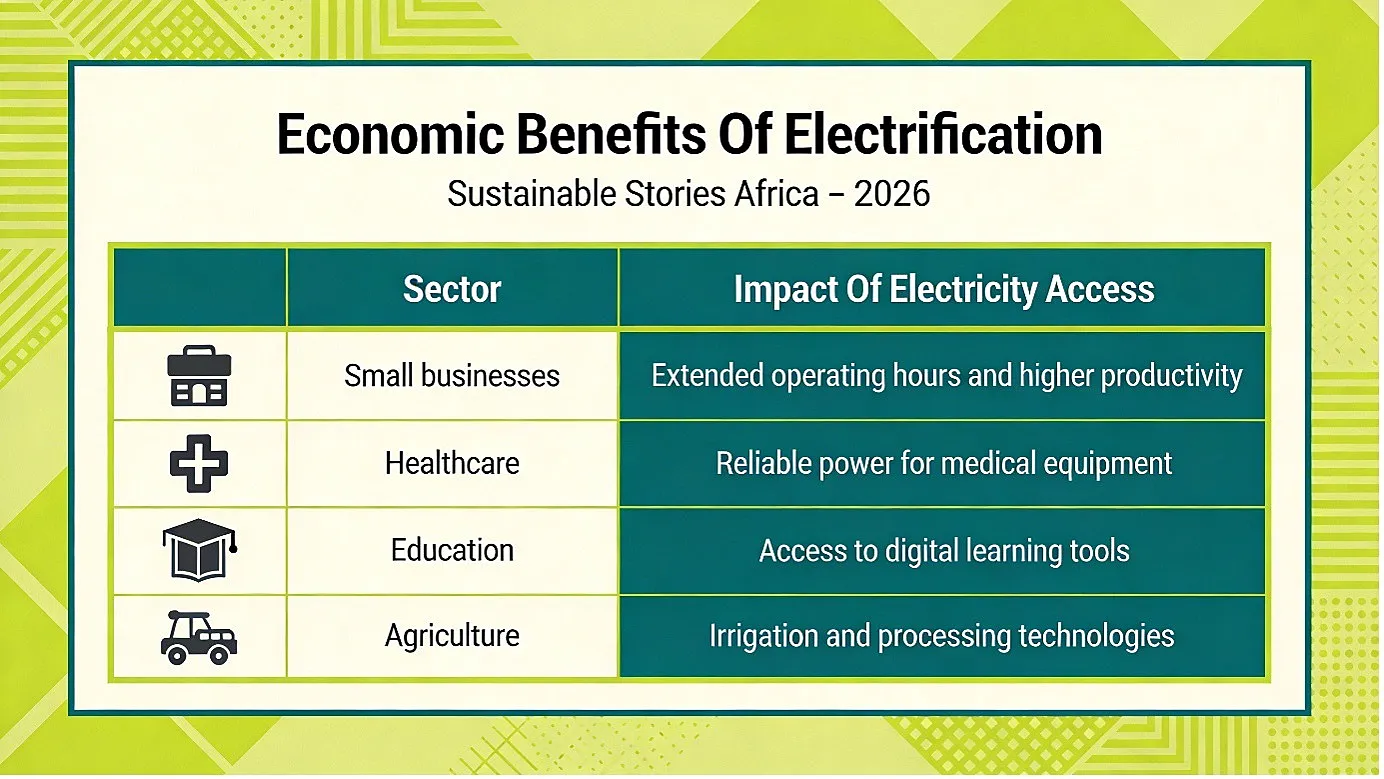
Economic Benefits Of Electrification
Sector | Impact Of Electricity Access |
|---|---|
Small businesses | Extended operating hours and higher productivity |
Healthcare | Reliable power for medical equipment |
Education | Access to digital learning tools |
Agriculture | Irrigation and processing technologies |
For rural communities, electrification can also unlock new opportunities in agro-processing, cold storage and digital services.
Importantly, many new electrification projects are expected to rely on renewable energy technologies, aligning development goals with global climate commitments.
Renewable mini-grids and solar systems can provide cleaner power while reducing dependence on diesel generators and fossil fuel imports.
Experts say the electrification drive could therefore support both economic transformation and climate sustainability across African markets.
Coordinated Investment And Policy Reform Needed
Despite the scale of the financing commitment, analysts caution that delivering electrification at scale will require strong coordination between governments, development banks and private investors.
Key priorities include:
- Expanding national grid infrastructure and cross-border power systems
- Supporting renewable mini-grids and solar home systems for rural electrification
- Strengthening energy sector governance and regulatory frameworks
- Mobilising private capital to complement development financing
Governments must also prioritise energy planning strategies that align infrastructure investments with population growth and industrial expansion.
For investors, Africa’s electricity market represents one of the world’s most significant untapped infrastructure opportunities.
If managed effectively, electrification initiatives could unlock billions of dollars in economic activity while improving the quality of life for millions of people.
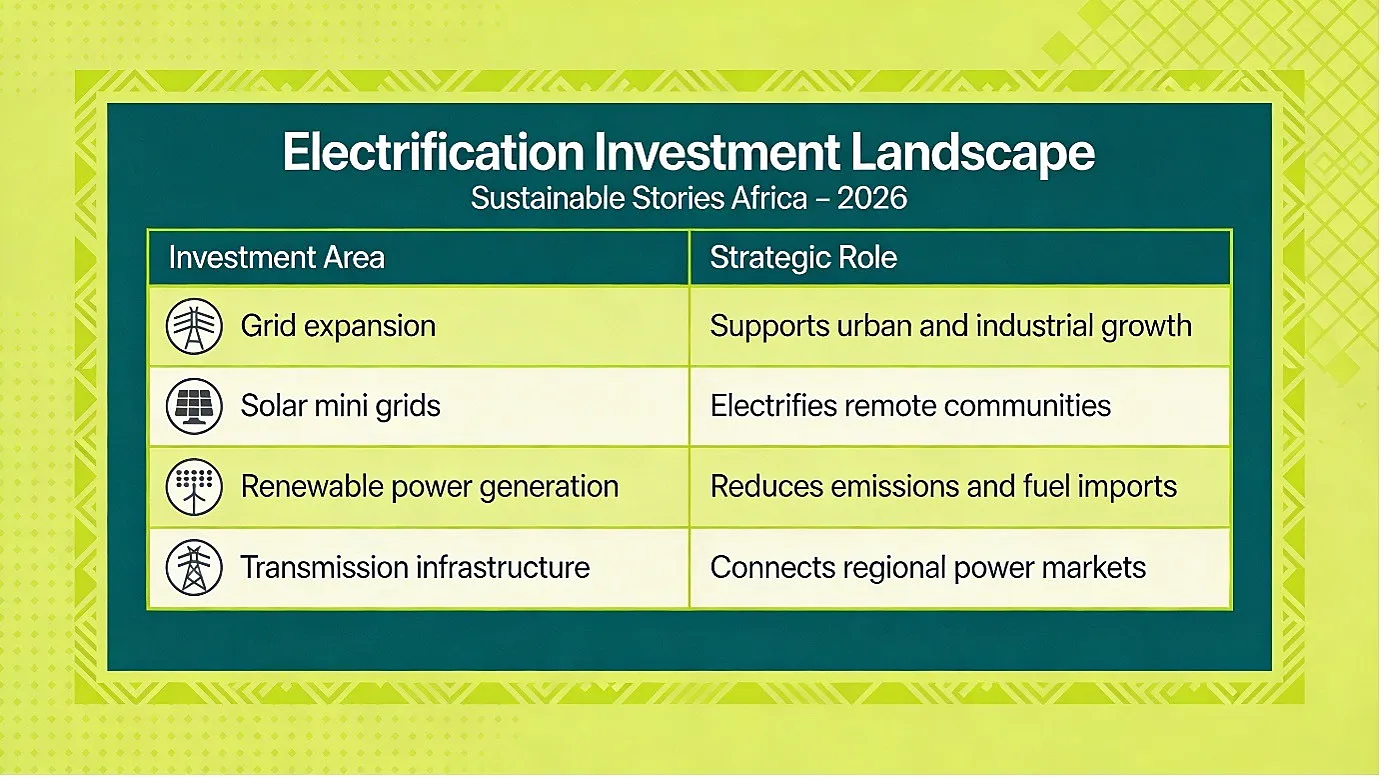
Electrification Investment Landscape
Investment Area | Strategic Role |
|---|---|
Grid expansion | Supports urban and industrial growth |
Solar mini grids | Electrifies remote communities |
Renewable power generation | Reduces emissions and fuel imports |
Transmission infrastructure | Connects regional power markets |
Path Forward – Powering Africa’s Inclusive Energy Future
The $50 billion electrification commitment marks a significant step toward closing Africa’s energy access gap.
By combining grid expansion, renewable technologies and stronger policy frameworks, governments and investors can accelerate electrification while building cleaner, more resilient energy systems across the continent.