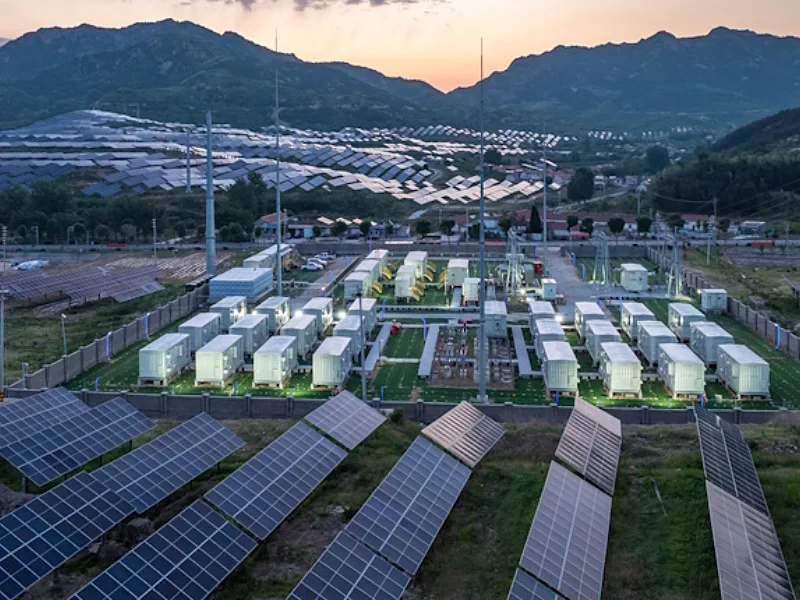
Solar entrepreneurs across Nigeria say raising capital in 2026 is becoming both more urgent and more complex as demand for off-grid electricity surges.
Investors remain interested in Africa’s clean energy transition, but founders say the terms, timelines and expectations around funding are shifting rapidly.
How Nigeria solves this financing puzzle could determine whether millions of households and businesses gain reliable solar power in the coming decade.
Nigeria’s Solar Startups Face Funding Reality
For Nigeria’s fast-growing solar startup ecosystem, the real challenge in 2026 is no longer proving demand; it is securing the right capital to scale.
Nationwide, entrepreneurs building mini-grids, solar home systems and commercial rooftop installations say investors remain interested in the sector. However, many founders warn that funding conditions have tightened, even as electricity shortages deepen and diesel prices rise.
Nigeria’s electricity crisis has created a powerful market opportunity. With more than 85 million Nigerians lacking reliable grid electricity, solar startups have stepped in to provide decentralised power solutions for households, farms and small businesses.
However, CEOs say raising funds now requires stronger financial discipline, clearer revenue models and patient investors willing to support infrastructure-like growth cycles.
“The demand is massive, but solar businesses require long-term capital,” one Nigerian solar founder explained during a recent industry discussion. “If investors expect tech-style returns in two years, they will struggle to understand this sector.”
For many companies, the funding environment is shifting from early-stage optimism toward more structured investment frameworks focused on profitability and operational efficiency.
Investors Rethink Solar Financing Models
Across Africa, solar startups historically relied on venture capital, development finance institutions and blended finance funds. These investors were attracted by the dual opportunity of climate impact and energy access.
But industry leaders say the global investment environment has changed. Rising interest rates, currency volatility and investor caution have slowed fundraising cycles.
In Nigeria, CEOs say the conversation with investors is evolving from growth potential to financial sustainability.
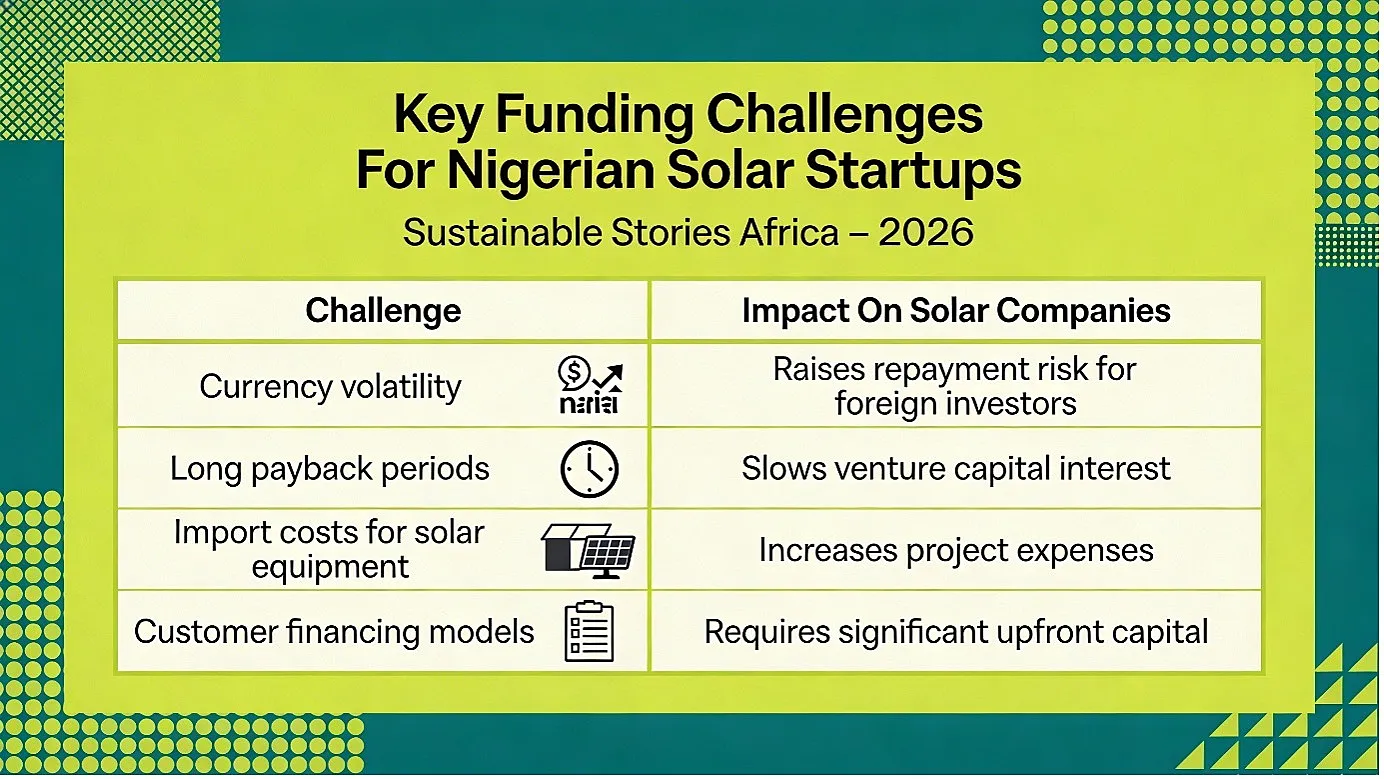
Key Funding Challenges For Nigerian Solar Startups
Challenge | Impact On Solar Companies |
|---|---|
Currency volatility | Raises repayment risk for foreign investors |
Long payback periods | Slows venture capital interest |
Import costs for solar equipment | Increases project expenses |
Customer financing models | Requires significant upfront capital |
Despite these obstacles, demand for solar energy continues to expand rapidly. Businesses facing unreliable grid electricity are turning to solar systems to maintain operations.
In Lagos, Abuja and Kano, solar installers report growing demand from manufacturers, hospitals, farms and small enterprises seeking alternatives to diesel generators.
Energy analysts note that Nigeria’s off-grid solar market could become one of Africa’s largest if financing challenges are addressed.
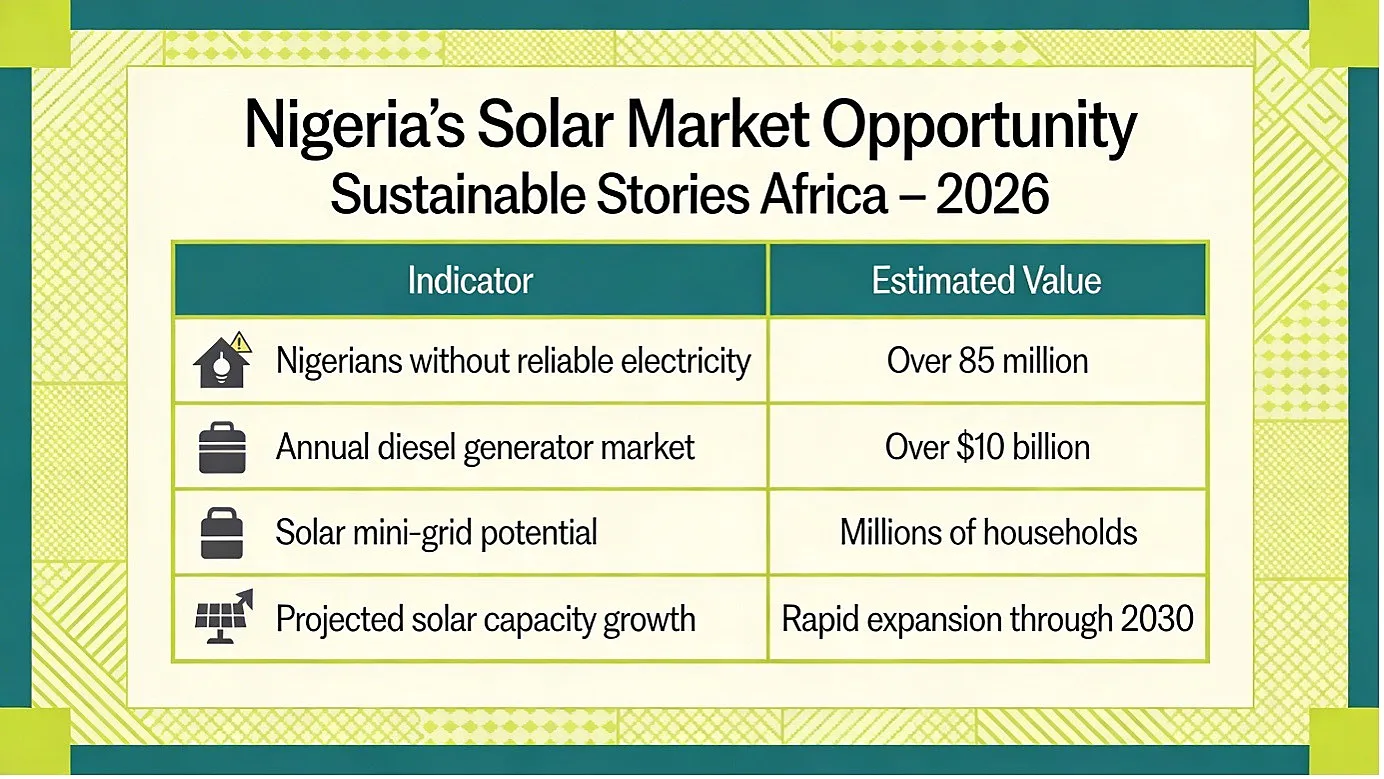
Nigeria’s Solar Market Opportunity
Indicator | Estimated Value |
|---|---|
Nigerians without reliable electricity | Over 85 million |
Annual diesel generator market | Over $10 billion |
Solar mini-grid potential | Millions of households |
Projected solar capacity growth | Rapid expansion through 2030 |
Several Nigerian solar founders argue that patient infrastructure capital—not short-term venture funding—will ultimately unlock the sector’s full potential.
Solar Energy Could Transform Nigeria’s Economy
If funding barriers are resolved, solar startups could play a transformative role in Nigeria’s economic development.
Reliable electricity allows small businesses to extend working hours, farms to adopt irrigation technology, and hospitals to operate medical equipment without interruption.
For many communities, decentralised solar solutions represent the fastest path to electricity access, particularly in rural regions where extending national grid infrastructure remains expensive.
Beyond energy access, the sector also presents job creation opportunities across installation, maintenance, manufacturing and financing.
Industry leaders say Nigeria’s solar ecosystem could support thousands of skilled jobs while reducing reliance on imported fossil fuels.
At the climate level, expanding solar capacity helps reduce emissions tied to diesel generators, which currently power millions of Nigerian homes and businesses.
In short, solar startups are not merely building energy companies; they are building the foundations of Nigeria’s clean energy economy.
New Capital Partnerships Needed For Solar Growth
To unlock the next phase of growth, industry leaders say new financing structures must emerge.
This includes stronger collaboration between governments, development finance institutions, commercial banks and private investors.
Key strategies under discussion include:
- Expanding blended finance funds combining public and private capital
- Developing local currency financing to reduce foreign exchange risk
- Strengthening solar equipment supply chains within Africa
- Creating credit guarantees for solar infrastructure projects
Some CEOs also advocate for policy reforms that support domestic manufacturing and reduce import costs for solar equipment.
Energy economists argue that the sector now requires “infrastructure capital thinking,” where solar companies are financed like long-term utilities rather than short-term technology ventures.
If these financial models evolve, Nigeria could become a leading solar innovation hub for West Africa.
Nigeria Solar Startup Funding Landscape – Solar Financing Challenges In Nigeria
- Venture capital becoming more cautious
- Solar payback periods longer than tech startups
- Currency volatility affecting foreign investment
- Equipment import costs remain high
- Customer financing models require upfront capital
Solar Market Opportunity – Why Investors Still See Solar Potential
- Over 85 million Nigerians lack reliable electricity
- Diesel generators dominate backup power market
- Solar increasingly cost-competitive with diesel
- Strong demand from SMEs and agriculture
- Rapid urban and rural electrification needs
Path Forward – Patient Capital For Solar Growth
Nigeria’s solar market now stands at a financing crossroads. Demand is rising rapidly, but startups require patient capital aligned with infrastructure timelines.
Industry leaders say stronger partnerships between investors, policymakers and developers will determine whether solar energy can scale fast enough to power Nigeria’s economic future.
Culled From: Raising funds for solar startups in 2026 in Nigeria. Here's what these CEOs think - Energy in Africa