
Nigeria's data protection regime reached a new enforcement milestone with the Chukwunweike v. Ecart Internet Services case.
The ruling clarified corporate duties on consent, data security, and accountability under Nigeria's evolving privacy laws.
Legal experts say the decision strengthens consumer rights while encouraging businesses toward stricter data governance and compliance cultures.
Privacy Law Meets Real Enforcement
Nigeria's data protection framework took a decisive step forward following the Chukwunweike v. Ecart Internet Services Nigeria Limited ruling, which underscored the responsibilities of corporations in handling personal data.
The court examined whether Ecart had lawfully collected, processed, and protected a customer's personal information, reinforcing that privacy rights are no longer abstract principles but enforceable legal obligations.
Legal analysts say the decision strengthens Nigeria's digital rights architecture and signals tougher accountability for businesses operating online.
What the Case Established Clearly
The dispute centred on alleged misuse and inadequate protection of personal data. The court assessed compliance with Nigeria's Data Protection Regulation (NDPR) principles, including lawful processing, consent, and security safeguards.
The judgment clarified that companies must demonstrate:
- Clear user consent
- Purpose-specific data collection
- Adequate security measures
- Transparent privacy policies
Key Data Protection Duties
| Obligation | Requirement |
|---|---|
| Lawful processing | Valid consent or legal basis |
| Data minimisation | Collect only necessary data |
| Security | Protect against breaches |
| Transparency | Inform users clearly |
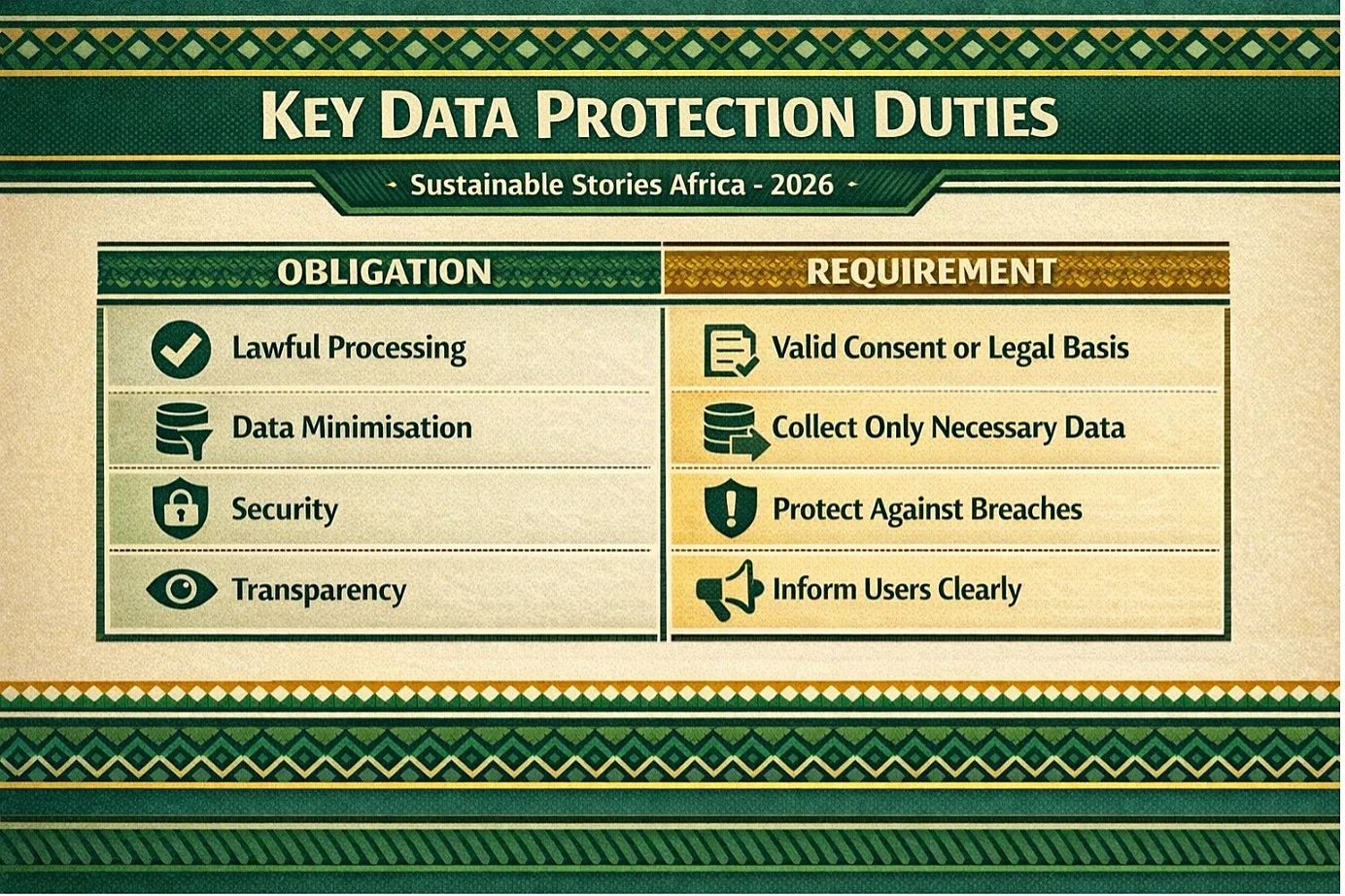
The ruling emphasised that failure to meet these standards exposes firms to legal liability and reputational risk.
Corporate Compliance Gets Redefined
Beyond legal consequences, the case reshaped how Nigerian businesses view data governance. Privacy compliance is no longer a "back-office" function; it is a core governance issue.
Companies are now expected to appoint Data Protection Officers, conduct risk assessments, and document compliance processes.
Corporate Compliance Shifts
| Area | New Expectation |
|---|---|
| Governance | Board oversight of data risk |
| Operations | Privacy-by-design systems |
| Training | Staff data awareness |
| Reporting | Breach response protocols |
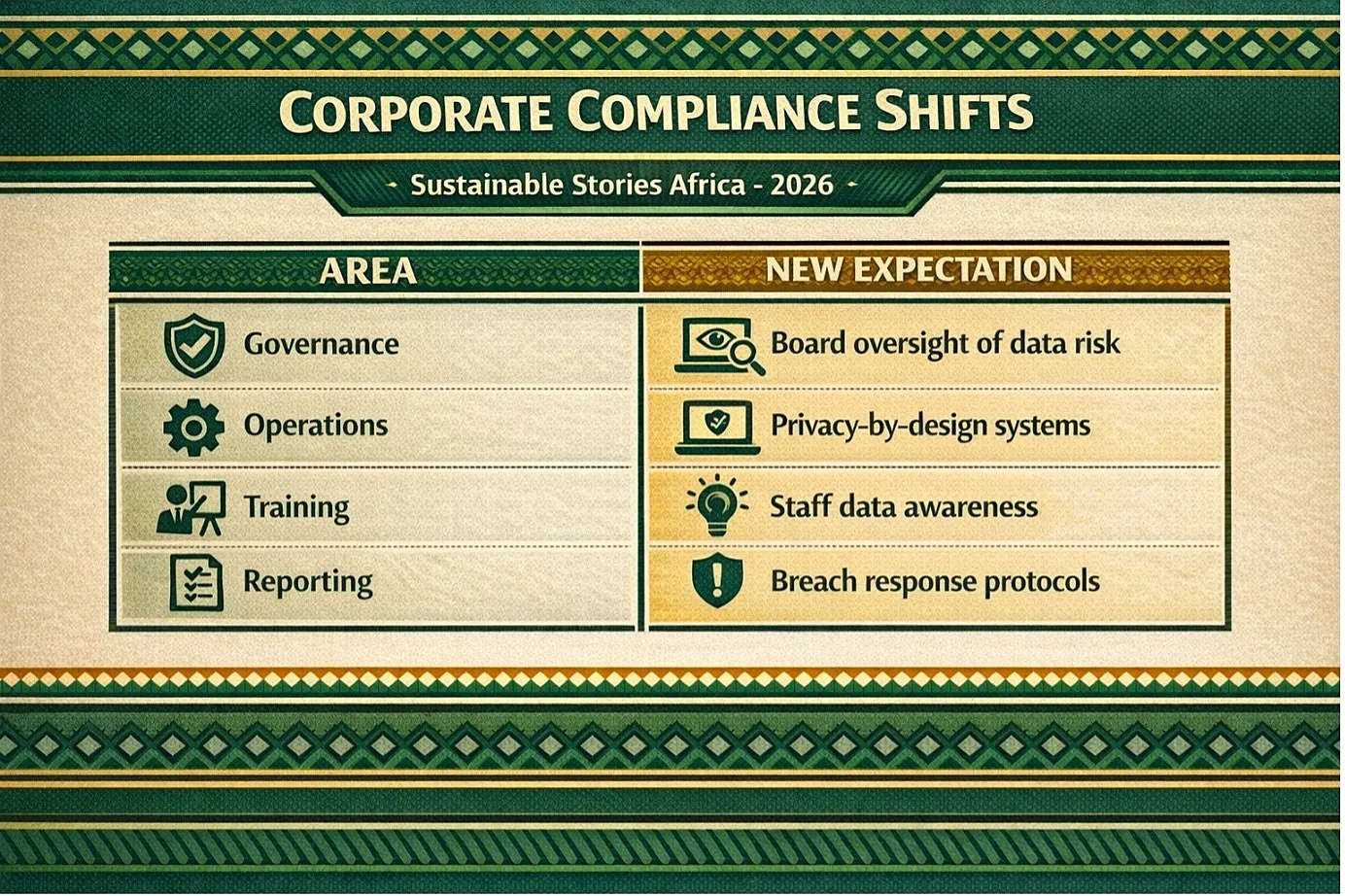
Experts say firms that embed privacy into corporate culture gain trust and reduce regulatory exposure.
Consumers Gain Stronger Protection
For Nigerian consumers, the ruling reinforces the right to challenge misuse of personal data.
Individuals can now rely on clearer legal precedents to seek redress where their privacy is violated.
Public awareness remains critical. When users understand consent rights, data access rules, and complaint channels, enforcement becomes more effective, and market discipline improves.
PATH FORWARD – Building a Privacy-First Business Culture
Nigeria's data protection regime is shifting from regulatory compliance to behavioural change.
Courts, regulators, and businesses must now sustain momentum through consistent enforcement, education, and governance reforms.
The goal is a privacy-first market culture, where digital growth aligns with consumer trust, legal certainty, and responsible data use.
Culled From: SSK-Template-on-Data-Protection-Case-Review-Chukwunweike-v.-Ecart-Internet-Services-Nigeria-Limited.pdf