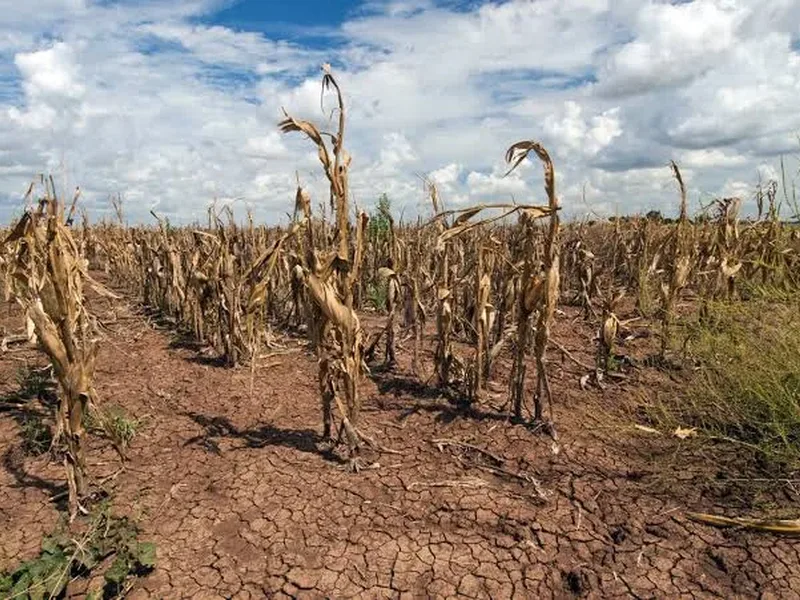
Nigeria could lose up to 30% of its GDP by 2050 without adequate climate action, government and business leaders told the Sustainable Finance Summit 3.0 in Lagos.
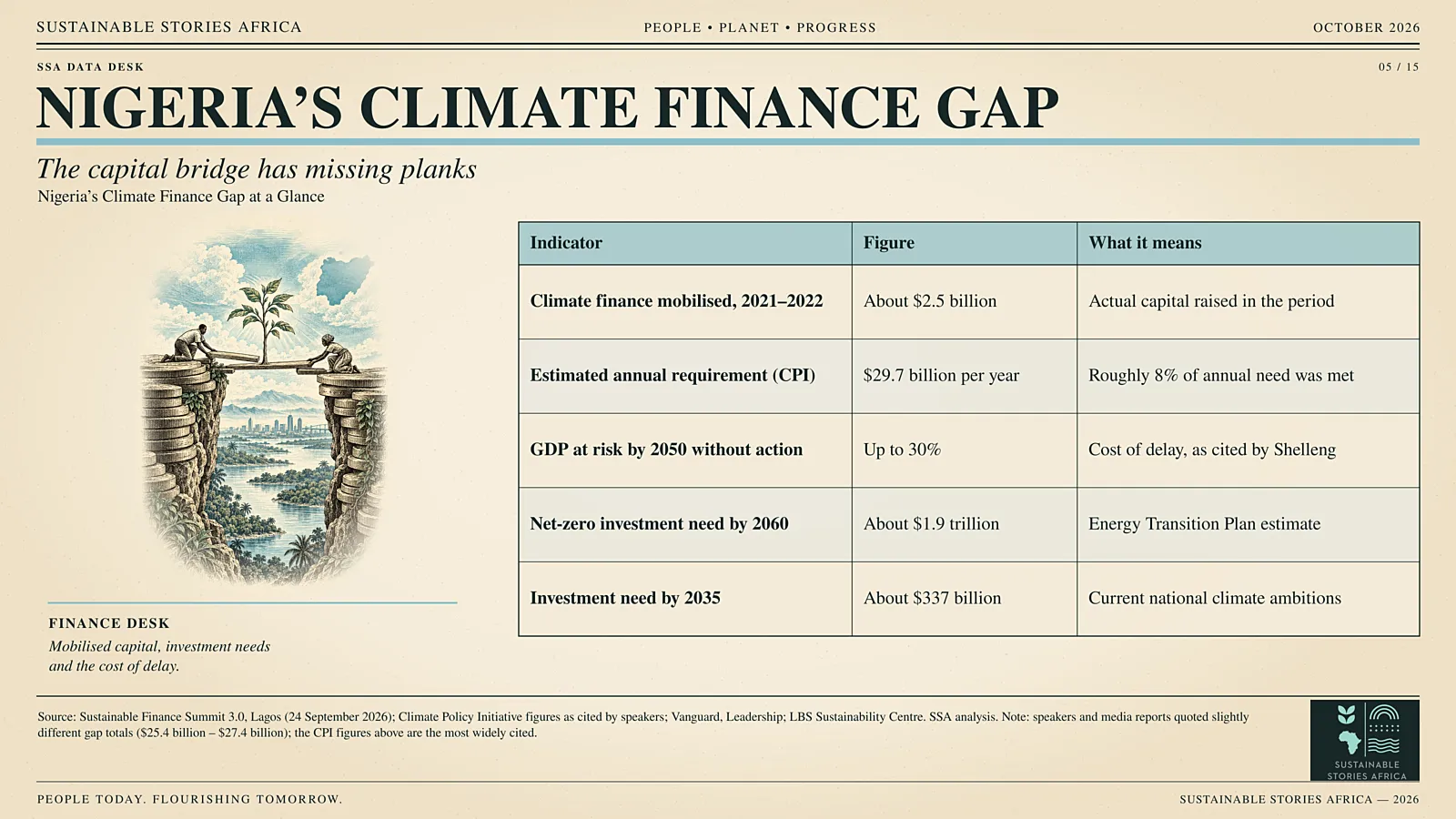
The warning matters now because the country mobilised only about $2.5 billion in climate finance in 2021 and 2022, against a need of $29.7 billion a year.
Distinguished Speakers argued that homegrown solutions, clearer rules and bankable projects will determine whether the transition protects jobs, energy access and growth.
Nigeria Warns of Costly Climate Funding Gap
Nigeria could lose up to 30% of its gross domestic product by 2050 if it fails to act on climate change, Ibrahim Shelleng, Senior Special Assistant to the President on Climate Finance and Stakeholder Engagement, told the Sustainable Finance Summit 3.0 in Lagos.
Convened by Stanbic IBTC Holdings in partnership with the Lagos Business School Sustainability Centre on 24 September 2026, it was themed “Financing Nigeria’s Just Transition: Mobilising Capital for People, Policy and Prosperity.”
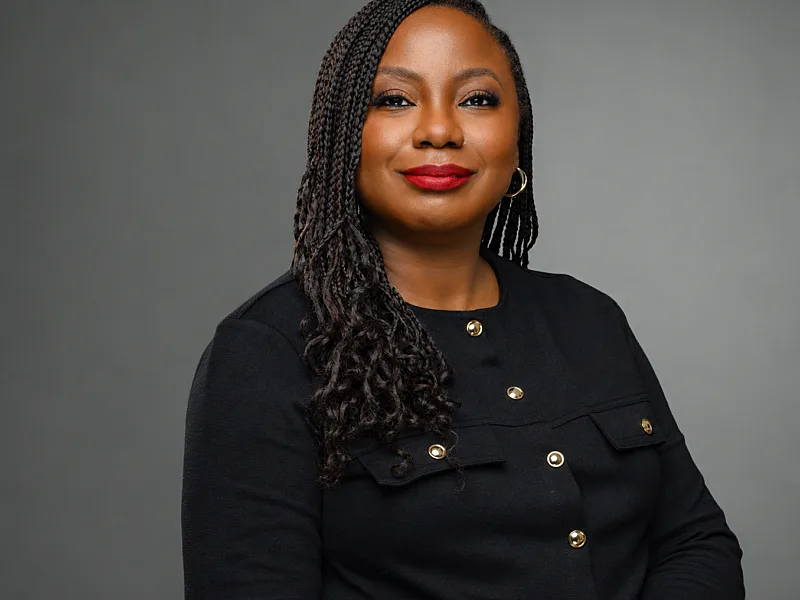
Titilayo Oshodi, Special Adviser to the Lagos State Governor on Climate Change and Circular Economy, delivered the keynote, “Capital Meets Climate: Financing Nigeria’s Just Transition at Scale.”
Oshodi said the question is not whether to develop or to transition.
- “We have to do both,” she said, noting that the country is still building infrastructure, creating jobs and expanding energy supply while climate change already affects communities.
Turning Ideas Into Projects
Oshodi said Lagos State’s development and climate action framework prioritises clean energy and clean cooking, climate resilience, the circular economy and industrial decarbonisation.
However, she warned that opportunities will not scale if they remain ideas.
- “They have to become well-prepared projects that can attract the right finance,” she said. “Capital is not the only challenge.
- Projects also need the right information, structure, business case and understanding of risk.”
She urged stakeholders to find the right data, policy, partners and capital to move the ecosystem forward.
The numbers explain the urgency.
- Climate Policy Initiative data cited at the summit shows Nigeria mobilised approximately 8% of the climate finance it needs each year.
- Speakers also cited about $1.9 trillion needed to reach net zero by 2060 and about $337 billion by 2035 to meet current national ambitions.
Voices From Government, Banks and Academia
Chuma Nwokocha, Chief Executive of Stanbic IBTC Holdings, said sustainable finance has moved “from good margins to mainstream”.
- “For Nigeria, a just transition and sustainable development are inseparable,” he said, adding that solutions must be “Nigerian solutions, Nigerian innovations”.
Prof. Bongo Adi, who spoke for the Dean of Lagos Business School, Prof. Olayinka David-West, asked what keeps capital from moving into existing opportunities: policy risk, a lack of investable projects, or the cost and structure of capital.
- He said private capital needs progressive policy frameworks to de-risk clean investments, and that capital allocation should “uplift millions of Nigerians”.
Shelleng said sustainable finance is now seen as an instrument for diversification, infrastructure, energy and food security, industrial competitiveness and jobs.
- He listed reforms including the Electricity Act, the Presidential Compressed Natural Gas Initiative, tax exemptions for renewable projects and lower tariffs on solar technology.
The government is also developing a Sustainable Finance Taxonomy to define what is green and curb greenwashing.
He added that the Development Bank of Nigeria and the Nigeria Sovereign Investment Authority are accredited Direct Access Entities to the Green Climate Fund, with three more institutions in the pipeline.
What Nigerians Stand to Gain
If capital flows, the benefits are tangible:
- Wider energy access, more jobs, stronger food security, resilient infrastructure and industrial growth, the priorities Nwokocha named.
- If it does not, the 30% GDP risk stays on the table.
The summit also saw Nwokocha unveil the Standard Bank Group Sustainability Academy, a learning platform for sustainability and ESG skills across Nigeria and Africa.
Calls to Move From Talk to Delivery
Kola Lawal, Executive Director, Enterprise Risk, Stanbic IBTC, urged stakeholders to move from dialogue to action and “plant the seeds for the future of a sustainable Nigeria”.
Tosin Leye-Odeyemi, Head of Personal Banking, said sustainable finance is now a mainstream imperative rather than a niche.
Orevaoghene Atanya, Director of the LBS Sustainability Centre, said the consensus was an urgent mandate to build sustainability priorities into the finance system, aligning instruments, policy and innovative financing to deliver a just transition.
Priorities for Nigeria’s Path Forward
Leaders called for Nigerian-led solutions, bankable projects, a clear green taxonomy and direct access to international climate funds.
The government is building the policy base, and banks and business schools are building skills and partnerships.
Delivery now depends on turning national targets into investable, sector-level projects that expand energy access, create jobs and strengthen ESG credibility in African markets.