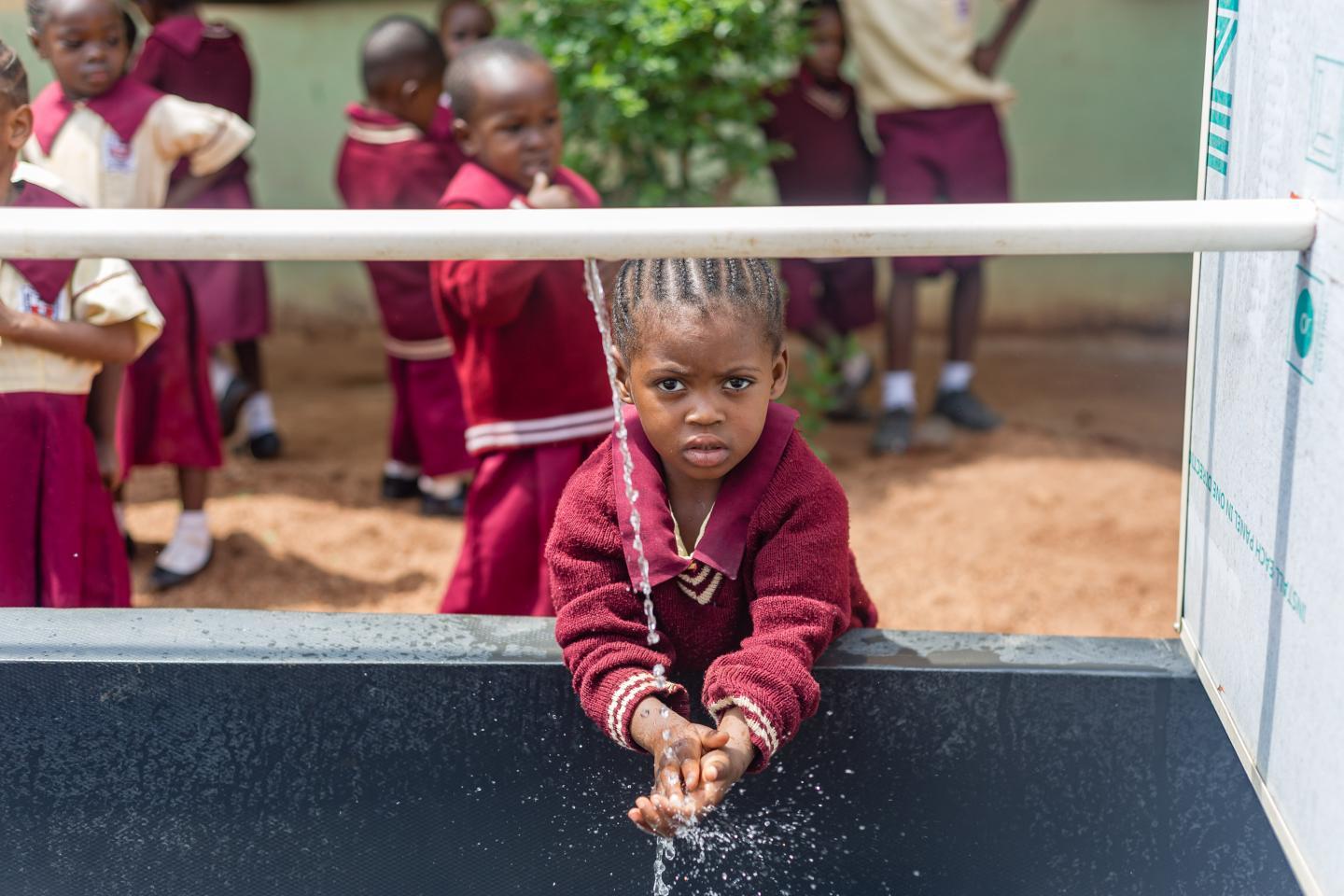
Intelpoint’s school WASH snapshot shows that most Nigerian schools lack at least one category of basic service.
Hygiene coverage is particularly low, while rural schools trail urban schools in water and sanitation access.
The figures demand attention to functional services, with care over their mixed underlying reference years.
School service gaps extend beyond classroom provision
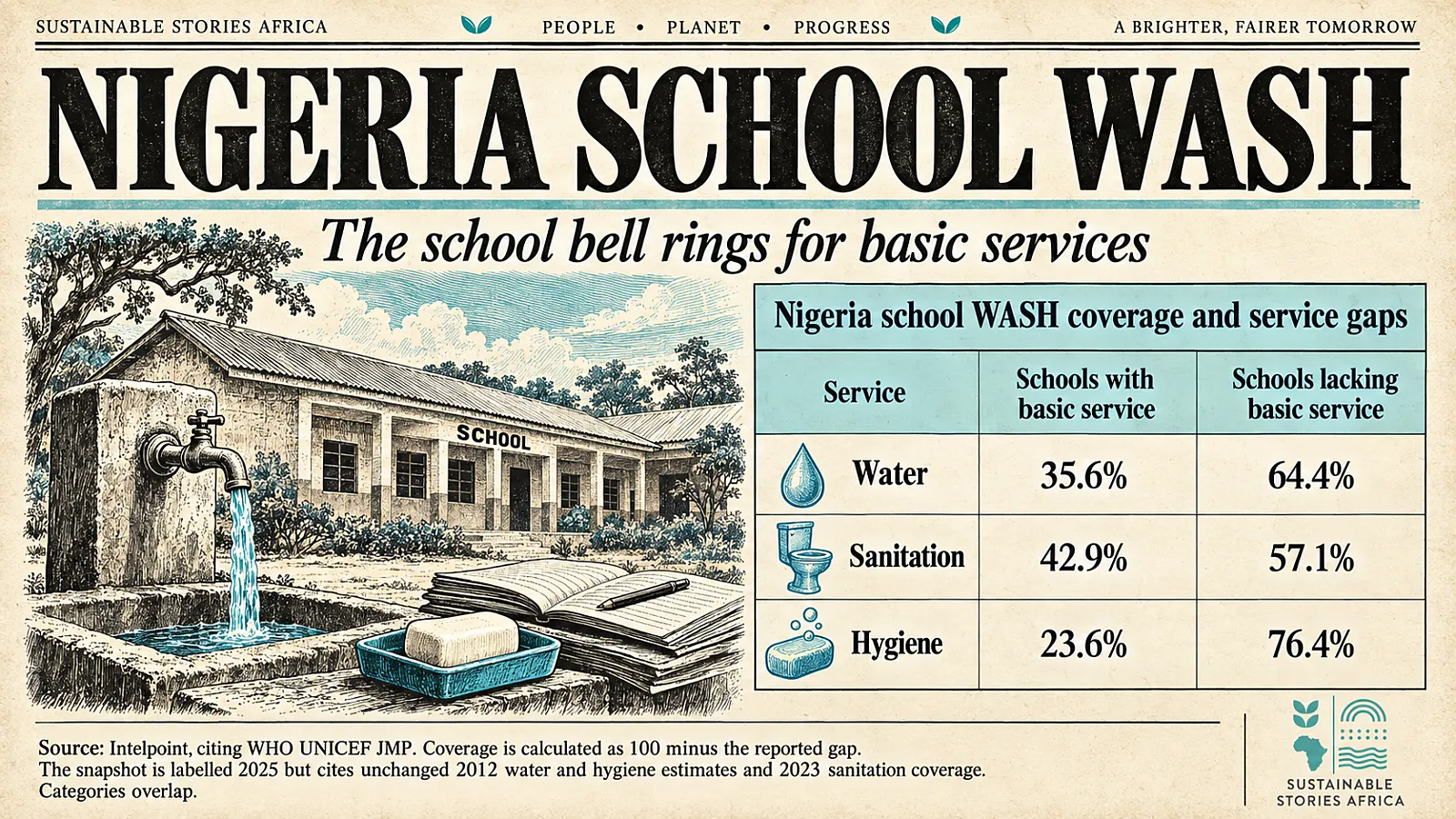
Most Nigerian schools lack basic water, sanitation or hygiene services in the estimates presented by Intelpoint’s 2025-labelled snapshot.
The figures indicate that;
- 64.4% lack basic water
- 57.1% lack basic sanitation
- 76.4% lack basic hygiene.
They describe separate service categories and should not be added together or used to calculate the share lacking all three.
The reference years also need precision.
- Intelpoint says the water and hygiene estimates are unchanged from 2012, while the sanitation estimate reached 42.9% coverage in 2023.
- The snapshot is therefore not evidence of a new nationwide survey conducted in 2025 or of measured progress during that year.
Behind the percentages is a practical question for education planning:
- What can a pupil actually use during the school day?
- A building provides space for learning, but a functioning water point, usable toilet and handwashing facilities are essential parts of the school environment.
National averages conceal substantial rural service disadvantages
- Intelpoint reports basic water access at 29.9% of rural schools against 47.9% of urban schools.
- Basic sanitation coverage is 33.1% in rural schools and 63.5% in urban schools.
These comparisons point to a substantial location gap, although they do not by themselves explain its causes.
The WHO/UNICEF Joint Monitoring Programme defines basic water as an improved source with water available.
- Basic sanitation requires improved, single-sex facilities that are usable.
- Basic hygiene requires handwashing facilities with both soap and water.
- Infrastructure that exists but cannot be used may therefore fail to provide a basic service.
This distinction should shape the public response.
- Counting newly installed equipment can show activity, but it does not establish whether children can use it.
- School monitoring should bring availability and maintenance into the same conversation as construction.
Functional services should guide education investment decisions
For a school manager, the improvement needed may be modest but recurring:
- Keeping water available, replacing soap or arranging timely repairs.
- A capital project without a maintenance budget can leave a facility visible on an inventory but unavailable to pupils.
- Education budgets should therefore consider the full cost of providing a service over time.
Privacy and accessibility should be examined alongside basic coverage.
- A toilet may require further improvements to meet the needs of girls or pupils with disabilities.
- These are practical design questions that school communities should help answer, rather than assumptions that can be settled by a national percentage.
The rural gap suggests a priority for closer investigation.
- Authorities should determine which schools have the greatest functional deficits and what prevents reliable service.
- Solutions may differ across locations.
- A common target should be accompanied by a local plan identifying supply arrangements, maintenance responsibilities and the funding needed to keep facilities usable.
Current evidence would also improve resource allocation.
- Carrying older estimates forward can preserve an important warning, but it cannot substitute for regular observation of individual schools.
- Better records would help distinguish persistent service failures from improvements that have occurred since the underlying data were collected.
Authorities should fund upkeep and publish progress
Education and water authorities should coordinate school-level checks using clear service definitions.
- The records should distinguish absent facilities from facilities that are temporarily unavailable, because the remedies can differ.
- Schools need a named contact who can escalate failures and obtain a response.
Development partners and businesses supporting schools should ask how donated infrastructure will be maintained after installation.
- Agreements could specify responsibility for consumables, repairs and verification.
- The aim should be an operating service that pupils can use throughout the school term.
Parents and community groups can contribute observations about availability, but responsibility for essential provision should remain clear.
- Public reporting should consistently disclose the date of each assessment and the basis of any claimed improvement.
- That would turn a national warning into an accountable programme of practical work.
Procurement plans should also identify who will check completed work.
- A handover should include an operating demonstration and clear information about repairs.
- The school’s first term of use is an opportunity to verify whether the promised service is dependable.
Path Forward – Make school services a funded priority
Authorities should identify the greatest deficits, budget for maintenance and verify service availability during school operations.
Rural schools require particular attention in resource allocation.
Updated observations should complement the older estimates.
Progress should be reported as usable water, sanitation and hygiene services, with clear dates and responsibilities, so communities can assess what has changed.