Nigeria is backing a hybrid extension model that combines mobile tools with trusted community advisers to reach smallholder farmers underserved by public services.
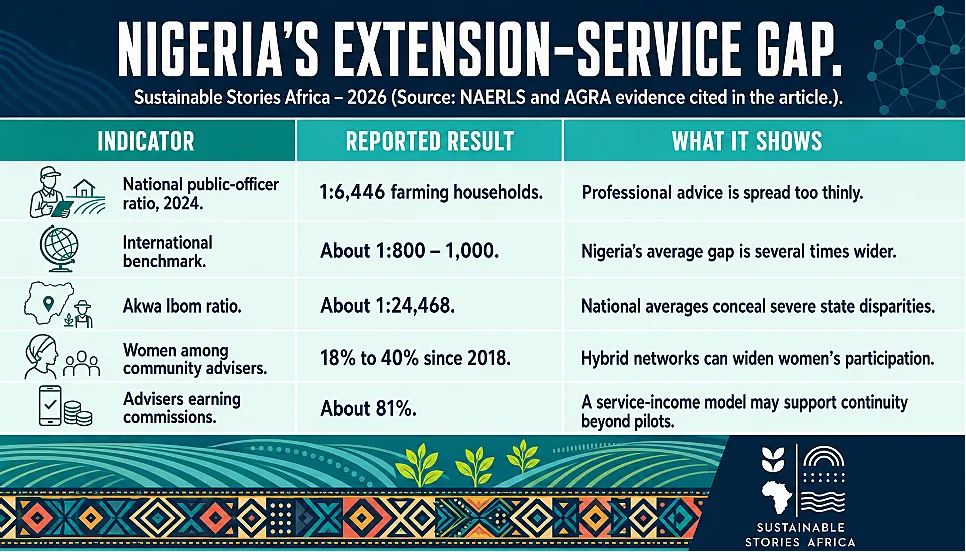
The national average was one extension officer for 6,446 farming households in 2024, with far wider gaps in some states.
Digital delivery can expand reach, but trust, local languages, connectivity and sustainable funding will determine whether advice changes outcomes.
One officer cannot reach thousands
Nigeria is turning to digital advisory tools and community-based agricultural advisers to close an extension gap that leaves millions of smallholder farmers without timely guidance on crops, climate, inputs and markets.
Data cited from the National Agricultural Extension and Research Liaison Services show that the country had one public extension officer for every 6,446 farming households in 2024, compared with an international benchmark of roughly one for every 800 to 1,000 households.
The national average hides severe disparities.
- In Akwa Ibom, one officer served about 24,468 farming households.
- While Kwara approached one for every 1,000.
The Alliance for a Green Revolution in Africa is promoting a hybrid model intended to extend scarce professional capacity rather than replace it.
Phones connect advice to trusted people
AGRA works with NAERLS, Extension Africa and private partners to digitise agricultural content and deliver it through text messages, voice services and mobile applications in local languages.
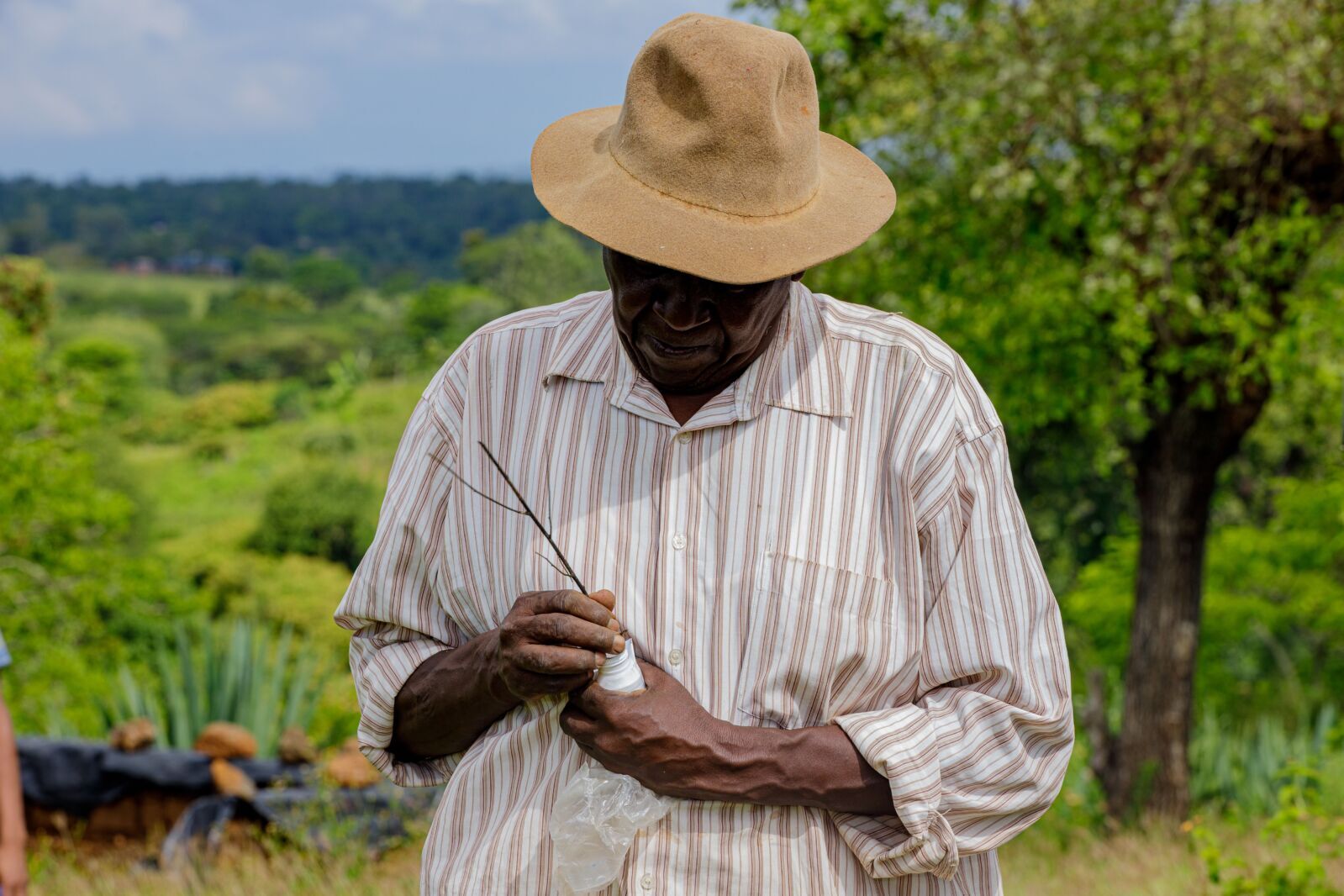
Community-Based Advisers then translate information into practical decisions at farm level.
That human layer is critical.
- A recommendation about maize disease, fertiliser timing or market prices is more useful when a nearby adviser can interpret local conditions and respond in a format the farmer trusts.
The approach recognises that digital agriculture is not simply an app.
- Farmers may face limited connectivity, low literacy, shared phones or weak confidence in unfamiliar platforms.
- Trusted intermediaries can connect digital scale with local knowledge.
Pilots show inclusion and income gains
AGRA’s earlier Village-Based Adviser work in Kaduna and Niger states points to broader social benefits.
Since 2018, women’s share of community advisers rose from 18% to 40%. Young people account for roughly one-third of the adviser workforce and have adapted well to mobile tools.
About 81% of participating advisers reportedly earn income through commissions from services.
Fee-based advice covering disease diagnosis, climate-smart production, input choices and market access may reduce reliance on limited public budgets when farmers see clear value.
The model should still protect inclusion.
- The poorest farmers may be least able to pay
- Commercial incentives can favour better-connected locations and crops.
- Public financing and targeted support will remain necessary for services with large food-security or climate benefits.
Scale requires systems, not isolated pilots
Agriculture contributes about a quarter of Nigeria’s economy and employs more than one-third of its workforce.
- Poor advisory coverage affects national food inflation, rural incomes, agro-processing and import dependence.
Scaling the model requires verified content, interoperable platforms, data privacy, reliable rural connectivity and feedback on whether recommendations improve yields and income.
Advice must provide updates quickly as rainfall patterns, pests and quality standards change.
The government should integrate proven tools into national and state systems while avoiding a patchwork of donor projects that disappear when grants end.
Safeguards for farmer data must grow with the platforms.
- Advisory systems may collect location, crop, input, yield and financial information that can improve recommendations, but the same data could be misused or sold without meaningful consent.
- Farmers need simple explanations of who holds their information, how it is shared and how to correct errors.
- Platforms should also allow independent evaluation.
- Researchers should be able to test whether advice arrives on time, reflects local agronomy and produces benefits across gender, age and income groups rather than only among the easiest farmers to reach.
Path Forward – Build a trusted national knowledge network
The path forward is a blended service: capable public officers, trained local advisers and digital tools designed around farmers’ realities.
Nigeria should track reach, women’s participation, farmer satisfaction, productivity and resilience, rather than downloads or messages sent.
If institutions, financing and trust scale together, digital extension can become durable infrastructure for food security.