
The Nigerian Climate Innovation Centre (NCIC) has accepted a pivotal seat on Nigeria's first Technical Working Group tasked with developing a National Occupational Standard for Waste Management and Recycling Operators, a landmark step in formalising the country's circular economy workforce.
The initiative, led by Germany's GIZ and BIBB under the SKYE II programme, puts practitioner expertise and employer-led design at the centre of skills development, recognising that Nigeria's green transition cannot succeed without a trained, certified, and empowered workforce.
Formalising Nigeria's Green Economy Workers
Nigeria sits at a critical crossroads. With a population exceeding 220 million, a rapidly urbanising economy, and growing pressure to reduce waste and close material loops, the circular economy is no longer a policy aspiration; it is an economic necessity.
However, a foundational building block has remained absent: a nationally recognised, competence-based qualification for the workers who form the operational backbone of the sector.
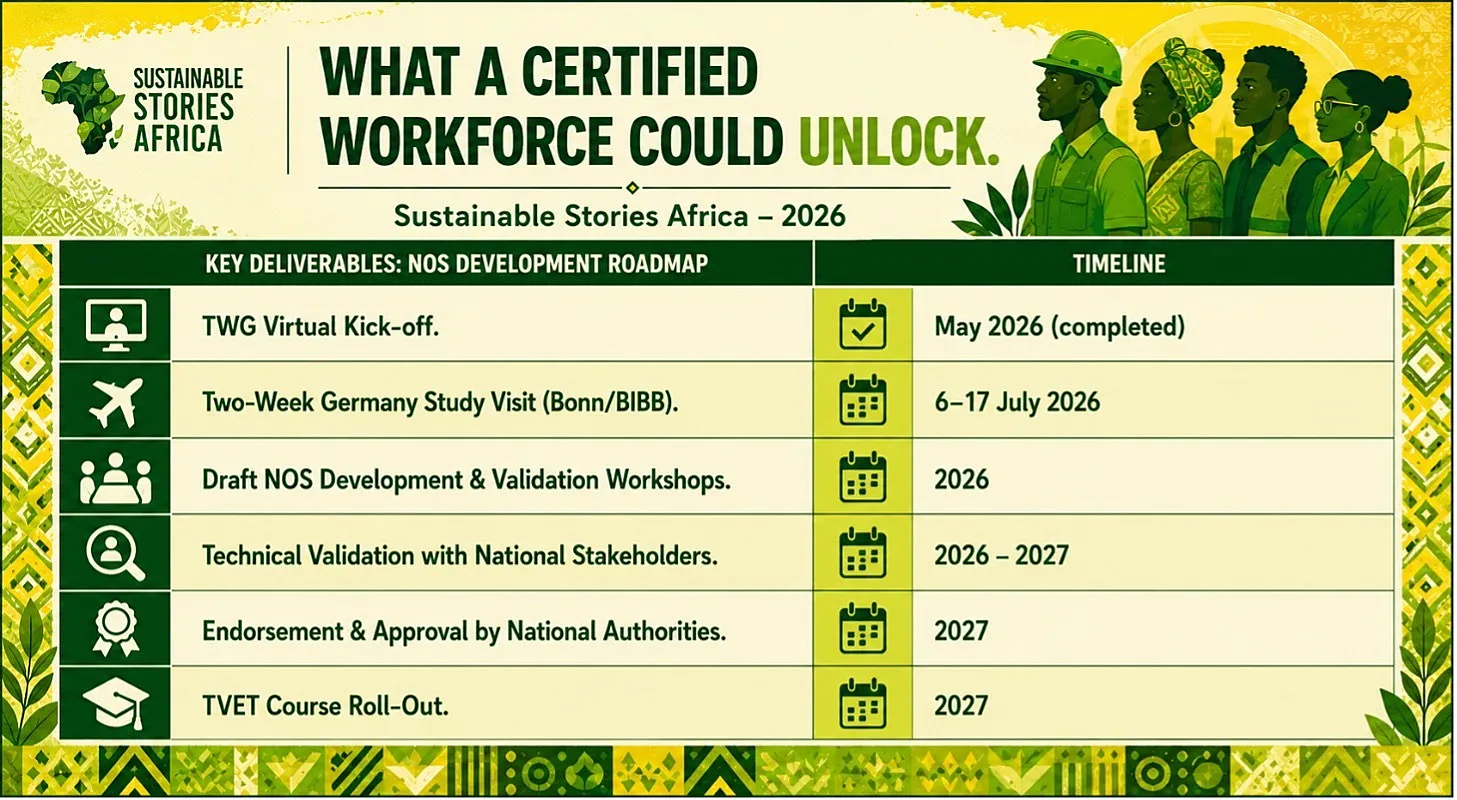
That gap is now being addressed. GIZ Nigeria, acting under the Skills Development for Youth Employment programme (SKYE II), funded by Germany's Federal Ministry for Economic Cooperation and Development (BMZ) and Switzerland's Agency for Development and Cooperation (SDC), has constituted a Technical Working Group (TWG) to develop a National Occupational Standard (NOS) for the occupation Waste Management and Recycling Operator in a Circular Economy.
The standard will be pegged to NSQF Levels 2–3, bridging the gap between informal-sector experience and recognised vocational qualifications.
Among the expert institutions invited to participate is the Nigerian Climate Innovation Centre (NCIC), whose CEO, Bankole Oloruntoba, has been nominated as a member of the TWG, a recognition of the NCIC's sectoral authority and its growing influence at the intersection of climate innovation and circular economy development in Nigeria.
A Sector Too Large to Leave Behind
Africa generates an estimated 125 million tonnes of solid waste annually, a figure projected to triple by 2050, according to World Bank data.
Nigeria alone accounts for a significant share; however, over 80% of material recovery is currently handled by informal workers operating without safety standards, recognised skills, or structured career pathways.
The invitation extended to the NCIC and other stakeholders by GIZ's Sustainable Economic Development Cluster is not merely procedural. It signals a strategic inflexion point: the formalisation of Nigeria's waste and recycling workforce as a prerequisite for unlocking the full value of the circular economy.
Dr Didier T. Djoumessi, Cluster Coordinator at GIZ Nigeria, and Britta van Erckelens, Programme Manager for SKYE II, co-signed the formal invitation, underscoring the weight of institutional commitment behind the process.
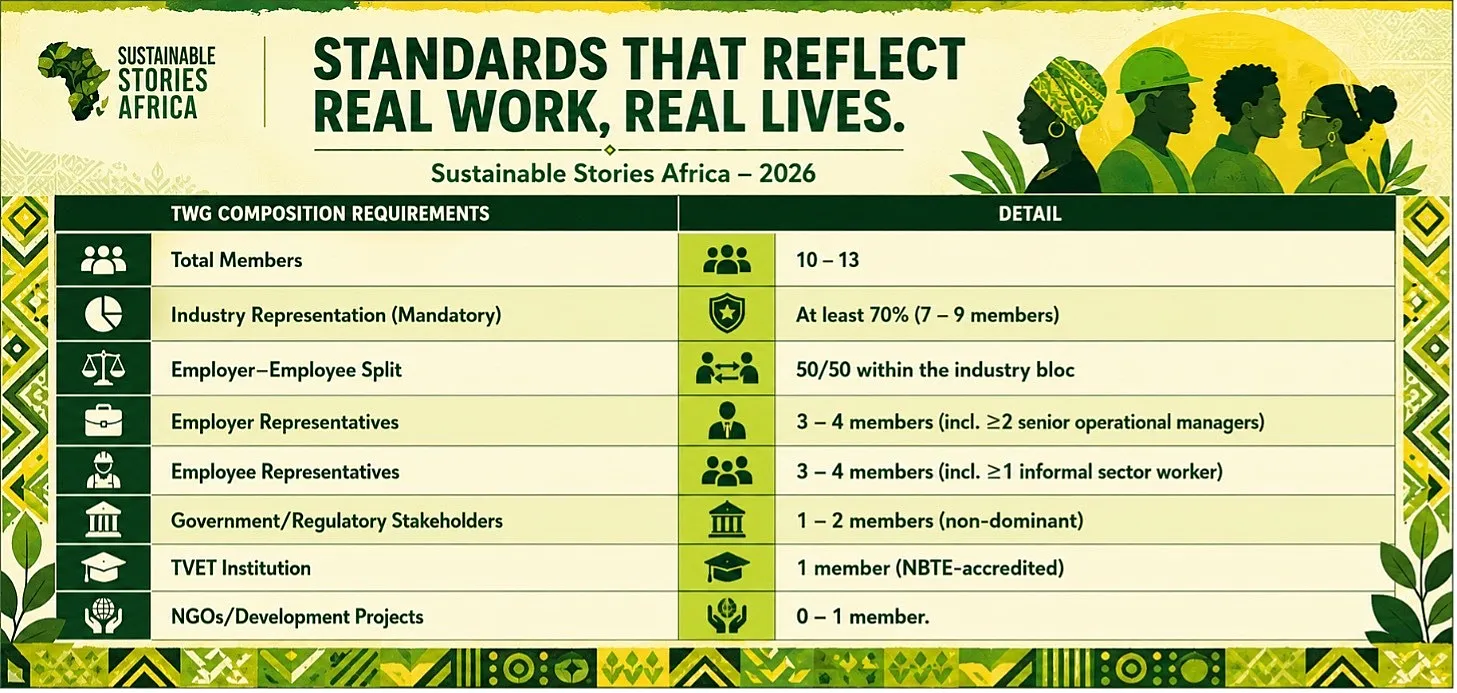
The TWG is designed to be employer-led and practitioner-dominated. At least 70% of its 10 – 13 members must be professionals actively working in waste and circular economy enterprises, with equal representation of employers and employees, ensuring that the standard reflects operational realities, rather than administrative abstractions.
Standards That Reflect Real Work, Real Lives
The Terms of Reference for the TWG are deliberately structured to exclude surface-level participation. Industry representatives must hold formal technical qualifications in waste management, environmental technology, or recycling, or demonstrate at least five years of hands-on operational experience in the sector.
Roles covered include waste collection and logistics, sorting and material recovery facilities, recycling and material processing operations, and occupational health and safety.
Critically, the TWG's employee representation requirements explicitly include informal and semi-formal workers, waste pickers, aggregators, and cooperative members operating through organisations like FIWON and WAPAN, ensuring that the NOS is grounded in the lived realities of those who do the work.
This is not a standard written for a hypothetical worker. It is being co-designed with and by the actual workforce.
The BIBB, Germany's Federal Institute for Vocational Education and Training, is to steward the technical development, bringing decades of experience in standardising Germany's own waste and recycling sector.
A key milestone in the process is a two-week delegation visit to Germany, scheduled for 6–17 July 2026, during which TWG members, including Bankole Oloruntoba, will visit German recycling and waste management facilities and co-develop the NOS at BIBB's premises in Bonn.
What a Certified Workforce Could Unlock
The implications of a successfully implemented NOS extend well beyond skills certificates.
- For individual workers, particularly the hundreds of thousands of informal waste pickers who form the invisible infrastructure of Nigeria's material recovery system, formal recognition means improved wages, safer working conditions, access to financial services, and a credible pathway into the formal economy.
- For the broader circular economy ecosystem, the standard creates a scalable foundation. TVET institutions and workplace-based training providers will have clear learning outcomes, performance criteria, and assessment frameworks to train a new generation of certified operators.
- For investors and development finance institutions, a certified workforce dramatically reduces the risk premium attached to circular economy ventures in Nigeria, and by extension, across West Africa.
The NCIC's participation, through Bankole Oloruntoba, positions the Centre as a critical connector in this ecosystem, bridging climate innovation, private sector engagement, and the regulatory architecture needed to formalise green jobs at scale.
If the circular economy is Africa's next industrial frontier, the workers who power it deserve the credentials to prove it.
Who Needs to Move and How
The development of the NOS is a multi-actor responsibility, and the institutions invited to the TWG carry specific obligations.
- Industry stakeholders must contribute rigorous input on job tasks, tools, equipment, safety requirements, and workplace performance criteria that reflect operational reality.
- Regulatory bodies, including NESREA, NBTE, and relevant line ministries, must ensure the standard is aligned with Nigeria's legal and quality assurance frameworks.
TVET institutions must translate the standard into accessible, workplace-relevant curricula. And the private sector, from large-scale waste management companies to informal cooperative networks, must champion the qualification's adoption, recognising that a skilled, certified workforce is not a cost, but a competitive asset.
For the NCIC and Bankole Oloruntoba, this engagement also represents an advocacy opportunity: to shape how Nigeria and the broader African continent define green jobs, value circular economy labour, and integrate skills development into climate action strategies.
The window to influence the standard from the ground up is now open, and participation in the process is the most direct lever available.
Path Forward – Nigeria's Circular Economy Workforce Moment
Nigeria's circular economy transition will be won or lost at the operational level, in sorting facilities, on collection routes, and in the material recovery centres that convert waste into value.
The development of a National Occupational Standard for Waste Management and Recycling Operators is the infrastructure that makes that transition viable, scalable, and equitable.
The NCIC's role in this process, anchored by the expertise of Bankole Oloruntoba, places a credible, innovation-focused Nigerian institution at the heart of a standard that will shape livelihoods, skills systems, and green economy trajectories for years to come.