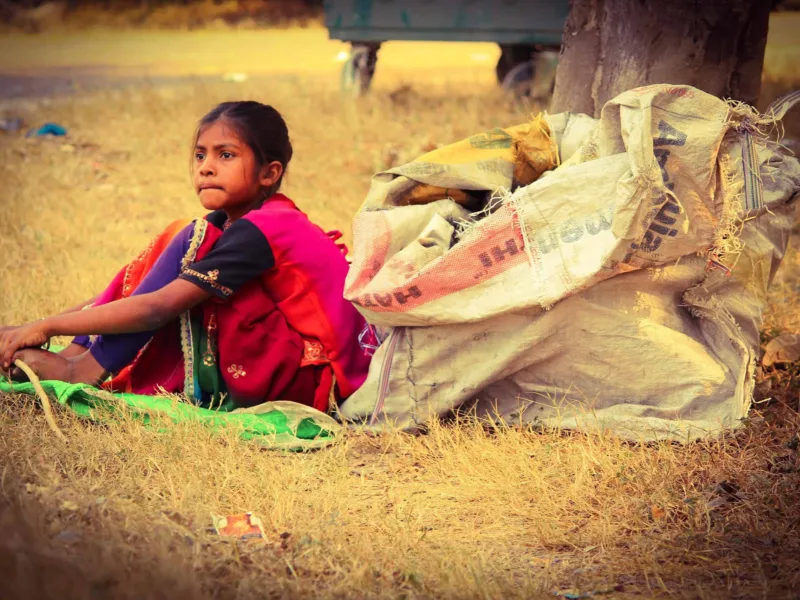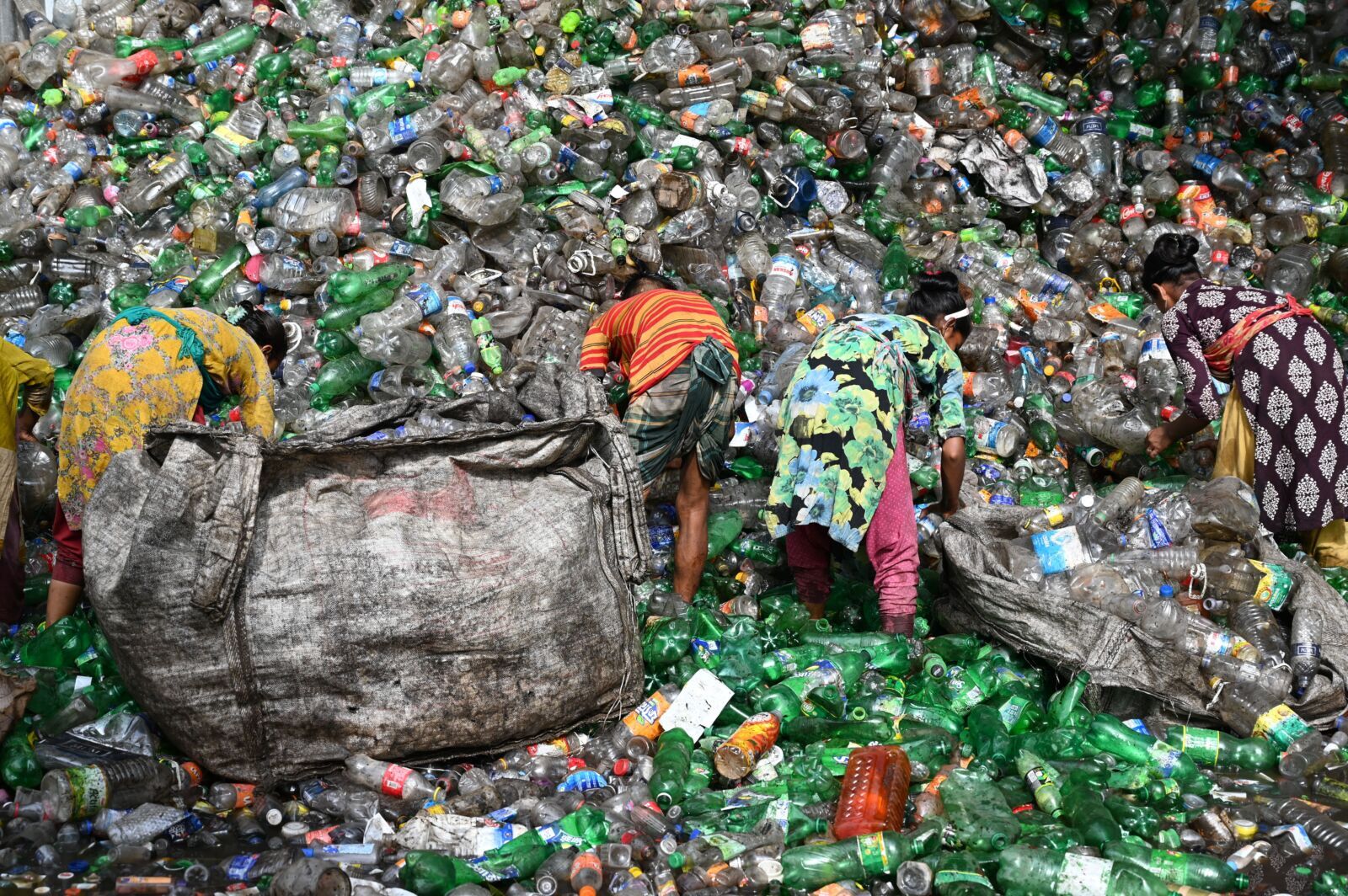
Every year, 130 million tonnes of plastic waste contaminate land, air, and water—equivalent to a lorry-load dumped into nature every second, per the World Economic Forum. Left unchecked, this figure could more than double by 2040.
A landmark WEF Insight Report (June 2026), spanning nine countries across three continents, including Nigeria, reveals that plastic pollution and biodiversity loss are a single interconnected threat to over half of global GDP, positioning Africa as both a frontline victim and an untapped solution provider in this unfolding crisis.
Plastic's Hidden War on Nature's Economy
A new World Economic Forum report has placed plastic pollution at the centre of global biodiversity loss, warning that the $500 billion to $2.5 trillion in marine ecosystem services destroyed every year by plastic waste is only the beginning of a much larger economic reckoning.
Published in June 2026 by the WEF's Global Plastic Action Partnership (GPAP), with support from the Government of Canada, Plastic Pollution and Biodiversity: A Global Overview synthesises two years of field research across nine countries, Colombia, Costa Rica, Ecuador, Indonesia,
Nigeria, Peru, the Philippines, Viet Nam, and Maharashtra, India, to produce the most detailed multi-country evidence base on plastic-biodiversity interactions to date.
A Crisis Growing Every Second
Plastic production has surged from 2 million tonnes in 1950 to nearly 500 million tonnes today.
However, only 10% of all plastic ever produced has been recycled; the rest ends up in landfills, open dumps, or natural environments.
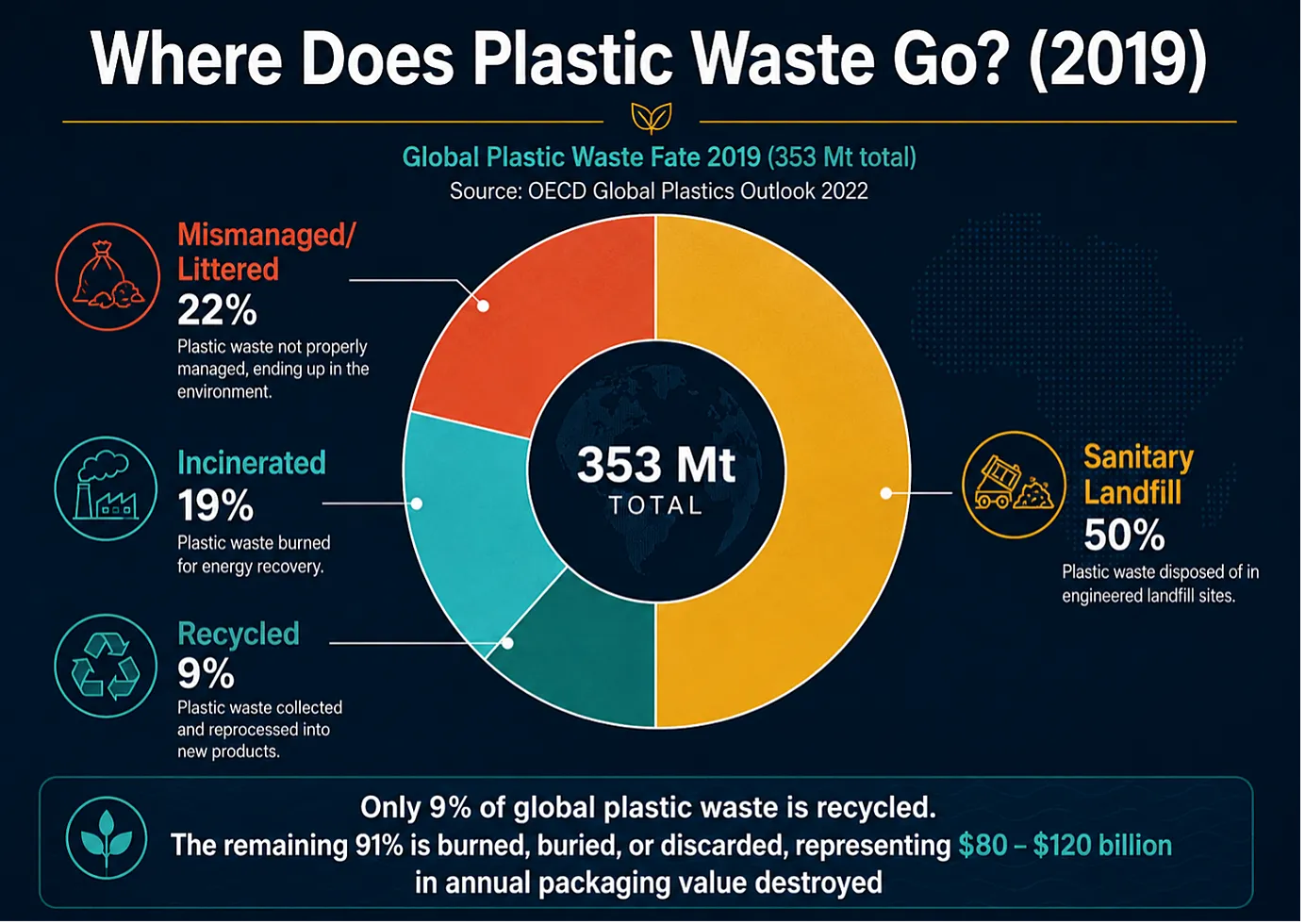
In 2019, of the 353 million tonnes of plastic waste generated globally, just 9% was recycled, 50% went to sanitary landfill, 19% was incinerated, and 22% was mismanaged or littered.
Plastic pollution is now ranked among the top five drivers of global biodiversity loss, directly impacting over 4,000 species through ingestion, entanglement, habitat degradation, and chemical contamination.
Rates of extinction are tens to hundreds of times higher than the historical average, and plastic pollution is accelerating them.
The $58 Trillion Stakes
Biodiversity is not only an ecological asset; it is the foundation of global economic activity. More than half of global GDP, equivalent to $58 trillion, is estimated to be moderately or highly dependent on nature.
Marine plastic pollution alone, from 75–150 million tonnes of plastic already in the world's oceans, has caused losses of between $500 billion and $2.5 trillion in marine ecosystem services annually.
In Asia-Pacific, marine debris cost regional economies $10.8 billion in 2015, with losses projected to total $216 billion by 2050 at current rates.
In Nigeria, the only African country included in the nine GPAP studies, plastic waste is eroding the fisheries, agriculture, and ecosystems on which millions of livelihoods depend.
Nigeria ranks ninth globally for mismanaged plastic waste, with less than 12% of its 2.5 million tonnes of annual waste recycled.
The report also delivers a striking climate warning: the global plastics value chain emitted 2.7 billion tonnes of CO₂ equivalent in 2025.
Under business-as-usual, those emissions will rise 60% to 4.2 billion tonnes by 2040, equivalent to 1 billion internal combustion engine cars.
Cumulative plastic emissions from 2025 to 2040 would consume 42% of the remaining carbon budget needed to hold warming to 1.5°C.
What a Clean System Could Deliver
The WEF's analysis also reveals the enormous opportunity hiding in plain sight. Under Pew/Systemiq's System Change scenario, upstream and downstream solutions could collectively reduce annual plastic leakage into the world's oceans by approximately 80% by 2040.
A shift of $570 billion in annual private sector spending away from single-use plastics towards reuse systems could support local economies and create 8.6 million new jobs.
Better product design alone could raise the share of economically recyclable plastic from 22% today to 54% by 2040.
Mangroves, critical to Africa's coastal communities, store four times more carbon per hectare than tropical forests and sequester CO₂ at 10 times the rate.
Protecting them from plastic pollution is a strategy for climate, food security, and economic resilience.
Transparency, Redesign, and Governance
The WEF report is direct in its calls to action.
- Companies must embed biodiversity into core strategy, disclose plastic-related impacts, and include exposure to extended producer responsibility (EPR) legislation in their risk registers.
- Governments must integrate plastic pollution into national biodiversity action plans, connecting it with EPR frameworks and local enforcement capacity.
- Financial institutions must agree on common metrics for evaluating corporate biodiversity performance and integrate plastic risk into valuation models.
Path Forward – Africa's Moment to Lead
Nigeria's 2021 National Policy on Plastic Waste Management, the one African policy the WEF highlights, already recognises the impact of biodiversity and delegates implementation to states and communities. It is a foundation to build on, not a ceiling.
For Africa, where fisheries, agriculture, coastal tourism, and freshwater systems are all at risk, the case for treating plastic and biodiversity as one integrated challenge is both compelling and urgent.
The WEF has provided the evidence. Now governments, businesses, and communities across the continent must act on it.