RGreen Invest and Renalfa have committed €800 million to develop a hybrid renewable energy platform across Central and Eastern Europe.
The initiative combines solar, wind and battery storage to stabilise energy supply while accelerating the region’s transition away from fossil fuels.
For communities, industries and investors, the platform signals a growing shift toward resilient, integrated clean-energy systems capable of powering Europe’s next phase of green growth.
€800 Million Bet on Hybrid Clean Energy
European renewable investment manager RGreen Invest and infrastructure developer Renalfa IPP have announced an €800 million partnership to build a large-scale hybrid renewable energy platform across Central and Eastern Europe (CEE).
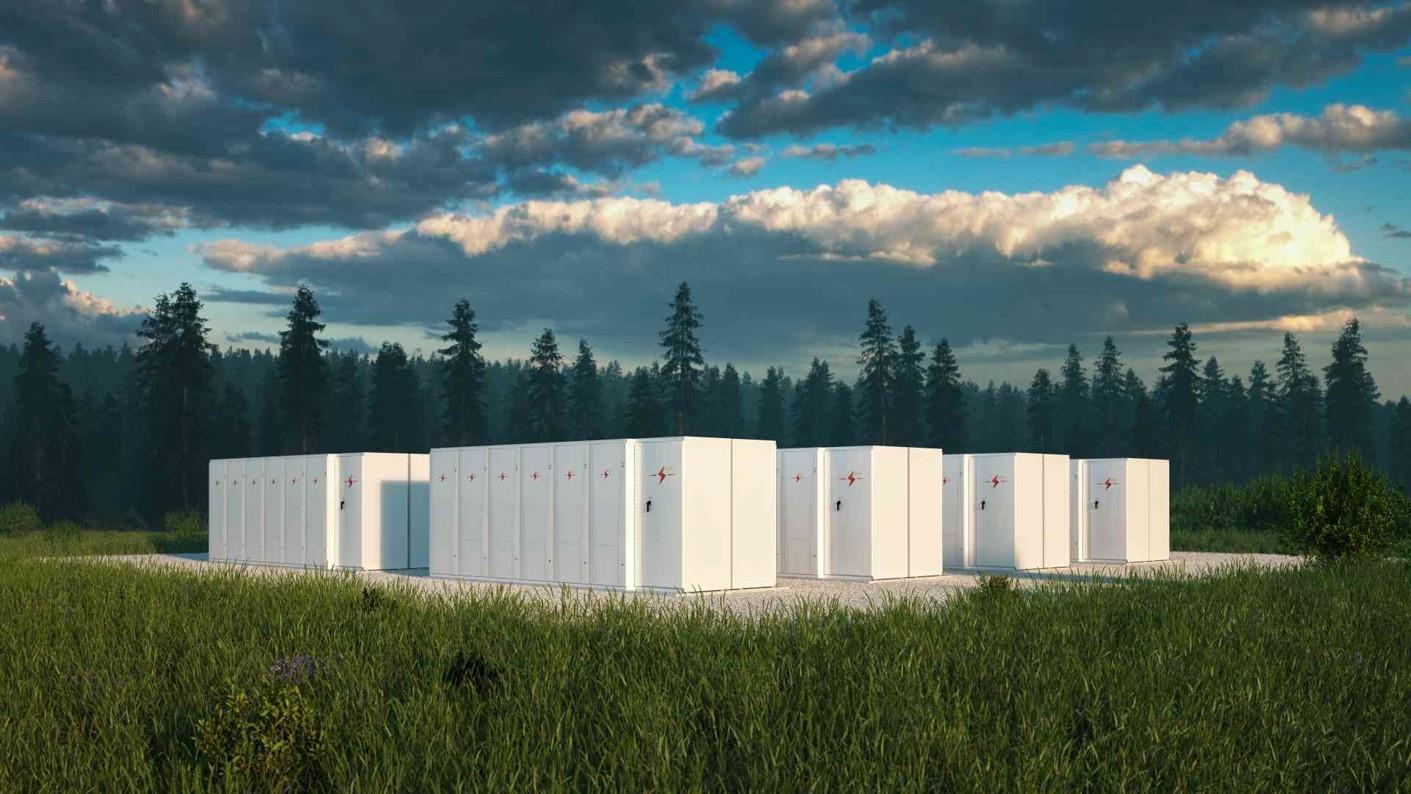
The platform will combine solar, wind and battery energy storage systems (BESS) across multiple markets, creating integrated energy projects that stabilise electricity supply and accelerate decarbonisation in the region.
The investment marks one of the largest hybrid renewable platforms by CEE, where countries are balancing rapid economic growth with the urgent need to modernise ageing power systems and reduce reliance on coal and imported gas.
Under the partnership, Renalfa will lead project development and operational deployment, while RGreen Invest provides long-term financing through its energy transition funds.
Executives from both firms say the hybrid model, combining multiple renewable sources with storage, will allow projects to deliver more stable power generation and improved grid flexibility, an increasingly critical need as renewable penetration rises across Europe.
Why Hybrid Energy Platforms Matter Now
Central and Eastern Europe has become one of the fastest-growing regions for renewable energy investment in Europe.
Many countries in the region, including Romania, Bulgaria, Hungary, Poland and the Balkans, still depend heavily on fossil fuels, particularly coal and gas. However, they are also emerging as major markets for solar and wind expansion.
Hybrid renewable systems are gaining traction because they solve a core challenge of clean energy: intermittency.
By combining solar, wind and energy storage, hybrid platforms can deliver more predictable electricity output while reducing pressure on national grids.
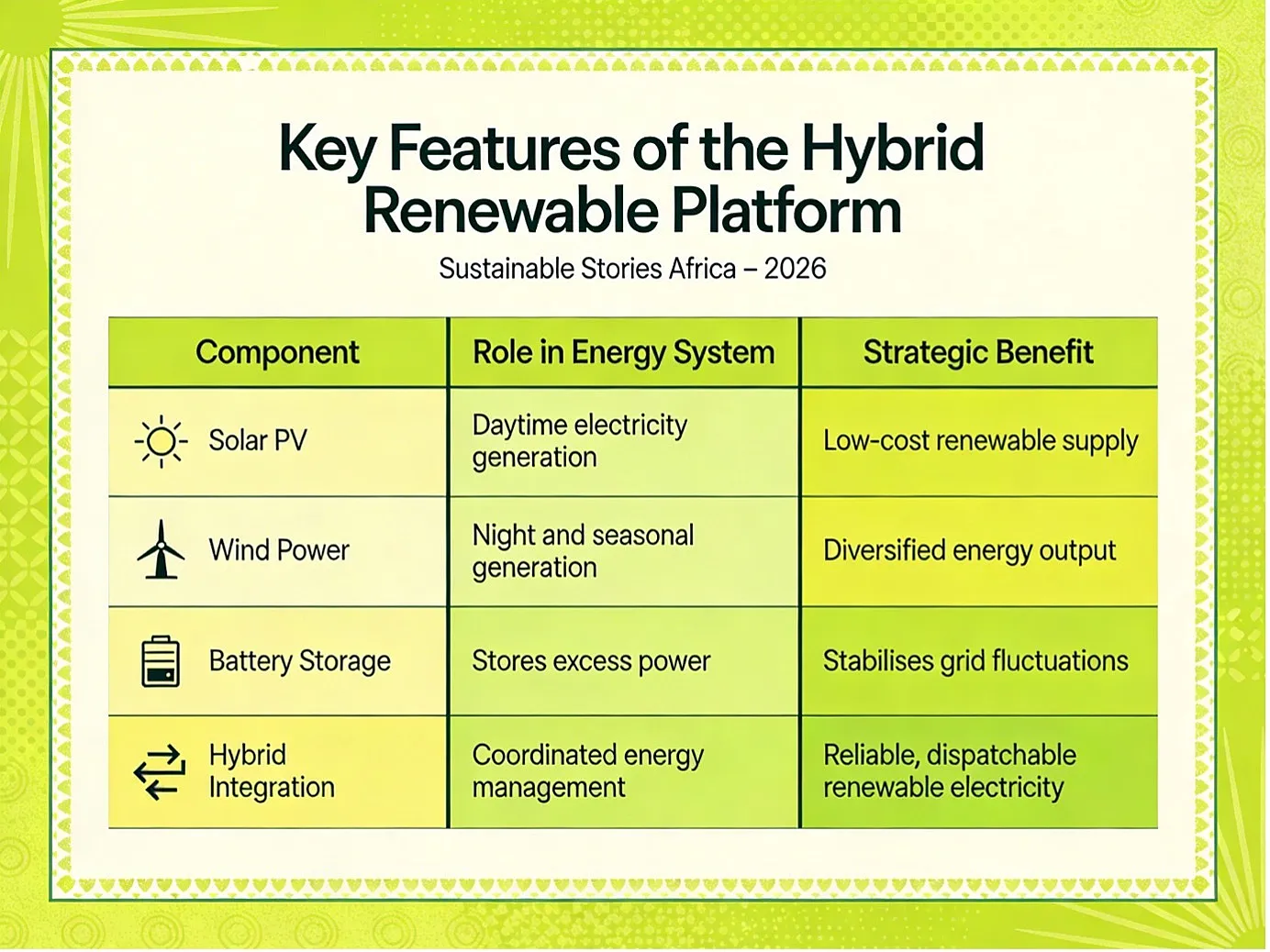
Key Features of the Hybrid Renewable Platform
Component | Role in Energy System | Strategic Benefit |
|---|---|---|
Solar PV | Daytime electricity generation | Low-cost renewable supply |
Wind Power | Night and seasonal generation | Diversified energy output |
Battery Storage | Stores excess power | Stabilises grid fluctuations |
Hybrid Integration | Coordinated energy management | Reliable, dispatchable renewable electricity |
According to industry analysts, hybrid projects can increase renewable utilisation rates by up to 30–40%, making them significantly more efficient than single-source renewable installations.
For investors, the model also offers more predictable revenue streams, particularly in electricity markets that are experiencing price volatility following Europe’s recent energy crisis.
RGreen Invest executives said the platform will target projects that combine large-scale solar capacity with co-located battery storage and, in some cases, wind generation, enabling flexible dispatch of clean electricity during peak demand.
Renalfa, which already operates renewable assets across several CEE markets, will identify and develop projects, manage grid integration, and oversee operational deployment.
A Cleaner, More Resilient Energy Future
If successfully deployed, the platform could become a cornerstone investment model for Europe’s next phase of energy transition.
Hybrid renewable systems promise several advantages:
- Lower carbon emissions
- Greater energy security
- Reduced electricity price volatility
- Stronger resilience against fossil fuel supply shocks
The model is particularly relevant in Central and Eastern Europe, where governments are seeking ways to replace coal-fired power while maintaining a stable electricity supply for industries and households.
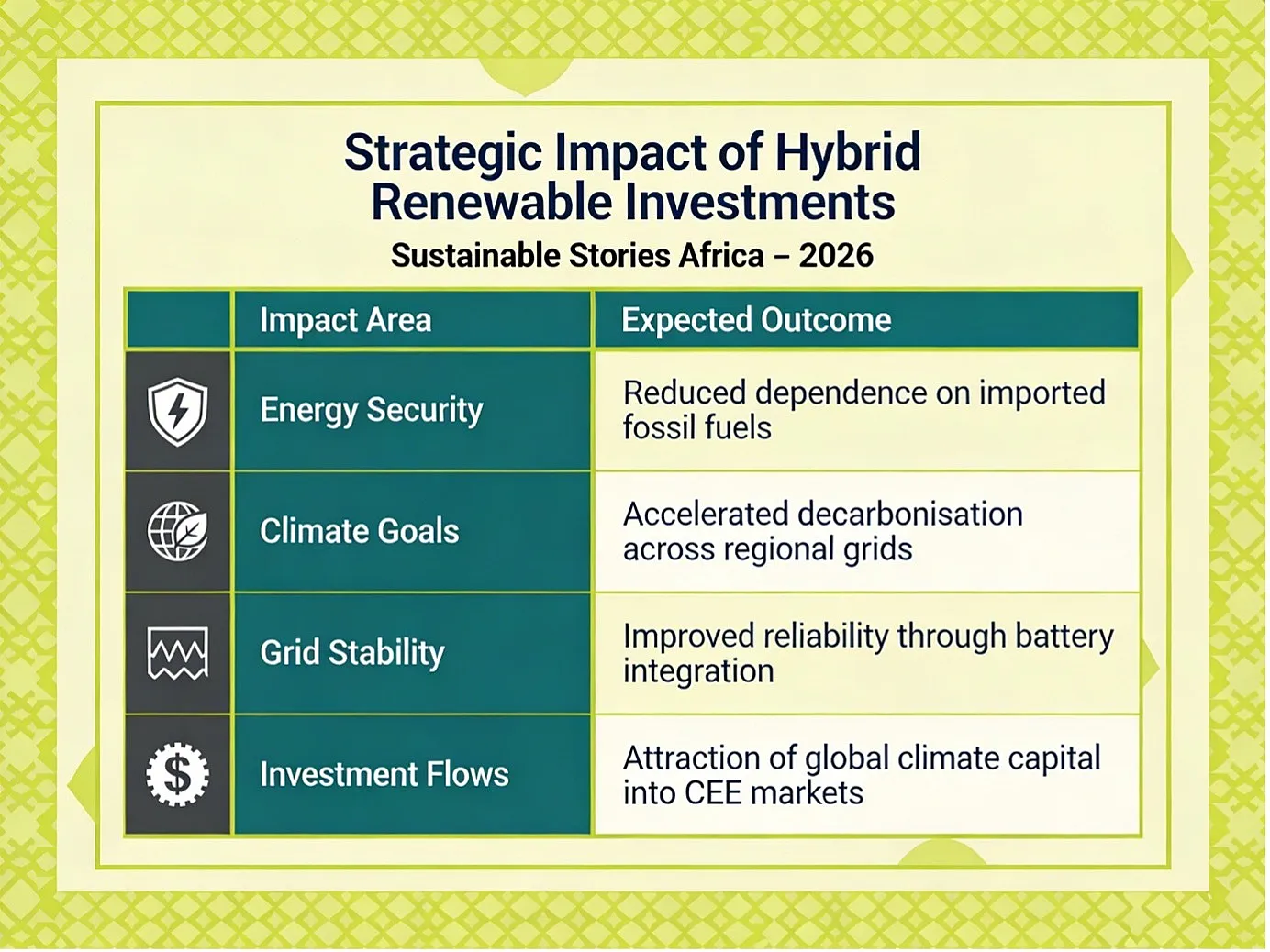
Strategic Impact of Hybrid Renewable Investments
Impact Area | Expected Outcome |
|---|---|
Energy Security | Reduced dependence on imported fossil fuels |
Climate Goals | Accelerated decarbonisation across regional grids |
Grid Stability | Improved reliability through battery integration |
Investment Flows | Attraction of global climate capital into CEE markets |
For communities and local economies, the investments could also generate construction jobs, technology transfer and regional infrastructure upgrades.
Energy analysts note that hybrid platforms could become the dominant renewable project structure in Europe by the early 2030s, particularly as battery costs continue to decline and power markets increasingly reward flexibility.
Scaling Capital for the Energy Transition
The announcement underscores a broader shift underway in global energy finance: the movement toward large, integrated clean-energy investment platforms capable of deploying capital across multiple projects and markets.
For policymakers and regulators in the region, the initiative highlights the importance of stable regulatory frameworks, predictable permitting processes and supportive grid infrastructure to attract long-term climate capital.
Investors are also watching closely. As energy transition financing grows globally, hybrid platforms like the RGreen-Renalfa initiative could become repeatable models for mobilising institutional capital into clean energy infrastructure.
For Europe and potentially for emerging markets across Africa and the Global South, the message is clear: the next phase of renewable expansion will depend not only on technology, but also on smart project integration, financial innovation and cross-border collaboration.
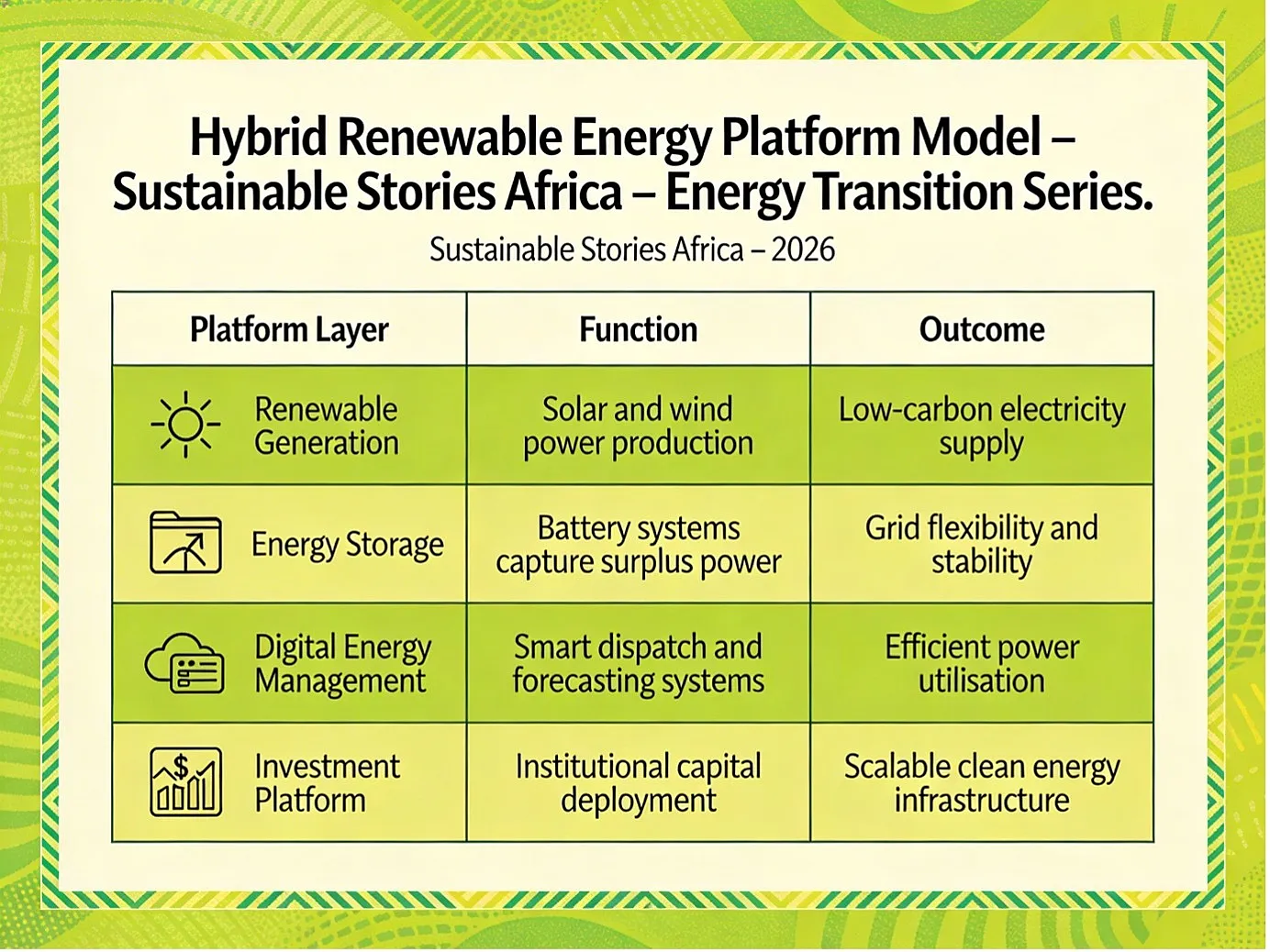
Hybrid Renewable Energy Platform Model – Sustainable Stories Africa – Energy Transition Series
Platform Layer | Function | Outcome |
|---|---|---|
Renewable Generation | Solar and wind power production | Low-carbon electricity supply |
Energy Storage | Battery systems capture surplus power | Grid flexibility and stability |
Digital Energy Management | Smart dispatch and forecasting systems | Efficient power utilisation |
Investment Platform | Institutional capital deployment | Scalable clean energy infrastructure |
Path Forward – Scaling Hybrid Platforms for Energy Security
The RGreen-Renalfa partnership reflects a broader shift toward hybrid renewable systems capable of delivering reliable, large-scale clean electricity.
As storage technologies mature and power markets evolve, integrated renewable platforms are likely to become central to Europe’s energy transition.
For emerging markets, including African economies pursuing rapid electrification, the model offers a compelling blueprint: combine renewable generation, storage and long-term capital to build resilient energy systems fit for the future.
Culled From: RGreen Invest and Renalfa Commit €800 Million to Hybrid Renewable Energy Platform in Central and Eastern Europe