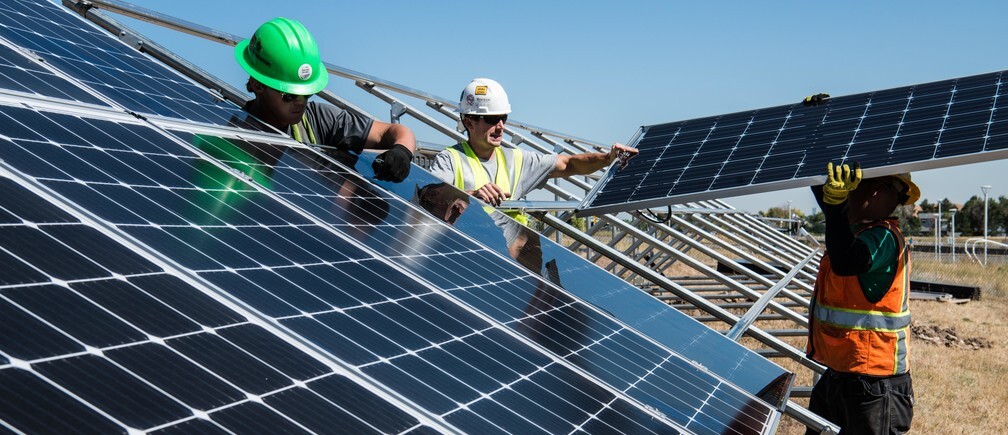
Seventy-four energy transition roles have been advertised this week across four African regions, with hiring activity from Scatec, Daystar Power, d.light and PowerGen.
The listings point to deeper momentum in solar, battery storage, field operations, project finance, engineering, data, legal and customer-facing roles.
For job seekers, the message is clear: Africa’s clean energy transition is no longer only about projects and policy. It is becoming a career pathway.
The Green Jobs Window Is Open
Africa’s energy transition is hiring now, and the opportunity is practical, urgent and increasingly local.
This week’s job board features 74 advertised roles across West, East, Southern and other African markets, with openings spanning engineering, finance, legal, procurement, project management, data, field service, health and safety, and business development.
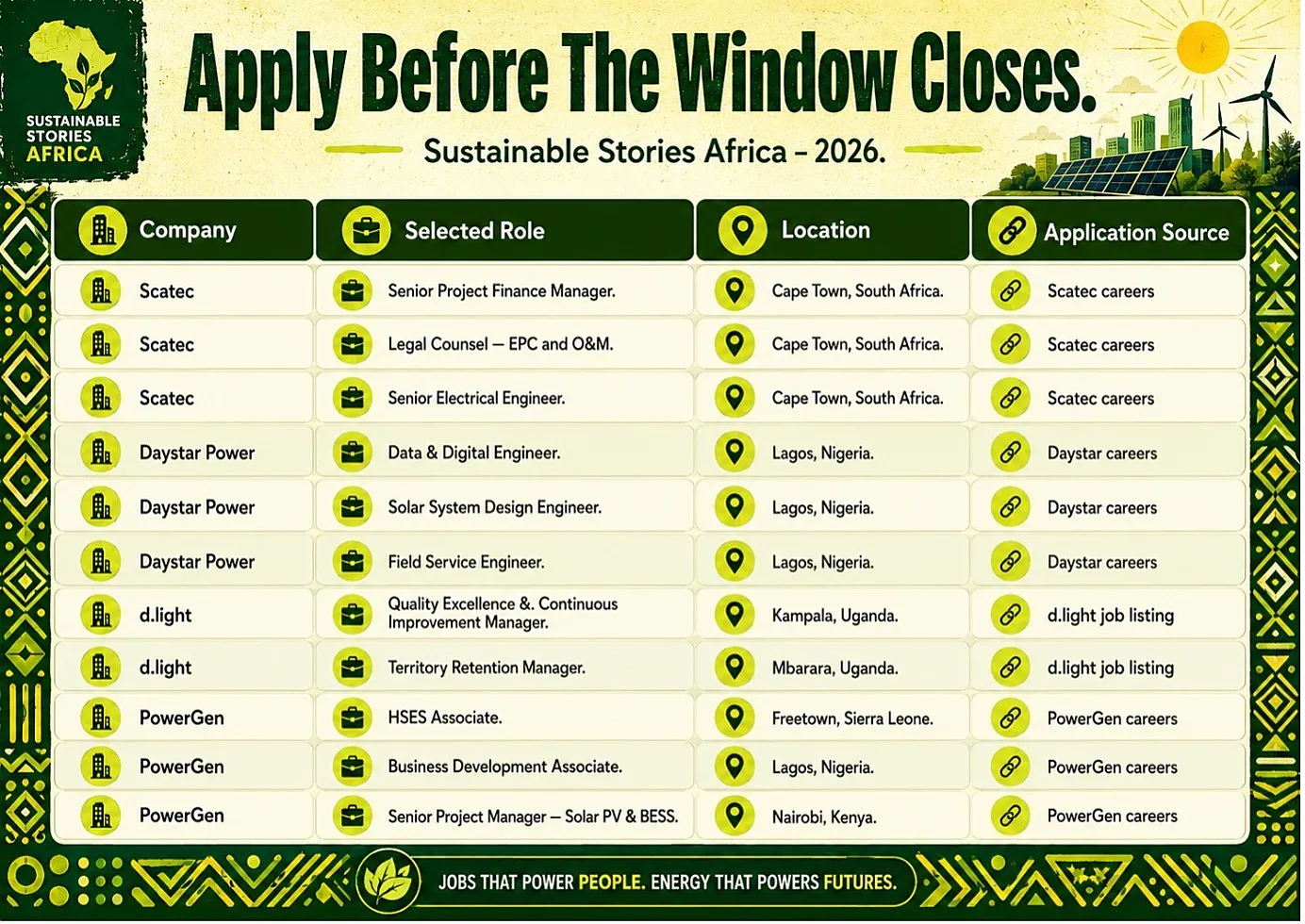
- Scatec’s South African listings show strong demand across finance, legal, procurement and engineering.
- Daystar Power’s Lagos cluster points to growing demand for commercial and industrial solar talent.
- d.light’s Uganda openings show that field operations and customer-retention roles remain critical to off-grid energy access.
- PowerGen’s listings across Nigeria, Kenya and Sierra Leone signal continued recruitment around solar, storage and distributed utility projects.
For a young engineer in Lagos, a finance analyst in Cape Town, a technician in Soroti, or a project manager in Nairobi, these are not abstract climate opportunities.
They are real vacancies tied to Africa’s need for cleaner, more reliable and more affordable power.
Why Energy Firms Are Recruiting
The hiring wave reflects a sector moving from promise to execution.
Solar projects now need engineers who can design systems, technicians who can keep assets running, analysts who can model project returns, lawyers who understand EPC and O&M contracts, and field teams who can serve customers beyond capital cities.
The roles also show how broad the energy transition labour market has become.
- It is not only for electrical engineers.
- It needs accountants, compliance officers, data professionals, logistics coordinators, community liaison officers, sales managers and health, safety, environmental and social specialists.
Daystar Power, for example, is recruiting in Lagos for roles including Data & Digital Engineer, NOC Engineer, Solar System Design Engineer, Field Service Engineer and Logistics Coordinator.
These positions connect digital systems, plant monitoring, customer delivery and commercial solar operations.
PowerGen’s openings include business development and HSES roles, as well as utility-scale solar PV and BESS project positions. BESS means battery energy storage systems, the technology that helps solar power remain useful when sunlight drops or demand peaks.
Scatec’s South African vacancies show another side of the market: project finance, legal contracting, electrical engineering, procurement and community engagement.
That mix matters because clean energy projects are not built by technology alone.
They require money, permits, contracts, supply chains, stakeholder trust and disciplined execution.
What Job Seekers Stand To Gain
For job seekers, the opportunity is bigger than a job title.
A role in Africa’s energy transition can mean a stable income, exposure to global standards, technical upskilling and a chance to work on infrastructure that directly affects households, clinics, factories and small businesses.
The most valuable candidates will be those who combine core professional skills with sector curiosity.
- Engineers should understand solar PV, grid connection, storage and commissioning.
- Finance professionals should sharpen modelling, risk assessment and project finance skills.
- Lawyers should understand renewable energy contracts, procurement, construction and operations.
- Data professionals should look closely at automation, monitoring, forecasting and asset performance.
There is also a strong inclusion signal. Some companies explicitly encourage women to apply, while field and operations roles can create pathways for youth and non-traditional energy professionals.
The clean energy workforce Africa needs will not be built only in boardrooms. It will be built by technicians, customer agents, analysts, site supervisors, safety officers and project teams working directly with communities.
Apply Before The Window Closes
Job seekers should act quickly.
Start with the company's careers pages, confirm that each role is still open, tailor your CV to the specific function, and highlight evidence of delivery.
- For technical roles, show projects, tools and field experience.
- For commercial roles, show pipeline development, customer management and measurable results.
- For finance, legal and ESG roles, show sector awareness and transaction discipline.
The best time to prepare for Africa’s green jobs economy is before the next hiring wave becomes crowded.
Update your CV, prepare a short impact statement, follow the companies, and share the listings with someone who may be ready for a new start.
Path Forward – Skills Will Define Africa’s Energy Future
Africa’s energy transition will reward professionals who build practical skills now: project delivery, data, storage, finance, safety, customer operations and community engagement.
The path forward is clear. As clean power moves from ambition to execution, job seekers who prepare early can help build the systems that power businesses, protect livelihoods and advance Africa’s sustainability goals.
Culled From: Job board: Apply for these roles