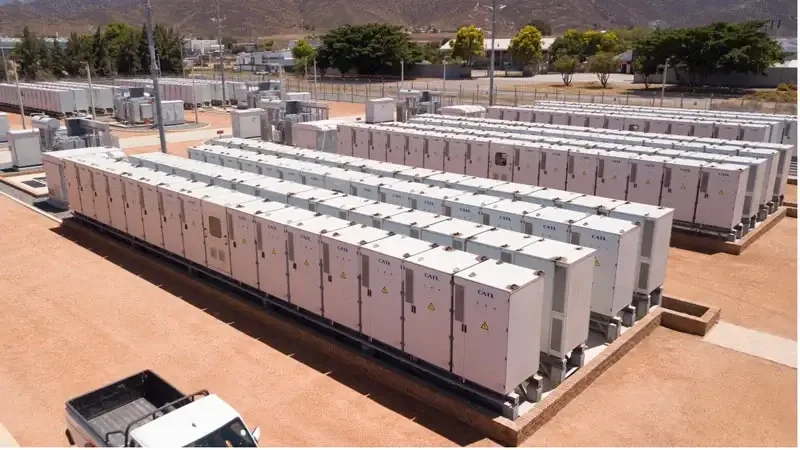
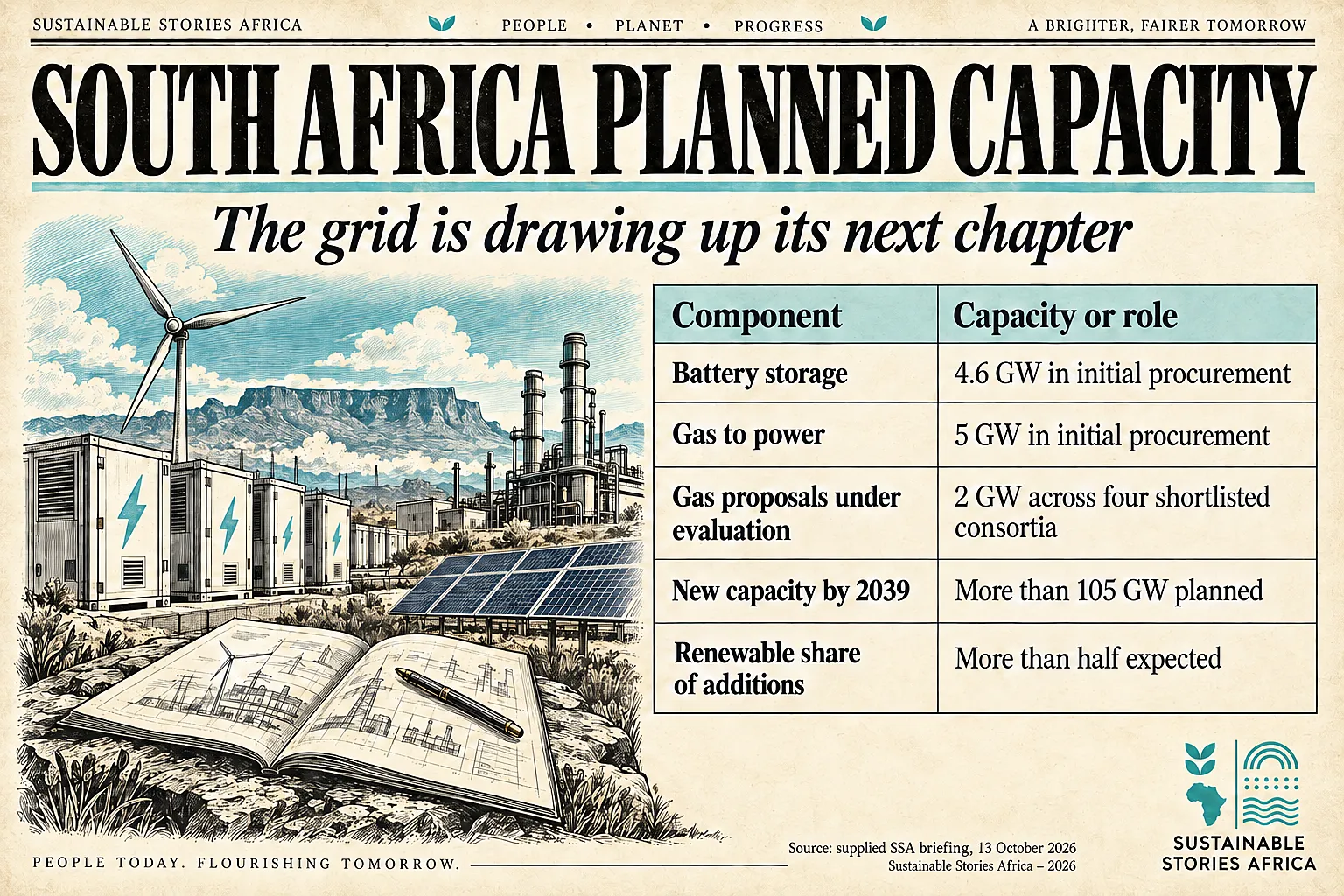
South Africa plans to procure 4.6 gigawatts of battery storage and 5 gigawatts of gas-to-power capacity.
The programme is intended to stabilise the grid as renewables expand and coal's role declines.
Its sustainability case will depend on transparent procurement, grid delivery and strict limits on long-lived fossil-fuel lock-in.
Storage and Gas Anchor Reliability Procurement
South Africa is preparing to procure 9.6 gigawatts of battery storage and gas-fired generation in an initial effort to strengthen electricity reliability.
Electricity and Energy Minister Kgosientsho Ramokgopa said the package would include 4.6 gigawatts of batteries and 5 gigawatts of gas-to-power capacity, with wind and solar allocations expected later.
The plan sits within an Integrated Resource Plan that envisages more than 105 gigawatts of new generation by 2039.
Renewables are expected to supply more than half of those additions as the country gradually reduces its dependence on coal.
Flexible Capacity Supports a Changing Grid
Batteries and flexible generation address different parts of the reliability problem.
- Storage can absorb surplus electricity and release it when solar or wind output falls, while gas plants can provide dispatchable power during longer shortages or demand peaks.
- South Africa is evaluating four shortlisted consortia for a separate 2 gigawatt gas-to-power programme, and the resource plan provides for 16 gigawatts of gas capacity by 2039.
At the same time, the Electricity Regulation Amendment Act allows private generators to compete with Eskom, while an independent state-owned transmission system operator manages access to the grid.
Today’s Contracts Shape Tomorrow’s Energy Costs
Sequencing of capacity will determine cost.
- Storage delivers most value when connected where congestion, renewable curtailment or peak demand creates a clear system need.
- Gas may provide flexibility, but plants and fuel infrastructure can remain on the balance sheet for decades.
- Procurement decisions made now could therefore shape tariffs and emissions well beyond 2039.
South Africa can preserve options by using modular projects, shorter commitments and regular plan updates based on actual demand and technology prices.
- Public modelling should compare gas with longer-duration storage, demand response, regional power trade and faster transmission investment under consistent assumptions.
- It should also disclose fuel and currency sensitivity so consumers can see the tariff risk.
Communities need access to those comparisons before major contracts receive final approval.
Sequenced Investment Could Reduce Power Disruptions
A well-sequenced build-out could reduce outages, support industrial activity and make room for more renewable energy without compromising system stability.
- Battery projects can respond quickly and may reduce the need for expensive emergency generation.
- Greater competition can also bring new capital and operating expertise into a market historically dominated by one utility
The central risk is that gas infrastructure becomes a costly long-term commitment even as cleaner flexibility options improve.
Gas price exposure, methane leakage and dependence on imported fuel could weaken both affordability and emissions goals.
Transparent Auctions Must Limit Fossil Lock-in
Government should procure storage and gas through transparent auctions that disclose price, duration, location, grid availability and emissions obligations.
Battery tenders should specify discharge duration, degradation rules, recycling plans and local safety standards.
Gas contracts should avoid rigid take-or-pay terms that could later crowd out cheaper renewables or storage.
The transmission operator must publish connection capacity and delivery milestones, because generation cannot improve reliability if projects wait years for the grid.
Communities and workers in coal regions also need credible transition plans linked to investment and training.
Path Forward – South Africa Needs a Credible Transition
South Africa should prioritise storage, transmission and demand flexibility while limiting gas to clearly defined reliability needs.
Competitive procurement and public contract data can reduce cost and lock-in risks.
Measure progress by fewer outages, faster renewable connections, affordable tariffs and verified emissions reductions.
The power transition will earn trust when households and businesses experience dependable electricity and affected communities can see a practical route into new jobs.
Culled from: South Africa Battery Storage and Gas Power