At the opening of its 25th annual Trade Finance Seminar in Abidjan, African ExportImport Bank (Afreximbank) called for stronger trade-finance capabilities across Africa to unlock inclusive growth.
Afreximbank emphasised that deeper collaboration among financial institutions, robust risk-management frameworks and technology-enabled trade-finance solutions are critical to converting Africa's trade potential into sustainable development.
Africa's Trade Finance Crossroads
Africa stands at a pivotal moment in its economic journey. While endowed with vast natural resources and increasing regional potential, many economies remain constrained by under-developed trade-finance infrastructure.
As Afreximbank's opening seminar in Abidjan signals, the need for stronger trade-finance capabilities, particularly among banks, fintechs and policy-makers, is more pressing than ever, defining trade finance as the lifeblood of commerce, investment and job creation, which places it at the centre of Africa's inclusive growth strategy.
Why Amplifying Trade Finance Matters
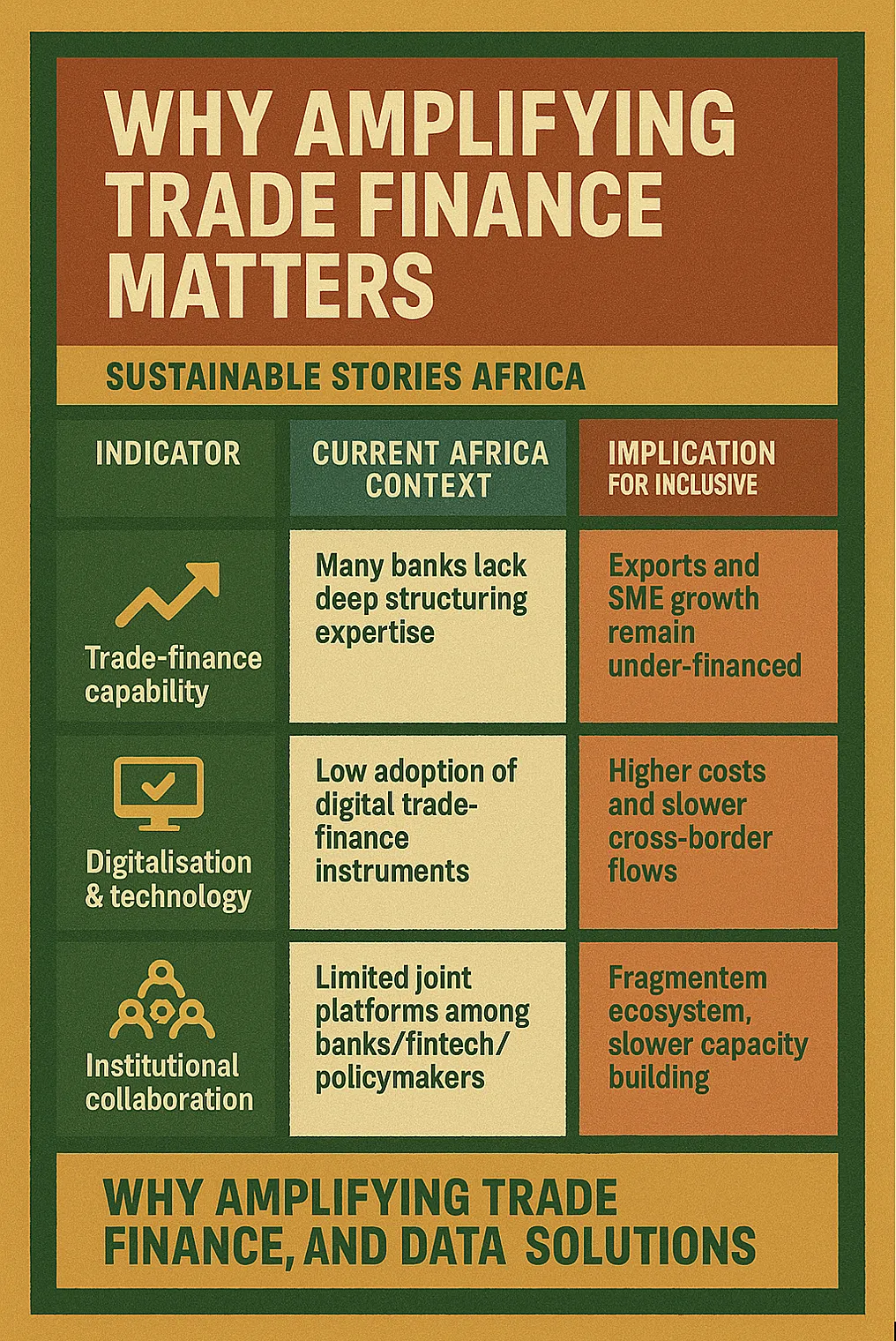
Afreximbank highlighted that the trade-finance gap in Africa continues to limit exporters, especially small and medium enterprises (SMEs), and restricts the continent's ability to fully exploit intra-African trade.
| Indicator | Current Africa Context | Implication for Inclusive Growth |
|---|---|---|
| Trade-finance capability | Many banks lack deep structuring expertise | Exports and SME growth remain under-financed |
| Digitalisation & technology | Low adoption of digital trade-finance instruments | Higher costs and slower cross-border flows |
| Institutional collaboration | Limited joint platforms among banks/fintech/policymakers | Fragmented ecosystem, slower capacity building |
Strengthening trade-finance systems has direct links to employment, value chain development and regional integration, which are key components of sustainable growth across Africa.
What Organisations Must Consider
Afreximbank's call to action implies that financial institutions, governments and regional bodies must make strategic choices:
- Prioritise capacity building in trade-finance structuring and risk assessment.
- Adopt digital tools and data-driven platforms to streamline trade flows.
- Enhance collaboration among banks, development institutions and fintechs to pool expertise and share risk.
These decisions will determine whether Africa transforms trade-finance potential into real outcomes.
Steps Towards Implementation
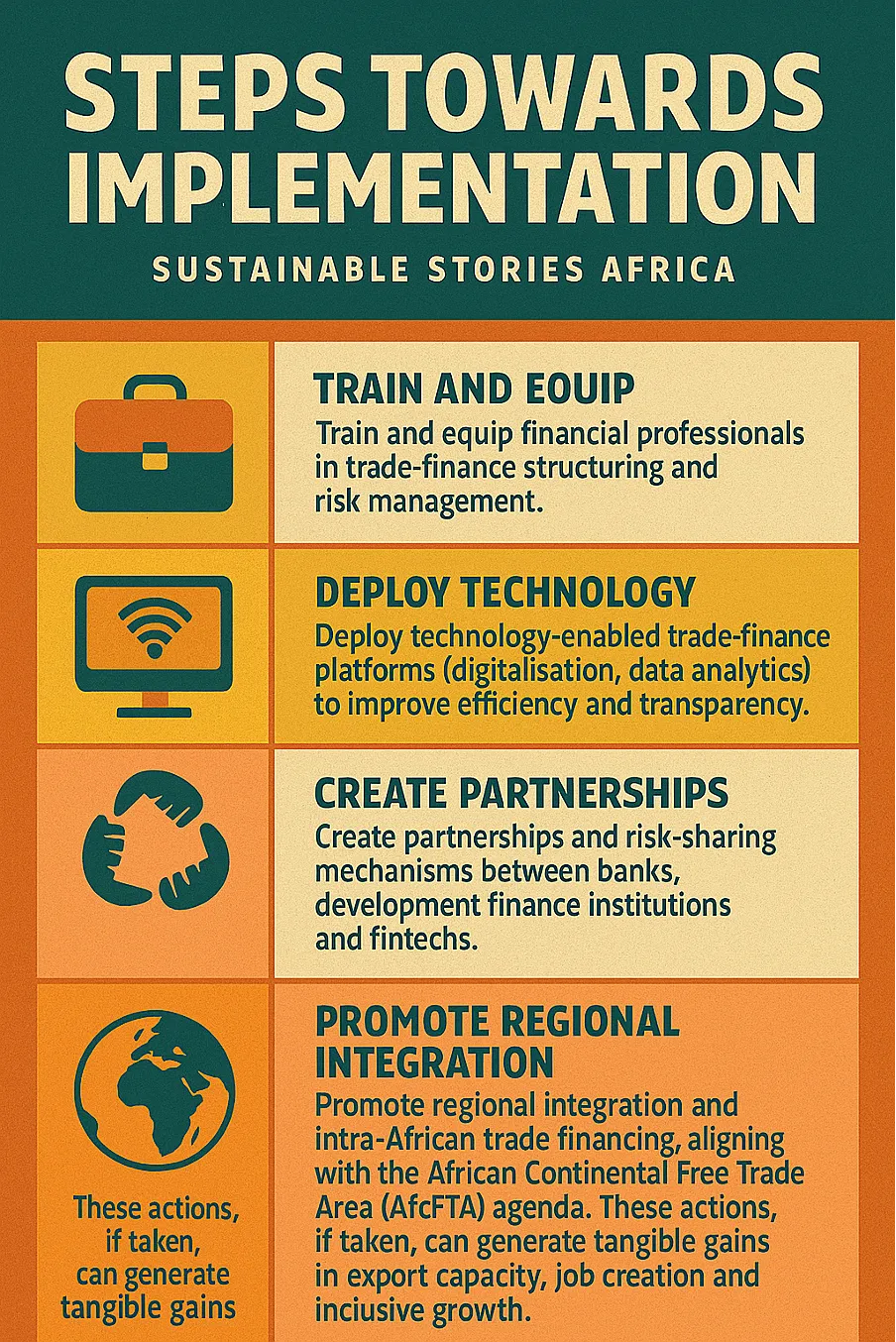
Concrete steps suggested by Afreximbank include:
- Train and equip financial professionals in trade-finance structuring and risk management.
- Deploy technology-enabled trade-finance platforms (digitalisation, data analytics) to improve efficiency and transparency.
- Create partnerships and risk-sharing mechanisms between banks, development finance institutions and fintechs.
- Promote regional integration and intra-African trade financing, aligning with the African Continental Free Trade Area (AfCFTA) agenda.
These actions, if taken, can generate tangible gains in export capacity, job creation and inclusive growth.
Path Forward: What Africa Should Watch
Looking ahead, Africa's trade-finance ecosystem must evolve beyond incremental improvements to transformational change.
Key Enablers, Risks and Challenges
Regulatory frameworks that support digital trade-finance instruments and cross-border collaboration.
- Standardised risk-sharing and guarantee models to mobilise private capital into trade.
- Continuous capacity-building for trade-finance professionals and SMEs engaging in export activities.
Macroeconomic volatility, weak institutional frameworks and limited digital adoption could undermine progress. Firms must avoid a scenario where trade-finance remains the bottleneck rather than the enabler.
For Africa's policymakers, financiers and exporters, the message is clear: trade-finance capability is not a luxury but a necessity if the continent is to realise its inclusive growth ambitions.