
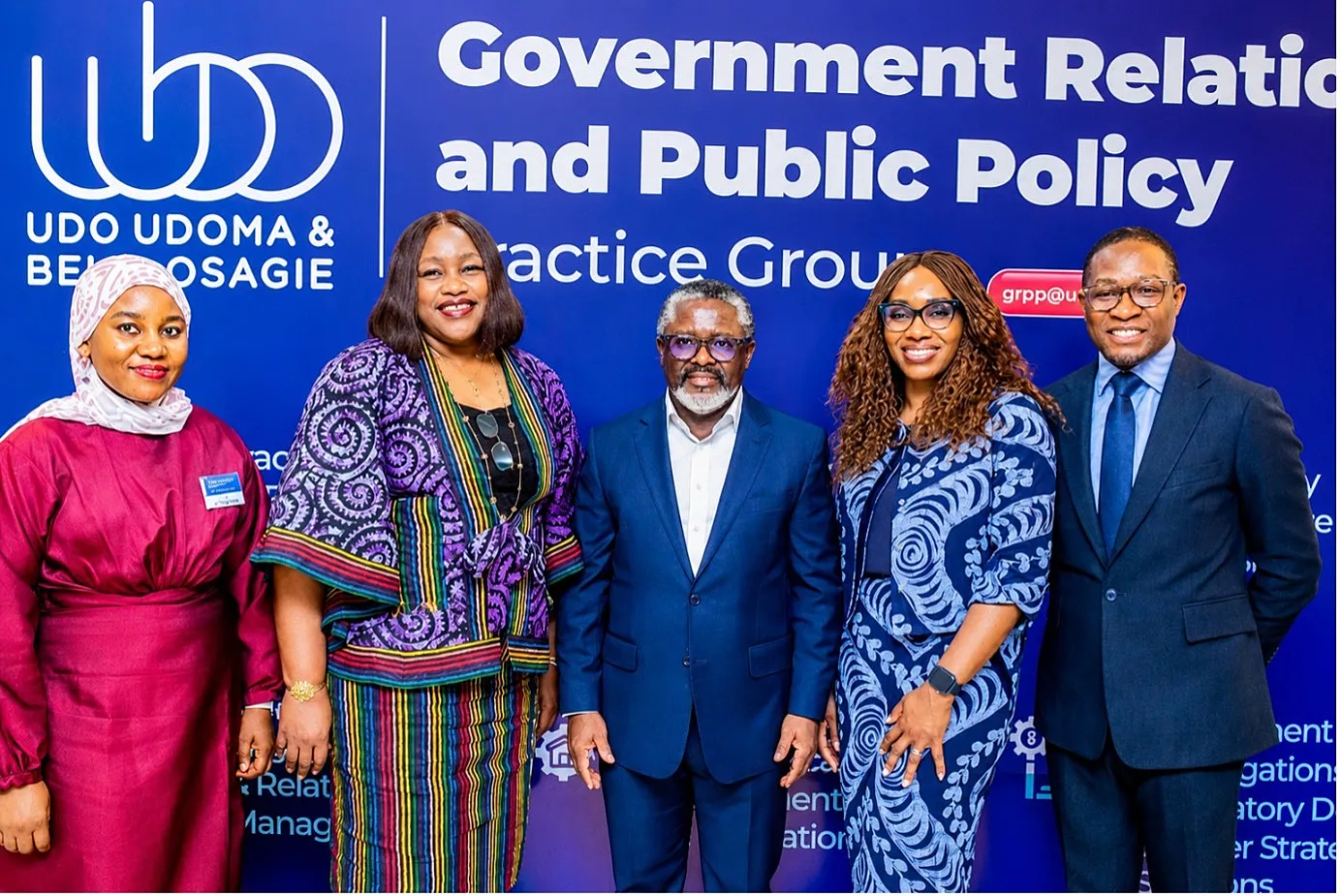
Udo Udoma & Belo-Osagie has launched its Government Relations and Public Policy Practice Group.
The move responds to a business environment in which regulation, policy and investment decisions increasingly collide.
Senior Partner Aniekan Ukpanah said the group will help clients navigate the space where law meets policy, and where government decisions can reshape commercial realities overnight.

Policy Risk Becomes Business Reality
In Nigeria’s fast-shifting business environment, a decision made in Abuja on Tuesday can change the commercial dynamics of a Lagos transaction by Wednesday.
That was the central message as Udo Udoma & Belo-Osagie formally launched its Government Relations and Public Policy Practice Group during the firm’s breakfast session on
“Translating Nigeria’s Industrial Policy into Productivity: Navigating Legal & Regulatory Bottlenecks.”
Speaking at the launch, Senior Partner Aniekan Ukpanah said the new practice group reflects a recognition that had been quietly building within the firm: clients are no longer navigating law alone.
They are navigating the space where law, regulation, policy and institutional power meet.
UUBO Responds To Client Complexity
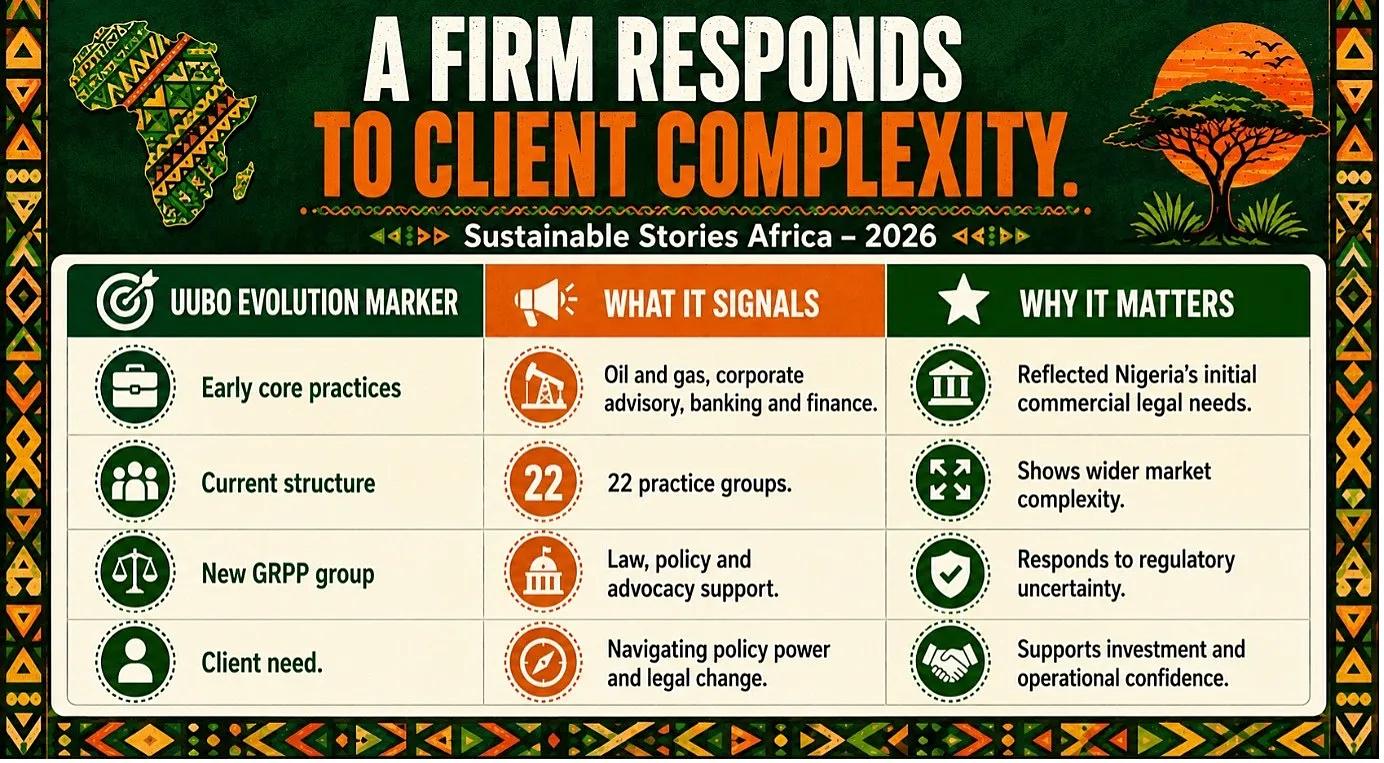
Ukpanah traced the firm’s evolution from its early years, when its practice centred on oil and gas, general corporate advisory, banking, finance and company secretarial services, to its current structure of 22 practice groups.
He said that growth was not simply about expansion, but a response to the changing needs of clients and the growing complexity of doing business in Nigeria.
The launch comes at a critical moment. Nigeria’s industrial policy ambition is growing, but businesses continue to face legal delays, regulatory uncertainty and approval bottlenecks that affect investment decisions.
For manufacturers, developers, investors and operators, legal advice now requires more than technical interpretation.
It requires an understanding of how policy is formed, how regulators move, and how government decisions translate into market consequences.
Where Law Meets Public Power
Ukpanah described the new group as a platform for lawyers who understand both technical legal issues and the power dynamics behind policy decisions.
“In some jurisdictions, this may be called lobbying,” he noted in substance. “However, in Nigeria, we are creating an advocacy platform.”
The distinction matters. In the Nigerian context, businesses often need structured, credible and legally sound engagement with policymakers and regulators.
Without that, reforms can stall, compliance costs can rise, and promising investments can lose momentum.
The launch also reinforces UUBO’s positioning as a firm that has built its reputation on complex assignments, unusual transactions, dispute resolution and problem-solving across Nigeria’s evolving commercial landscape.
Industrial Policy Needs Legal Architecture
The timing of the launch is significant as the breakfast session focused on Nigeria’s efforts to translate industrial policy into productivity goals.
Industrial policy can promise manufacturing growth, export expansion and local value creation.
However, those outcomes depend on whether investors can secure approvals, understand compliance obligations, resolve regulatory conflicts and plan around predictable rules.
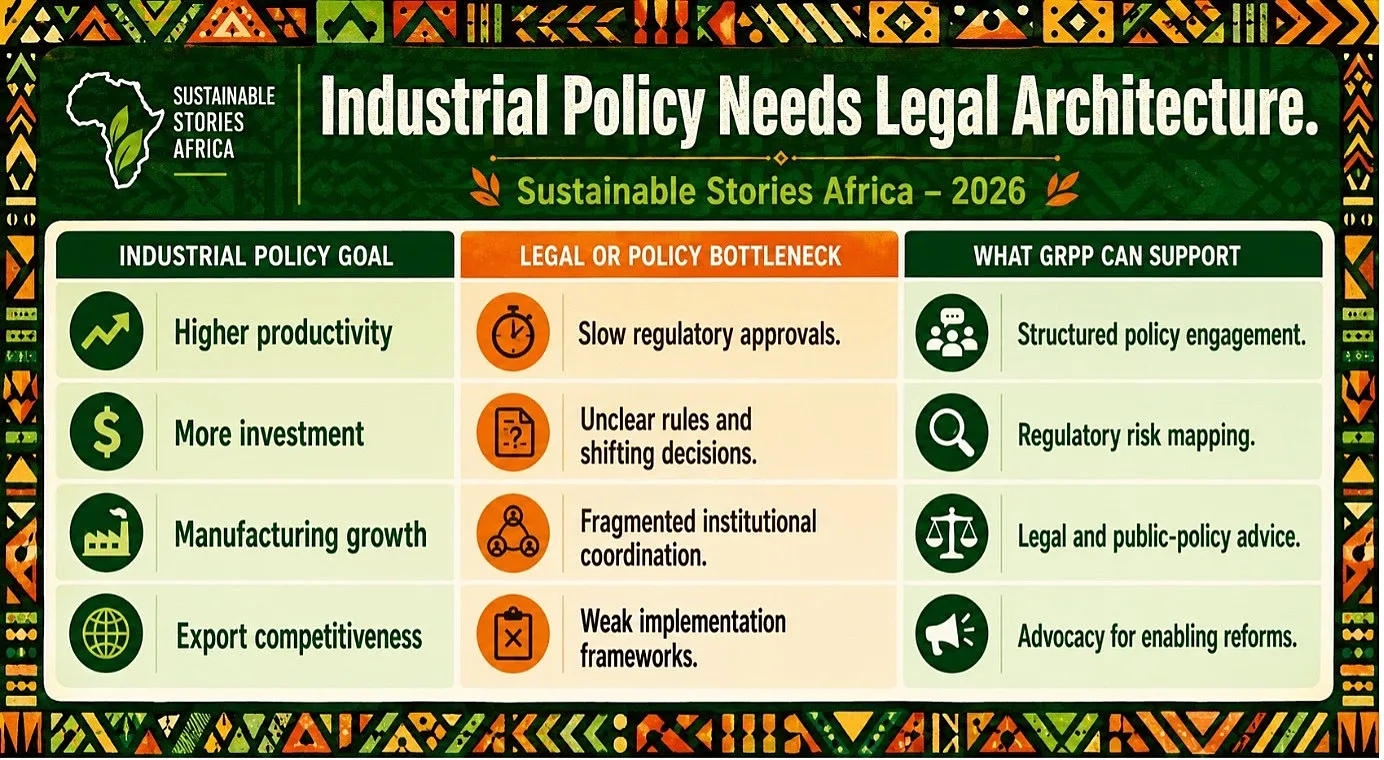
For African markets, this is also an ESG issue. Stronger governance, transparent regulation and predictable policy engagement are essential for sustainable investment.
- When rules are unclear, businesses delay projects.
- When institutions coordinate better, capital can move into factories, infrastructure, jobs and local supply chains.
From Legal Advice To Systems Change
The launch of the GRPP signals a broader shift in how corporate law firms are responding to Nigeria’s development challenge.
The work is no longer limited to drafting contracts, closing transactions or resolving disputes.
It increasingly includes helping businesses understand policy direction, engage institutions responsibly and anticipate regulatory change before it becomes a commercial crisis.
Ukpanah said the firm already has lawyers with the required background, skills and insight.
The new practice group, he explained, provides a dedicated platform for the firm to serve clients with advocacy needs more efficiently.
The call to action is clear: businesses, regulators and policymakers must work together to reduce bottlenecks that weaken productivity.
If Nigeria’s industrial policy is to succeed, legal and regulatory systems must become enablers of growth, not barriers to it.
Path Forward – Requires Policy-Legal Alignment
The GRPP launch points to a practical priority: align law, regulation and policy with Nigeria’s productivity ambitions.
For sustainable development, clearer public policy engagement can improve governance, unlock investment and support industrial growth.
The next test is whether advocacy, regulation and implementation can work together to create a more competitive Nigerian economy.