Addis Ababa is treating early childhood development as a city-building strategy, rather than a narrow social programme.
A new Brookings and AfC-ECD case study shows how the Ethiopian capital connected health, childcare, education, women’s jobs and green spaces into a single municipal agenda for children under six.
A City Learns To Raise Children
Addis Ababa’s early childhood development experiment began with a simple political ambition: to make the Ethiopian capital “the best city in Africa to raise a child and to be a mother,” in the words of Mayor Adanech Abiebie.
Since 2019, that ambition has grown into a citywide programme reaching across health centres, homes, schools, day care facilities and public spaces.
The case study, Raising a City: How Addis Ababa Reimagined Early Childhood Development, documents how the city built a multisectoral early childhood development model focused on children from birth to age eight, with priority attention to the first 1,000 days of life.
The numbers show why this matters. Addis Ababa has more than 1.3 million children under age six, equal to about 20% of the city’s population.
In Ethiopia, 40% of children under five were stunted nationally in the 2024 – 2025 demographic and health survey, while Addis Ababa recorded a lower but still serious rate of 14%.
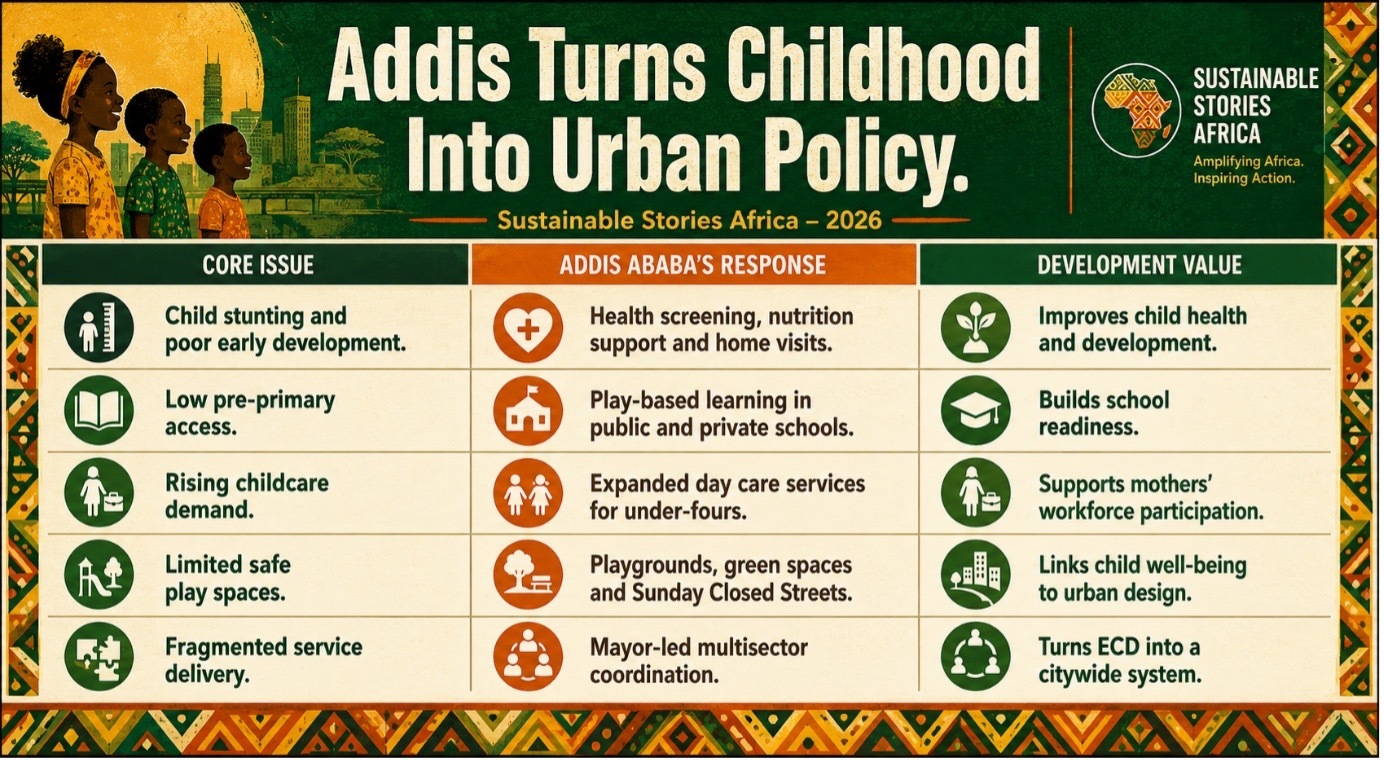
Addis Turns Childhood Into Urban Policy
The headline lesson from Addis Ababa is that early childhood development can become city infrastructure when political leadership, data and service delivery are aligned.
The city’s flagship programme, “Children: The Future Hope of Addis Ababa Early Childhood Development Program,” was piloted in 2019 and fully adopted in 2021.
It aims to ensure that 1.3 million children under the age of 6 are developmentally on track in health, learning and well-being, while prioritising 330,000 vulnerable households.
This is not a single-sector intervention. Addis Ababa built its model around health, nutrition, responsive caregiving, play-based pre-primary education, childcare services, public playgrounds and child-friendly green spaces.
The strategy is coordinated by the Strategic Programs Management Office directly under the mayor, with a multisector group chaired by the mayor and involving city bureaus and 11 sub-cities.
That governance structure matters. Many African cities face similar pressures: rapid urbanisation, growing informal settlements, low access to quality childcare, rising demand for women’s employment, and overstretched schools and health systems.
Addis Ababa’s approach suggests that early childhood policy can serve multiple goals at once: child development, women’s economic empowerment, poverty reduction, public health, climate resilience and social cohesion.
A Multisectoral Model Built Around Families
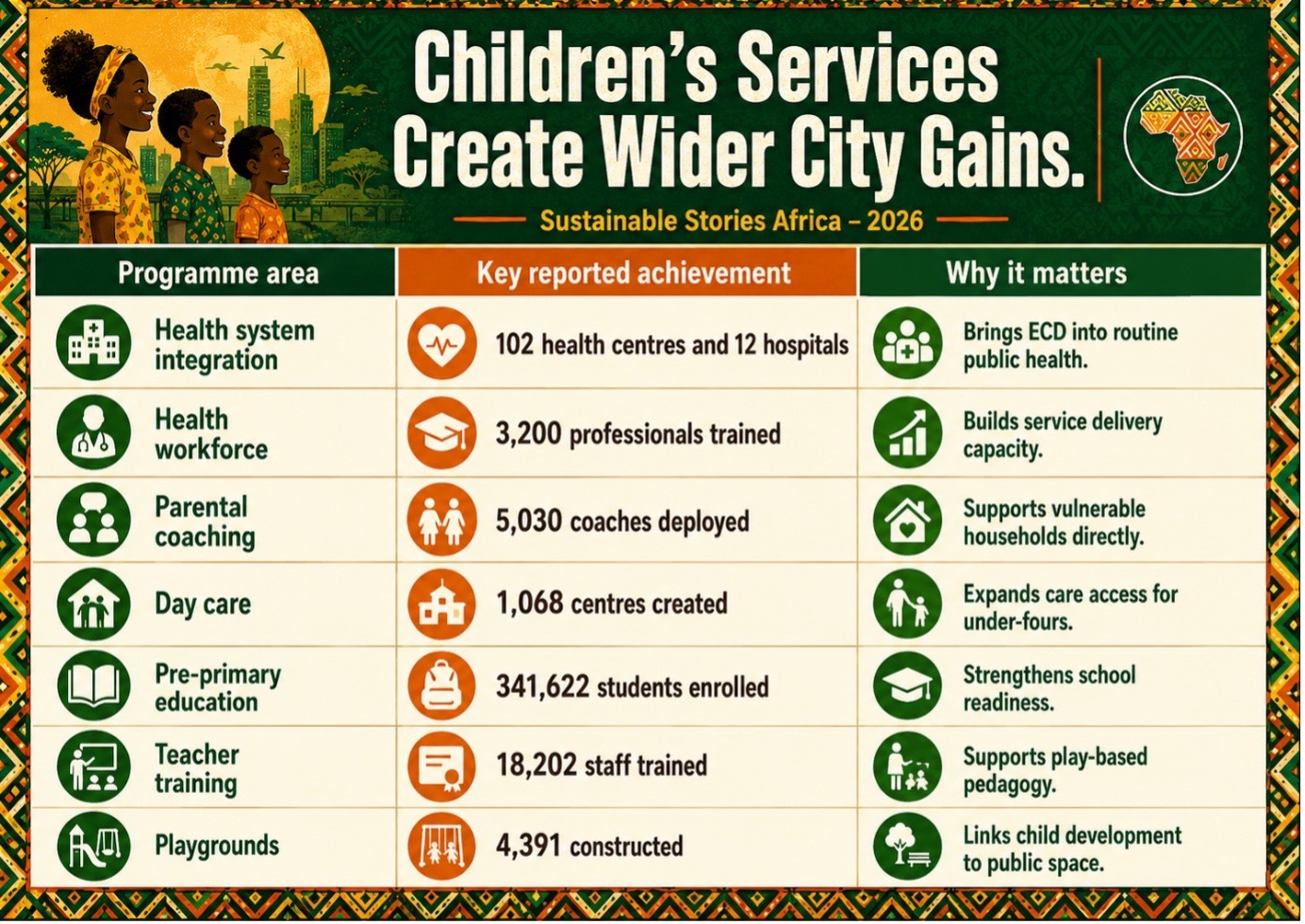
Addis Ababa's early childhood development programme demonstrates what integrated, systems-level investment in young children can achieve. The city embedded early childhood services across 102 health centres and 12 public hospitals, training 3,200 health professionals against a target of 2,700.
By June 2025, 98.1% of children under five visiting health facilities had received developmental screening, with only 22.1% flagged for improvement.
At the household level, the city deployed 5,030 parental coaches, all women, formalised as government employees, to support 298,003 children across 39,850 households in 11 sub-cities. Coaches provided guidance on early stimulation, responsive caregiving, developmental monitoring, and malnutrition referral, embedding a dual benefit: stronger child outcomes and stable employment for young women.
To support working mothers, 1,068 new day care centres were created, serving 21,388 children under four, including 7,464 from vulnerable households, supported by 3,734 trained staff.
Pre-primary education expansion reinforced these gains, with 341,622 students enrolled across 1,169 schools, 18,202 educators trained, and 137,524 children accessing school feeding programmes. International Development and Early Learning Assessment scores rose from 68% in 2021 to 84% in 2025, with the strongest improvements recorded in numeracy and motor development, reflecting the compounding impact of coordinated early investment.
Children’s Services Create Wider City Gains
Addis Ababa’s model is compelling because it treats early childhood development as an investment with multiplier effects.
For families, it means a child can receive developmental screening at a health facility, parental support at home, day care before school age, play-based learning at the pre-primary level, and access to safer public spaces.
- For mothers, it means childcare can reduce barriers to employment.
- For young women, parental coaching and school feeding jobs provide income and formal work experience.
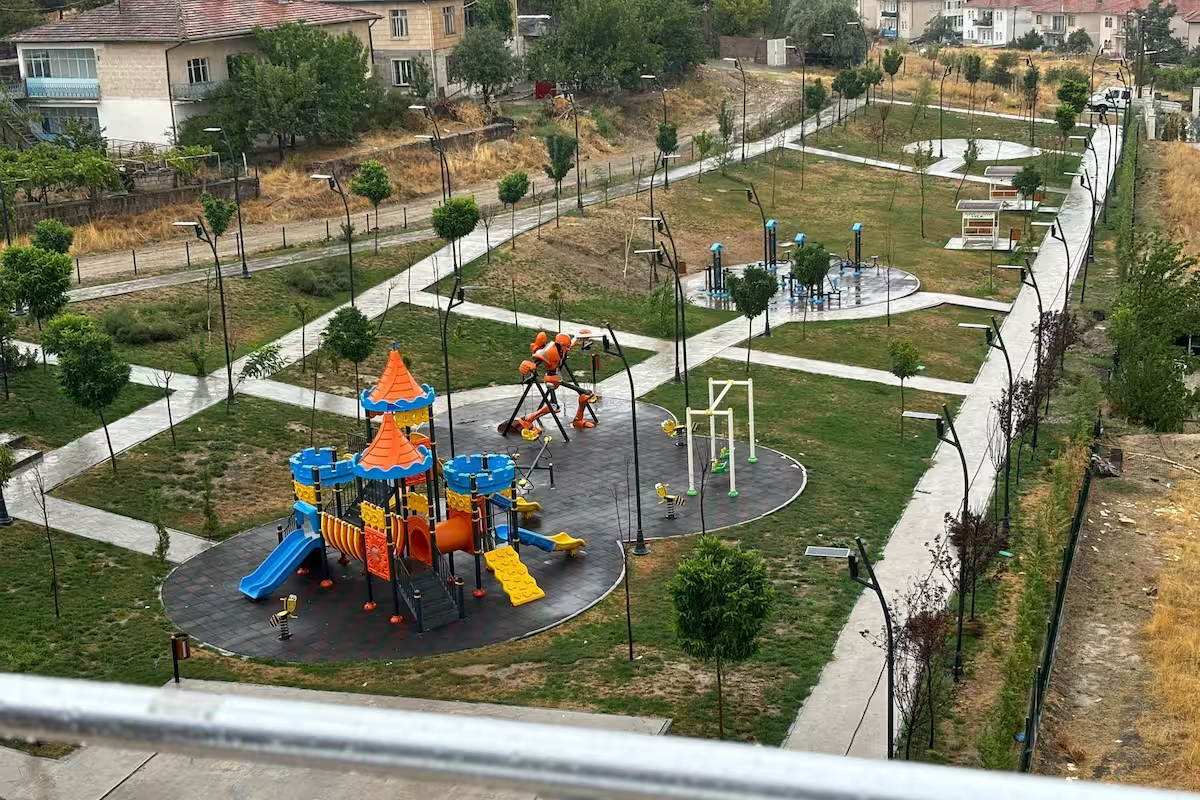
- For the city, the model links social policy to climate and urban design. Addis Ababa has constructed 4,391 playgrounds, against a goal of 12,000.
About 75,780 children have accessed playgrounds, including 33,039 economically vulnerable children and 898 children with disabilities.
The city also reported 114 Sunday Closed Streets for play, used by an estimated 87,870 children by 2025.
That is why the programme matters beyond Ethiopia. Across African cities, children’s needs are often treated as household responsibilities rather than urban planning priorities.
Addis Ababa is testing a different idea: that a city’s roads, parks, schools, clinics and budgets should be judged partly by whether they help young children thrive.
What Other Cities Must Build Next
Addis Ababa's progress was not without challenge. Early barriers included limited awareness of early childhood development, political resistance, gaps in cross-sector coordination, and insufficient workforce capacity.
Shifting to play-based learning required significant reorientation within the education bureau, while the Bureau of Women, Children and Social Affairs had limited experience designing comprehensive childcare systems.
The city's response yielded practical governance lessons. Political leadership proved decisive; the mayor's direct chairmanship of the steering committee aligned 16 senior officials across 12 bureaus. Evidence-based planning, anchored in baseline assessments using CREDI and IDELA tools, revealed critical developmental gaps and shaped programme design.
The city also demonstrated that scale need not precede action: piloting within existing health centre infrastructure allowed gradual, cost-efficient expansion by adapting existing budget lines and training structures.
Crucially, Addis Ababa invested in sustainability by establishing the African Centre for Early Childhood Development to anchor research, training, and peer learning across cities.
The centre has already supported five Ethiopian regions and is now assisting Mombasa, Kenya.
The broader governance lesson for African cities is clear: early childhood development demands coordinated leadership across mayors, finance teams, planners, social protection agencies, employers, and data systems, rather than siloed departmental action.
Path Forward – Make Childhood A Core City System
Addis Ababa’s lesson is not that every city should copy its model exactly. It is that every city should treat early childhood as infrastructure, with political champions, local data, public budgets, trained workers and measurable outcomes.
The next step is institutionalisation: protect gains beyond political cycles, improve nutrition screening, strengthen quality standards and scale what works.
Well done, early childhood investment becomes social equity, climate resilience and human capital policy in one system.