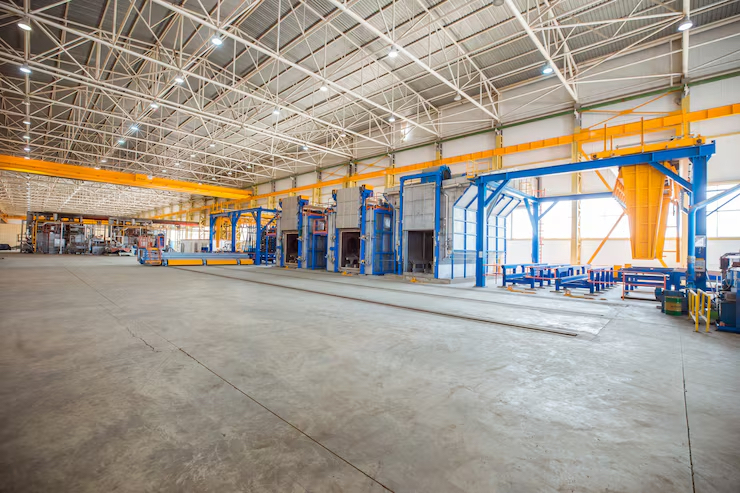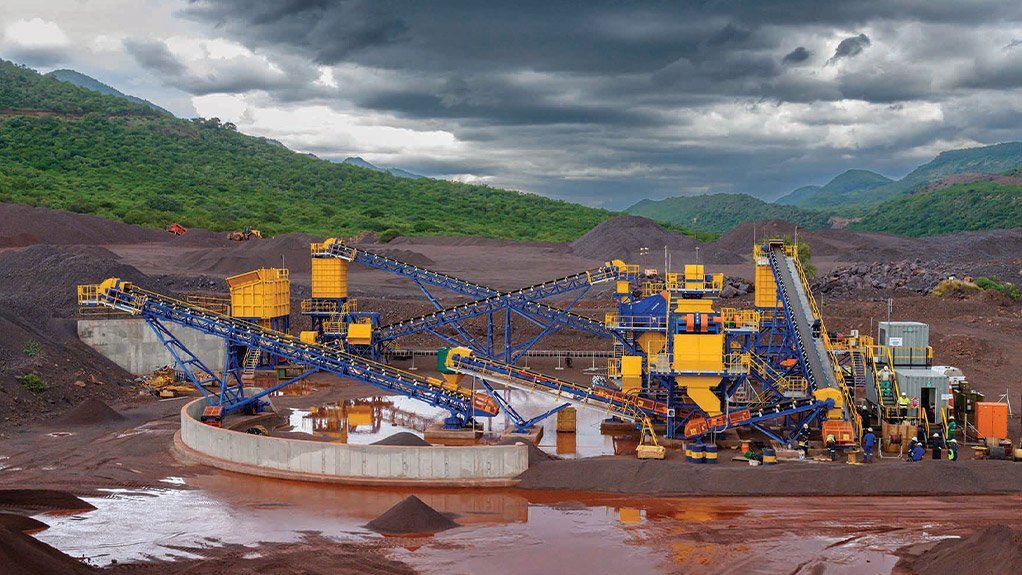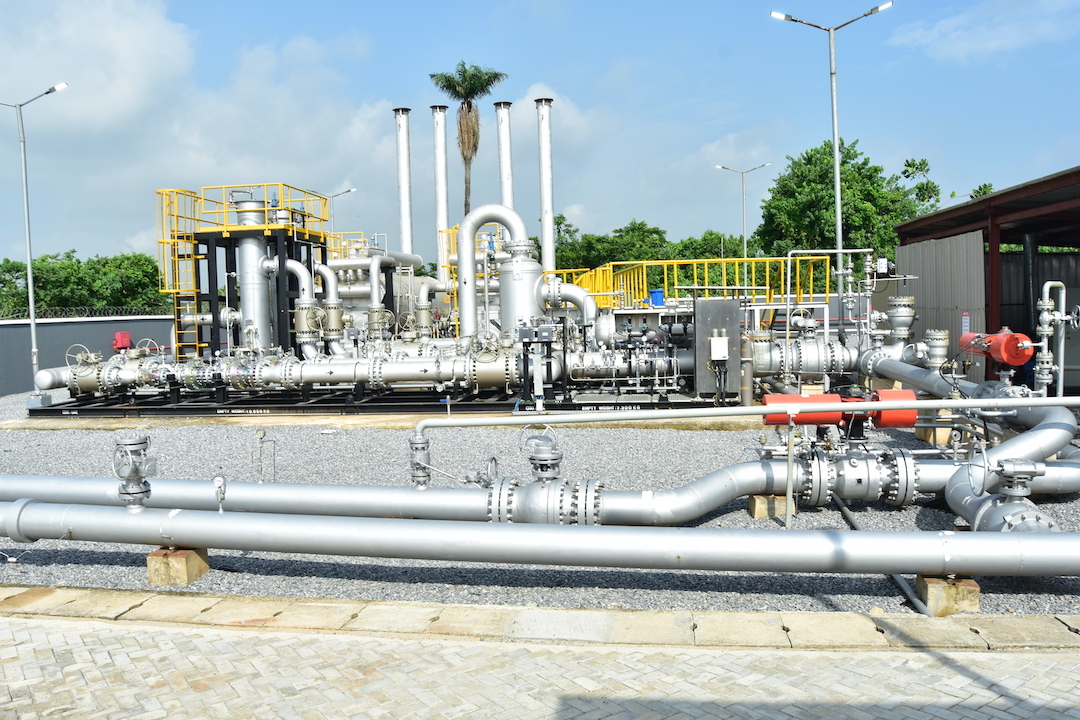
Nigeria has accumulated billions of dollars in energy commitments as final demand, industrial gas use and transport alternatives expand.
However, capital remains concentrated in public reform programmes, recovery financing and access projects, while foreign-exchange risk and expensive domestic credit deter private investment.
The market opportunity is vast; the challenge is matching finance with customers who need reliable, affordable energy and can sustain repayment.
Nigeria’s Energy Market Faces Funding Gap
Nigeria’s final energy demand increased by 20% between 2017 and 2024, and electricity demand is projected to grow by about 7% annually.
However, the country’s Energy Transition Plan requires $936 billion through 2060, including $138 billion by 2040, far beyond what public revenue can finance.
Sections 4 and 5 of Nigeria Energy Industry 2026, published by Businessfront Energy in partnership with Intelpoint, connect the investment landscape and capital flows with demand across industry, households, businesses and transport.
Read together, they show a market with enormous need but a difficult path from committed finance to commercially sustainable supply.
- Development institutions are funding reform, distribution recovery and decentralised access.
- Consumers are adopting captive power, compressed natural gas and early electric mobility.
Between them sits the bankability gap: currency volatility, high interest rates, weak utility collections and household affordability.
Demand Is Growing Faster Than Delivery
The report estimates about $3.94 billion in active World Bank energy commitments, led by the $1.2 billion Nigeria Distribution Sector Recovery Programme, three $750 million operations covering renewable access and power-sector recovery, and a $486 million transmission project.
The African Development Bank has added two $500 million phases of its Economic Governance and Energy Transition Support Programme.
China-related energy loans total approximately $1.2 billion, with a World Bank-backed $750 million DARES programme that has drawn $100 million from the Global Energy Alliance for People and Planet and $200 million from JICA.
These figures are substantial; however, much of the capital targets market repair, transmission, distribution and access rather than new utility-scale generation, reflecting Nigeria's deeper constraint.
Infrastructure exists; however, liquidity, metering, tariffs and gas supply undermine performance.
Demand isn't waiting; manufacturers, households and transport operators are already absorbing higher costs, forcing capital to solve reliability and affordability at once.
Capital Flows Toward Reform And Access
The investment pipeline spans sovereign loans, performance-based operations, development finance facilities and smaller private transactions.
Domestic initiatives are also emerging, including a N100 billion REA–FCMB renewable energy facility and N22.9 billion in Bank of Industry lending to local manufacturers.
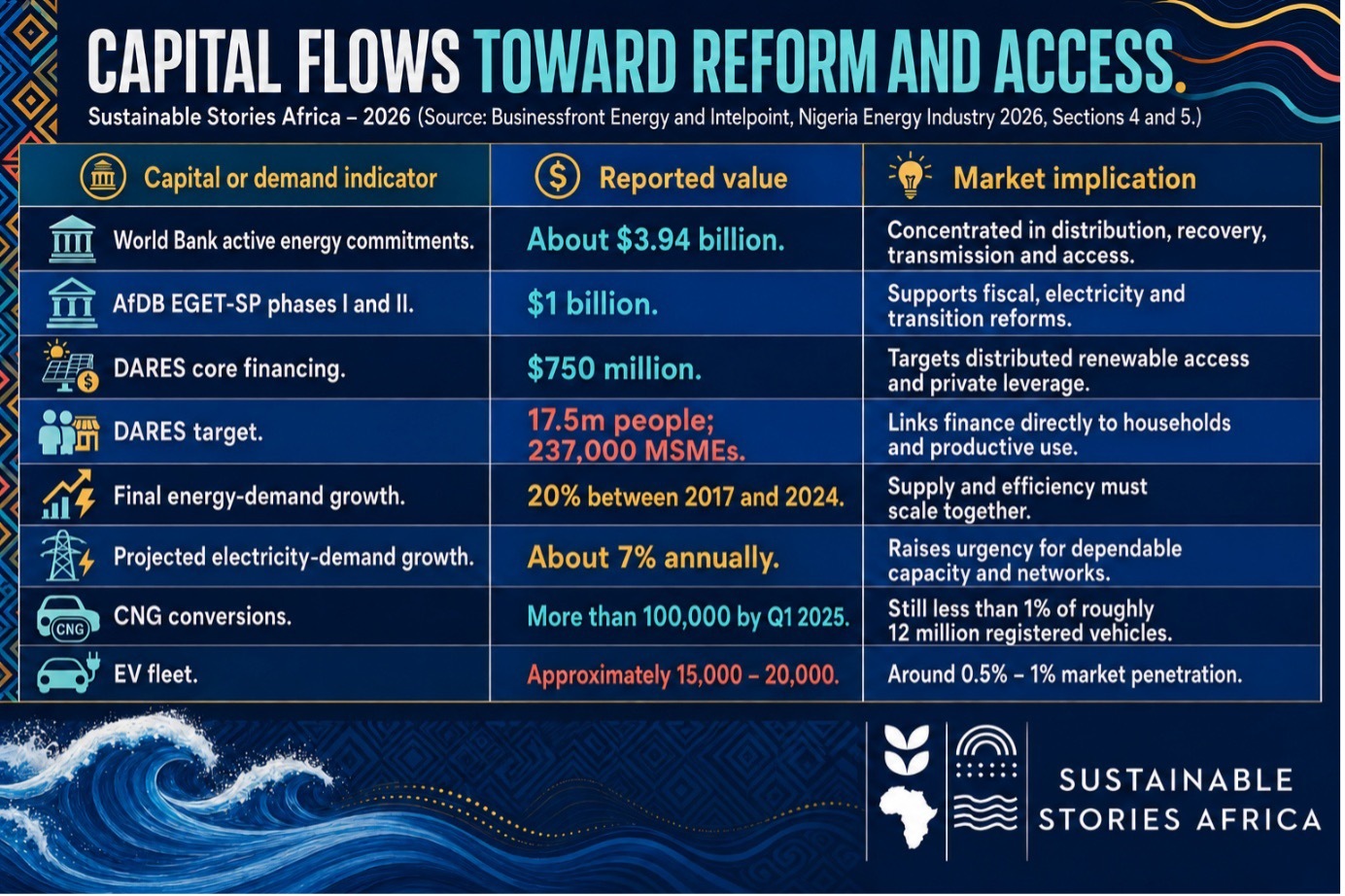
ARES illustrates Nigeria's shift from centralised expansion toward distributed supply.
Beyond its $750 million credit, the programme is expected to leverage over $1 billion in private capital, extend electricity access to 17.5 million Nigerians, support 237,000 MSMEs and replace more than 280,000 generators.
This matters because Nigeria's energy customer is not a single market.
- Industrial plants need firm power and bankable gas contracts; neighbourhood businesses need mini-grid tariffs below diesel costs; households may need affordable solar instalment financing; transport fleets weigh fuel cost per kilometre.
Each segment demands a distinct financing structure.
Foreign-exchange exposure remains a common obstacle; imported equipment and dollar debt against Naira revenues, as such, currency depreciation can undermine sound projects.
Tight monetary policy compounds this, making short-tenor, high-interest financing poorly suited to long-recovery energy assets.
New Markets Could Turn Demand Productive
Industrial demand offers the clearest opportunities for productive use.
Gas supplies over 70% of Nigeria's on-grid generation, with its share of the broader energy mix rising from 15% in 2010 to 25% in 2025.
Reliable gas-to-power could ease industrial diesel dependence and support fertiliser, petrochemicals, cement and export manufacturing.
Energy efficiency could reduce new supply challenges; however, adoption remains weak.
A 2009 survey found that 79% of respondents were unaware of government efficiency policies and 77% reported no workplace energy-management training. This highlights the need for updated baselines and appliance standards.
Transport demand shows how economics drives transition. As of April 2025, compressed natural gas costs roughly N230 to move a vehicle 10 kilometres, versus N891 for petrol.
Over 100,000 vehicles had converted by Q1, though this remains under 1% of registered vehicles.
Electric mobility lags further, with 15,000 – 20,000 EVs (0.5% – 1% penetration) priced between N12 and N28 million compared to between N6 and N15 million for petrol equivalents.
These markets can create jobs and cut fuel imports if financing follows real use cases, such as fleet loans, solar replacing generators, and efficiency to lower peak demand.
Make Capital Match Customer Economics
Policymakers should stabilise the rules that determine cash flow: cost-reflective but socially sensitive tariffs, transparent subsidies, enforceable gas contracts and predictable import and tax treatment for clean-energy equipment.
Currency-risk facilities should be targeted at projects with measurable access, productivity and emissions benefits rather than applied indiscriminately.
Development financiers must use guarantees, local-currency lending, first-loss capital and longer tenors to crowd in domestic banks and institutional investors.
Performance-based disbursement should reward metering, collection, service reliability and customers connected, rather than approvals or equipment installed without sustained use.
Investors should segment demand rigorously. Industrial gas, commercial solar, mini-grids, CNG fleets and EV charging have different credit risks and revenue patterns.
Bundling smaller customers, using digital payment histories, and contracting anchor users can turn fragmented demand into financeable portfolios.
The government should also update demand and efficiency data.
A modern appliance survey, industrial energy audit programme and transport-fuel database would improve project design.
CNG and EV expansion must include safety standards, technician training, charging or refuelling uptime and lifecycle emissions, rather than vehicle counts alone.
Path Forward – Finance Demand And De-Risk Delivery
Nigeria does not lack energy demand or announced capital. It lacks adequate financing structures that absorb currency risk, reward reliable service and remain affordable for industrial, commercial, residential and transport customers.
The priority is to connect reform finance with bankable demand: local-currency capital, credible tariffs, stronger collections, efficient appliances, productive-use energy and scalable mobility infrastructure. When money follows sustained service rather than project announcements, Nigeria’s expanding market can become an engine of inclusive and lower-carbon growth.