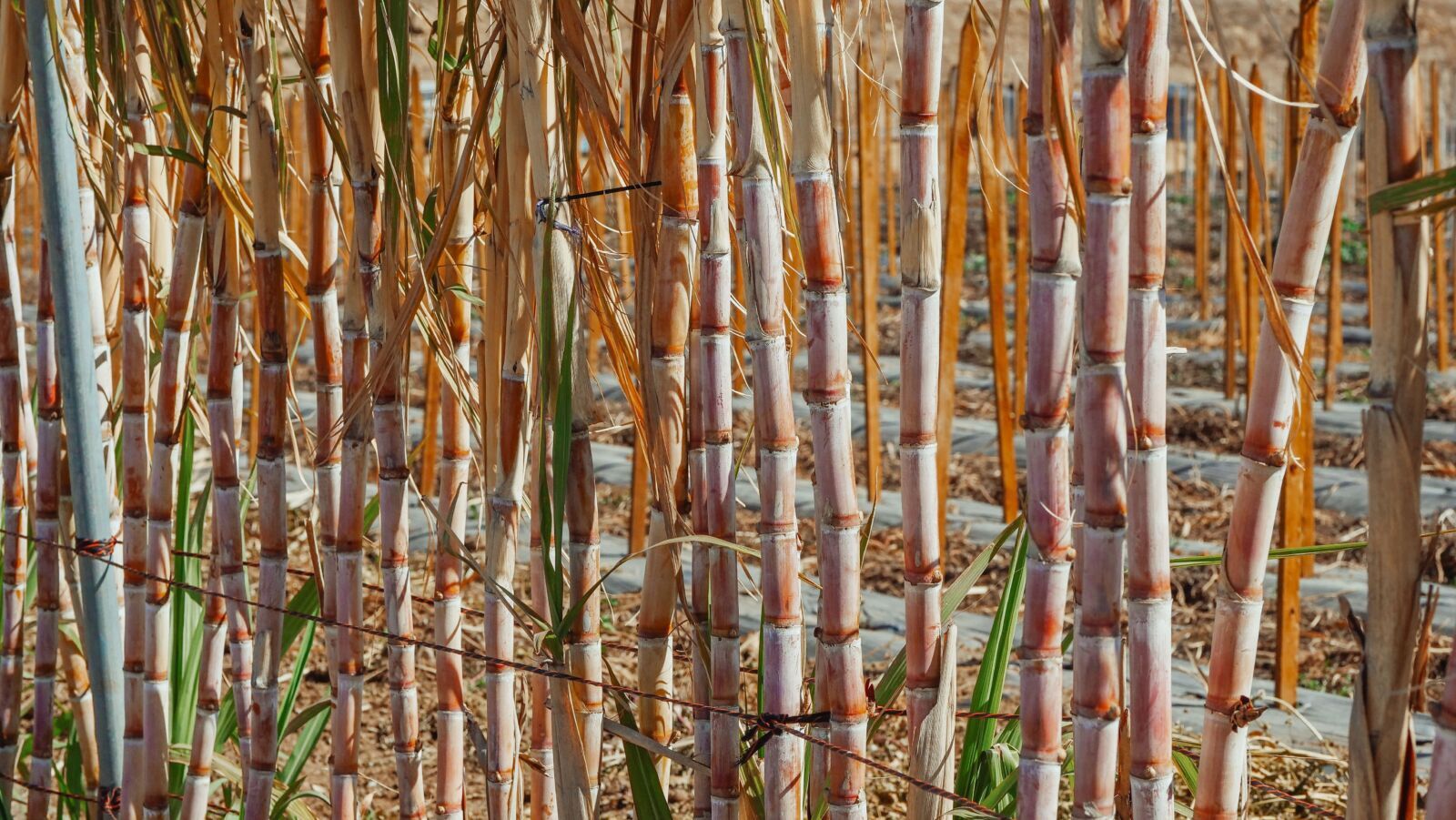
New TNFD guidance asks alternative-fuel producers, buyers and users to measure what climate narratives often miss: land conversion, water stress, pollution, traceability and community impacts.
For African markets rich in biomass, renewable-energy and hydrogen potential, the question is no longer whether cleaner fuels can scale, but whether they can grow without shifting environmental costs onto nature and people.
Clean Fuels Carry Hidden Nature Costs
The Taskforce on Nature-related Financial Disclosures has issued additional sector guidance that places land, water, biodiversity, pollution and supply-chain integrity alongside carbon in the assessment of alternative fuels. Published in June 2026, the guidance covers bioenergy, low-emissions hydrogen and hydrogen-derived fuels such as e-methanol, e-kerosene and e-ammonia.
Its central message is straightforward: replacing an unabated fossil fuel does not automatically produce a nature-positive outcome. A fuel can reduce greenhouse-gas emissions while increasing pressure on freshwater, converting natural ecosystems, competing with food production or transferring pollution into another part of its value chain.
For African and other emerging markets, that distinction matters. The continent has substantial renewable-energy resources, agricultural feedstocks, waste streams and potential export markets for cleaner fuels. Yet it also contains water-stressed regions, biodiversity-rich landscapes and communities whose livelihoods depend directly on land, forests and freshwater. The quality of the transition will therefore be determined by what companies measure before projects are financed and built.
Nature Risk Enters Alternative-Fuel Decision Making
Producing one kilogramme of hydrogen through electrolysis requires about nine litres of water, rising to 12–15 litres when cooling and operational losses are factored in. Over 35% of existing and planned renewable-hydrogen and CCUS-equipped fossil-hydrogen capacity sits in water-stressed regions, with cooling alone driving 56% of green hydrogen's water withdrawals. Global freshwater use for hydrogen could triple by 2040 and increase sixfold by 2050.
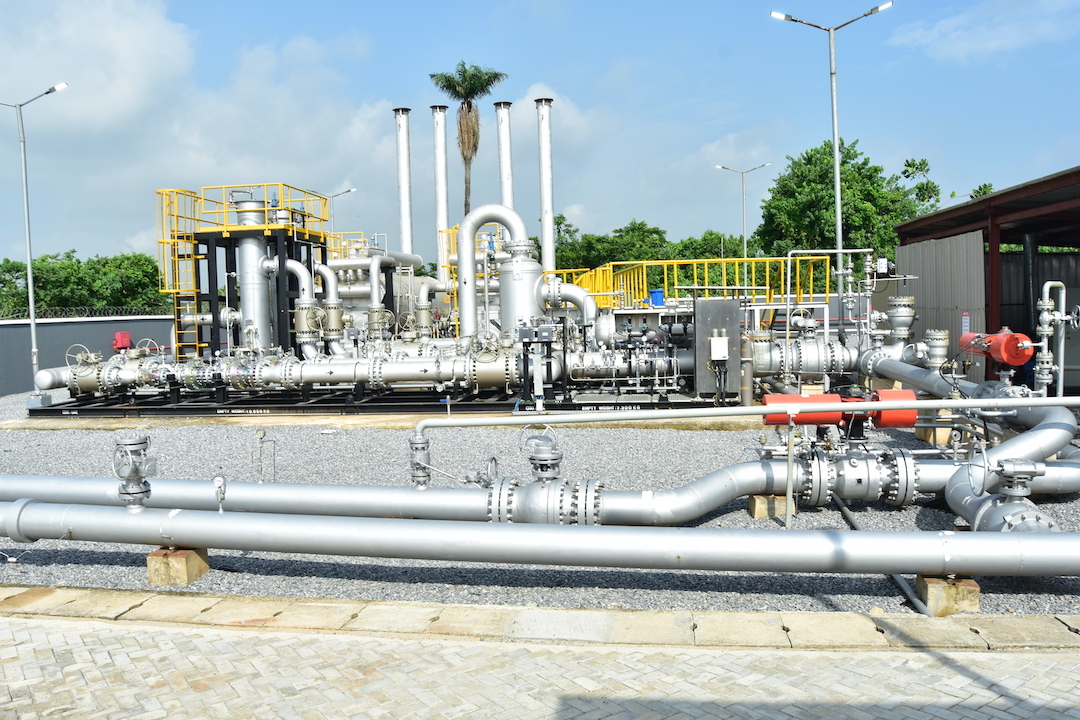
These figures challenge the narrative of hydrogen as simply stored renewable electricity. Real-world projects involve water abstraction, electricity generation, land use, transmission infrastructure, electrolysers, critical minerals, storage, and sometimes desalination and brine disposal.
TNFD guidance addresses this by extending nature-related assessment across the full value chain. While biofuels are its primary focus, the guidance also applies to agriculture, chemicals, forestry, waste management, aviation, freight, marine and road transport, utilities, power generation, and oil and gas.
This broadens relevance beyond fuel producers: airlines buying sustainable aviation fuel, shippers using green methanol, or utilities sourcing biomass may all face material upstream risks they don't directly control.
The Metrics Follow Every Fuel Pathway
The guidance applies TNFD's LEAP framework: Locate interfaces with nature, Evaluate dependencies and impacts, Assess risks and opportunities, and Prepare to respond and report. Organisations must map the full fuel pathway, from biomass, electricity, water, carbon dioxide, nitrogen or natural gas inputs through manufacturing, distribution and use to waste management, recycling or carbon storage.
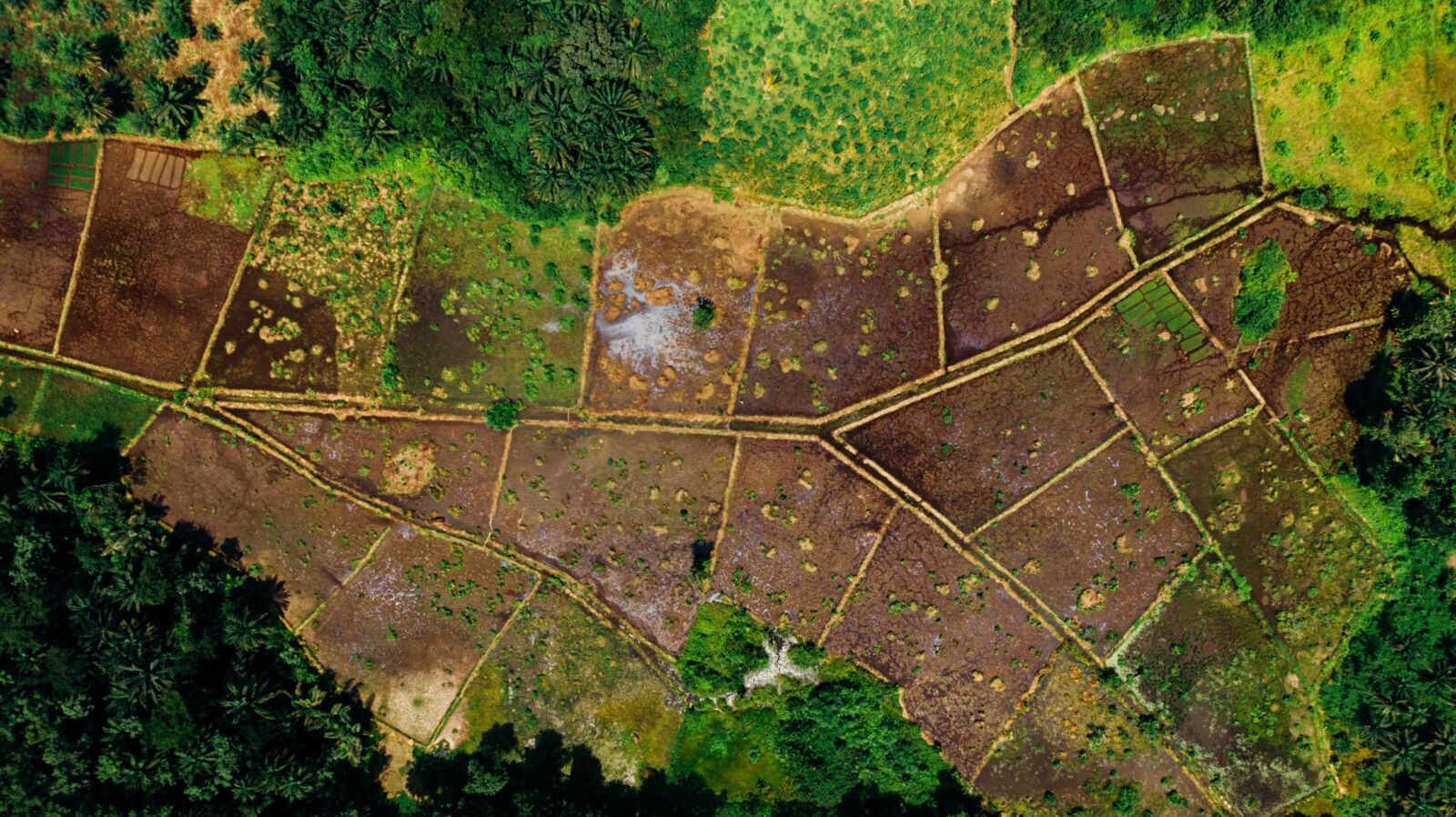
For bioenergy, key questions cover feedstock origin, ecosystem conversion, land and water use, and whether "waste" materials had more valuable alternative uses. A discarded agricultural residue may seem climate-friendly, yet its removal can still harm soil fertility, livestock feed markets or local livelihoods.
Traceability is a core control. Companies must report primary biomass weight and proportion traced to country, jurisdiction and farm, plantation, forest, mill or facility, with waste feedstocks traced to their point of origin. Below 100% coverage requires disclosure alongside a time-bound improvement plan, plus plausibility checks—flagging, for instance, used cooking oil volumes inconsistent with a source market's population or restaurant activity.
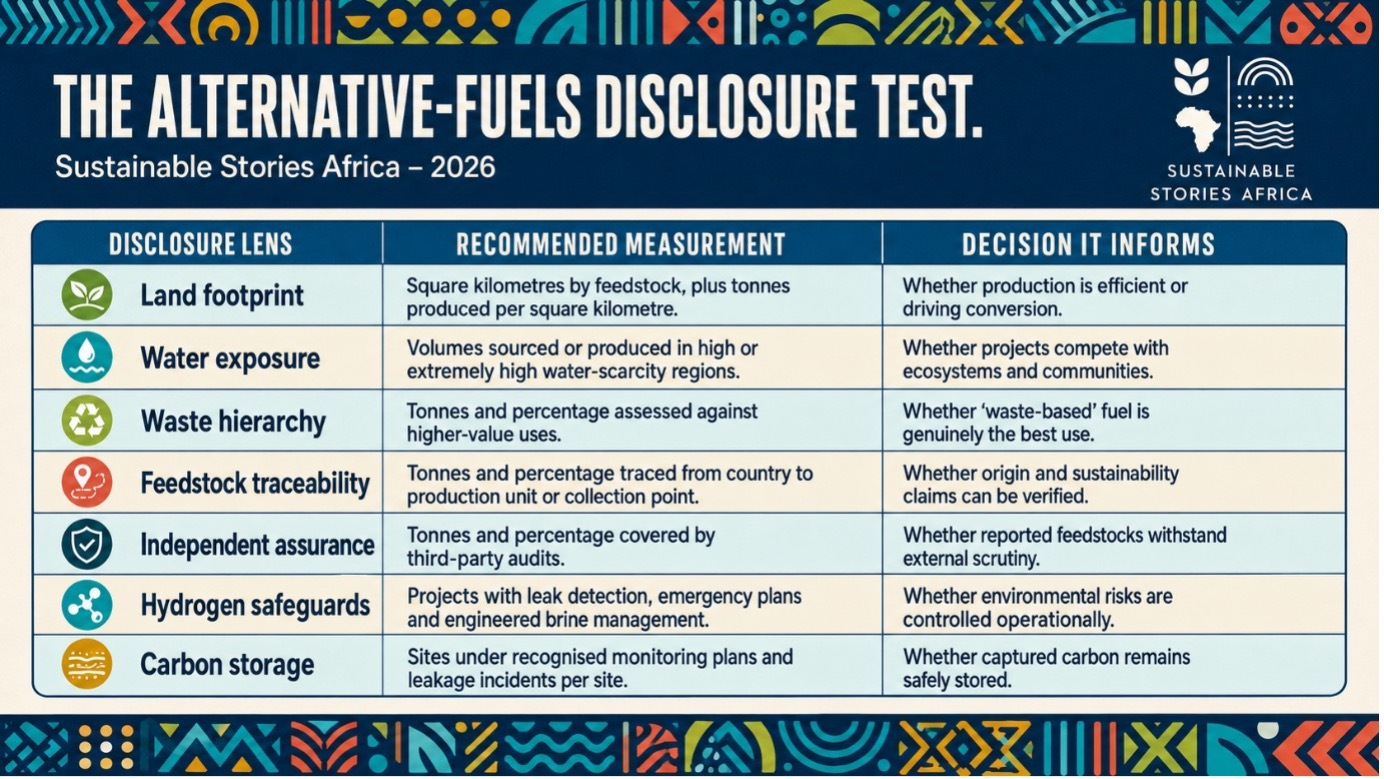
The framework includes 10 core metrics (comply-or-explain) and 15 additional metrics. Certification can support this system, but TNFD warns it shouldn't replace public disclosure, since schemes may offer process assurance without quantitative transparency.
Better Disclosure Can Build Better Markets
For Africa, stronger disclosure could turn natural advantages into more credible investment opportunities. Well-designed biofuel projects can create markets for appropriate residues, reduce unmanaged waste, capture methane and support rural incomes, while hydrogen and synthetic-fuel projects can link renewable energy to industrialisation, shipping, aviation and export markets. Shared infrastructure can further cut costs and expand local benefits.
Credibility, however, depends on proving these gains don't undermine food systems, water security or local rights. Pests and pathogens can already cut yields of major fuel crops like maize and wheat by up to 40%, meaning feedstock expansion into poorly governed landscapes risks compounding both ecological and commercial volatility.
Better data can shift this equation. Geolocation can flag deforestation exposure, water-risk screening can guide siting, independent audits can verify waste claims, and leak detection or brine management can protect hydrogen efficiency and coastal ecosystems. For investors, this sharpens the line between green-labelled and evidence-based resilient projects. For communities, it strengthens consent and benefit-sharing; for companies, it reduces exposure to stranded assets and reputational risk.
Five Moves Turn Guidance Into Practice
First, companies must map beyond operational boundaries, identifying material land, water, pollution and biodiversity impacts across supply chains even without direct control—starting with proxy data while building toward better primary data.
Second, boards should embed nature metrics into investment decisions. Water availability, land conversion, feedstock authenticity and community rights must inform capital allocation and procurement, not remain confined to sustainability reports.
Third, regulators should prioritise interoperability over new reporting silos. The guidance aligns with IFRS, SASB, GRI, CDP, European Sustainability Reporting Standards and the Kunming-Montreal framework, giving African authorities a foundation for proportionate, aligned national regimes.
Fourth, financiers should price evidence into capital, rewarding traceable feedstocks, water stewardship, restoration and transparent engagement—testing "green" financing against both emissions and nature impacts.
Finally, developers must treat communities as decision participants, supporting Free, Prior and Informed Consent, defender protections and smallholder verification.
These steps reflect TNFD's AR3T hierarchy: avoid, reduce, regenerate, restore, transform. Sequencing matters—restoration shouldn't excuse avoidable destruction.
Path Forward – Africa Must Scale Fuels With Nature
African regulators and market operators should translate the guidance into interoperable, proportionate reporting expectations, while companies map supply chains, measure water and land exposure, and publish time-bound data-improvement plans.
Financiers should reward traceability, community consent, credible verification and nature-positive design. Alternative fuels can advance climate and development objectives together, but only when every “clean” claim is tested against ecosystems, livelihoods and long-term resilience.