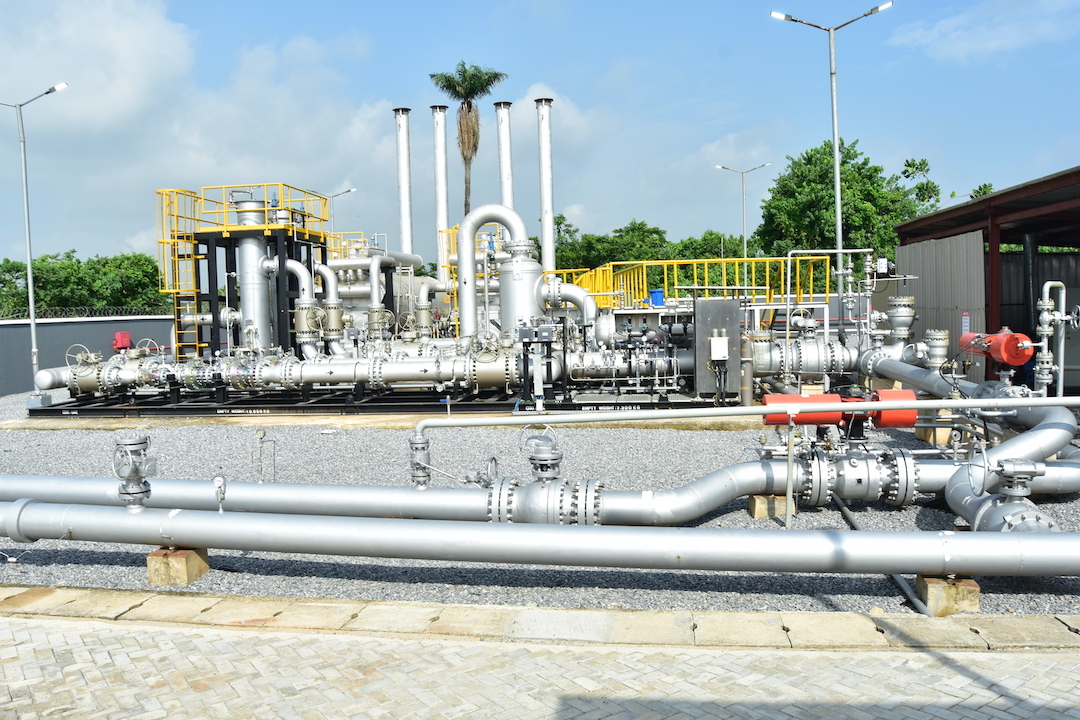
The African Development Bank approved a record UA746.4 million through results-based financing in 2025, backing seven programmes across six countries and four sectors.
The surge moves the instrument from an experiment to mainstream sovereign finance.
However, as projected demand challenges existing lending limits, the central question is whether the Bank can scale payments for verified results without weakening indicators, safeguards, data integrity or public accountability.
AfDB Moves From Funding To Results
The African Development Bank’s results-based financing approvals nearly quadrupled in 2025, rising from UA188.39 million in 2024 to a record UA746.4 million across seven operations.
The portfolio covered Cameroon, Morocco, Rwanda, Benin, Nigeria and Ghana, and accounted for 9.1% of the Bank’s annual sovereign commitments.
The figures come from the Bank Group Results Based Financing Instrument: 2025 Implementation Status Report, prepared by the AfDB’s Strategy and Operational Policies Department in May 2026.
The report describes 2025 as the time the instrument moved from a pilot-oriented approach to a mainstream sovereign financing modality.
The distinction matters beyond development-finance terminology. Instead of disbursing solely against eligible expenditure, results-based financing links releases to pre-agreed, independently verifiable milestones.
For citizens, its credibility rests on a practical test: whether money follows the working electricity connections, stronger local services, jobs and functioning institutions, rather than merely completed paperwork.
Seven Operations Redefined One Lending Year
Introduced in 2017 as the African Development Bank's third sovereign lending instrument, results-based financing (RBF) leverages government systems while reinforcing accountability.
Between 2018 and 2024, the Bank approved 15 RBF operations worth UA1.40 billion across nine countries and seven sectors.
In 2025 alone, seven new approvals exceeded half that cumulative total.
African Development Bank resources dominated the 2025 mix at UA688.3 million (92%), followed by the African Development Fund at UA43.2 million (6%) and the Transition Support Facility at UA15 million (2%), reflecting stronger uptake among ADB and blend countries with capable disbursement systems.
Sector allocation showed social programmes at 36%, agriculture at 31%, energy at 20%, and multi-sector operations at 13%, signalling a broadening beyond RBF's earlier focus on social protection and energy access.
The 2025 approvals also exceeded the standard 5% ceiling, though co-financing allows up to 10%. With 2026 requests projected near 20%, pressure is mounting to revisit the cap, reflecting demand, but also the need for stronger operational controls.
The Indicators Behind Every Disbursement
Disbursement-linked indicators (DLIs) anchor every RBF programme, specifying results governments must demonstrate before releasing financing.
The 2025 operations contained 55 DLIs, averaging nearly eight per programme, ranging from six in energy to nine in agriculture and multi-sector operations.
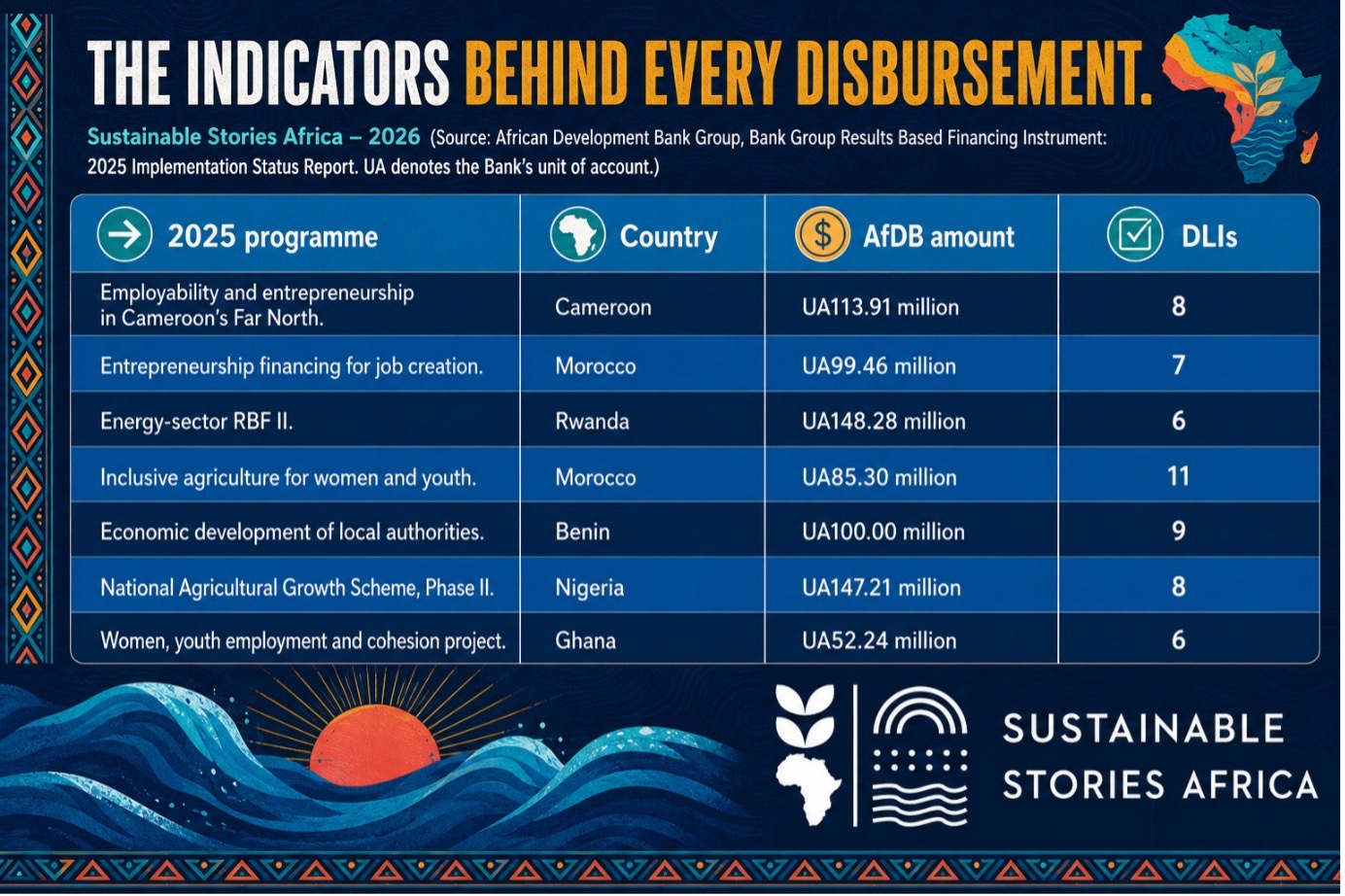
- Cameroon illustrates the model's use in fragile settings: eight DLIs blend employability, entrepreneurship, gender and youth targets with climate-resilient infrastructure in the Far North, verified independently under a Category 2 risk profile.
- Benin's UA100 million PADECT programme shows system expansion, with nine indicators spanning digital infrastructure, MSME support and climate adaptation, following the country's first RBF programme in rural water security.
Indicator composition reveals a design challenge.
- Across 2018 – 2024, 41% of DLIs measured outputs, 30% processes, 27% outcomes and 2% financing milestones.
- Outputs are easier to verify quickly, but outcomes, such as jobs, incomes, and service quality, take longer and depend on external factors.
This bias risks conflating quick wins with lasting change, requiring sharper balance ahead.
A co-financing discrepancy also needs resolution: the narrative cites UA2.696 billion and a 3.6-to-one ratio, while Annex 2 totals UA990.77 million for 2025.
Reconciling these figures is essential before any ceiling increase.
Paying For Outcomes Can Strengthen Systems
Well-designed RBF strengthens the public systems behind results, including budgeting, procurement, safeguards, data collection and inter-ministerial coordination, giving governments execution flexibility while offering financiers clearer evidence of impact.
For communities, this ties funding to services rather than inputs: electricity programmes pay against verified connections, employment programmes link disbursement to training or jobs created, and local-government programmes connect capital to digital systems and climate-resilient infrastructure.
The model can also align multiple financiers around a single national programme. Partnerships cited include the World Bank, the Islamic Development Bank, KfW, the French Development Agency, the Asian Infrastructure Investment Bank and the European Union.
Shared indicators can reduce fragmentation, though poorly harmonised requirements risk increasing governments' reporting burden instead.
RBF is not inherently safer than conventional lending. Weak baseline data can render targets unreliable, indicators can be gamed or set too low, and delayed verification may interrupt funding, penalising agencies serving the hardest-to-reach regions. Equity, safeguards and grievance mechanisms must remain central to design.
Scale The Instrument Without Diluting Accountability
First, the AfDB should reconcile its 2025 co-financing data and publish a consistent portfolio dataset before seeking a higher cap.
- Clear definitions should distinguish parallel financing, joint financing, trust funds and programme-level government contributions. Credibility begins with numbers that users can reproduce.
Second, programme teams should increase the share and quality of outcome indicators without overloading operations.
- DLIs need baselines, realistic timelines, proportional disbursement values and equity disaggregation by gender, age, location and vulnerability.
- Fragile regions may require adaptive targets and technical assistance rather than weaker accountability.
Third, independent verification agencies should be engaged during design, not after targets are fixed.
- The Bank’s proposed IVA workshop can harmonise methods and reporting expectations.
- National statistical, financial-management and sector information systems should be strengthened so verification builds lasting public capacity instead of a temporary parallel data structure.
Finally, the Bank should complete its revised concept, appraisal, supervision and completion templates.
- Roll out the planned e-course and expand fiduciary and safeguards training.
- Any increase beyond the 5% – 10% policy thresholds should be phased against evidence of staffing, verification timeliness, portfolio performance and remedial capacity, rather than demand alone.
Path Forward – Raise Ambition, Protect Results Integrity
The AfDB’s record 2025 approvals show that African governments and financing partners want capital linked more directly to measurable delivery. Raising the RBF ceiling may be justified, but only with reconciled data, stronger outcome indicators, early verification planning and fully resourced safeguards.
The instrument’s success will not be measured by approvals alone. It will depend on whether verified milestones become durable public services, stronger institutions and fairer opportunities—and whether citizens can see, question and trust the results their governments report.