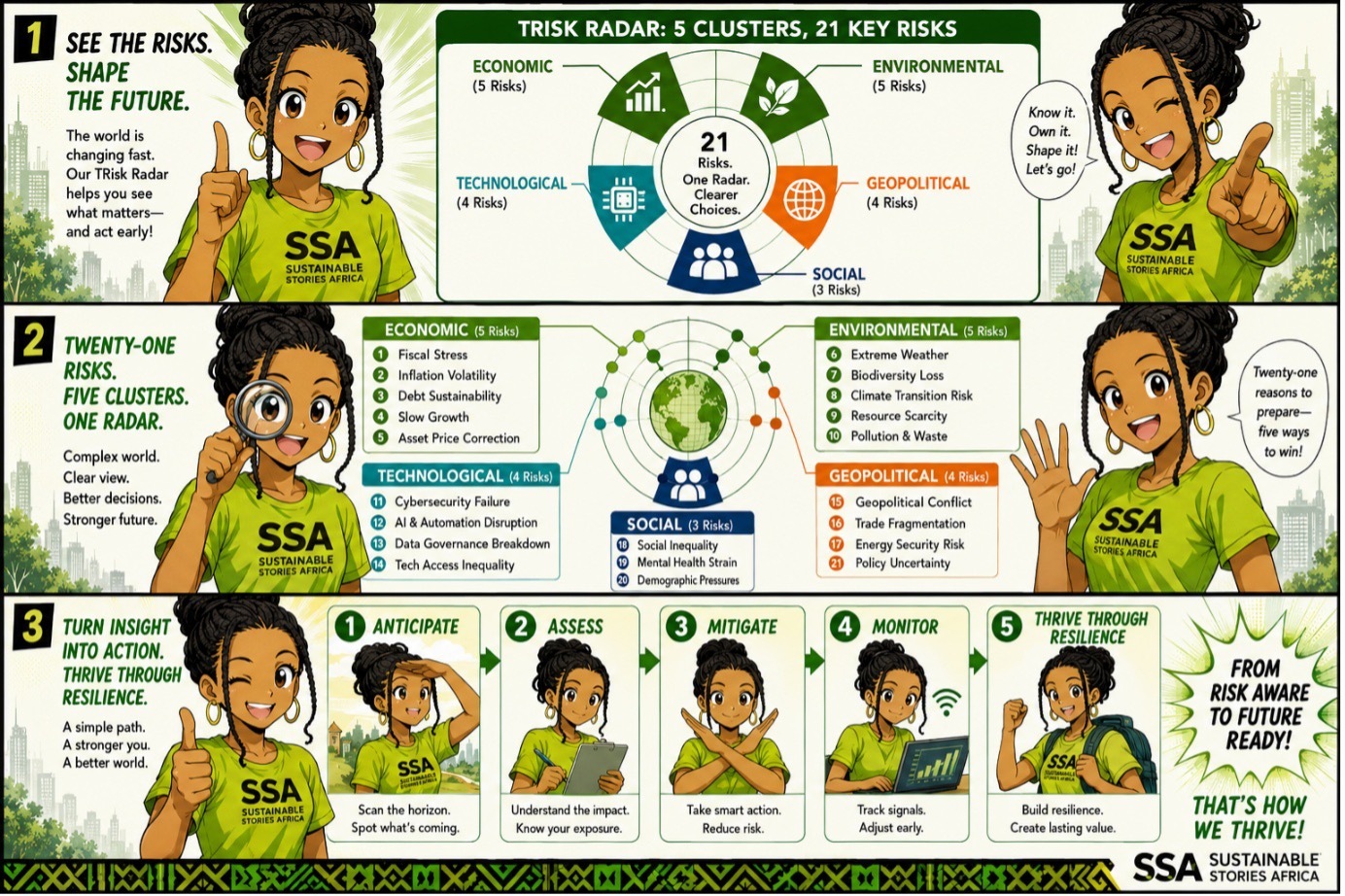
FinPolNomics identifies 21 distinct risk types now shaping boardroom decisions, from cyber, artificial intelligence, and geopolitical risk, to climate, nature, misinformation, fraud, and enterprise resilience.
The central message is unambiguous: risk management has moved permanently from a back-office compliance function into a front-line strategic survival system.
For African companies navigating multiple simultaneous shocks, infrastructure gaps, currency stress, supply-chain disruptions, and regulatory uncertainty, integrated risk thinking is no longer a governance aspiration. It is a competitive and institutional imperative.
Risk Management Now Defines Resilient Growth
The modern enterprise risk register is getting crowded, and for good reason.
Cyber-attacks, AI model failures, trade disruptions, regulatory surprises, supply-chain delays, climate shocks, data privacy breaches, and coordinated misinformation campaigns can now affect the same company in the same quarter, compounding crises that singular risk frameworks were never designed to manage.
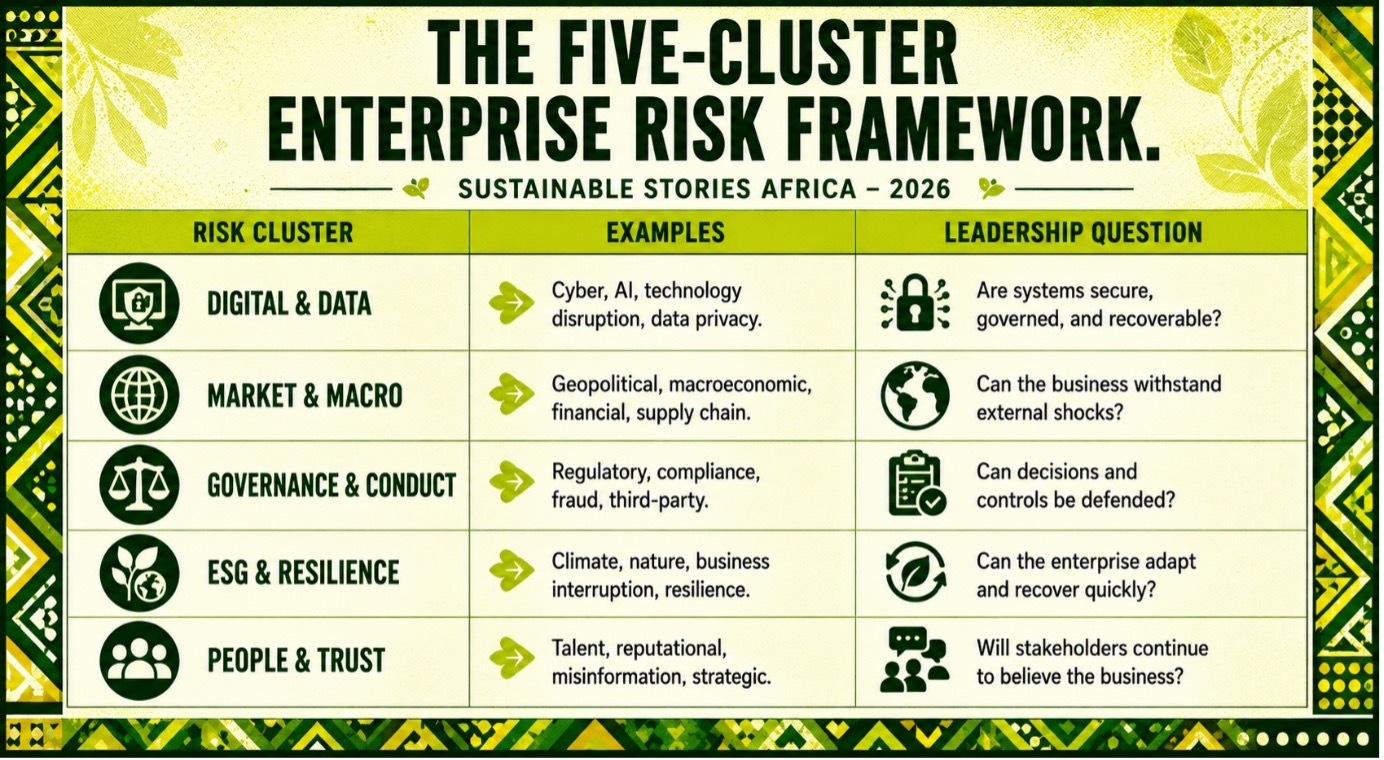
The FinPolNomics risk map captures that reality with 21 distinct categories, organised into five thematic clusters. It is not simply a vocabulary exercise.
It is an institutional warning: boards and executives cannot manage tomorrow's enterprise risks with yesterday's narrow risk taxonomy, designed for a simpler operating environment that no longer exists.
In African and also emerging markets specifically, where companies routinely manage power instability, foreign exchange volatility, import dependence, governance scrutiny, and political transition simultaneously, integrated risk thinking has become a measurable competitive advantage.
One Disruption Can Travel Through Everything
The collapse in risk containment is systemic.
- A single cyber incident can simultaneously disrupt operations, trigger legal data privacy obligations, damage institutional reputation, expose weak third-party vendor controls, and cause a market valuation decline.
- A single climate shock can affect logistics routes, insurance costs, asset reliability, community relations, and ESG investor ratings in a single reporting period.
This is why the old model of managing financial, operational, and compliance risks in three separate silos is no longer adequate.
Risk is now integrated, fast-moving, and mutually amplifying. Boards that have not updated their risk taxonomy in the last three years are likely already behind.
AI And Misinformation Create New Exposures
The inclusion of artificial-intelligence risk and misinformation risk in the FinPolNomics 21-type framework is particularly significant.
As African finance teams and businesses accelerate AI adoption for everything from credit scoring to audit automation, they must actively govern bias in model outputs, unsafe automation without human review, weak data governance, opaque decision logic, and dangerous over-reliance on machine-generated outputs without adequate oversight.
Misinformation risk deserves equal attention. In a digital economy where false narratives spread at algorithmic speed, coordinated misinformation campaigns can distort markets, damage institutional brands, accelerate panic among stakeholders, and trigger regulatory scrutiny, often before formal communications teams can issue a measured response.
That makes real-time monitoring, rapid escalation procedures, and proactive communication a core dimension of enterprise risk management.
Climate risk and biodiversity risk signal that ESG is now structurally embedded in enterprise resilience frameworks.
Physical climate damage, water stress, ecosystem degradation, and policy transition shocks can affect supply chains, insurance costs, asset reliability, and long-term enterprise value.
For African businesses operating in climate-sensitive sectors, such as agriculture, energy, transport, and water, risk visibility is now inseparable from value protection.
What Integrated Risk Governance Makes Possible
Companies that implement integrated enterprise risk governance, connecting cyber, AI, climate, financial, compliance, operational, and reputational risks into one coherent enterprise view, gain measurable resilience advantages.
They detect emerging threats earlier, escalate issues before losses become visible, allocate mitigation resources more efficiently, and communicate more credibly with investors, lenders, and regulators.
For African businesses competing for international capital, development finance, and strategic partnerships, demonstrable maturity of risk governance is now a prerequisite.
Investors and global partners increasingly conduct enterprise risk due diligence before making any commitment.
Move From Reaction To Pro-Active Anticipation
FinPolNomics frames the required leadership sequence as: anticipate, assess, mitigate, monitor, and build resilience.
That sequence is entirely practical.
- Companies should conduct structured identification of emerging threats, estimate likelihood and systematically align potential impact, assign clear risk owners with accountability, test response and recovery plans regularly, and update risk assumptions continuously as operating conditions evolve.
- Regulators, financiers, and boards should demand tangible evidence of this work: live, regularly updated risk registers; documented stress tests; incident response logs; mapped supplier ecosystems; controls testing schedules; and formal scenario analysis outputs.
Risk governance cannot remain a static spreadsheet reviewed once a year at an audit committee meeting.
Path Forward – Anticipate, Assess, Mitigate, Monitor
The governance priority is integration. African companies should integrate cyber, AI, climate, financial, compliance, operational, and reputational risk considerations into a single enterprise-level view, governed at the board level with executive ownership and operational accountability at every tier.
Better, more integrated risk systems will help African firms absorb disruption without losing momentum, protect institutional trust through crises, and keep long-term strategy alive and credible under the pressures of an increasingly volatile and interconnected operating environment.