Africa is industrialising, but not yet fast enough to change its economic structure.
A new African Development Bank index shows gains across most countries, even as manufacturing remains too small, fragmented and unevenly distributed.
The core question is no longer whether Africa needs factories. It is whether governments, financiers and firms can turn national ambition into regional production systems.
Africa’s Factory Moment Faces Hard Choices
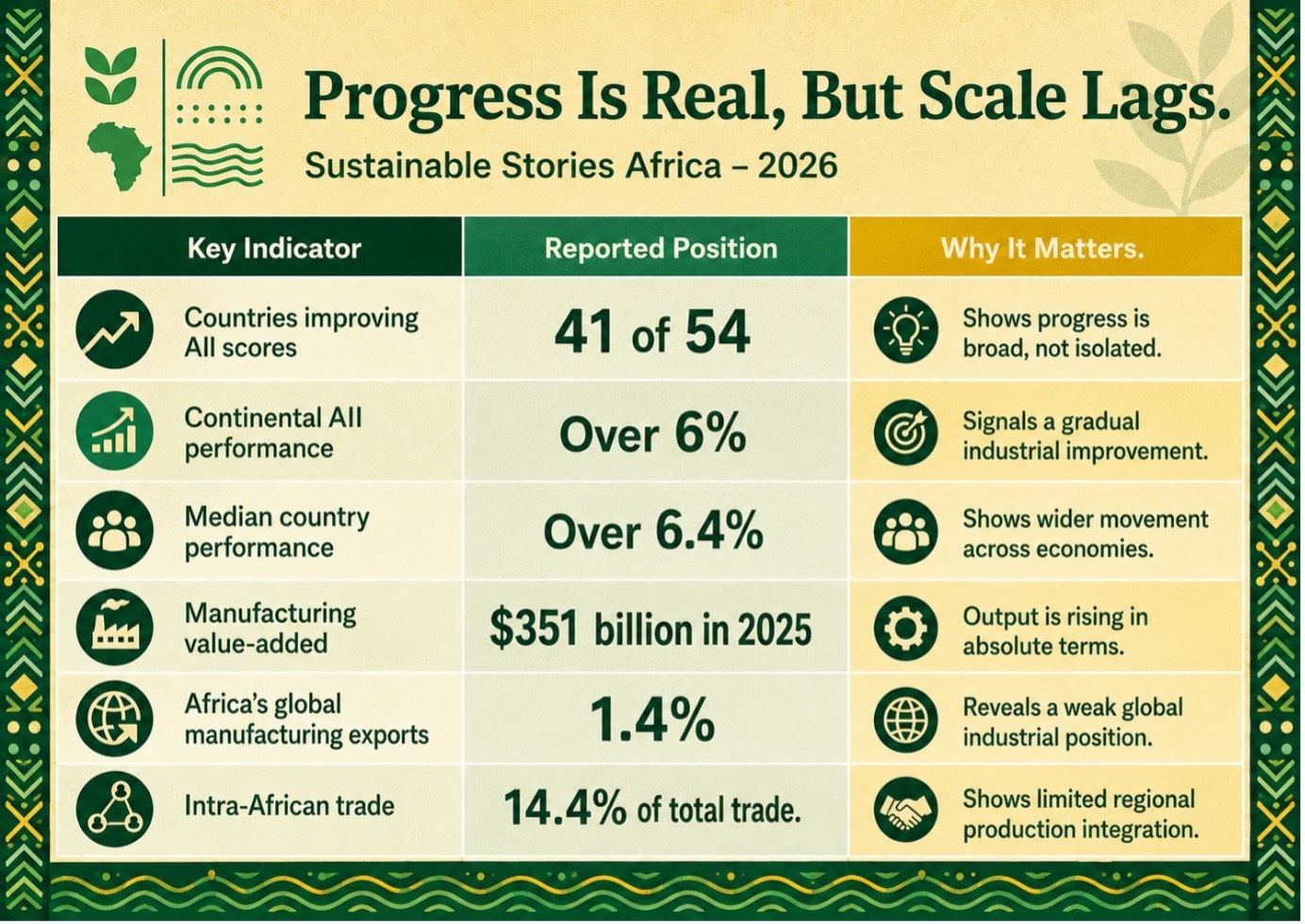
Africa’s industrial story is entering a more urgent phase. The African Development Bank’s Africa Industrialisation Index 2025 finds that 41 of 54 countries improved their industrialisation scores between 2010 and 2024, pointing to measurable progress across the continent.
However, the bigger message is more sobering. Manufacturing value-added rose from $285 billion in 2020 to $351 billion in 2025. Africa still accounts for only about 2% of global manufacturing output and 1.4% of global manufacturing exports.
That gap matters for jobs, trade resilience, climate competitiveness and economic sovereignty.
For a young worker in Lagos, Abidjan, Kigali or Tangier, industrialisation is not an abstract policy word. It determines whether raw materials become local value, whether skills become decent work, and whether African markets can produce more of what they consume.
Progress Is Real, But Scale Lags
The 2025 Africa Industrialisation Index, developed by the African Development Bank with continental partners, assesses industrial development across all 54 African countries over the 2010–2024 period. It tracks not only manufacturing performance, but also the direct and indirect conditions that shape industrial competitiveness.
The headline finding is mixed: Africa is improving, but from a low base. Continental AII performance rose by 6% between 2010 and 2024, while the median country performance increased by 6.4%. Progress was strongest among lower-performing countries, suggesting some gradual convergence.
Yet manufacturing remains the weakest of the index’s three dimensions. The report warns that industrial growth has not yet translated into broad-based structural transformation. Africa’s manufacturing value-added per capita reached $226.7 in 2025, still below its 2014 peak of $254.9.
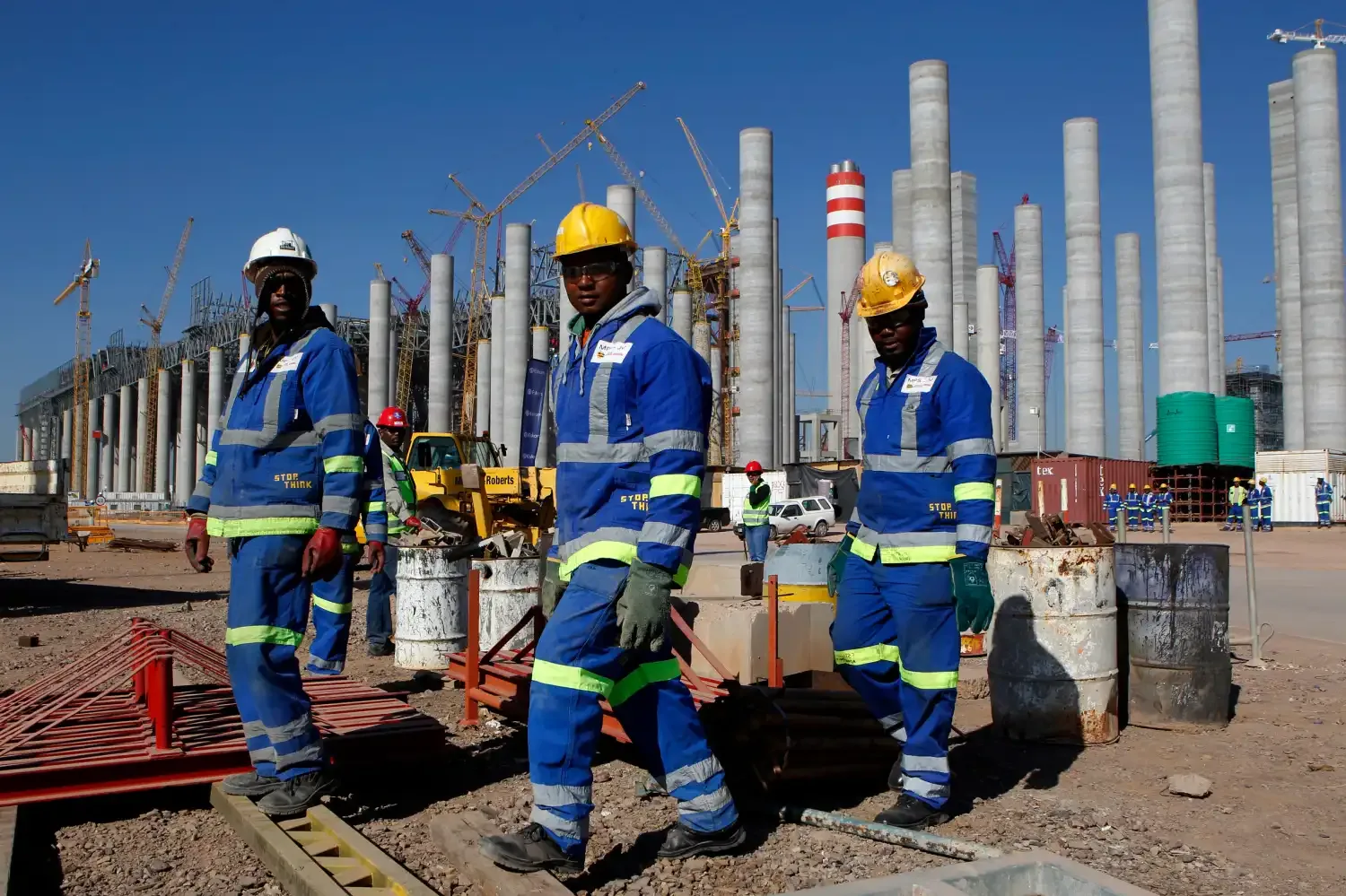
The challenge is visible at the factory gate. A manufacturer may secure equipment, workers, and local demand, but still face costly logistics, uncertain power, border delays, fragmented standards, and limited access to patient capital.
The report identifies these issues as central barriers to scaling production.
Morocco Leads as Regional Gaps Persist
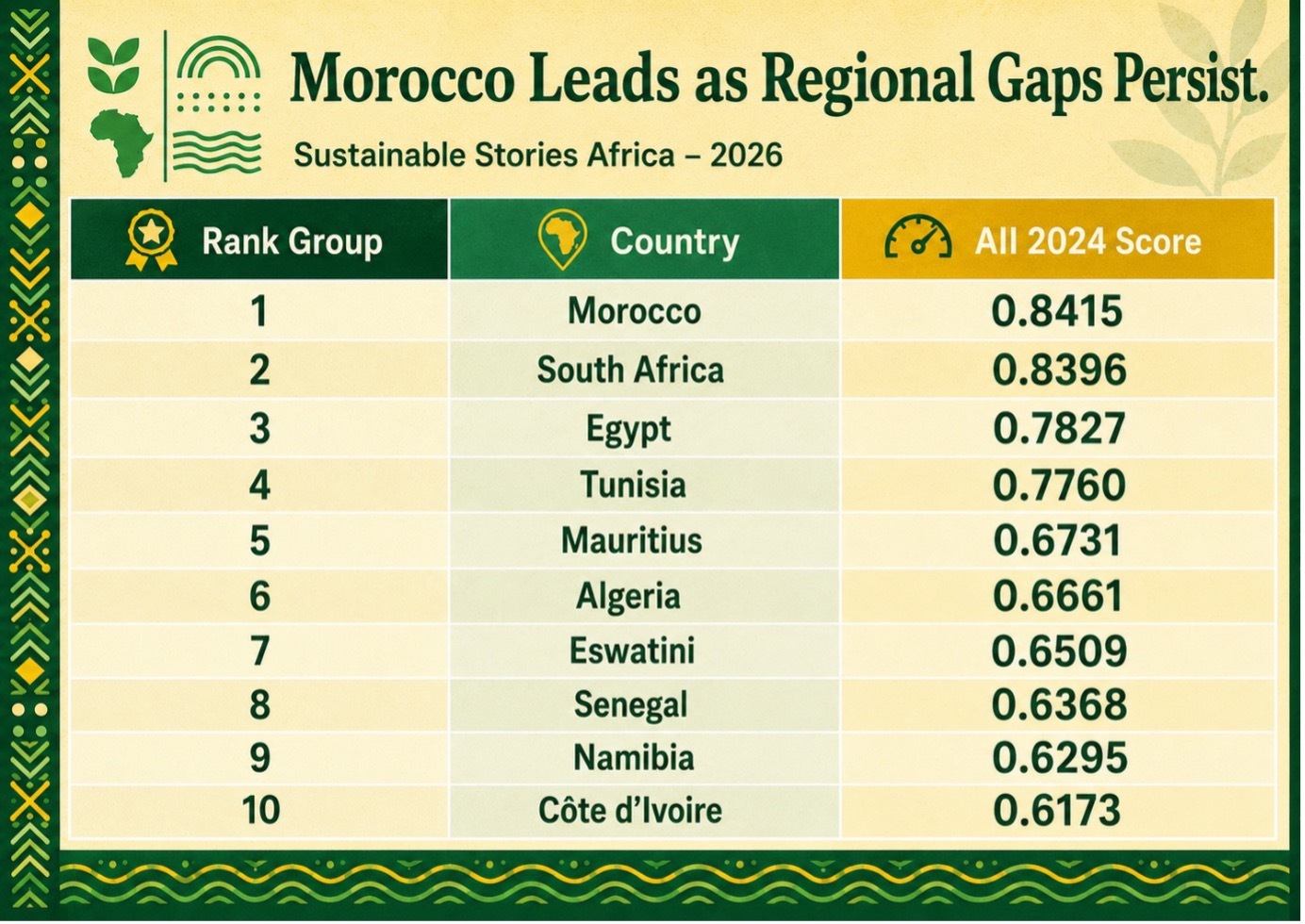
Morocco now ranks as Africa’s leading industrial economy, surpassing South Africa. Its 2024 score of 0.8415 places it just ahead of South Africa’s 0.8396, reflecting Morocco’s sustained industrial upgrading, export diversification and strategic policy implementation.
South Africa remains a continental powerhouse, but the report points to a longer-term decline from its 2010 score of 0.8819. Egypt ranks third, followed by Tunisia and Mauritius. Algeria, Eswatini, Senegal, Namibia and Côte d’Ivoire complete the top ten.
The regional pattern remains highly concentrated. North Africa is the most industrialised region, followed by Southern Africa. Central, West and East Africa continue to lag, despite gradual gains.
This concentration matters because industrialisation thrives on scale, networks, suppliers, logistics and skills, all of which become harder to build when production remains fragmented across small national markets.
The report also highlights important upward movement. The Democratic Republic of Congo, Djibouti, Gabon, Benin, Mauritania, Somalia, Senegal, Rwanda, Guinea and Sierra Leone were among the top-ranked advancers between 2010 and 2024.
In the DRC, manufacturing value-added per capita more than doubled from $51 to $122.1, while its share of African MVA rose from 1.5% to 4.1%.
AfCFTA Can Convert Markets Into Factories
The AfCFTA is central to the next phase. The report argues that Africa must move from “shallow integration” focused mainly on tariffs to “deep integration” that tackles border delays, standards, infrastructure, logistics, technical barriers and investment rules.
That distinction is critical. A free trade agreement can open markets, but factories need more than open borders.
They need reliable transport corridors, harmonised standards, predictable customs systems, quality infrastructure, skilled workers and regional supplier networks.
The report estimates that intra-African trade remains only 14.4% of total trade, compared with 60% in Asia and 57% in Europe.
Intermediate goods trade is also weak: only 12.8% of Africa’s industrial input exports went within the continent in 2022, while most went to Asia and Europe.
This is the missed opportunity. Africa exports too many raw and low-value products out of the continent, while importing finished or intermediate goods back at a higher cost.
For industrialisation to become development, regional value chains must connect cotton to textiles, minerals to battery components, agriculture to processed food, and ports to inland production hubs.
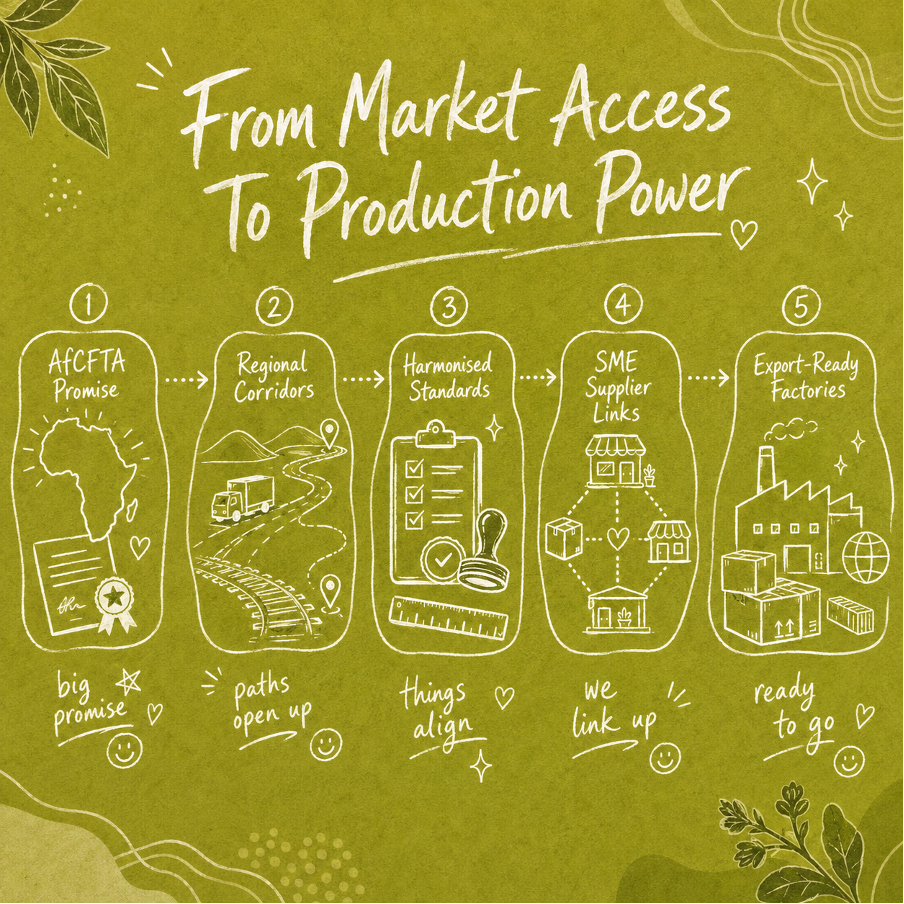
This is the shift the report advocates: not integration for trade alone, but integration for production.
Industrial Corridors Need Finance And Standards
Announcing industrial strategies is insufficient. The policy imperative now is operationalisation, through corridors, special economic zones, SME integration and industrial finance that convert vision into functioning economic geography.
Strategic corridors connecting infrastructure, logistics, energy, industrial clusters and border systems are especially critical for landlocked economies where fragmented transport inflates costs and constrains competitiveness.
Special economic zones, however, require a fundamental reset. Too many African SEZs have functioned as investment-attraction enclaves with weak linkages to local suppliers and domestic production systems, generating activity without structural transformation.
The next generation of SEZs must be designed differently: connected to regional value chains, anchored in quality infrastructure and built around sustainability, circularity, skills and climate resilience.
With carbon border measures tightening and global supply-chain standards rising, environmental performance is no longer optional; it is a market-access condition.
SMEs remain central to inclusive industrialisation. Across Africa, MSMEs form the backbone of enterprise activity, yet many remain informal, under-financed and disconnected from industrial supply chains.
Without deliberate SME integration, industrialisation risks becoming narrow and exclusionary.
Skills close the loop. TVET systems must align with real industrial demand across corridors and value chains, because factories cannot scale without technically capable workers and certification-ready firms.
Path Forward – Build Regions That Manufacture Together Now
Africa’s industrialisation agenda is no longer only about building more factories. It is about building connected production systems that can compete, employ, innovate and withstand climate and trade shocks.
The path forward is regional: deepen AfCFTA implementation, finance corridors, reform SEZs, upgrade SMEs, harmonise standards and invest in skills. Africa’s industrial future will be strongest when countries manufacture together, not alone.