Infrastructure can be completed physically and still fail economically or socially. A road without maintenance, a hospital without reliable service standards or a water scheme without viable operations exposes the limits of construction-led thinking.
BPMI, an author-developed methodology, proposes that project management, PPP practice and infrastructure finance should operate as one lifecycle from vision to handback. Its promise, and its test, is integration.
Infrastructure success extends far beyond construction
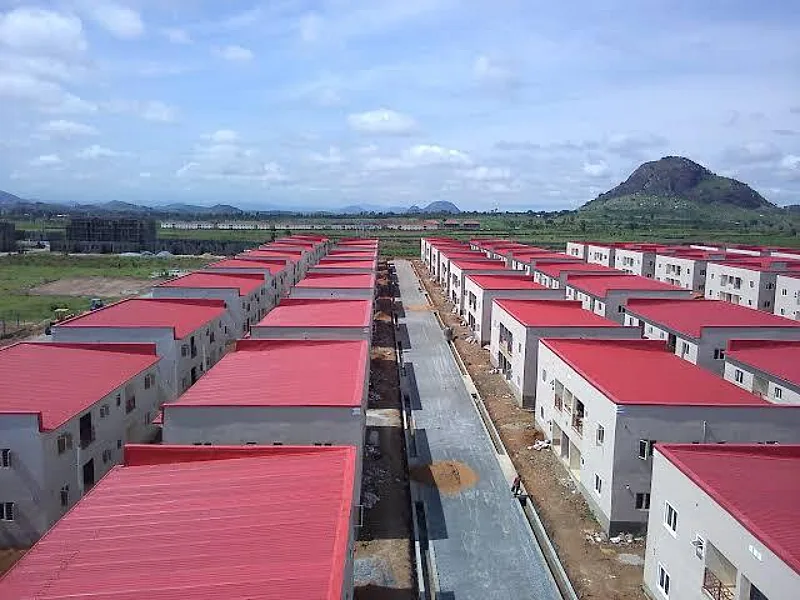
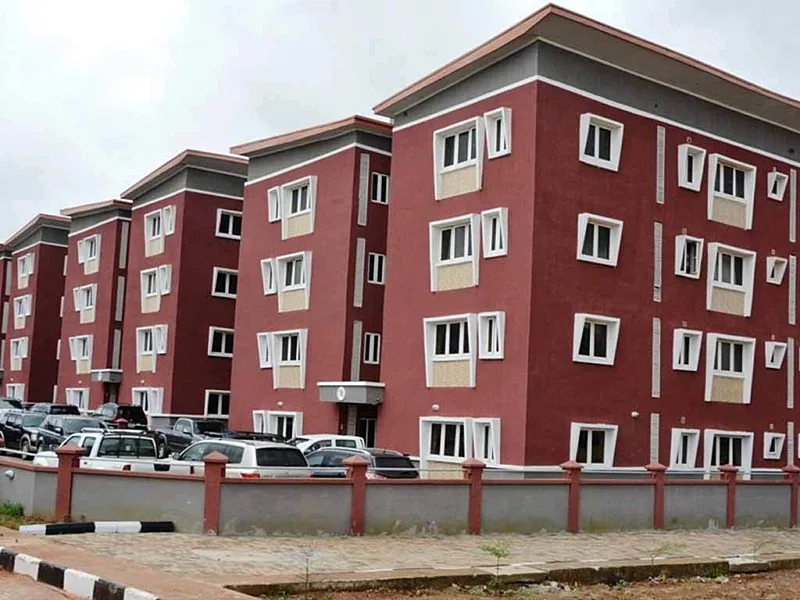
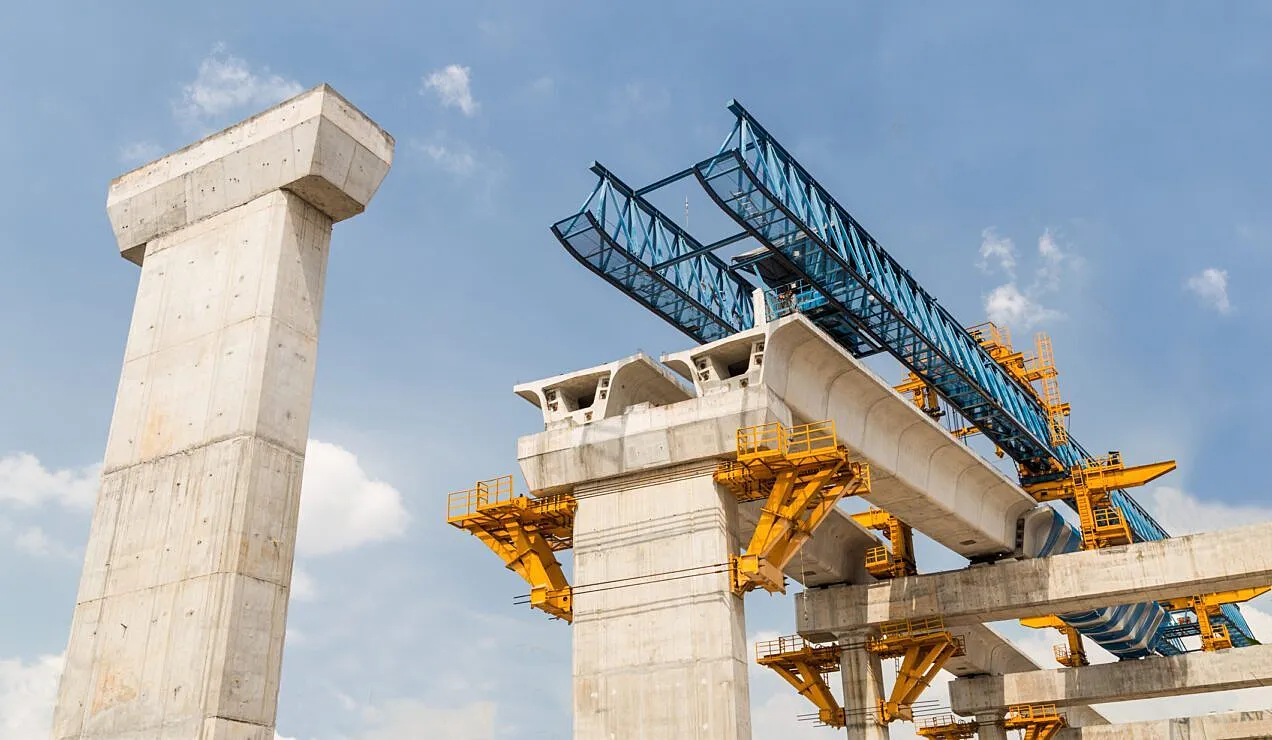
The easiest milestone to photograph is completion.
- The more difficult question is whether the asset continues to solve the problem that justified it.
- A completed road that deteriorates quickly, a hospital that cannot meet service standards, or a water network that cannot cover maintenance costs may satisfy a works contract while failing the public.
Dr W. Akhator-Eneka's BPMI methodology starts with that gap.
- It treats project vision, initiation, planning, execution, commissioning, operations, contract management, sustainability and eventual handback as connected decisions.
The source essay argues that monitoring and control should run through all phases rather than appear as a detached stage.
That proposition aligns with a basic feature of PPPs: they are long-term service arrangements, not simply ways to finance construction.
The method is not an independently adopted international standard; rather, it offers a useful integration lens for African governments where technical, fiscal, legal and operational teams often work on parallel documents without a single delivery logic.
Siloed decisions create lifecycle project failure
Conventional project management can organise scope, time, cost and quality effectively.
- However, infrastructure PPPs add policy, affordability, bankability, environmental and social safeguards, payment mechanisms, risk allocation and decades of contract performance.
- A design choice made during construction can alter operating costs, lender protections, government obligations and service quality long after commissioning.
BPMI's central warning is therefore practical:
- A project team cannot optimise each workstream separately and assume the total project will be optimal.
- The cheapest design may increase whole-life costs.
- Maximum risk transfer may make financing unaffordable.
- Fast procurement may lock in an immature scope.
- Completion may arrive without a funded maintenance regime.
The lifecycle begins with public purpose
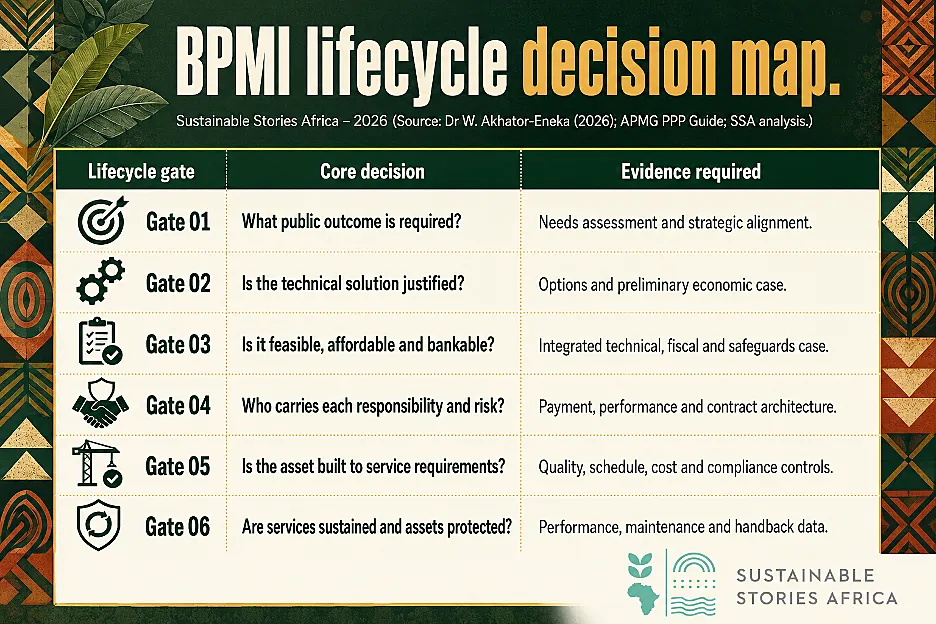
The first anchor is project vision:
- The social, economic or institutional change the infrastructure is meant to create.
- That vision should lead to a defined need and an optimal technical solution.
- Only then should government screen whether PPP delivery is appropriate.
The APMG PPP Guide similarly cautions that a PPP cannot transform a weak or unjustified project into a valuable one.
Preparation deepens the case through technical feasibility, demand analysis, economic appraisal, environmental and social assessment, affordability, fiscal impact, commercial viability, bankability, Value for Money, legal due diligence, risk analysis and market sounding.
These are not boxes for separate consultants:
- Assumptions must reconcile.
- Demand drives revenue.
- Revenue affects financing, financing affects affordability, and affordability can change project scope.
Structuring then translates the case into responsibilities, output specifications, risk allocation, payment rules, government support and contract terms.
- Competitive procurement tests the structure against the market.
- After financial close, design, construction and commissioning must remain connected to performance standards, while operations require active contract management until expiry, handback and evaluation.
The same lifecycle view should extend to climate and social resilience.
- Flood, heat, energy, resettlement, gender and accessibility assumptions affect design, capital cost, operating performance and public legitimacy.
If they are assessed in a separate report but not reflected in specifications, finance and monitoring, the project remains integrated on paper only.
Integration protects value across project decades
An integrated lifecycle makes trade-offs visible before they become claims, delays or service failures.
- Finance teams can see how technical changes affect debt service.
- Engineers can see which performance deductions the design must withstand.
- Public officials can see the long-term fiscal exposure behind an apparently off-budget transaction.
- Communities can see how service outcomes, tariffs and safeguards are meant to work.
The strongest benefit is institutional memory.
- Large projects outlive political administrations and project teams.
- A common decision record that links vision, assumptions, approvals, risk ownership, performance data and change control reduces the chance that a later team manages the contract without understanding why it was structured in a particular way.
Integration can also improve accountability between approval bodies.
- Finance ministries can trace fiscal commitments to service outcomes.
- Procurement authorities can see whether tender changes alter the business case.
- Regulators can connect performance data to contract remedies.
This makes it harder for fragmented project approval processes that are individually defensible but collectively inconsistent.
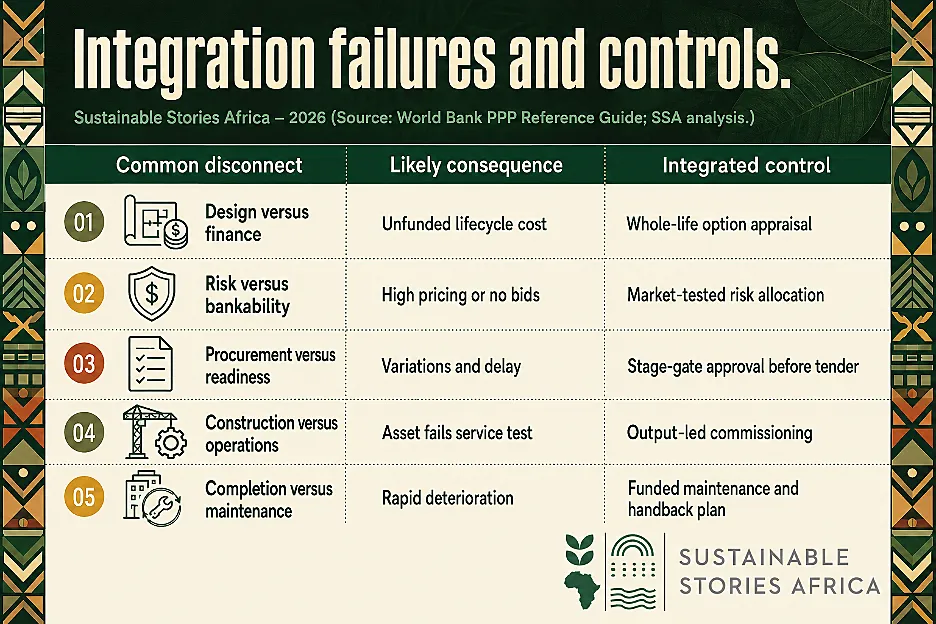
Governments need one integrated assurance system
Public sponsors should establish a single integrated project team and assurance map.
- Each major decision should show its technical, economic, fiscal, legal, environmental, social and operational effects.
- A change-control board should test material variations against the original business case, affordability ceiling, risk allocation and service outcomes, rather than only the construction schedule.
The approach also needs evidence.
- Agencies adopting BPMI or any locally developed method should publish definitions, stage gates, required outputs, decision rights and performance measures.
- Pilot projects should be independently reviewed against time, cost, service, fiscal and stakeholder outcomes.
- Integration is valuable only if it produces better decisions and a traceable accountability chain.
A practical implementation would use an integrated project-assurance plan, a single assumption register and a benefits-realisation map.
These tools should not create another reporting layer; they should replace contradictory versions, assign the authoritative dataset, and identify which committee has power to stop, redesign or reapprove the project.
Path Forward – Make lifecycle outcomes the delivery standard
Nigeria's next infrastructure gains will not come from finance or project management acting alone.
Sponsors should test one integrated assurance model on a live project and publish lessons at each gate.
The success measure must extend beyond completion: reliable services, affordable obligations, controlled risks, maintained assets and a credible handback.
That is where project vision becomes sustainability.