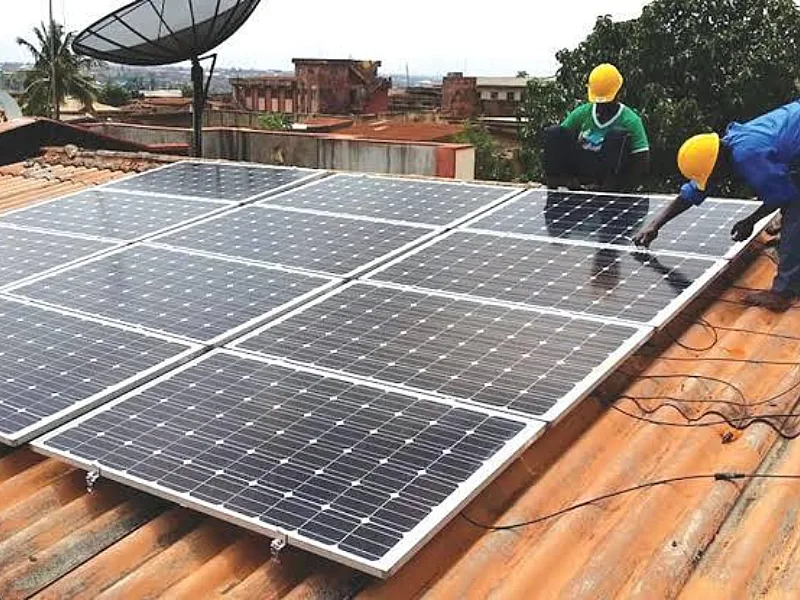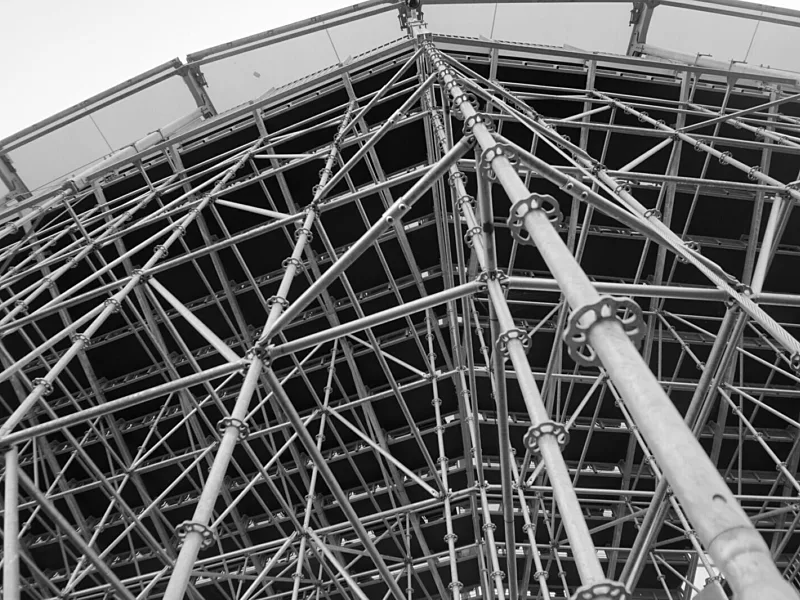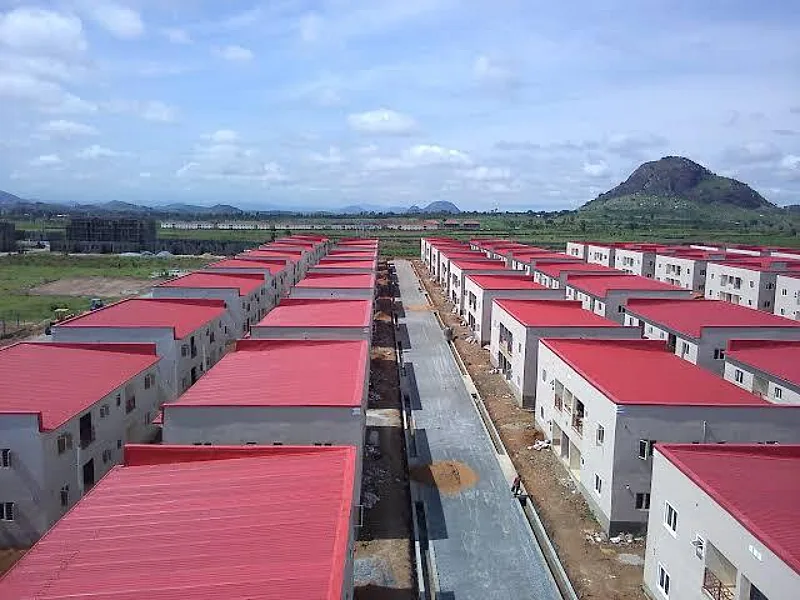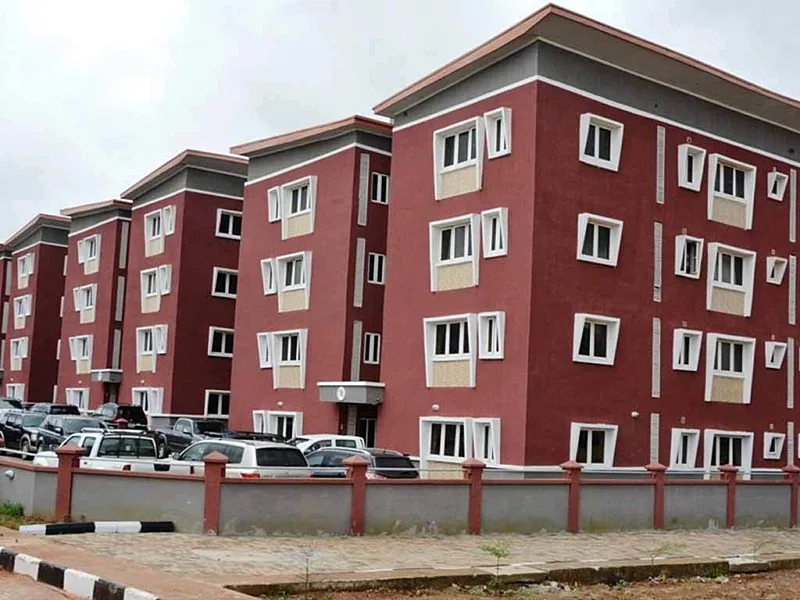
Nigeria does not lack infrastructure plans, financing proposals or potential investors. The recurring weakness is conversion: moving a public need through preparation, approvals, capital matching, procurement and operations without losing scope, affordability or accountability.
A practical reform agenda starts with rolling programmes and project readiness. Finance enters at the right gate, while contracts, performance data and maintenance preserve value after construction.
Plans become infrastructure through delivery systems
A national plan can identify roads, water, housing, energy, health and digital priorities, but investors and contractors cannot finance a policy aspiration.
- They need defined projects with land, permits, studies, safeguards, revenues or public payments, risk allocation, procurement routes and accountable sponsors.
Dr W. Akhator-Eneka's Part C source essay proposes action areas including rolling development programmes and time-bound franchise arrangements for services such as water, waste and transport.
The larger lesson is institutional: infrastructure delivery improves when long-term goals are broken into adaptable, monitored phases and operating responsibility is tied to performance.
The agenda below converts that insight into a full delivery chain.
- It does not assume every project should be a PPP or every service should be franchised.
- It asks government to create a prepared portfolio, match delivery models to evidence, disclose public obligations and manage assets as services rather than announcements.
Nigeria's bottleneck sits between plans and projects
Plans often contain broad projects whose costs, routes, demand, land status and institutional owners remain uncertain.
When political timetables push them toward procurement, bidders price missing information, lenders request guarantees and scope changes appear after award.
- The project is nominally financed but structurally fragile.
Fragmented responsibilities deepen delay.
- Planning agencies set priorities, ministries sponsor projects, finance authorities assess budgets, regulators approve, procurement bodies oversee tenders, and operators inherit assets.
- Without a common stage-gate process, each institution may complete its task while no one owns the integrated result.
Rolling programmes need disciplined project gates
A rolling infrastructure programme should connect long-term outcomes to a three- or five-year prioritised portfolio, updated annually using evidence.
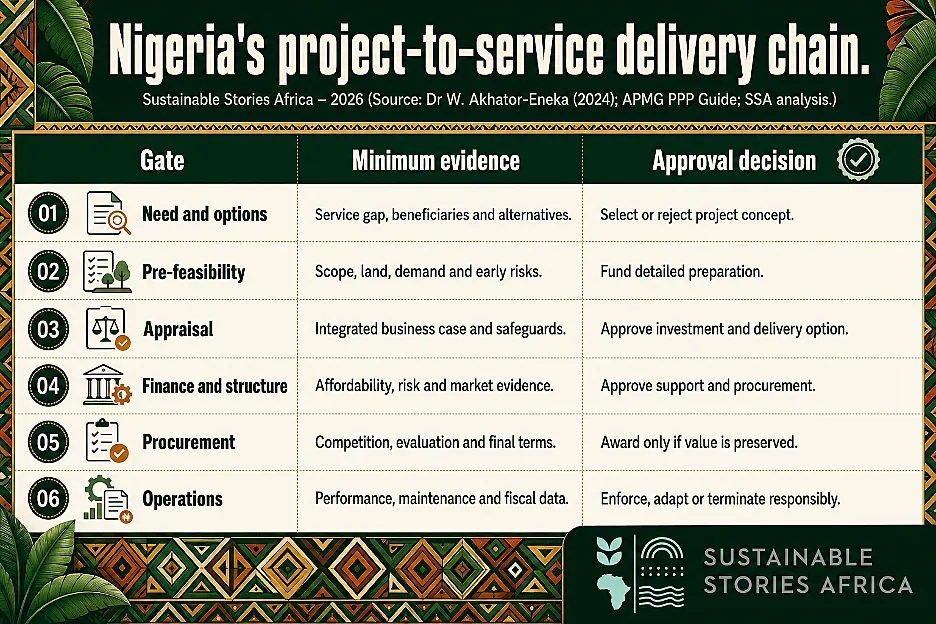
- Projects should enter through a needs and options gate, then progress through pre-feasibility, full appraisal, financing and procurement approval only when required information and stakeholder decisions are complete.
A project-development facility can fund technical, economic, environmental, social, legal and financial preparation.
- Support should be milestone-based, with standard terms of reference, independent review and recovery mechanisms where appropriate.
- Weak projects should be re-scoped or stopped; a large pipeline is not useful if every item is marketed as urgent.
Delivery models should then be selected.
- Conventional public works may suit stable, budget-funded assets.
- Design-build can integrate interfaces.
- Management or franchise contracts can improve operations without private finance. PPPs may suit measurable long-term services.
- Blended finance can address specific market failures. The choice must follow risk and public value.
Franchise agreements deserve particular caution.
- Time-bound private operation can improve collection, maintenance and customer service.
- However, monopoly rights, tariff rules, service areas, asset condition and termination must be explicit.
- A successful waste or transport franchise depends on enforceable performance and public oversight, rather than the private label alone.
Reliable programmes can lower financing costs
A credible pipeline lets government bundle similar assets, coordinate land and permits, engage markets early and sequence capital needs.
- Investors can plan resources and compare projects. Local contractors and advisers can build capability.
- Repeated, standardised transactions reduce avoidable preparation and negotiation costs.
Rolling review also improves resilience.
- Projects can be phased when fiscal space tightens, redesigned when climate or demand evidence changes and accelerated when readiness is high.
- Performance data from operating assets can update cost and risk assumptions.
- Maintenance becomes part of programme finance rather than an annual afterthought.
Programmatic delivery can create scale for local-currency finance and standardised procurement.
- Bundles of schools, clinics, mini-grids or water systems may justify stronger preparation and monitoring than isolated transactions.
- The bundle should use common service standards while retaining site-specific land, community and environmental work.
Reform must name owners and consequences
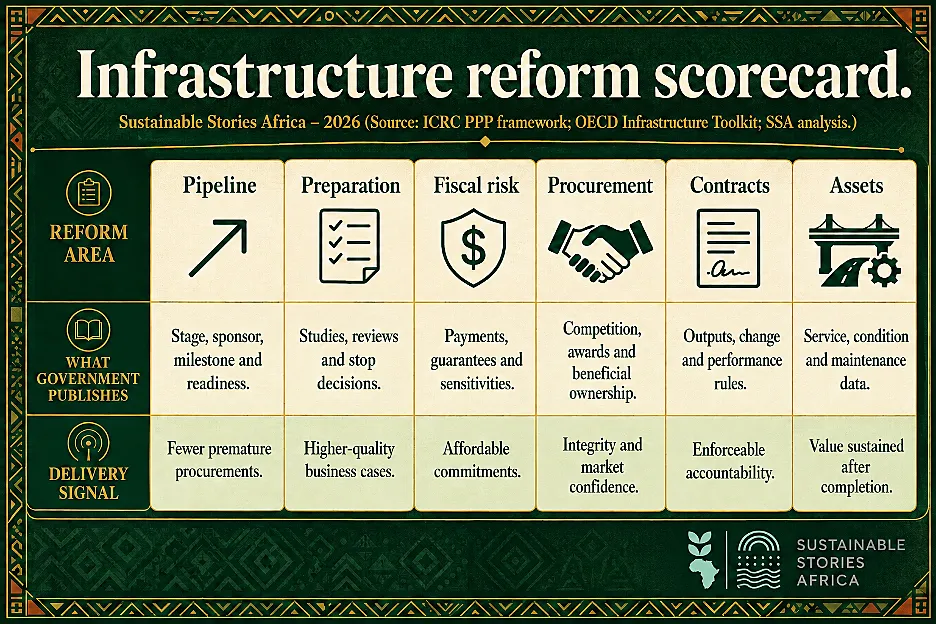
Nigeria should publish one project pipeline showing sponsor, stage, required decision, estimated public support and next milestone.
Approval bodies should reject projects that lack options analysis, affordability, safeguards or operating plans.
A consolidated fiscal-risk statement should include guarantees, availability payments, revenue support and termination exposure.
Contracts for works, franchises or PPPs should specify outputs, data, deductions, change procedures, dispute mechanisms and exit conditions.
- Procurement results and beneficial ownership should be disclosed subject to lawful protections.
- Operating agencies need funded maintenance, skilled contract managers and dashboards that report service, rather than only physical completion.
Reform should have a public timetable and measurable milestones:
- Projects screened out, studies completed, average approval time, competitive bids, fiscal commitments disclosed, assets meeting service standards and maintenance funded.
Without outcome data, new units, facilities and committees may add process while leaving delivery unchanged.
Finance readiness before financing public promises
Nigeria should organise infrastructure as a transparent rolling portfolio governed by evidence, stage gates and accountable sponsors.
Capital should enter only after the project demonstrates readiness and public value.
The delivery test is sustained service within affordable fiscal limits. Announcements, financial close and commissioning are milestones, not the outcome.